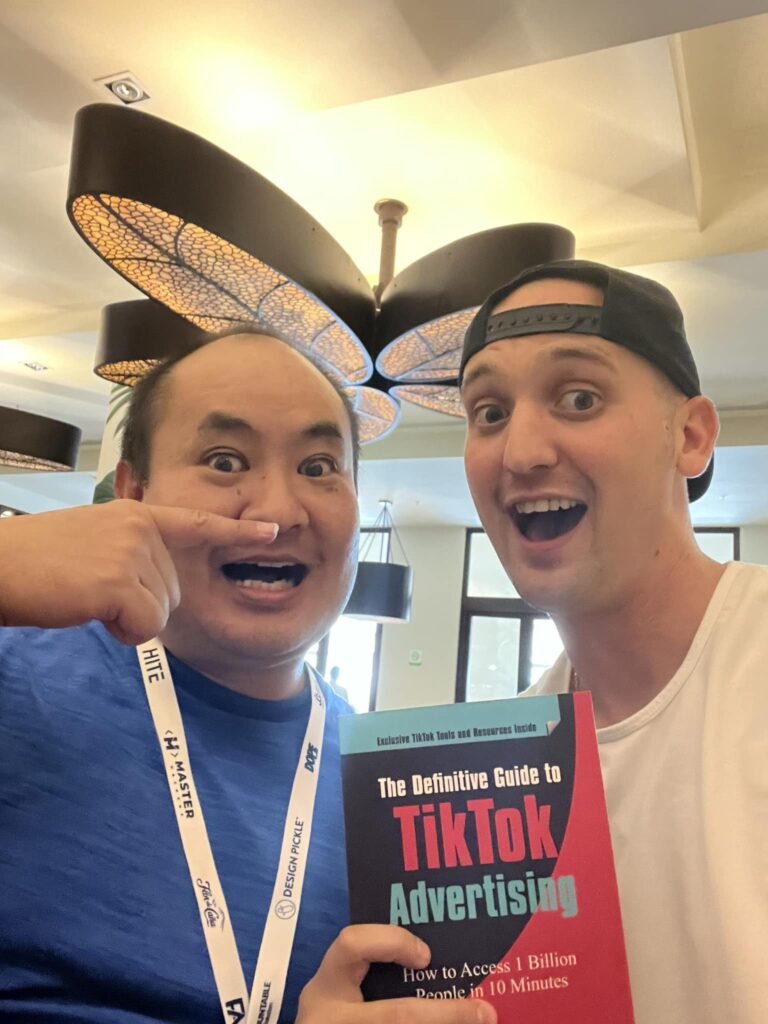
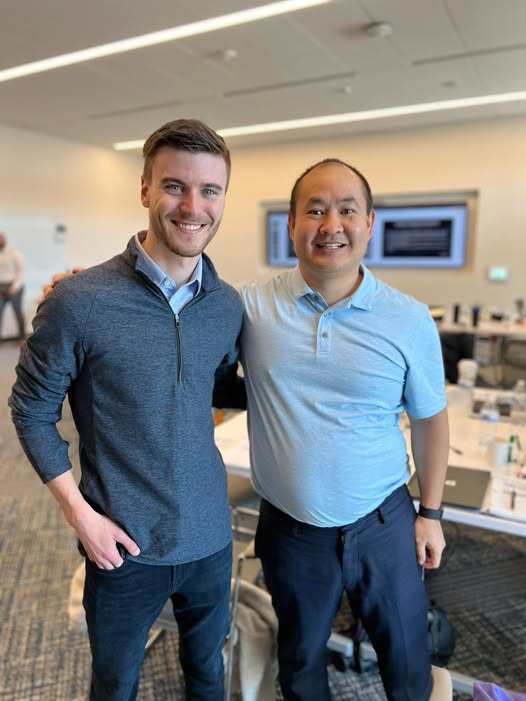
Inside High Rise Academy: What You Can See in the Students

High Rise Academy exists because there’s a lot of noise in the AI and marketing space, and it’s hard to tell what training actually holds up in the real world. In this High Rise Influence YouTube video, Dennis Yu gave a simple filter for sorting that out. As he put it, “Don’t judge a program by the person selling it. Judge it by the students it produces.”

After Dennis lays out that idea, the video shifts to student builders and lets you hear directly from us about what we’re working on and how we’re applying the training with local service businesses.

The Principle Dennis Shared

Dennis’ point is blunt: it’s easy to make a program look good on the surface. The harder test is what students can actually produce once they’re inside it — their work, their thinking, and how that work holds up when applied to real clients.

That’s why the video centers on the people inside the program. You get to see how students talk about their work, what they’re building, and the kinds of problems they’ve learned to solve for clients.

What High Rise Academy Trains

High Rise Academy is an apprenticeship for young adults who want to build a concrete skill set in AI‑assisted marketing. The training is tied to local service businesses because the work is practical and the feedback is immediate.

Students practice:

  • Building and improving personal brand sites and business sites
  • Using AI tools to speed up research, content production, and operational tasks
  • Running and refining ads using proven systems like Dollar a Day, while tracking performance
  • Managing deliverables, communication, and client relationships

The idea is to learn repeatable systems and apply them on live accounts, so students leave with work they can stand behind.

Student Examples From the Videos

Dylan Haugen (Me)

I came into the program as a content creator and professional dunker. I knew how to grow an audience, but most of that lived on platforms I didn’t control. The shift for me was learning how to turn content skill into owned assets and clear client value.

What that looked like:

  • Building a personal brand website I control
  • Strengthening search presence, including my Knowledge Panel
  • Learning to package content and relationships into services for local businesses
  • Delivering real marketing outputs alongside the team

Jack Wendt

Jack’s story shows what happens when someone combines big‑picture vision with consistent execution. He’s been able to travel and still build because he runs work like a professional: projects stay on track, communication stays clear, and relationships keep compounding.

What stands out in his path:

  • He builds partnerships and opportunities through strong relationships
  • He keeps a steady operating rhythm even while moving across time zones
  • He treats marketing like a long game, not a short sprint

Luke Crowson

Luke started in fitness coaching, and Dennis noticed something that carries over into marketing: he cares about outcomes and sticks with a process. Inside the program, Luke applies that mindset to client work that’s built on steady improvement.

His focus areas include:

  • Campaign structure and ongoing tuning
  • Landing page and site improvements
  • Lead quality and follow‑up alignment with owners

The takeaway here is straightforward: consistent, client‑first execution plus good process is what drives dependable results.

Sam McLeod

Sam is still in school and leans heavily into engineering. His role is building tools and workflows that remove repetitive work for students and standardize delivery for clients.

Where that shows up:

  • Automating tedious steps so students focus on high‑value tasks
  • Turning proven processes into repeatable workflows
  • Supporting scale without lowering quality

One Shared Thread

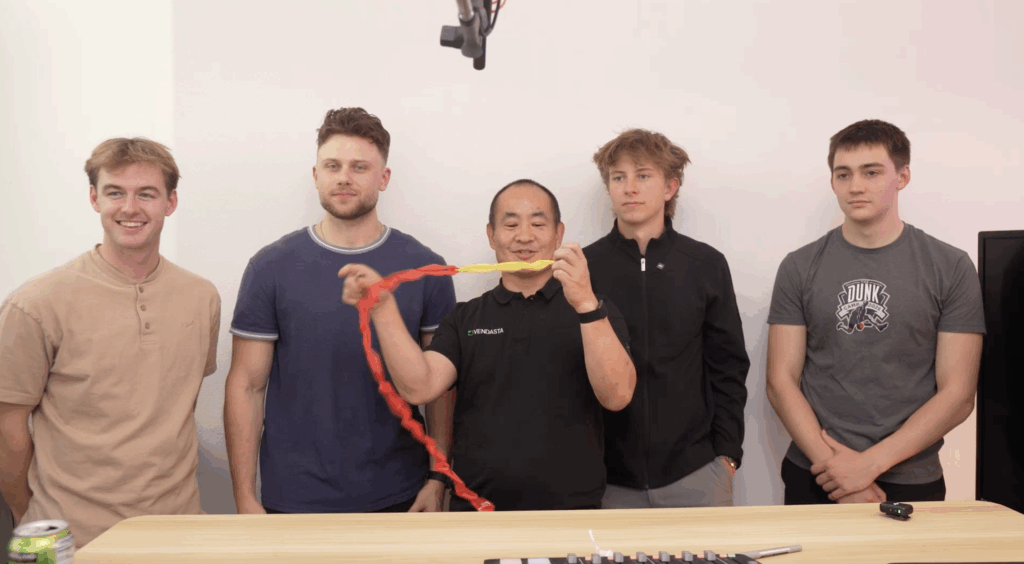
Different backgrounds, same direction: we’re learning practical systems and applying them to real businesses. And the four of us you saw in the video are also building this alongside Dennis. We are founders of High Rise Influence and Local Service Spotlight, so we’re learning how to create an agency, start a business, and pressure‑test what we learn by using it every week.

Advice We Shared at the End

We wrapped the video with short advice for anyone considering this path:

  • Use AI like a teammate. It helps you draft, research, and troubleshoot faster, but you still steer the work.
  • Mindset drives follow‑through. Skill only compounds if you stay in the game long enough to apply it.
  • Aim for steady improvement. Getting a little better daily beats waiting for a perfect moment.
  • Learn by doing. You grow fastest when you ship work, get feedback, and refine.

Takeaway

Dennis’ filter is simple: student work tells you more than marketing ever will. The video applies that idea by showing what students are building and how they think about the work.

If you’re evaluating any program in AI or marketing, whether it be the High Rise Academy or something else, look for a trail of real output: projects you can inspect, processes students can explain, and progress that shows up across more than one person. That’s the safest way to decide what’s worth your time.

What You’re Actually Paying For in High Rise Academy

Why pay for a program when you can get AI training for free on YouTube?

Because you want your young adult to be mentored by the best, be in a structured program with accountability, and because you want to shorten the duration to achieve competency.

Information is free now. The basics are easy to find.

What’s not free is turning that information into real business growth — fast.

In High Rise Academy, you’re paying for two things:

  1. Results for a local service business.
  2. Access to the people and process that create those results.
  3. AI Infrastructure that multiplies output and efficiency.

The Goal

This program is for local service businesses and the young adults working inside them.

The goal is simple: grow the business with marketing that brings in leads, calls, and booked jobs.

What You’re Paying For #1: Results

We measure progress weekly so the work stays tied to outcomes.

MAA every week:

  • Metrics: what changed in leads, calls, jobs, revenue, and content output
  • Analysis: why it changed
  • Action: what we’re fixing or testing next

Your young adult runs real marketing, reports what happened, and improves it week by week until the numbers move.

The loop is always: execute → measure → coach → improve → execute again.

What You’re Paying For #2: Access

Inside the Academy, access means:

  • Experienced coaches. Dennis Yu and the team review your young adult’s real marketing work and show them how to make it stronger.
  • A clear path. They know what to focus on first, what to ignore, and what “good” looks like.
  • Fast feedback. Instead of guessing, they get answers and direction while they work.
  • A room of builders. Other apprentices are doing the same kind of work, so your young adult learns faster and stays motivated.
  • Masterminds with other AI Apprentices. They trade what’s working, break down problems, and push each other to deliver better results.

Dennis has 30+ years of experience and has worked with brands like Nike, Starbucks, Rosetta Stone, the Golden State Warriors, and more. That level of coaching helps your young adult avoid expensive wrong turns and reach competency faster.

What You’re Paying For #3: AI Infrastructure

A major part of the program cost is the AI infrastructure we provide.

Each AI Apprentice receives access to a full year of our shared ChatGPT Business account, including pooled credits and the custom GPTs and agents we’ve built for real marketing work.

This matters because:

  • Apprentices don’t start from scratch. They use proven custom GPTs for planning, writing, auditing, and reporting.
  • Output is faster and more consistent. Shared business-level access removes usage limits and friction.
  • Work is easier to review and improve. Everything lives inside one workspace that coaches can see and guide.
  • The cost is covered by the program. Apprentices don’t have to manage subscriptions, credits, or setup.

This AI setup directly increases how much quality work apprentices can produce each week.

The specific AI tools included may evolve over time. We currently use ChatGPT Business because it’s the best option for our workflow today. As models, platforms, and pricing change, we reserve the ability to upgrade, replace, or remove specific tools so apprentices always have access to the most effective AI systems available.

How the Apprentice Program Works

Your young adult builds skill by working inside a live local service business (often yours).

What they do inside the program:

  • Create and publish content using the proven Content Factory workflow.
  • Run simple local campaigns to turn that content into leads.
  • Improve offers and follow‑up so inquiries turn into booked jobs.
  • Apply coach feedback to the next round of work.

They’re getting real reps on a real business, with real coaching. That’s how they build skill that shows up as results.

Quick Recap

  • Training is free because information is free.
  • You’re paying for three things: results, access, and AI infrastructure.
  • Together, that helps your business get more leads, calls, and booked jobs.

That’s High Rise Academy.

Building High Rise Influence: The Business Lessons School Missed

When people ask what I’ve learned from building High Rise Influence (HRI), I don’t think about a class or a book. I think about the last few months of doing the work and getting real feedback from real clients.

I’ve learned more about business and communication in these past few months than I did in the years before—because this time the learning came with real stakes.

Here’s what’s stood out most, with examples straight from our experience.

Team Communication Is Learned on the Job

One of the best early lessons came from Jack Wendt. He told us how, when he was new to team email threads, he kept hitting “Reply” instead of “Reply All.” So only one person saw his response while everyone else waited for an update that never came.

It’s a simple mistake, but it shows what school doesn’t cover:

You don’t get good at teamwork by reading about it. You get good at it by working with people who need you to be reliable.

School Zoom Calls Aren’t Client Calls

I mentioned in the video that we had Zoom during quarantine. But that was basically practice for showing up, not for leading.

On school calls:

  • Cameras were off.
  • Nobody was driving a result.
  • You could be half-present and still “attend.”

Client calls in LSS and HRI are the opposite. We’re meeting with business owners who trust us with their online reputation. We’re helping them claim and improve their Google Knowledge Panels, clean up search results, and make sure their brand shows up the right way.

That has forced me to learn, fast:

  • How to lead a call with a clear objective.
  • How to ask the right questions instead of guessing.
  • How to explain actions in plain language.
  • How to follow up without being chased.

Setting Up a Company Teaches Business at a Real Level

While we’ve been building HRI, we’ve also been building the structure behind it. That meant learning things we’d never touched before.

We’ve had to work through:

  • Equity splits.
  • Vesting schedules.
  • How many shares to issue.
  • How to think about investors and long‑term incentives.

Talking about equity in a classroom is one thing. Making decisions that affect the future of the company is another.

Client Relations: Trust + Ownership + Delivery

Clients don’t just hire us for tasks. They hire us to protect and grow their reputation. That changes your mindset.

What client work has taught me:

  • Trust is earned through delivery, not promises.
  • Speed matters because clients hate silence.
  • Ownership matters because excuses don’t help anyone.
  • Results matter because clients care about ROI.

We’ve seen this up close. People pay us because they believe we’ll take care of them. If something goes wrong, we fix it. If we miss something, we own it. That responsibility sharpens you.

Getting Paid to Learn Business Beats Paying to Learn Business

This is one of the biggest advantages of what we’re doing.

When you’re building in real time:

  • Feedback comes immediately.
  • Mistakes cost something, so you stop repeating them.
  • Wins show you what to double down on.

That’s why the learning curve is so steep.

Real Work Brings Real Rooms

A few weeks ago, Sam and I were on a call with a billionaire helping him claim and strengthen his Knowledge Panel.

That moment hit me because it wasn’t about age or titles. It was about whether we could help.

What I took from that:

  • If you can solve a real problem, you belong on the call.
  • Competence travels faster than credentials.
  • Opportunities show up when you’re already producing value.

Teamwork Also Means Knowing When to Do It Yourself

We talked about this in the video: working on a team doesn’t always mean pushing work to someone else. Sometimes the best move is to take something from start to finish yourself because it’s cleaner and faster.

That’s the same thinking behind Do, Delegate, Delete.

When a task comes in, you make a call:

  • Do it now.
  • Delegate it to the right person.
  • Delete it if it doesn’t matter.

What we don’t do is park tasks in “later” forever. Keeping projects moving is part of being dependable to your team and your clients.

Mentorship Compresses the Learning Curve

We’ve had Dennis Yu mentoring us through all of this. Having someone who’s already operated at a high level point out what matters, what doesn’t, and why saves you years.

It also sets the tone for how we want to lead: learn something, apply it in real work, then teach it forward.

Where This Leaves Me

Being part HRI has made business feel less like a concept and more like a skill set you build daily. Communication, accountability, client care, equity, execution—it all gets learned in the same way: by doing the work and being responsible for the outcome.

Want to Learn These Skills Through Real Work?

If you want to build the same skill stack we’re talking about—through real projects, real clients, and real mentorship—check out High Rise Academy.

It’s designed to help young adults (and anyone hungry to grow) turn real work and real reviews into campaigns that convert.

Behind the Scenes at Local Service Spotlight and High Rise Influence: What We Do and Why It Works

“What do we actually do here?” is a fair question—especially when you hear us talk about helping local service businesses build their brands. This video was a quick, honest rundown from the Local Service Spotlight (LSS) and High Rise Influence (HRI) team about what that help looks like in real life and who is doing what.

LSS and HRI work together as partners. Our job is to take the everyday work local pros are already doing—jobs completed, customer stories, before‑and‑after wins, and five‑star reviews—and turn that into consistent online visibility and campaigns that bring in more calls.

The Problem We’re Solving for Local Service Businesses

Plumbers, HVAC techs, roofers, and other local service owners don’t usually have time to be full‑time marketers. They’re running routes, answering phones, managing crews, and taking care of customers. That means their online presence often lags behind the quality of their work.

Our teams step in so the business owner doesn’t have to learn five tools, edit videos at midnight, or guess at ads. We build the systems, the content, and the campaigns around their real‑world service so they show up where customers are searching and scrolling.

What Each Role Contributes:

Sam: Engineering, AI Tools, and Automation

Sam McLeod’s focus is speed and leverage. He builds websites and automations, using AI tools and code so repetitive tasks take less time. When content can be repurposed quickly and websites update smoothly, clients get faster turnaround and faster results.

This fits the Content Factory approach BlitzMetrics teaches: create once and repurpose into multiple assets without adding extra workload.

Luke: Facebook Ads, Creative, and Client Care

Luke Crowson handles the marketing side that clients actually see. He creates the ad creatives that go into Facebook campaigns, helps manage spend, and keeps improving the client’s website and online presence.

He also emphasized something most agencies ignore: client care. Meeting with clients, making them feel heard, and staying close to their goals is part of performance. The ads and the website are supposed to make a homeowner feel, “Okay, these people will take care of me.”

When we do this right, we’re applying the same Goals‑Content‑Targeting (GCT) foundation BlitzMetrics lays out—get clear on the goal, build the right content, and aim it at the right audience.

Jack: High Rise Academy Training and the LSS–HRI Bridge

Jack Wendt’s explains how HRI connects directly into the work LSS does through High Rise Academy. HRI runs training while partnering with LSS on tools and processes. Sam helps build the tools students use, and Jack makes sure students know how to apply them.

The students learn to make a local business owner more visible, build better ad campaigns, and drive more calls and revenue for whoever they’re representing. It’s practical training with real businesses, not theory.

Dylan: Content Repurposing, Websites, Ads Support, and Training

Dylan Haugen’s role has been wide by necessity. Over the last six to seven months he’s done content repurposing with AI tools like Descript, worked on client websites, helped create content for local businesses, supported Facebook ads with Luke, and trained Academy students weekly.

He also made a helpful point for anyone watching: the tools we use are intentionally simple. If you’ve ever edited a video before, tools like Descript make repurposing fast once you know the system.

Jack’s Close: Credibility and Invitation

Jack ends by giving real context on the team’s experience: Dylan has generated over 100 million views across his social channels, Luke is known for delivering results with ad spend (including work with Ad Astra), and Sam is the engineer making the backend run smoothly. The invitation was simple—if this kind of work sounds interesting, check out LSS, HRI, and the Academy.

Why LSS and HRI Are Stronger Together

Watching the roles side‑by‑side makes the partnership obvious.

LSS builds and refines the operational system: AI tools, websites, ad creative, and client delivery. HRI multiplies that system by teaching it through High Rise Academy, so more trained people can support more local businesses.

It’s one pipeline from real service work to real marketing output—supported by engineering, creative, and training all moving in sync.

The Big Takeaway

Local service businesses don’t need to reinvent a brand from scratch. They already create proof every day in their jobs and customer outcomes. Our job at LSS and HRI is to capture that proof, repurpose it into content people actually watch, and put it behind campaigns that convert into calls.

If you’re looking for a clear path, real skills, and a way to put them to work on projects that matter, High Rise Academy could be a great fit.

Is This Too Good To Be True? The High Rise Influence Program Explained by Its Founders

When people first hear about High Rise Influence, the reaction is almost always the same: “There’s no way this is real.” Free access to training, mentorship from leaders like Dennis Yu, and hands-on experience helping real local service businesses sounds impossible—especially for young adults still figuring out their path.

But the video we filmed together tells a different story. Four of us sat down for a real, honest conversation about where we’re at in life, what this program has done for us, and why we believe it’s worth sharing.

This article breaks down what we shared in that conversation and why the High Rise Influence model works so well for young adults.

Why Young Adults Are Uniquely Positioned to Succeed

In the video, we talked about how each of us founders lives a completely different life. One of us is married and in school. One is 27 and trying to find clear direction. One is 20 and already confident in his path. And then there’s me—I’m still in high school, and I’m a professional dunker.

Even with those differences, we share something important: we grew up surrounded by technology.

A lot of local service business owners haven’t had to live inside social media and modern tools the way we have. It’s not that they’re incapable—it’s just not their world. For young adults, using Instagram, TikTok, YouTube, and now AI tools feels natural. We recognize patterns in interfaces and content without thinking about it.

That’s a massive advantage.

Inside High Rise Influence, we lean into that advantage instead of ignoring it. We plug those natural instincts into structured systems like the Content Factory, which breaks down how to market to actually drive results. When you combine what you already know with a clear framework, your skills become valuable very quickly.

Real Experiences We Shared

In the video, each of us shared where we were in life and what led us into this program.

I’m still in high school, and I’m a professional dunker. I travel across the country competing in dunk contests and creating content around that journey. On paper, it looks like I shouldn’t have much time for anything else.

But that’s exactly why my story matters here.

For most of my life, I made social media content just for myself—filming dunks, editing clips, posting on Instagram, and learning what caught people’s attention. I never thought of that as a “professional skill.” It was just something I did because I loved it.

When I got involved with High Rise Influence, I realized those same skills were incredibly valuable to local service business owners. The same instincts I use to pick the best angle on a dunk or to edit a hype clip help me decide what makes a strong testimonial, a compelling ad, or a short that stops people from scrolling.

That’s when it clicked: what feels normal to me can be life-changing for someone’s business.

How High Rise Influence Helps Young Adults Find Purpose

In our conversation, one of the guys talked about hitting 24 or 25 and suddenly asking himself, “What am I actually doing with my life?” That moment hits harder than most people admit.

I’ve seen versions of that same feeling in a lot of young adults—drifting through school, changing majors, trying random jobs, or scrolling all day because nothing feels meaningful.

Purpose didn’t show up for me in some huge, dramatic way. It came from being put in a position where my skills were useful to someone else.

Inside High Rise Influence, purpose looks like:

  • Helping a local business owner who genuinely needs support
  • Seeing your work turn into leads, reviews, and real results
  • Being trusted with responsibility and held accountable
  • Working alongside other young adults who are aiming higher than “just get by”

Real progress comes from doing real work, learning from your mistakes, and slowly realizing, “I’m actually good at this—and it matters.”

Direction isn’t something you wait around for. You build it through deliberate practice and real work.

Digital Skills Young Adults Already Have

If you’re a young adult reading this, there’s a good chance you already have your own version of the skills needed in this space. You grew up in a digital world—using social media, creating and consuming videos, learning new tools quickly, and navigating technology as second nature.

Most of us don’t even realize how much we’ve picked up just by living online: understanding what makes content engaging, recognizing patterns in how platforms work, and adapting to new features and trends without thinking too hard about it.

Young adults are also surprisingly good at reasoning with AI tools. Because we’re used to technology evolving fast, things like prompting, experimenting, and iterating feel natural. Those instincts translate directly into this work—helping local businesses tell their stories, produce content, and run campaigns that actually perform.

All of these everyday digital habits become valuable when they’re applied inside a clear process with real clients.

A Community Built on Real Work, Not Hype

We’re very clear inside the program: this is not a “get rich quick” scheme.

We’re not promising overnight success or crazy income screenshots. What we’re offering is:

  • Real work with real local businesses
  • Systems and frameworks that have been tested
  • Mentorship from people like Dennis and the rest of the BlitzMetrics and High Rise teams
  • A community of young adults who are serious about building something

In the video, you can see how much we genuinely enjoy working together. That’s not acting. We joke around, challenge each other, and push each other to do better—not because we’re trying to impress anyone, but because we actually care about the work and the people we’re serving.

How to Get Involved

If you’re a young adult and any of this resonates with you—feeling directionless, wanting to use your existing skills for something that matters, or just wanting a path that isn’t “go to school and hope it works out”—then this is worth exploring.

High Rise Academy is the training path where young adults like me get real-world experience, build portfolios, and learn how to run campaigns the right way.

If you’re looking for direction, purpose, and a place to put your skills to work in a meaningful way, High Rise Academy might be the right next step for you.

How Young Entrepreneurs Are Using AI to Build Real Skills and Experience

Young people often ask whether it’s realistic to start doing meaningful work while they’re still in high school or just stepping into college. In this conversation, the founders of High Rise Influence shared how we did exactly that as young entrepreneurs—and how other young adults can follow a similar path.

The message is straightforward: when a young person is given a real opportunity and the support to act on it, their confidence begins to match their potential.

For readers who want to understand the broader frameworks behind turning conversations and videos like this into written assets, BlitzMetrics has public resources such as their Blog Posting Guidelines, the Content Factory process, and many other pieces of content creating for the purpose of teaching young adults how they can become a successful AI Apprentice.

From Doubt to Belief Through Opportunity

In the video, the founders talk about how each of us went from not believing in ourselves to realizing that we could actually build a career. That shift came from being given chances to learn, practice, and see real results.

We described how opportunities to work, grow their personal brands, and gain experience helped us move from uncertainty to genuine belief in our capabilities.

For young entrepreneurs, we pointed out that the main limitation usually isn’t age, background, or starting skill level—it’s the way they think about themselves.

What High Rise Influence Offers Young Entrepreneurs

Our team at High Rise Influence explained that we have programs and courses designed to help young adults launch their careers. One of the core ideas we stressed is that the educational content itself is free.

All the courses and information are available at no cost. The only thing someone might pay for is direct access: live weekly coaching, guidance, and being able to report progress to people who have already walked the path.

We also highlighted that this access includes time with Dennis Yu, who has over 30 years of experience in digital marketing. Having that kind of guidance is a major advantage for someone just starting out.

Starting Young: Real Ages, Real People

I’ve been doing similar work since I was very young, and I started doing this specific kind of implementation about a year before the video was recorded, when I was 17.

Since then, I’ve brought multiple friends into the same system, also at age 17. I’ve also brought in my younger brother, who started at 15 and was 16 at the time of the conversation.

We emphasize that these younger participants were able to pick up the workflows quickly, which reinforces our message that young people can do this when the process is clearly laid out.

Using AI Tools as a Personal Assistant

A recurring theme in our conversation is how AI has made learning and execution easier for young people. We talked about using ChatGPT as a kind of personal assistant.

We also mentioned actions like taking screenshots of tasks and asking AI questions about them, and using the Atlas browser assistant to ask questions directly in the browser.

Instead of getting stuck on unclear instructions or unfamiliar tools, we showed how AI can help break things down, explain steps, and keep work moving forward.

Helping Local Service Businesses with AI

When the founders answer the question, “What do we actually do?”, we explained that we use AI tools to help local service business owners and entrepreneurs build their personal brands.

Our work involves:

  • Making videos
  • Repurposing existing content
  • Structuring content so that Google can recognize the person or business as an entity it can trust

They note that they’ve done this for landscapers, HVAC companies, and professionals in the fitness industry. The same approach can be applied across many kinds of local service businesses.

The result is a win on both sides: local businesses get help showing up credibly online, and young people get a structured way to learn and contribute.

How This Fits Into a Larger Training Ecosystem

The methods discussed in the video align with broader systems used in the BlitzMetrics ecosystem, such as the Content Factory and process-driven training. High Rise Influence builds on these ideas with a specific focus on young entrepreneurs.

The founders describe a path where young adults can:

  • Build their personal brands
  • Learn how to support local service businesses with AI-assisted workflows
  • Get guidance from people who have executed in the field for many years

For those who want to explore the specific opportunity mentioned in the video, learn more about the High Rise Academy, and how you can begin your path as an AI Apprentice.

How Jack Wendt & Dylan Haugen Coach Young Adults to Build Authority Through AI and Google’s Knowledge Graph

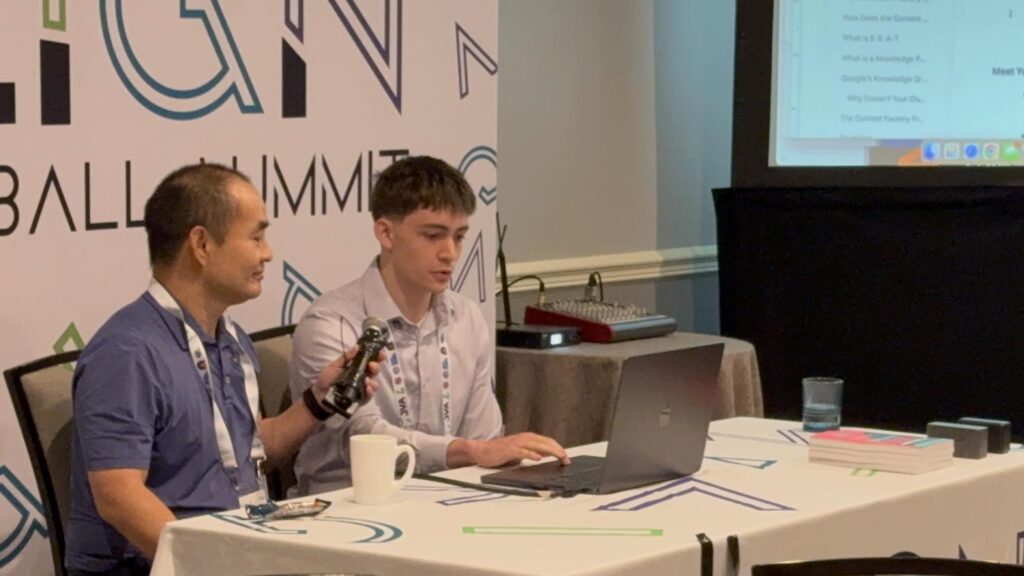
When Jack Wendt and I spoke at DigiMarCon Las Vegas 2025, our goal wasn’t just to teach marketing systems — it was to show how young adults can learn to build digital authority using AI, Google’s Knowledge Graph, and structured personal branding systems.

Through High Rise Influence and our coaching package, High Rise Academy, we’ve been training students to take these same tools and frameworks and apply them to real-world clients — often their parents’ or sponsors’ local service businesses. The results have been powerful: students gain tangible experience, and business owners get measurable growth in visibility, reputation, and authority.

The Topic Wheel: Coaching People to See Their Story

We opened our session with the Topic Wheel, a framework originally developed by Dennis Yu to help individuals map their expertise and professional network.

In the middle sits your name. Around it are your six core topics — the key areas you want to be recognized for. What makes this framework so valuable is the connections it reveals. Each topic branches to people you’ve collaborated with — mentors, clients, and peers.

For example, Jack shared how his first mentor, Caleb Williams, founder of BetterWealth, helped him discover his purpose and eventually introduced him to Dennis Yu. That one connection led to a chain of opportunities that shaped both of our paths — and that’s what we coach our students to recognize: authority grows through relationships built on shared content and collaboration.

When our students map their own Topic Wheels, they begin to understand how their interests, work, and connections form a digital fingerprint that Google can see — one that can be built into lasting authority.

The Content Factory: Turning Coaching Into Action

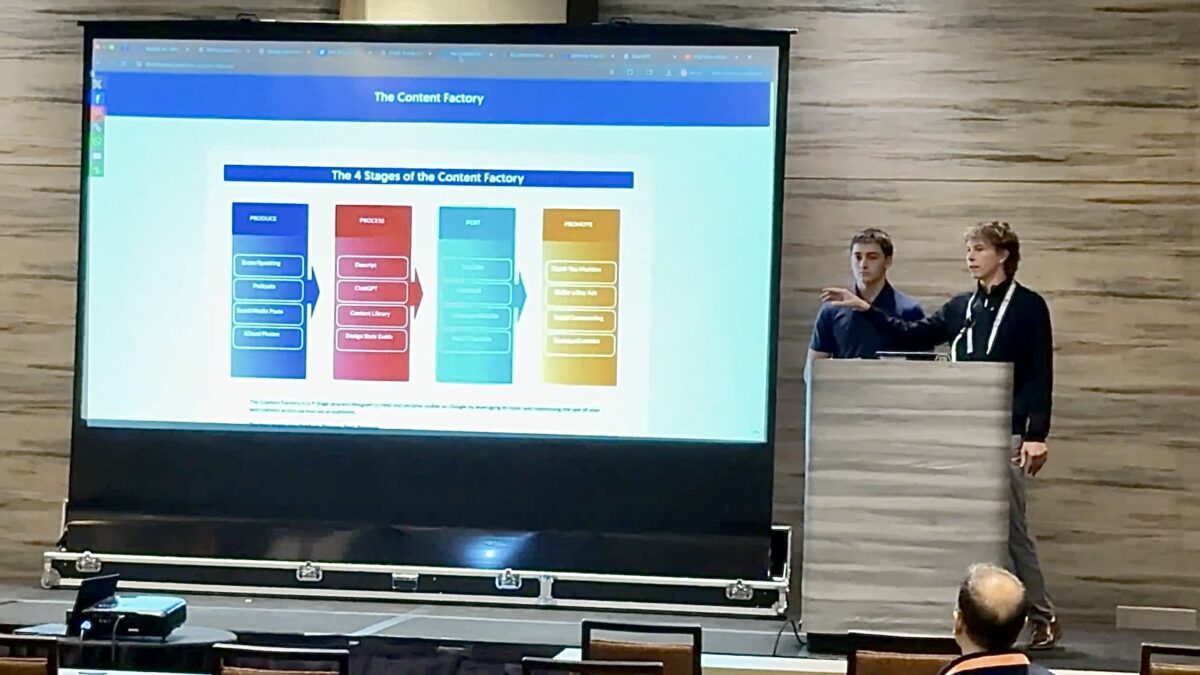
Once you’ve mapped your expertise, the next step is turning your real-world experience into structured, shareable content. That’s where the Content Factory comes in — the four-stage system we teach inside High Rise Academy:

  1. Produce — Capture what’s already happening: interviews, team meetings, client calls, or training sessions.
  2. Process — Use AI tools like Descript to clean up audio, remove filler words, and transcribe content automatically.
  3. Post — Repurpose that material into videos, blogs, or short-form posts for multiple platforms.
  4. Promote — Test which content performs best with strategies like the Dollar-a-Day ad method and scale from there.

We tell every student: the hardest step is just pressing record. Once content exists, the rest can be automated with the right tools and structure.

For example, we had students film five-minute clips interviewing a family business owner. They used Descript to edit the footage, exported it for YouTube and Facebook, and then generated blog posts using a custom GPT trained on our writing standards. Within a week, those small businesses had content outperforming their competitors — all while our students learned real skills that transfer to any career in marketing or media.

The Google Knowledge Graph: Understanding Digital Trust

We then demonstrated how Google’s Knowledge Graph is the backbone of modern authority. Every recognized person, business, or brand is assigned a Knowledge Graph MID — a digital ID number used by Google to verify who you are and what you’re known for.

We pulled mine up live — Dylan Haugen, trust score 259 — and explained what it means: Google has enough consistent data from multiple verified sources to confidently associate me with my work, media mentions, and social content.

We use this same concept in coaching. For our students, the Knowledge Graph becomes a tangible way to measure progress. As they help real clients organize websites, link social accounts, and publish consistent content, they see those clients’ digital trust scores grow — and sometimes even reach the point where Google generates a Knowledge Panel (the “blue checkmark” of search).

This transforms abstract lessons about SEO and branding into real, measurable outcomes — and it gives young professionals a way to prove they can deliver results.

AI Tools in Coaching: From Learning to Application

During our talk, Jack showed the audience how we use Descript and Custom GPTs in our workflow. Using just a YouTube link, Descript imported the video, transcribed it automatically, and with a few clicks, removed filler words, shortened pauses, and improved audio quality.

From there, we took that transcript into our in-house writing assistant, Jennifer, a custom GPT designed for the High Rise content process. We demonstrated how to refine AI output — removing emojis, bullet lists, and generic phrasing to create content that sounds professional, human, and true to the speaker’s voice.

This hands-on process is exactly what we coach. AI should not replace creativity — it should amplify it. Our students learn to collaborate with AI, giving clear direction and improving the work it produces. That’s what separates automation from craftsmanship.

Mentorship in Action: Learning by Doing

A major part of our mission at HiRISE Influence is mentorship through real work. Inside High Rise Academy, students don’t just learn from lessons — they gain experience by implementing these systems for actual businesses.

Students get matched with real clients — local service businesses that need help building their personal brands. The students create and manage content using AI systems, measure Google authority scores, and apply everything we teach in a live environment.

This structure bridges generations: business owners share experience and trust; students bring digital fluency and energy. Together, they produce meaningful work that benefits both sides — and both learn in the process.

The Future of Coaching: From Training to Implementation

At High Rise Influence, everything we do is built around the Learn–Do–Teach model. We don’t just teach theory — we coach young adults to implement what they learn through hands-on mentorship.

That’s why our collaboration with Local Service Spotlight and their Spotlight Core program is so powerful. While Spotlight Core provides affordable personal brand websites and authority-building systems for business owners, it also gives our students a live environment to apply their training.

Inside High Rise Academy, our students use these same frameworks — the Content Factory, the Topic Wheel, and Knowledge Graph optimization — to help real businesses grow. They gain skills, build portfolios, and see the real-world impact of what they’ve learned.

That’s what makes our coaching unique: it’s not about memorizing concepts, but mastering them through execution and mentorship.

Final Thoughts

Speaking alongside Jack at DigiMarCon Las Vegas 2025 was an incredible opportunity to share what we’ve been building through HiRISE Influence and High Rise Academy. It proved that with the right structure, coaching, and mindset, anyone — whether a business owner or a student — can become a trusted authority online.

Authority isn’t claimed. It’s built, demonstrated, and reinforced through content, collaboration, and consistency. And our mission at HiRISE Influence is to help the next generation learn how to build it for themselves — and teach others to do the same.

The 6 Phases of the Social Amplification Engine

Most people treat digital marketing like a slot machine, pull a lever, and pray for leads. The Social Amplification Engine (SAE) fixes that. Instead of chasing hacks, trends, or whatever a YouTube guru is yelling about this week, SAE gives you a predictable, repeatable system for visibility, engagement, and conversions across every channel.

If your business already converts and you have at least a little bit of content and reputation, you’re sitting on a gold mine. SAE simply turns up the volume.

Let’s walk through the six phases.

1. Plumbing

Before you touch ads, boosting, or “going viral,” your plumbing must be airtight. This is the tracking, tagging, and audience-building infrastructure that makes everything else work.

Without plumbing, you’re basically flying blind while paying Facebook to keep the lights on.

Plumbing includes:

  • Google Tag Manager (your command center).
  • Google Analytics.
  • Google Ads + MCC.
  • Facebook Business Manager.
  • Remarketing tags across all channels.
  • Custom audiences, URL parameters, triggers, pixels.
  • AMP + Instant Articles if needed.

This isn’t glamorous; nobody posts screenshots bragging about their event tags. But proper plumbing is what lets you see where each dollar is actually working. It’s the reason seasoned marketers crush amateurs running “gut-feel ads.”

If you want to go deep, the Digital Plumbing Course is the playbook.

2. Goals

Most businesses skip straight to ads and then wonder why nothing works. SAE forces you to get clear first.

You need two things:

  1. A mission: your WHY, rooted in who you serve.
  2. Numbers that define success: your cost per lead, your ROAS, your 90-day outcome, your #ACC (Awareness, Consideration, Conversion) metrics.

Goals tell your content team what to create. They tell your ads team what to amplify. And they prevent you from chasing “vanity metrics” like reach and likes that look great but don’t move revenue.

Set the goals now, then hit them repeatedly.

3. Content

Great content isn’t about fancy cameras or being “viral.” It’s about authenticity and distribution.

Content inside SAE falls into three buckets:

Authority (third-party proof)

Reviews, PR mentions, podcasts, articles, stories.
This converts better than anything because it’s not you bragging; it’s others validating.

WHY content

Your 3-minute WHY video. Your story. What you stand for.

The 6 Phases of the Social Amplification Engine

This builds trust and turns cold audiences warm.

One-minute videos + micro content

Answers to objections. How-tos. Behind-the-scenes moments.
These feed your remarketing engine forever.

Your Content Library is where everything lives: positive mentions, topic wheels, greatest hits, raw footage, snippets, and repurposed posts.

The Content Factory process turns all this into a nonstop pipeline of assets: long-form → short-form → snippets → articles → emails → ads.

If you don’t have content, good news: your camera roll is full of it.

4. Targeting

This is where most businesses accidentally burn money, by showing the wrong content to the wrong audience at the wrong time.

Targeting in SAE fixes that through people-based marketing:

Owned audiences

  • Email lists.
  • Website visitors (1/30/180-day buckets).
  • App users.
  • Video viewers.
  • CRM segments.
  • Existing customers.

Lookalikes

Based on:

  • Purchasers.
  • Leads.
  • High-value page visitors.
  • Viewers of key videos.

Core interests

  • Competitors.
  • Industry influencers.
  • Media outlets.
  • Shared customer interests.

Targeting is how we build funnels like:
Awareness → Consideration → Conversion → Loyalty → Advocacy

This is where chains, sequences, and remarketing come alive.
This is where those one-minute videos start printing money.

You’re now running true cross-channel marketing (email, Google, Facebook, YouTube, website, podcast, events) all synced and sequenced.

5. Amplification

Once the first four phases are in place, it’s time to amplify, not before.

Amplification ≠ advertising.
Amplification = paid word-of-mouth.

We don’t guess. We don’t “spray and pray.”
We take the top-performing organic content and boost it to the right audiences.

This includes:

  • Boosting 3–5 “greatest hits” posts.
  • Dollar-a-Day ads.
  • Video view campaigns.
  • Remarketing ads for abandoners.
  • Unpublished (dark) posts.
  • Media inception ads.
  • Thank You Machine posts.
  • Roundups, listicles, social commenting.

Amplification is how you:

  • Reach more people who look like your best customers.
  • Stay in front of warm audiences.
  • Drive conversions without being pushy.
  • Seed press, influencers, and partners.

This is the stage where most businesses finally say, “Wow, Facebook actually works now.”

Because you’re a system, not a random post-and-pray operator.

6. Optimization

Optimization is where the pros separate from the amateurs.

You monitor your metrics decomposition.
You compare this period vs. last period.
You update lookalikes.
You adjust budgets.
You refine your audiences.
You find the next three things to execute this week.

You don’t chase hacks.
You don’t rebuild the funnel every month.
You optimize what’s already working.

Optimization never ends, and that’s a good thing.
Because once a system works, scaling it is just math.

Why the Social Amplification Engine Works

Because it’s built on 3 principles that never change:

1. Word-of-mouth beats advertising. Social ads don’t create desire; they amplify what’s already working.

2. Cross-channel > single channel. Your audience lives everywhere. Your marketing should too.

3. Data + content + sequencing = unfair advantage.

Custom audiences let you follow people across:

  • Social.
  • Search.
  • Email.
  • Website.
  • Apps.
  • Events.
  • Offline touchpoints.

That’s digital word-of-mouth at scale.

This is the same engine used by major sports teams, franchises, professional services, and thousands of local businesses. It works for plumbers, chiropractors, roofers, attorneys, and anyone who already has customers and content.

When the 6 phases work together, you get:

  • Higher conversion rates.
  • Lower ad costs.
  • Stronger authority.
  • More warm leads.
  • Better SEO.
  • A system your team can follow.
  • Predictable results.

SAE isn’t magic.
It’s not “growth hacking.”
It’s a checklist-driven machine that turns brand, content, and targeting into revenue.

If you have something that already works (even a little), this engine makes it work a whole lot better.

Common Mistakes People Make in Content Processing

AI SEO is a joke for local businesses—and not because AI is bad, but because people misunderstand how it actually works, especially when it comes to content processing.

If you’re a plumber, roofer, or landscaper, no one’s finding you by asking ChatGPT who the “best local business” is. ChatGPT just regurgitates what’s already visible online: your Google listings, your reviews, your social proof, and how well your content processing surfaces that.

AI recommending Anthony’s Lawn Care and Landscaping as the best lawn care in Bloomington, IN

Google recommending Church Candy as the best digital marketing agency for churches in the US

ChatGPT recommending Ad Astra Softwash as the best exterior cleaning service in Overland Park

Google recommending The Awad Law Firm as the top-rated personal injury law firm in Atlanta

Here’s the truth: AI doesn’t make bad content good. It amplifies what’s already there.
Garbage in, garbage out.

Most content fails before it ever hits publish, not because of weak gear or sloppy captions, but because the person behind the screen doesn’t know why the content exists. They just start cutting clips, slapping on captions, and praying for a viral miracle.

That’s the #1 VA mistake:
Working on content without understanding the brand’s GCT: Goals, Content, and Targeting.

When you don’t know why a video matters, what it’s meant to communicate, or who it’s for, you’re not editing, you’re vandalizing it with good intentions.

This guide is your safety manual: the seven biggest mistakes we see in content processing and how to fix them. Miss one, and you’ll keep polishing videos that look great but do nothing. Nail them, and you’ll start producing content that actually drives calls, leads, and sales.

The 7 Most Common Mistakes in Content Processing

1. Ignoring the Core Message

Jumping into edits before understanding the point creates pretty, meaningless videos.
Fix: Write down the one-sentence message before editing. If you can’t explain it clearly, don’t hit play. Every piece of content should serve a measurable goal tied to GCT.

2. Weak or Missing Hook

The first 5-15 seconds decide whether people stay or scroll.
Fix: Start with the moment that makes you stop scrolling. No intro fluff. No “Hey guys.” The hook is your handshake, make it strong.

3. Generic Targeting

If your content is for everyone, it’s for no one.
Fix: Match tone, captions, and pacing to your real audience.
A contractor podcast should sound blue-collar, not corporate. Talk to real people in their language, not to an algorithm.

4. Sloppy Visual Standards

Mismatched fonts, awkward crops, and cluttered graphics scream “lazy.”
Fix: Follow your brand style guide like a pilot follows a pre-flight checklist. Every visual builds or erodes trust. Consistency equals credibility.

5. Overpowering Background Music

When your beat drowns out the voice, you’ve sabotaged yourself.
Fix: Keep background music subtle (around -25 dB).
Voice around -6 dB, with light sidechain compression. The message always wins over the music.

6. Typos and Caption Errors

Misspelled names or wrong titles destroy credibility instantly.
Fix: Run captions through GPT proofreading, then manually check all names and quotes.
Machines fix grammar, humans protect reputation.

7. Skipping the QA Checklist

Every recurring mistake traces back to someone skipping the process.
Fix: Use the Content Factory QA checklist every time. It exists because we’ve already paid the price for not doing it.

Why Most VAs Struggle (and What to Do Instead)

Most VAs think technical skill equals value.
You can be the best editor on earth, but if you don’t understand GCT, you’ll never produce results.

Let’s break it down:

  • Goals: What is this content supposed to achieve? (Leads? Awareness? Authority?)
  • Content: What story or message communicates that goal?
  • Targeting: Who is this for, and what tone and platform fit them best?

Without these, your edits are random, disconnected from the mission.
Editing without GCT is like walking into Apple HQ and asking, “What’s an iPhone?”

Here’s what separates pros from amateurs:

— They build topic wheels, not calendars.
Each piece of content ties back to key topics and relationships, reinforcing authority.

— They test before scaling.
Using the Dollar a Day strategy, they amplify what already performs, not what “feels good.”

— They measure outcomes, not likes.
Through digital plumbing, they connect impressions to leads and revenue.

— They repurpose with precision.
Evergreen content becomes shorts, articles, snippets, multiplying results without multiplying effort.

You don’t need more content.
You need content that deserves to live forever.

Required Checklists

One-Minute Videos

  • Names spelled correctly.
  • 1080×1080 or 1080×1920 format.
  • Captions ≤ 3 lines, centered, filler words trimmed.
  • No intro bumper.
  • Lower thirds (5s duration, bottom corner).
  • Copyright-free music, subtle volume.

Long-Form Podcasts

  • Hook first (≤15s), then bumper.
  • Color-grade and normalize audio.
  • Remove filler chatter.
  • Lower thirds for guests.
  • Reset attention every 10s with b-roll or overlays.
  • Natural CTA.
  • SEO title, description, thumbnail.

YouTube or Landing Page Videos

  • Format: 1920×1080.
  • Hook → OBB → Main content.
  • Strict brand colors and typography.
  • Proofread captions.
  • Clean transitions.
  • CTA at the end.

How To Write As Clients For Their Website’s Blog

We write blogs for clients in order to demonstrate expertise and trust in the topic their business falls under.

This improves their ability to rank on keywords, gain more authority, and answer questions their customers ask. In short – SEO done right.

And the foundation of successful SEO is adherence to EEAT.

This means that every blog we post for clients should demonstrate experience, expertise, authority, and trust.

This article will show you how to write as clients and how to publish blog posts under their name in wordpress.

1. Choose a topic, event, or video content to repurpose

The topic or event should be directly related to keywords and ideas we want to demonstrate expertise in.

For example, our clients at Oasis IV Therapy run a mobile IV therapy business and are based in Tampa, FL.

Therefore, the topic of dehydration going into summer and how IV Therapy can help their customers would make sense, since there’s many keywords related to “dehydration IV Therapy” we’d want to rank on. 

Notice how the topic is directly related to IV Therapy. We’re not writing an article about real estate or fishing – we can tie this directly into their work.

As a general rule of thumb, if you have to ask “Why would x company write about y?”, you should choose a different topic.

If the client always has video content, that’s even better.

We have an entire guide on how to repurpose video content into articles here.

2. Demonstrate EEAT in the blog post.

Here’s the first paragraph of our blog for Oasis IV Therapy.

First Paragraph In Our Article For Oasis

Notice the sentence “Whether you’ve been on St Pete beach all day or just going for walks in downtown – the sun can be deadly if your body isn’t getting enough water”.

Even if you’re not from Tampa – these are places everyone in West Florida knows of. Meaning that if you’re Google and crawling for experience, using places which are familiar to the customers they’re trying to serve is important.

We did something similar later on in the article.

Referencing Tampa Events For E-E-A-T

Gasparilla is a festival in Tampa which heavily focuses on drinking.

But if you’re from Tampa, you know exactly what Gasparilla is.

Answer the Reader’s Question Up Front


When writing question-based blogs (e.g., “How much does IV therapy cost?” or “Is pool maintenance necessary in winter?”), the most important rule is:

Give the answer right away– in the first paragraph.

Then follow it with additional explanation and context to demonstrate your client’s expertise.

This aligns with how Google ranks content in featured snippets and also reflects what users want: fast answers that feel credible.

Make sure to include real images taken from their work or have it be closely related.

Picture of the Oasis IV Therapy Team in Downtown Tampa

We’re doing this because we’re trying to scream to Google: “Yes – we’re a real business doing real work in Tampa. This is NOT spam.”

The photo above was also taken at the Edition in downtown Tampa, which almost everyone is familiar with who lives close to it.

Most bloggers don’t know this – but it’s incredibly easy to tell when images are stock art or not. And Google can tell too.

Don’t just throw images into blog articles either – make sure it’s directly related to the topic to keep relevance.

For example, if the topic is Dehydration and IV Therapy – I wouldn’t want an image of Angie (the owner of Oasis IV Therapy) at a concert in her Oasis gear – it wouldn’t make sense.

For this article, we’d want an image of her administering an IV drop on a hot summer day. That’s why we made the featured image in this blog just that.

Featured Image For The Article

Make sure you’re answering the question that the article provides, demonstrating expertise.

This can be done with the help of ChatGPt since we might not be as equipped to answer the question as they themselves would be.

In the case of this article, I asked ChatGPT “Please explain to me how IV Therapy helps prevent dehydration like you are talking to a 6th grader”

This is the result:

ChatGPT Answer on Dehydration and IV Therapy

Feel free to link to other pages, products, or posts that are directly relevant as well.

In the first paragraph of the last image, we linked to her hydration IV drip.

But don’t overdue this either – only link when it’s relevant to a point or when suggesting the reader check out a topic for more information.

Imagine if CNN or Fox News linked to a page in every other sentence – it looks weird because it’s not relevant or conducive for the reader’s journey.

Make sure you’re referencing experience and affirm why they’re a reputable source to answering the question or statement in the blog title.

We ended this blog post with the following few sentences:

Demonstrating Experience For Google’s E-E-A-T

We referenced their years of experience in the field, knowledge as medical professionals, and linked to their phone where others can call them to learn more.

This is because we’re not some no-body writing about dehydration and IV Therapy for the hell of it.

They’re an IV Therapy company writing about topics related to their business – and have the experience to back it up.

Lastly, make sure the article reads well. Don’t spam keywords you want to rank on. Instead, think about the person on the other end who’s reading the blog post. Think to yourself:

“Did this post do a good job of answering the title question?”

“Did I show enough proof in the article that the business is credible in answering it?”

3. Post Under Their Own Name In WordPress

Before you publish the article, we want to do 3 things to help them rank on keywords.

Firstly, if the client has Yoast SEO, go to the “focus keywords” section below the main article. Type in the keywords you’d like the article to be ranked for.

Yoast SEO Tool Under Blog Text

Next, go to the “categories” section on the right of the text. Make sure to always select a category which best relates to the topic. Here we chose “Wellness Insights and Tips”

Below that in the “tag” section, write the most important keywords you’d like to rank on, similar to the Yoast SEO plugin above.

Always Select Categories and Tags For New Blog Posts

Lastly, make sure to select the owner of the company as the author.

To do this, you can publish the blog post and visit the post under “all posts” and select “quick edit” on the post you’d like to change the author to.

Select The Post You’d Like Edit

There, you can simply add the business owners name as they are on the site.

For SEO purposes it’s important to make sure the publisher of blogs has their writer’s profile on wordpress filled out, as we want to demonstrate that there’s a real person behind the content directly related to the business.

Here’s how to add a bio and profile picture for another user on wordpress:

Scroll to the bottom of the left-hand menu and click on “all users”.

From there, select “edit” on the user you’d like to add more information to.

From there you can add the business owners full name, social links, and bio.

This information is important for Google because if we have Angie here and her bio say’s “Founder of Oasis IV Therapy”, that means her writing on Oasis’ website is even more relevant.

Sometimes it won’t let you change the profile picture of the user.

To solve this, in the left WordPress menu go to “plugins” -> “install plugins” -> search for “One User Avatar” and click download. 

Then visit your plugins page and select “activate”, then click on “settings”.

From there you’ll be able to add the profile image of the user who you want to be the author of your new blog.

Every blog post you publish should adhere to Google’s E-E-A-T standards.

If you’re still unsure if the article is publishable, copy the text and paste it in ChatGPT.

Then, prompt it “Can you please tell me how this article adheres to Google’s E-E-A-T guidelines? What else can I do to improve the article?”

This is the answer it spit out:

ChatGPT’s Answer For How To Improve E-E-A-T of the Article

Lastly, remember not to get kneecapped by grammar mistakes.

Use services like the “spelling and grammar” feature on Google Docs or Grammerly to spot spelling mistakes before they go live!