How George Paladichuk Built a 100+ Client AI Agency at 22 While Still in College

George Paladichuk isn’t your typical college student. At 22, he’s scaled Nail AI to over 100 clients while still attending classes. His approach has everything to do with relationships and showing up prepared.

Are you a young adult trying to grow your SaaS or agency? If you’ve ever thought “I could never have a podcast,” “I don’t have the connections,” or “I don’t have wealthy parents funding everything,” this conversation is for you.

The power of showing up in person

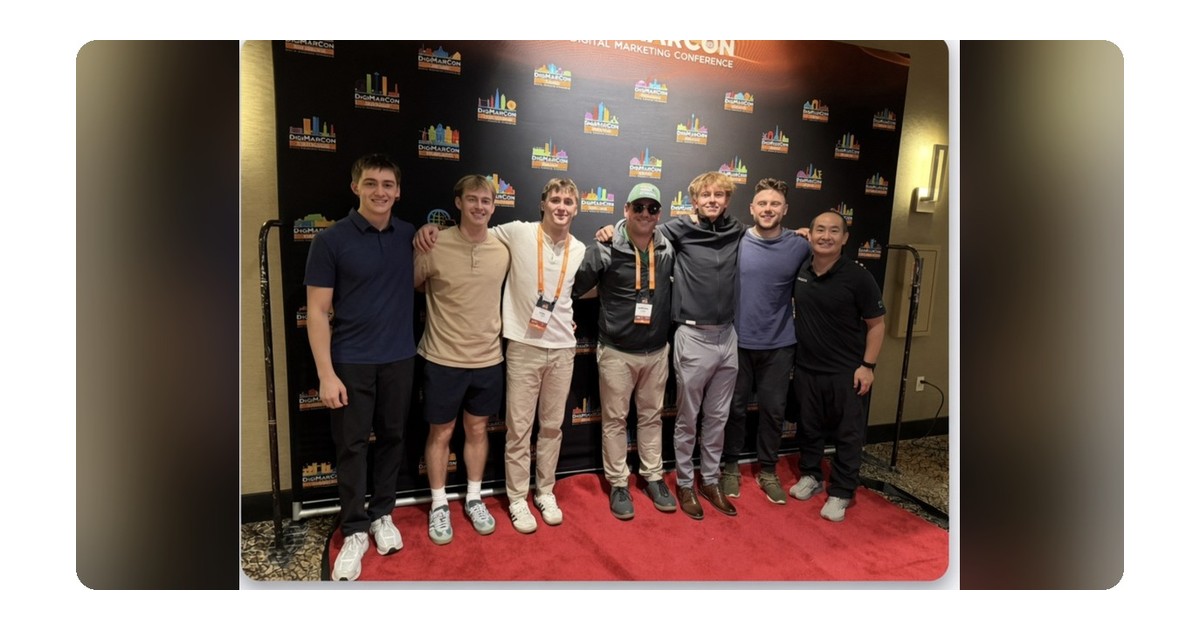
George and I recently flew to Atlanta to meet with Brad Strawbridge of Capital City Roofing.

Capital City Roofing

We could have done a Zoom call and saved the hassle of flying and hotels. But something special happens when you show up in person.

There’s a different kind of connection that gets formed when you show up to that person’s office. You can meet their wife, the co-founder, their ops manager, sit in on their level 10 sales meeting, and see how they actually run their day to day. The depth of connection you get when you’re in the business rather than looking through a screen is incomparable.

The excuse most people make

Most people think they don’t have the guts to reach out to someone running a $10 million roofing business, a mortgage business, a software company, and a nonprofit while running for political office. They assume they’d get rejected. That even if the person said yes, they’d be too nervous and act like a fool. That the executive would realize they’re a nobody with three YouTube subscribers and laugh at them.

The exact opposite happened with Brad. He was extremely inviting and hospitable, spending the entire day with us. He welcomed us with open arms to train his team, sit in on meetings, and go to lunch together.

How George gets influential people to say yes

When George started his first agency, he reached out to prominent business owners for his podcast. His first few episodes included a business coach doing over $10 million a year, when George’s agency was making negative money. Another early guest was the co-founder of the biggest seamless gutter franchise in the country who sold to PE and did $100 million a year.

George at Gutterwise Marketing

All of them said yes.

When I told George to start podcasting again with his new show Nail It, George reached out to his top 10 people. Eight responded. All eight said yes.

These weren’t small names. This was Dan Antonelli, the biggest name in home service branding. Lance Bachman. Randy Brothers. The who’s who of the roofing and home service industry.

George with Randy Brothers

What magical words did George use? Nothing special.

He simply said hi, my name is George. I have this podcast. It’s a new show. I know you have a big audience and you’ve done these cool things. I did a little research and I love how you do this specific thing. Would you like to come talk about it on my show?

That’s it.

The more people you have on your show, the more people want to come on your show. Then people like Brad reach out and say let’s do something together. And you end up in Atlanta hanging out with awesome business owners of the same mindset.

MEATINGS in Atlanta!

People don’t judge you based on your age or follower count. They judge you based on how you show up.

Preparation relieves anxiety

George’s biggest tip is preparation. You relieve your anxiety through over-preparing. Anxiety comes from the fear of the unknown. How do you alleviate that? Prepare for everything.

Before any podcast George researches heavily who he’s talking to. Who am I sitting next to? What are they all about?

Think through scenarios. What could happen? What would you do? Bring your own equipment in case they don’t have the setup. Condense your questions in case they have less time. Find one thing you genuinely love about their work.

George did a ton of research on Dan Antonelli before their episode, figuring out where he came from, what his original sign business was back in the early 2000s when he first started. He brought all of that up in the intro.

George with Dan Antonelli

When guests see that you’ve done your homework, a mindset shift happens. They see you’re serious, you’re prepared, and when they see that, they give more.

Practice makes podcasting easier

The only way you get better at something is by doing.

Practice in the mirror. Record yourself pretending you have a guest. Ask a friend or spouse to be a pretend guest. Record it on your iPhone. You don’t have to publish it.

George’s favorite practice method is mock interviews with ChatGPT using the voice model. He tells it to do all the research it can on the person, then assume their role. He presents podcast questions and ChatGPT answers as that person. He asks it to be harder on him, try to trip him up, give critiques along the way.

This works for sales calls, job interviews, negotiations, anything where you need to prepare for a conversation.

The vibe matters more than the words

George and I had a meal with Brad before the podcast. Being able to break the ice and have the initial awkward conversation before you get on camera is a game changer. It opens up the relationship and makes both people a lot more comfortable.

We got to learn about what Brad did in his day to day, what he was up to, what he was planning for the future. We learned everything about what he had going on before even hopping on the podcast.

By the time we got on camera, George already felt like Brad was a buddy. That’s what made the conversation flow seamlessly.

George contrasted this with a podcast he did with Chris Lee where they didn’t have time to chat beforehand due to scheduling. “I could tell there was a different dynamic in the podcast because of that. The episode was still good and Chris was a great guest, but the circumstance of the day led to a less open and friendly feel.”

The vibe is more important than the actual questions and words being said. The vibe dictates the questions and what’s actually being said.

If you’ve never met someone before and you jump straight into “So Dennis, what do you do?” both people put up a wall. The responses and the way you ask questions becomes extremely rigid and structured. The way they answer becomes very artificial and prepared because they don’t have the comfort to relax and feel like they’re just talking to a friend.

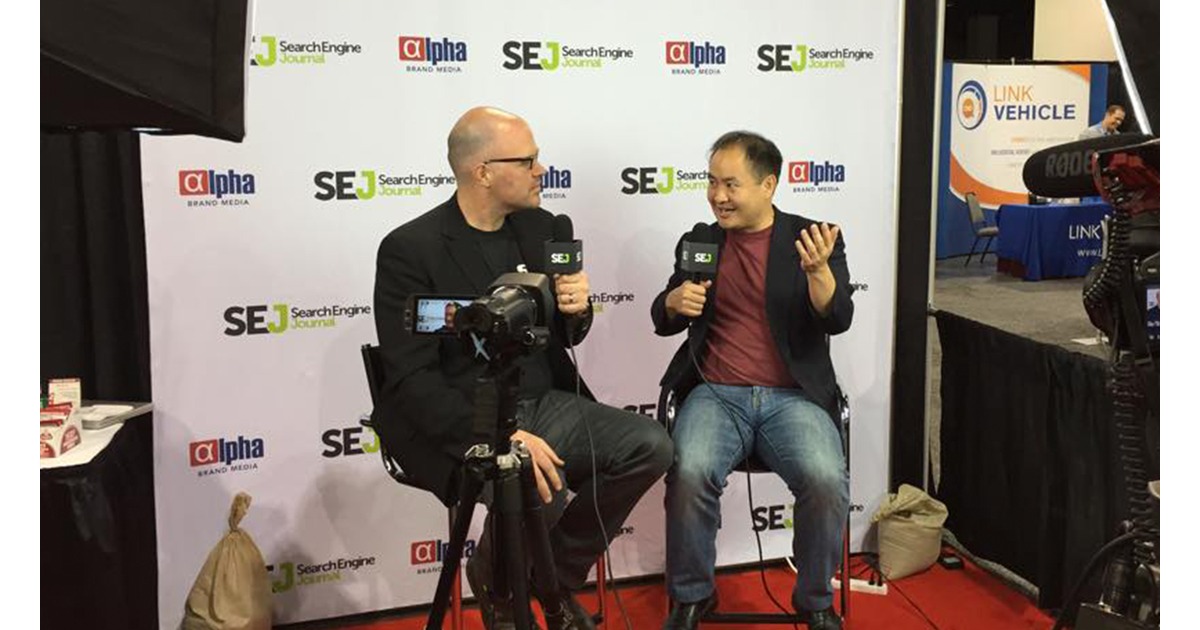
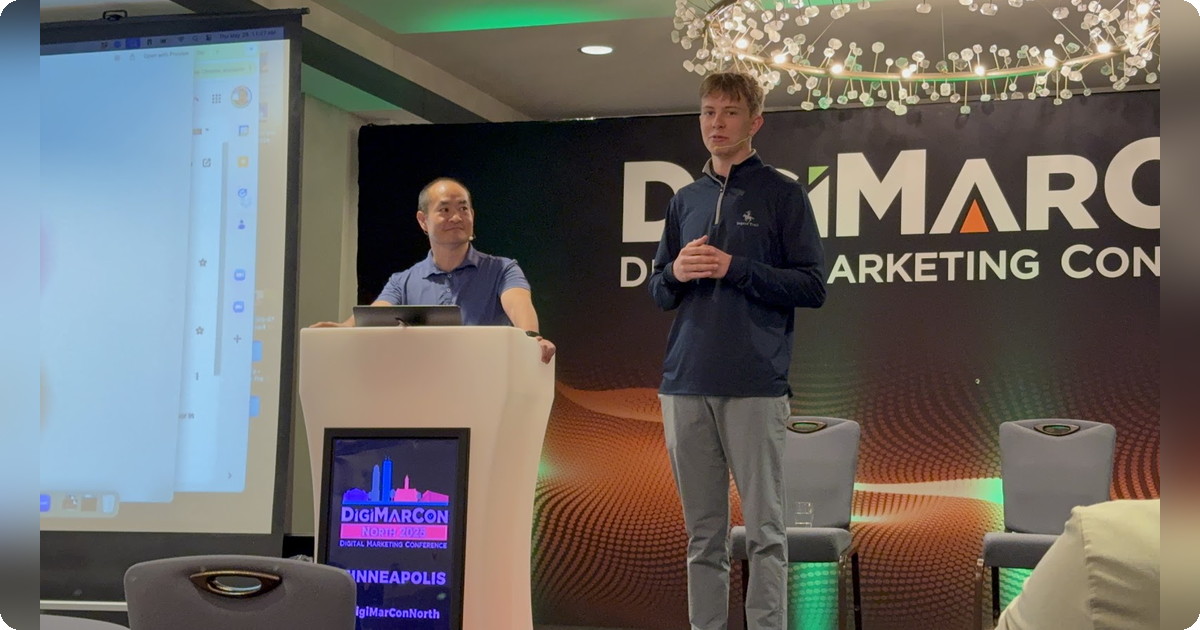
Even at conferences you can create this dynamic in two or three minutes. You start a conversation at a booth, build rapport quickly, then say “This conversation is so good, can we film a quick five-minute podcast?” You’re just continuing the conversation you already started.

Other people get interested because they see someone with microphones and wonder what’s happening. They listen in. You finish and someone else has a question. It multiplies.

The opening that changes everything

My biggest pet peeve from coaching young adults who start podcasts is when they begin with “So, tell the audience who you are.”

In the very first sentence of the podcast, you need to say who this is for and why this is valuable. Then tie that into why this person can answer that question. Then, to show respect and honor, you share four or five quick stats about that person.

When you do that they realize you’ve done your research. You’ve set the framework for how it’s going to go. You’ve seeded where this is going. The guest is already ready for your first question.

I opened the conversation with George by saying “You’re a young adult. You have an agency or a SaaS that you’re trying to grow. This is the power of podcasting and building relationships, especially in person.”

I’d already set the tone. Now when I asked the first question, George was already ready for that because he could assume what’s coming next. I was very specific about who I was talking to. I said agencies and SaaS companies, using the acronym because the audience already knows what SaaS is.

You can see the shift in guests when that happens. Brad said afterward “That was the best intro I’ve ever gotten. I’m gonna clip that and use that for the rest of my videos.”

Those are the types of reactions you get when you come with a structured, prepared opening. I stood there for 30 seconds to two minutes before the podcast to think about what I was gonna say and who this is for. It sets the tone.

Positive mentions are better than testimonials

When you’re with good people and you say something genuinely complimentary, if they’re a good person, they will reciprocate. They’ll say something good about you.

If you’re listening carefully, you’ll pick up on those positive mentions. Gather them and sprinkle them across your marketing. Put them in your intros, in your speeches, in all your content.

Then magnify it further. When someone says something complimentary, ask “Can I quote you on that?”

They always say yes. And they usually go even further with the compliment. I’ve done this several thousand times.

A positive mention captured naturally is more powerful than a testimonial. A testimonial is a forced confession where you hop on a Zoom call and ask someone to say how good your products and services are. It comes off as fake.

George got his first testimonial ever and it was so bad and awkward he never published it. The client put his hat on and sat there. George asked “Can you tell us what we’ve actually done for you?” The response was flat. “You guys built me some stuff. We use some agents. It’s been good.”

How believable is that? The vibe is more important in communication. That’s what a podcast brings out. And that’s why when possible, you want to meet people in person. The vibe is just 10 times stronger.

Using one positive mention everywhere

All you need is one person who says something good about you. You clip that, turn it into a Facebook post, a YouTube short, a Twitter post, a LinkedIn post. You can boost that dollar a day on every single channel.

In George’s case, he can boost it to other people who are members of the National Roofing Contractors Association, people who use roofing software, people who have been on his podcast before, people who have watched an episode before, or people who have been to his website using a retargeting pixel.

You use the podcast as a vehicle to collect high influence, high credibility moments. Then you use AI to process it, to distill it, to concentrate the power of that. And you use that to drive more sales for your agency and your software product.

The face socks strategy

I have a philosophy and company that prints out Nike Elite quality face socks with people’s faces on them. Usually you want it to be the person’s face.

When George attended the Ignite 26 Conference for Empowered Brands, he took this concept and executed it perfectly.

He found the list of all the executives of this big brand company that owns different home service franchises. He printed out a pair of socks for each executive plus every brand president for every single brand of the franchise.

Then he went further. He spent 30 minutes on each person researching about them, listening to their podcast, looking at their social media, reading their articles. He found one thing he liked about their work.

You don’t have to know everything about them. Just find one thing.

Sometimes it would take George five minutes because he found the person likable. Sometimes it would take 30 minutes because he didn’t know anything about what they were talking about and had to find something relevant.

Then he wrote a handwritten note. “Dennis, I love how you run High Rise Influence and have such an emphasis on building up the next generation instead of just living your luxurious life and going to parties. I love how you build up people around you and have this unsatiable thirst of giving back.”

Put that in a note. Throw a pair of face socks in there and that person will never forget your name.

George handed them to Scott Zeid, the CEO of Empowered Brands, a billion-dollar corporation. Now Scott has a pair of socks with his face on it and a note from George Paladichuk and the Nail team. He will never forget that.

Real examples of this working

Dan Leibrandt and Marko S. Sipilä are my two favorite examples of this playbook working.

With Dan Leibrandt (Founder of Pest Control SEO)

Dan’s first episode was rough. He eventually asked me to delete it because once he had all these big names on the show, that first one didn’t make him look good.

I did a throwaway podcast with Dan just to get him started. We’d already been talking for 45 minutes on Zoom, so I said why don’t we just do a 15-minute podcast and I’ll interview you on what you already told me.

Dan turned himself into one of the most prevalent faces in pest control. He’s written a bestselling book, grown a $30 million agency, has major partnerships.

You go to Pest World, their big industry conference, and he’s a celebrity. People come up to him and want to take pictures.

Would you have known three years ago he was a nobody? He started the same way George did.

Same thing with Marko. When George first met Marco at an HVAC conference, he thought “Marco’s gotta be somebody because he’s here with Joe Crisara, with Dennis, with Lance Bachman.”

Joe Crisara and Marko S. Sipilä (founder of HVAC Quote)

That’s what happens when you build influence.

Becoming media opens even more doors

Media is often hard to get because you have to establish the first credential. But once you’re established, it compounds.

I’ve been going to CES as media for many years. Because I’m media at CES, I can go as media at other conferences.

A couple months ago at CES, I interviewed the CMO of Samsung. Samsung has produced 200 million TVs, more TVs than anyone on the planet. I met folks from Hyundai, from Lego, from Bosch. I interviewed C-level executives at billion-dollar companies. I’m just a guy with an iPhone and a tripod.

Panasonic tagging me on Instagram

When I ask interesting questions to demonstrate I understand their business, then say “I would love to feature this on my YouTube because we serve a lot of contractors,” something interesting happens.

They’ll say “Yeah, I could answer, but let me go get our CEO.”

They bring the CEO over. I say “I was just talking with your associate about how you’ve launched AI and how cool that is. I’d love to talk to you about that.”

Then I ask “Can you hold the phone?” So the person who just said they needed to get the CEO becomes the camera operator.

You tell them it’s five minutes and they’ll always say yes. But then they might say “I can go for 10 minutes” and now you’ve doubled the window.

I take that video and post it to Facebook and YouTube, targeting people that work at that company. The employees forward it to the CEO. It gets to the PR people and comes back to me with thanks or minor corrections. I’m totally gracious about edits.

They don’t judge you just because you have an iPhone. People care about how you show up.

The call that changed everything

George saw a Facebook post from me about six or seven months ago. The post said “We have this AI Apprentice program where we teach young adults how to use AI in their businesses or how to use AI in other people’s businesses.”

George thought “I’m a young adult that uses AI for other people’s businesses. This is interesting to me.”

He just wanted to see what it was all about. So he messaged me.

George was prepared to be sold to. He expected the typical sales process with questions, answers, “I think you’d be a great fit,” here’s the cost, where would you like to move from here.

I had this energy saying “I really don’t need to be on this call right now, and I don’t need you in my program.” Genuine. “I’m not here to convince you to join this thing. I don’t need your money. This program provides a lot of value to people who are in it.”

That came extremely off guard for George. Towards the end of the call, George asked “What do we do? Where do we go from here?”

I said “Here’s the cost to join and if you wanna join, great. If not, just let me know.”

George sat there for 30 seconds. He wasn’t planning on joining at all. But he felt called to join. And he did.

What George got from the program

George expected it to be like any other coaching program with a curriculum, login portal, exercises, and videos to watch.

What surprised him was when he hopped on the weekly call. I said “George, this is your first call. What’s going on in your day to day?”

George told me his problem, where he wanted to go, where he was, and what he thought was stopping him.

I told him “Yeah, that is what’s stopping you. Why aren’t you going and doing it?”

George gave excuses. I told him those excuses were stupid and he should just go do it anyway.

George thought “You know what, you’re right.” He went and did the thing. That’s how we ended up sitting together doing this podcast.

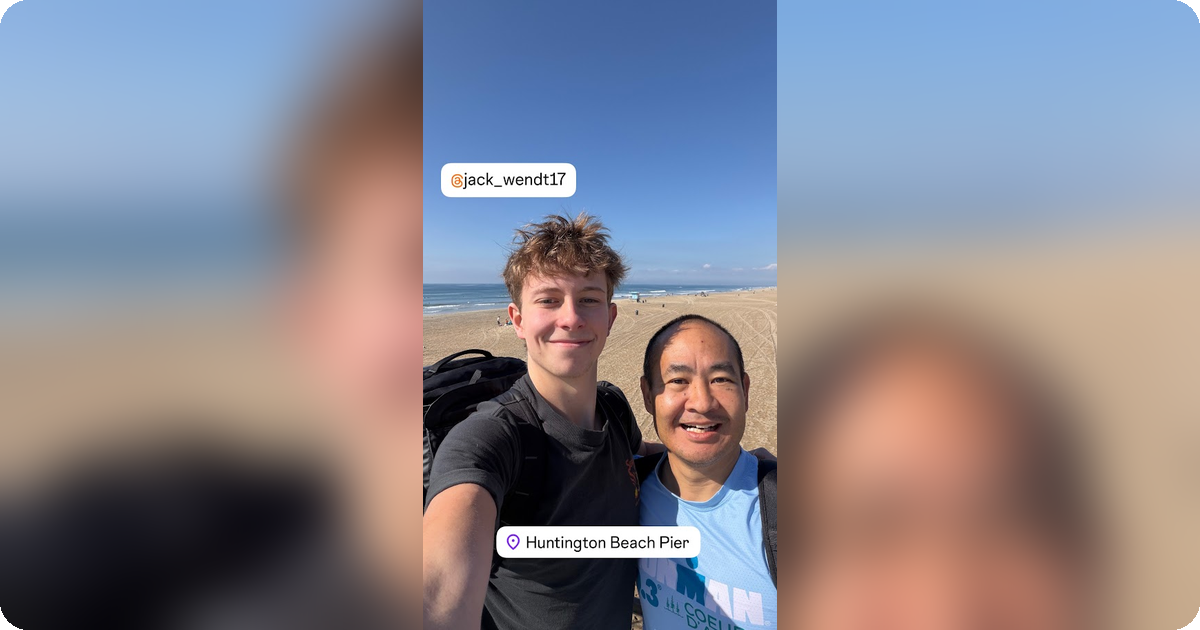
George was able to sit down with Jack Wendt and me and say here’s what I’m actually doing, here’s my problem. And I had actual real advice that came from lived experience. George was able to put that in action.

The momentum effect

The connections George has been able to make have multiplied tenfold because of momentum. All you need is one.

One person who says yes. Then you can say “Okay, they said yes, so why won’t this other person say yes?”

People see the podcast online and think they’re just sitting down doing a podcast. But they don’t see everything else happening. They don’t see the positive mentions that Brad gives you. They don’t see the repost that Brad posted of George’s story. They don’t see that Brad might be running for office in the future.

It’s a much longer game than what most people play.

Why influence matters more as AI grows

The credibility signals you’ve been generating because of your associations become even more valuable as everything becomes more AI-generated.

AI makes all these software things look the same. There are probably 50 other companies that do voice agents. If you run an agency, there are thousands of other agencies that claim they can do what you do.

Leveraging relationships and the positive mentions that other people give you is more powerful than any ad. More powerful than any cold DM. More powerful than anything.

I play an unfair game because on my team, I only want eight players who I know are gonna win. There are certain people where you just know that no matter what, they’re gonna win.

What you can tell from being around these other people is that there’s an esprit de corps. Everyone lifts each other up.

If you pay $50k to go to a mastermind, you’re there because you are with other people and you’re being held accountable with these other people. The program or the figurehead is just a catalyst. It comes from the community.

Josh Nelson talks about this all the time.

The most powerful thing that happens at all of the Seven Figure Agency conferences is the quality of people he brings to the table who are all there to learn from each other.

You need to be okay with being told no

A lot of people are too scared of being told no. Even George admits it happens to him even today. It happens to everyone.

Here’s the thing. People tell you no a whole lot less than what you think they do. And when they do, you think “Oh, that kind of sucks” and then you move on. Life continues moving.

Finding the right mentors

Entrepreneurship is like driving through the fog. You have to be willing to drive further along the road. But when you have mentors, it’s the high beam. They’ve driven this road before. They can see ahead further than you.

George has leveraged relationships with people like me, Jeff Lopez, Charles Rera, Frankie Fihn.

George with Lane A Houk and Frankie Fihn

Even Sean Drennan back in the day helped him get up off his feet.

Finding someone who believes in you, who has the expertise you need, and who has gone where you want to go is invaluable.

The more specific you can be about your visualization of that goal, the more you can find the right mentor.

George has me for enterprise clients and SaaS strategy because I’ve worked with enterprise clients and SaaS companies. George has Jeff Lopez as a mentor because Jeff is a genius when it comes to one-to-many selling and webinars.

It’s a cheat code. You just follow the playbook.

The harder you work, the luckier you get

George always knew that something was gonna happen. He didn’t know what it was gonna be, but he would do it. He has had that mindset since day one.

He doesn’t know what the next five years are gonna look like. He has goals. He wants to sell the SaaS. He doesn’t know how he’s gonna do that.

But he knows for a fact that if he keeps working hard and keeps putting forth the effort, he will get lucky enough to do what he wants to do.

George with Mike Goldenstein

Because when you’ve done the hard work, you’ve got the right pieces in the right places. You have the right people in your corner. You have friends who have already walked the path and successfully exited.

There are levels to this game. You’re meeting the people at the next level. And when you hit that level, there are other people I want to introduce you to. It just gets more and more fun the more you ladder up.

George admits “When I’m in late at night, I think about what’s after today? And it daunts me because it’s a black void.”

But it’s reassuring to have the right people in the corner. If you do things the right way and build your influence, the next door will open and it’ll be a whole lot bigger than the one you just closed.

George with Tim Brown

Broadcasting your intentions creates reality

Don’t be afraid to reach out.

On the internet, you can literally just comment and someone will see it. Even if nobody saw it, there’s still intention because you are telling people that this is your goal.

Until you say your goal, until you put that intention out there, it doesn’t organize in your mind. When you start putting it out there, it allows your subconscious mind to organize towards the thing you want.

It sounds spiritual, but this is coming from a search engine engineer. It’s true.

Otherwise you might as well just watch cooking videos for entertainment but never actually cook. We’re here to actually cook.

It’s still early for podcasting

Most people think they’re late to podcasting. It’s super early still. Everyone still says yes when you invite them.

Everyone and their mom will say they have a podcast. But who actually goes out and puts forth the effort and does it the right way?

If you actually go out there and put forth the effort, do it the right way, honor the person, do it in person, have real conversations and bring value, that’s how you stand out.

The harder you work, the luckier you get.

Why Most Coaches Are About to Get Crushed by AI (And How Some Will Thrive)

Most course sellers and coaches are about to face a reckoning, and it has everything to do with AI.

If you’re selling information, you’re in trouble. Information is now free. Anyone can ask ChatGPT, Claude, or any number of AI tools for the knowledge you’re packaging into your $200-a-month coaching program.

AI cannot provide transformation.

The shift from information to implementation

For years, coaches have been selling access to weekly calls, community forums, and video libraries. Clients don’t want to attend another Zoom call or watch another training video.

They want the result. They want to go from point A to point B with as little friction as possible.

Getting results for our clients

This is where the paradigm shifts. Stop thinking like a coach who sells time. Start thinking like an agency that sells outcomes.

What high-ticket buyers actually pay for

A $10,000 buyer is fundamentally different from a $100 buyer, and paradoxically, they’re easier to serve.

Premium clients pay for transformation. They’re investing in results, and they understand that results require more than watching videos.

They’re buying your reputation; the social proof and credibility that comes from your track record.

They’re buying direct access to you for strategic guidance at critical moments. They’re buying implementation support, the actual doing of the work. They’re buying exclusive fellowship, being part of a vetted group of serious operators.

AI cannot replicate these things. You can’t automate relationships. You can’t AI-generate your reputation. You can’t replace the accountability and camaraderie of an exclusive mastermind.

How to use AI to scale transformation

AI shouldn’t threaten your coaching business. It should amplify it.

I have friends Chris and Eric Martinez (founders of Dynamic Fit Pros) who coach personal trainers. They’ve started implementing AI agents that handle marketing, website updates, ad management, and client success story collection for their clients. They’ve essentially added micro-agency services to their coaching.

Their clients get more done with less effort, which means better results and higher perceived value.

This is the model: take everything you teach and turn it into systems, standard operating procedures that can be executed by AI agents. Whether it’s Claude, GPT-4, or whatever your tool of choice is, equip your clients with agents that do the actual work.

Your coaching program becomes an implementation system that gets results even when you’re off a call.

The paradox: less time equals more value

In our own AI Apprentice program, we have a session every Thursday. Attendance is optional because our clients have access to agents that repurpose their podcast episodes, optimize their video content, tune their advertising, handle SEO and Google Business Profile optimization, and execute on dozens of other tasks.

The less time and effort clients invest to get results, the more valuable your program becomes.

This flips traditional coaching on its head. You’re no longer the bottleneck. You’re the architect of a system that delivers transformation at scale.

The choice ahead

You have two paths.

Continue selling information and time, competing with free AI and burning yourself out on endless coaching calls.

Or position yourself as the provider of transformation, combining your reputation, strategic access, implementation systems powered by AI, and an exclusive community.

One path leads to commoditization. The other leads to premium positioning where a $10,000 client is willing to pay and is actually easier to serve because they’re bought into the outcome.

AI is making information free. That’s terrifying if you’re in the information business.

If you’re in the transformation business, if you provide reputation, access, implementation, and fellowship, AI becomes your greatest leverage tool.

The coaches who survive and thrive will be those who use AI to scale their unique value.

Are you selling information or transformation? Only one of those has a future.

AI Agents in 2026: What I’m Doing to Not Get Left Behind

If you’re running a local service business, digital marketing agency, or managing a team, what’s coming in 2026 will fundamentally change how you operate.

There’s been a lot of fear that robots are taking over, that digital marketing is dead, or that VAs won’t have any work. A lot of that will be true by the end of the year. But here’s what we need to be thinking about in terms of our operations, marketing, agencies, and team members.

Why AI agents will be taxed like employees

Sam Altman, founder of OpenAI, wrote an article a few years ago called “The UBI of Everything.” He said that as agents are able to do more and more of the work, they start to approximate what human labor is and therefore should be taxed just like W2 wages.

If they’re doing the work, why shouldn’t it be taxed according to the output? Instead of hours worked, they’d be taxed according to the number of tokens they burn. Just this past week, I used 120 million tokens on Anthropic’s Claude 4.6 Opus model alone.

534 steps taken by Claude on Dennis Yu’s YouTube channel

It makes sense that if work is being done by these agents, they should be taxed just like companies are taxed. Companies aren’t real, but they have social security numbers and EINs. Companies can buy and sell property, enter into contracts. So why can’t agents start to do that?

The rise of persistent agents

The reason this is happening in 2026 is that we’ve got persistent agents. Instead of just a program on your computer like a spreadsheet or Gmail, you have a persistent entity. An entity is a person, place, object, or thing with an identity that interfaces with other entities.

As these chatbots are able to take autonomous action, they become more entity-like. This means that in order for us to get work done, we have to start allocating not just capital and labor, but this secondary category of autonomous labor, which is paid for in tokens.

As we move to universal basic income (or what Elon Musk calls universal high income), we’re going to be paying tax. The big billion-dollar companies are the ones who are going to be paying the tax first.

From worker to manager: the critical shift

If our work is shifting towards these agents, how do we adapt? How do we think about this?

In our AI Apprentice program, we’re training young adults who are learning how to manage and direct these agents. The ability to move from being a worker (a VA who just edits videos, runs ads, or builds websites) to leveling up as a manager is critical.

When you start telling different agents what to do (“Hey, you over here, go do this, and when you come back, we’re gonna do this”) and you name them Jennifer, Christopher, Evan, and Ethan, you’re managing these different agents effectively.

Right now we’re doing most of this using Claude Max 20x. We were using OpenAI, but because of the way tokens work and the compute power available, Claude is the best bet right now.

I spend most of my time directing other agents. I’ll tell my team to go do this or that, then check in a couple hours later to see if the work is done. I’m moving towards productivity and output. I don’t care about how many hours someone charges. I don’t care about how many tokens necessarily, although that’s a rough gauge of work done.

How to structure your business for the agent economy

If everything’s moving towards us being managers directing agents, how do we structure our time? How many humans do we actually need? How do we transition over into agents?

Here’s what you do:

Document your repeatable process

Think about the thing you do in your local service business. Do you have that repeatable thing documented as an SOP? If so, who is involved at different steps? Are there different people tasked together in a linked chain?

Claude in Chrome worked diligently for 25 minutes, taking 240 steps to do a thorough job of tuning 7 articles that relate to each other

Identify what agents can do

Basically anything that can be done through a laptop, Zoom call, or phone call can be done now by agents. If you can figure out what that chain is to repeatably get that result, the underlying client will pay whatever they’ve been paying all along, independent of how many hours or tokens it takes.

Your clients are paying for the job being done. If you’re a digital marketer, I don’t care if you spent 20 hours in Google Ads or 10 minutes. I want to know whether the ads are converting.

Using Claude for repurposing Sam DeMaio‘s videos (Founder Showcase Remodels)

Train agents using your SOPs

If we’re shifting towards a performance model, we have the SOP documented. We run it to the agent, they document it for us. We then have agents train up other agents supervised by humans who have actually done the thing.

Now all of a sudden we’re organizing our people based on them being managers of their own micro business. I love seeing these young adults start these businesses because technically it’s them and a couple other humans, some of their buddies they bring in. But they’re managing teams and getting work done.

Podcast inventory for Bryan Eisenberg

Initially maybe they charge a couple thousand dollars for whatever they do (process a podcast, set up a YouTube channel, a website, a landing page, run ads). But if they can get it done 10 times faster and just as good or better, shouldn’t most of that benefit accrue to them as the service provider?

The economics are changing fast

We know our clients want the result. Your token budget might actually be higher than your human labor budget. You might be spending more money on tokens and processing and need fewer humans than you have today.

Just like the founder of Twitter cut 40% of his workforce yesterday (from 10,000 employees down to 6,000), they cut 4,000 people because of what they see happening. They’re cutting those people in advance of what we see right now.

If you’re not able to move up to the manager level instead of being a worker, if you’re not understanding token budgets and the cost of these tokens (for example, Opus 4.6 on Claude is $5 per million tokens input, $25 per million tokens output and that adds up quick), then you’re not really figuring out what it costs to get work done.

Claude repurposing Ethan Van De Hey‘s videos

Now you have cost of software, cost of tokens, cost of people, cost of ads. Think about those raw materials and the delivery of your service. You’ll find you’re going to get way more efficiency off of having agents, not just because they don’t give you excuses about getting sick or their computer broke, but you’re dealing with a whole new class of labor.

Take action now, not later

All of these agents are doing the same thing. They’re your workers. If you’re confused about what to do because there are so many people giving advice, we’ve got a program where hands-on, we’re working together and sharing what’s working for us.

If you’re a service-based business where trust and credibility are important, you might want to see how we’re doing things. We publish everything for free on YouTube and Facebook. But if you want to meet and spend time with our team and other members, check out our AI Apprentice program.

Bookmark this article. In a year from now, you’re going to be glad you took steps now to create these agents to do your work versus the wait and see approach, hoping you can catch up later.

If you’re in the world of digital marketing, doing things mainly behind a computer or driven by a tool, these agents are learning how to use the tools. We’ve got to direct these robots. I would love to see you step up to the manager level so you can manage a team of them.

Maybe it’s your young son or daughter being able to do that on your behalf for your business. The future is here. It’s just a matter of whether you’re ready to lead it.

It’s many times more effort to chase and explain than to actually do the task

The former is mainly a burden on me, so at a certain point, it makes more sense for me to just do it, since I’ve already put in the effort to create the training, re-teach the training privately here, and chase it down.

What actions should we take to remedy the pain of unqualified people making it through our hiring process?

Each time this happens, they generate massive vandalism for us to fix. And this also pulls my time into teaching, fixing, and chasing, so I’m distracted from doing the things that create value for our company.

Those high value (level 8-9 activities) are more valuable than the level 1 QA work I’m currently spending 90% of my time doing.

Hence, anyone joining our company must be able to do MAA which is to be able to understand problems (especially ones they generate) and fix them. Because you can see the results of when people make mistakes and then continue to make excuses and rationalize instead of actually owning up.

Look at this excuse here, where the VA probably thinks it’s a good one to use:

Its many times more effort to chase and explain than to actually do the task

On a scale of 1 to 10, with 10 being excellent, how well did they own up to their mistake? Based on that, how might we easily test whether they are practicing active listening.

In this video (watch it now, even if you’ve seen it before), look at how I explain how to instantly tell when someone is NOT doing active listening, even if they insist that they are:

Being able to screen for quality people shouldn’t require a lot of effort of their part or our part if we ourselves understand this concept.

For example, few people understand why we want candidates to submit an article and also rate their performance via our guidelines using active listening.

Note that ChatGPT is better at helping coaching these candidates (explaining where they went wrong) and our own team than in auto-generating content (which is how most people use it).  

If they continue to make the #1 mistake in AI (which is closely related to the #1 VA mistake and the #1 way to tell if they’re not doing MAA), it would be better for them to use ChatGPT to explain, rather than rely upon me personally to explain each time.

When you see a reliability issue (ignoring messages or lost track of messages), it’s usually an underlying competency issue (no understanding of what we’re talking about).

Which usually means they skipped the L in LDT— jumping straight to D or even T (publishing articles).

I’m a reliable emergency rescue as the last line of defense.

But we don’t want people to get used to me being the support VA.

Of course, Ops should catch this before I have to intervene.

But if we’re reliably and competently iterating, nobody needs to step in.

How Team Members Should Communicate on Basecamp and Email

Communication is the difference between success and failure as a team.

When team members don’t know how to communicate, this wastes hours of our time we could use on higher leverage tasks and fixing issues.

One of the most important parts of managing your communication is your response to work assigned to you. This is a major bottleneck which slows everything down, since we value things getting done more than messages getting answered immediately.

For example, every time you hit send on a shared project, everyone receives an email. So while I’m managing over 1,000 emails a day, countless of these are responses to work already assigned out. Most of these responses include the following:

  • “Okay”
  • “Understood”
  • “Let me check”
  • “Sure”
  • “Thanks, checking it”
  • “Will respond after seeing it”

When a task is assigned or changes are requested, the instinctive response for many is to immediately acknowledge the message with quick replies such as “Okay,” “Understood,” “Let me check,” “Sure,” or “Thanks, checking it.” While these responses may seem polite and reassuring, they often add little value and can, in fact, be counterproductive.

These quick acknowledgments may only take a moment to send, but they generate unnecessary email traffic. Each time you send a message, it triggers a notification for the recipient, which can interrupt their focus and workflow. Over time, these interruptions can accumulate, leading to a less efficient work environment.

We value quality over quantity

AD 4nXdtYPZM128XUd9cOZ1L2BGgA8oQuHITiHxo0Ig7 XlGfpolEEIRL x MolAj3wtqcqIvJgtC8DVbUsqB dDuBOoDh3eOljiARV4eZdseWJCv6 cSEbXV3sTDbb1GSOkD7usFDNrNNX jbbZmEanZwDae7g?key=0XJjprL0NOVo0TiDe0fEGw
Multiple Messages Being Sent Instead of 1

Your response doesn’t need to be instant. We understand that it takes a few minutes to digest the task at hand, review the thread history, and formulate a plan of action. We do not expect you to respond within seconds. What we value more is a well-thought-out, comprehensive reply that addresses the task or query in full.

Rather than sending multiple short messages, take a moment to think through the task. Gather all your questions, concerns, or updates, and compile them into a single, concise message. This approach not only reduces unnecessary email traffic but also ensures that your communication is clear and complete.

Consider this scenario: A project manager sends a request for a minor change in a document. Within minutes, the team member responds with “Okay,” and a few minutes later with “Let me check.” Shortly after, another message follows: “I see the issue. I’ll update it now.”

Each of these messages might seem harmless on its own, but when viewed collectively, they create a fragmented communication trail. Each message triggers a notification, pulling the project manager’s attention away from other tasks. Instead of focusing on higher-level strategic work, the manager now spends time monitoring the progress of a small task, which could have been summarized in a single, well-considered reply.

Aim for inbox 0

AD 4nXdSf lOrkWqxZUH9LiLCktjPPbN5Xt S7uE1TVhHpMvBr3lg1B5vJ7oKXpOqjUK8UWZMm yycPgiJNMxBbtmSn2r8x3OsOuT8 p9k38cKD2rh mnNi1RwYyGAvcKX9uxWXi95cLVcgNZ0GNk5yFD5iL eYZ?key=0XJjprL0NOVo0TiDe0fEGw
Do, Delegate, Delete

Everyday you should be aiming for an empty inbox. You do this by following DDD, (do, delegate, delete) as shown in our level 1 VA training. This isn’t just for email but for Basecamp, Facebook, and any other platform where you’re communicating within the business.

The reason why this is so important is because we have clients and team members everywhere. Without personal efficiency with your communication, this makes this unnecessarily challenging even for simple tasks which take 5 minutes to complete.

Fortunately, fixing this is easy. We recommend installing plugins like Boomerang to return email messages at a certain date for projects which may take a while. For example, if you’re a website developer and know adding local service pages may take 2 days, boomerang messages out to that time so you can focus on getting things done and responding only when the task is complete.

You should avoid dot replies

AD 4nXcUSZIZvzWGCYkYbLLIC7XtzHRE4o7xNFBuLVt B27fpB 1og R2mW SdVty3j8ErhUmQBc0qOCR2zfDpycA7IFq4YLH31LKeuUcGRCu1dVVeh64C h3KwZKLv2k3NEpkGhYA7y8Zhwe9JHUuIh GWGuqKJ?key=0XJjprL0NOVo0TiDe0fEGw
Dennis Yu, Responding To An Email Thread With a Dot Reply

Dot replies are reminders of an email or basecamp thread which aren’t being answered. Every time you see this in your inbox, it means we want communication and iteration. Chances are, if you see this in your inbox it means that tasks aren’t being completed and your iteration is required.

We’ve heard every excuse on why this happens. Your internet goes down, or your mother get’s sick, or a typhoon kills your power for a few days. What you do in these situations separates the A players from everyone else. If you know you’ll be unavailable for a few days, it’s important to communicate with our team so we can delegate out your projects in advance.

Many VAs and team members have disappeared for a week, only to blame their absence on something outside of their control. As we’re building a team of A players, sudden long absences without communication will result in immediate termination from working with us.

Check your grammar before sending messages

Whether you’re from Pakistan, the Philippines, or even the USA – watch your English before sending messages to our team and clients. Even if unintentional, this makes us look unprofessional and throws into doubt our ability to get things done for our clients.

You should eliminate any improper slang when communicating. For example, “ur”, “idk”, etc. You should also follow basic English word structures and start sentences with a capital letter and end them with a period or question mark.

If a client who’s paying us thousands of dollars a month sees we can’t spell – how can he trust us to solve issues for his website or ads accounts? This results in less money for the agency, which in turn, means less money for us all.

You should be studying our level 1 VA training if you’re unsure on any of these

We only want A players on our team. What that means is proving you can communicate well within a team and add more value than you take away. Oftentimes, QAing your blog posts and text actually costs us more money and time than simply doing it ourselves, which serves no one and wastes countless hours.

This is also why studying and completing our level 1 VA course is a requirement for all new VAs who want to join our team.

Basecamp Basics – The Foundation of How We Work

Basecamp is the main place we communicate with our team and with clients. If you’re part of a project, you’re expected to stay on top of everything happening in Basecamp. We have a simple philosophy: if it didn’t happen in Basecamp, it didn’t happen.

That means tasks, updates, iterations, and files don’t live in email or Slack. They live here, so that there’s one place everyone can check and stay aligned.

Why Basecamp matters

Email gets messy. Slack is temporary. Basecamp is where we track client projects in a way that is transparent, documented, and easy to follow. It lets us:

  • Keep clients updated without confusion.
  • Make sure tasks don’t get lost.
  • Apply RACI (Responsible, Accountable, Consulted, Informed) so the right people are always looped in.

It’s also client-facing. With the exception of one “Updates (Internal)” thread, everything you post can be seen by clients. That’s why precision and clarity are non-negotiable here.

Basics – The Foundation of How We Work 1

It’s a core part of the OpsProcess, the structured way we run projects, hold people accountable, and keep quality consistent across the team.

Rules you must follow

To avoid confusion and wasted time, here are the standards we live by:

1. Tasks live in Basecamp.
When Dennis (or anyone else) gives you a task in email, turn it into a Basecamp To-Do. If it’s not here, it doesn’t exist.

Basics – The Foundation of How We Work 2
Basics – The Foundation of How We Work 3

2. Use proper naming in Basecamp.
Threads, projects, and tasks must be named so anyone can understand what they are at a glance. “Obtain access to John Smith’s Facebook Business Manager” is clear. “Access” is not.

Basics – The Foundation of How We Work 4

3. File handling.
When sharing with clients, always use PDFs. Internally, use Google Drive links instead of uploading directly into Basecamp. Our Drive is unlimited; Basecamp storage costs money.

4. Link everything.
Every update you post should include links even if you’ve already shared them before. Don’t make people hunt.

5. Don’t ping Dennis.
He sees the updates. Trust the system.

6. Apply RACI every time.
Only add the people who need to be there. Don’t flood inboxes. Remove subscribers who don’t belong.

Basics – The Foundation of How We Work 5

7. Never mark your own tasks complete.
Managers close tasks after QA. Your job is to finish and update, not to close.

Basics – The Foundation of How We Work 10

8. Don’t delete.
Nothing in Basecamp gets deleted. Even if something feels obsolete, the context may be valuable later.

9. Post frequent updates.
Silence is not an option. Even if you haven’t finished, post what’s been done so far.

10. Don’t ignore messages.
A message unanswered is work left hanging.

11. Continuation threads.
When threads hit 80+ comments, you must create a continuation thread so Gmail doesn’t truncate.

12. Rescue and revive.
If something is stalled, it’s your job to “rescue” or “revive” it; don’t let threads die without resolution.

13. Use “My Stuff.”
That’s where you’ll find every task on your plate. No excuses for missed deadlines.

Basics – The Foundation of How We Work 6

Internal vs. client-facing

Every thread is visible to clients unless it’s explicitly internal.

That’s why we have an “Updates (Internal)” thread. This is where drafts, rough versions, or questions go before posting client-facing updates.

Basics – The Foundation of How We Work 7

Once something is ready, it moves into the client threads.

Basics – The Foundation of How We Work 8

Managing subscriptions

By default, Basecamp adds everyone as a follower when you create a thread. That’s sloppy.

Change people to “Just Following” if they don’t need full project notifications, then subscribe them only to the specific threads where they’re relevant.

Basics – The Foundation of How We Work 9

Always apply RACI when deciding who gets notified.

Quality over quantity

Posting in Basecamp is about clarity and progress. A vague note like “Done” isn’t an update. A proper update is:

  • What was done.
  • The link to the deliverable.
  • What the next step is.
  • Who owns that next step.

That’s how we keep projects moving without wasting time.

Bottom line

Basecamp is the single source of truth for all client work. Learn to use it properly and you’ll avoid confusion, save time, and make clients happy. Skip it, and you’ll create chaos for yourself and everyone else.

If you want to learn how to run client calls, manage your team effectively, and handle both happy and frustrated clients with confidence, the Level 4 Account Manager Course will show you exactly how.

Why Am I Seeing a “Continuation” Thread in Basecamp?

We manage structured communication and projects in Basecamp to ensure we actually do what we said we would, tracing it back to individual tasks by individual people.

If you notice a thread labeled “Continuation” in Basecamp, there’s a simple reason for it.

Gmail places a 100-comment limit on each thread. Once that limit is reached, the thread can no longer be used reliably for tracking and follow-ups. To avoid running into that ceiling, we start a continuation thread before we get there, usually around 80 comments. This keeps communication organized and ensures nothing breaks at the worst possible moment.

Sometimes you may see a continuation thread started even earlier, around 50 or 60 comments. Our team uses Boomerang for Gmail to manage follow-ups, which can include internal reminders and messages that aren’t visible to clients.

Because of those additional follow-ups, the effective comment count can be higher than what you see. Rather than risk hitting the limit, we reset the thread early.

If you’re a client, seeing a continuation thread is actually a positive sign. It means there has been substantial communication and multiple rounds of iteration to refine your campaigns. More discussion usually means more optimization and attention to detail.

Any team member can start a continuation thread when a conversation begins to grow long. There’s no special approval required. If the comment count is climbing, we create a new thread and reference the original so the history remains connected and easy to follow.

On larger projects, this process can repeat several times. We have some threads with seven continuations, which means more than 700 iterations on a single initiative. This is common for living documents such as our Team Roster, which is updated frequently, and for core programs like our AI Apprentice Program, Quick Audit, and the Google Knowledge Panel package.

When you see a “Continuation” thread, nothing is wrong. It simply means the work is ongoing, the discussion has been extensive, and we are maintaining a clean, trackable system so projects can scale without communication breaking down.

How We Use Podchaser to Amplify Authority and Repurpose Podcast Content

What Is Podchaser and Why Does It Matter?

Podchaser is the IMDb for podcasts — a free database that catalogs every podcast, episode, host, and guest credit across the industry. When we record a podcast episode at High Rise Influence, that’s not the end of the content lifecycle. It’s the beginning. And Podchaser is one of the tools that makes the repurposing and amplification engine work.

When you appear on a podcast, that appearance should live forever in a searchable, linkable database — not just buried in a single RSS feed. Podchaser creates a “creator profile” for every podcast guest and host, tracking every appearance across every show. Think of it as your podcast resume. When someone Googles your name and finds a Podchaser profile showing dozens of podcast appearances across industries, that’s instant third-party credibility you didn’t have to build from scratch.

How Podchaser Fits Into Our Podcast Repurposing Framework

At High Rise Influence, we believe every podcast episode contains at least 10 pieces of content. The podcast video itself is the raw asset. From that, we extract the audio for podcast directories, clip short-form videos for social, pull quotes for graphics, and write long-form articles that embed the episode. But the step most people miss is crediting and cataloging. Every episode should be credited on Podchaser so that the guest’s profile grows, the show’s discoverability increases, and the backlink ecosystem expands.

Step-by-Step: How to Set Up Your Podchaser Profile

Step 1: Go to podchaser.com and create a free account with your email.

Step 2: Verify your email address (check your inbox for the activation link).

Step 3: Search for your name in the “Credits” tab. If you already have a creator profile from someone tagging you, click “Claim Profile” to take ownership of it.

Step 4: Go to your creator profile and click “+ Add Credits.” Podchaser’s algorithm will suggest episodes you may have appeared on — click “Guest” on every one that’s really you, then hit “Save Changes.”

Step 5: For any episodes Podchaser didn’t find automatically, use the “+ Add Credits” button to manually search for the podcast name and add yourself as a guest on the specific episode.

Step 6: Update your profile bio, photo, and social links so the profile looks complete and professional.

This entire process takes about 15 minutes and gives you a permanent, searchable, SEO-friendly record of your podcast authority.

The Bigger Picture: Podcasts as the Authority Engine

Podcasts are the single most efficient way to build authority because they combine long-form video for YouTube and repurposing, audio for podcast directories and commuters, relationship building with the host and their audience, and content generation from every episode.

Podchaser is the connective tissue that ties all those appearances together into one profile that grows over time. For a deeper look at how we think about podcasting strategy, watch Dennis Yu’s episode with Dan Leibrandt filmed at the Great Pyramids: “Dennis Yu on The RIGHT Way To Start a Podcast, The Power Of Repurposing, and Boosting Content.”

To see the growing list of every podcast Dennis Yu has appeared on, visit his Podchaser creator profile.

How to Get the Transcript of a YouTube Video

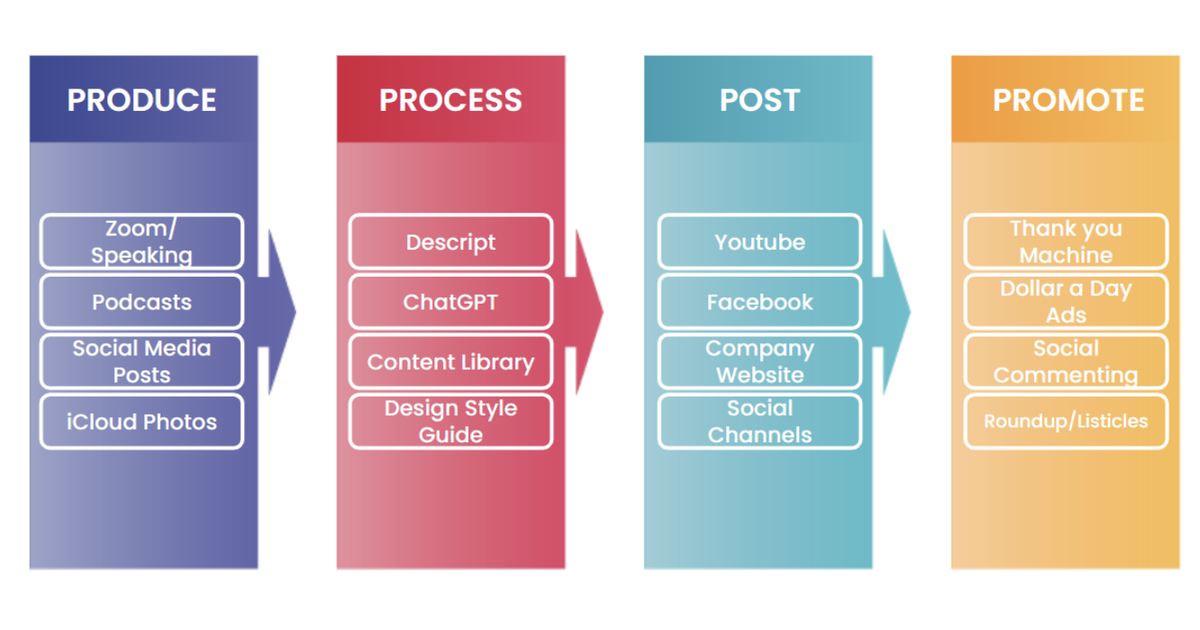
In our 4 stage Content Factory process, transcripts are the bridge between producing video and turning it into scalable written assets.

After we produce content through Zoom calls, podcasts, or speaking engagements, we process it using tools like Descript and ChatGPT.

The transcript is what allows us to repurpose those videos into articles, social posts, website pages, email newsletters, and SEO-driven content.

Without the transcript, the content stays locked inside the video.

With it, one recording can become dozens of searchable, reusable assets.

If you want to turn YouTube videos into blog posts, research notes, or authority-building articles, the first step is getting the transcript.

Fortunately, YouTube makes this easy, and you don’t need special software to do it.

Using YouTube’s built-in transcript feature

The fastest way to get a transcript is directly from YouTube.

Open the video you want.

Below the video player, look for the three-dot menu.

Click those three dots and select “Show transcript.”

A transcript panel will appear on the right side of the screen.

You can scroll through the text and copy it directly into a Google Doc, Word document, or any text editor.

YouTube automatically generates captions for most videos, which makes this method quick and reliable in many cases.

Removing timestamps

When the transcript appears, it usually includes timestamps before each line of text.

In some cases, you can click the three dots inside the transcript window and toggle the timestamps off.

If that option is not available, paste the transcript into a document and remove the timestamps using a simple find-and-replace function.

Once cleaned, you’ll have plain text that is much easier to edit, summarize, or restructure into a polished article.

Getting transcripts on mobile

If you are using the YouTube mobile app, the steps are slightly different.

Open the video and tap the title or description area to expand it.

Scroll down until you see the “Show transcript” option.

Tapping it will display the transcript within the app, where you can read and manually copy the text.

When a transcript is not available

Sometimes the “Show transcript” option does not appear.

This typically means the creator disabled captions or YouTube did not generate them automatically.

In that case, you can use transcription tools such as Descript, Otter.ai, or Rev.

These tools allow you to upload audio and receive a written transcript in return.

If necessary, you can extract the audio from the video and upload it to one of these tools to generate the transcript.

Turning transcripts into content

Once you have the transcript, you can transform it into multiple forms of written content.

You can reshape it into a blog post, extract key insights, create social media posts, or convert it into website copy.

If you use AI tools, you can paste the transcript in and instruct the system to rewrite, summarize, or expand it into structured content.

In the Content Factory framework, this is the processing stage that unlocks leverage.

A single 10-minute video can produce a long-form article, several short-form posts, email content, and SEO-optimized web pages. This is the exact process we used to turn a podcast recording into a comprehensive AI guide for contractors — one video became a full article covering scams, the Content Factory, and practical next steps.

Video creates engagement, but transcripts create discoverability.

Getting the transcript is the first move.

What you build from it determines how much authority and visibility you generate from every piece of content you produce.

Why Every YouTube Video Must Have Its Language Explicitly Set to English

When you’re working through the Content Factory to publish videos (whether from client Zoom calls, interviews, or raw footage) YouTube is often your first publishing destination in the “Post” stage.

But before your video can generate captions that become transcripts, articles, and social posts, YouTube must have an explicit video language setting.

The problem is that YouTube will not generate captions without a video language.

This seemingly minor configuration step is critical. When skipped, it breaks everything downstream. No captions means no transcripts, no articles, no searchable content, and lost SEO opportunities.

This article covers one specific technical requirement within our YouTube publishing checklist, which includes optimizing descriptions, thumbnails, chapters, playlists, and making videos that rank for local service terms.

YouTube uploads create the source asset that feeds everything else. If this step breaks because of missing language settings, the entire system stops. Small configuration errors here create large failures that waste hours.

The problem: YouTube will not generate captions without a video language

YouTube requires an explicit video language to generate captions.

When uploaders skip this setting, YouTube often fails to create subtitles.

The gray CC icon never appears, and transcripts remain unavailable.

Channel defaults do not fix existing videos

Many people assume that setting the channel’s default language to English solves the problem. It does not.

Channel defaults apply only to future uploads. They do not update existing videos.

Videos uploaded without a language selection stay broken until someone fixes them manually.

How to identify the issue

You can spot the problem directly on the channel page.

Videos with captions display a gray CC icon beneath the thumbnail.

Videos without that icon almost always lack captions because no one set the video language.

YouTube Studio confirms the issue. When you open a video’s details and check the language and captions section, a blank language field indicates the root cause.

How to fix existing videos

Open the video in YouTube Studio, set the video language to English, and save the change.

While you can fix each affected video individually by opening it in YouTube Studio, setting the video language to English, and saving the change, there’s a much faster approach for channels with many videos.

AI agents like ChatGPT, Claude, or other automation tools can handle this task.

This method transforms what would be hours of manual clicking into a quick automated task. Your AI agent can systematically go through your video library, adding the language designation to each video, thereby triggering YouTube’s caption generation for your entire catalog.

YouTube then generates captions, usually within minutes or hours.

What happens after you fix it