AI Apprentice Builder Mindset Scorecard

Thinking of applying to our $7,500 AI Apprentice program? Before you step into the dojo, run yourself through this scorecard. It’s designed to separate builders from spectators and show you whether you’re ready to thrive in our high-velocity environment.

Portrait of a woman to represent our team in the AI Apprentice program.

Tool Curiosity

  • Ask yourself: what’s a tool or app you recently discovered, and how did you learn it?
  • Good sign: you dove in, broke it, and figured it out by doing.
  • Red flag: you only watched tutorials but never touched it.

Execution Velocity

  • Ask yourself: what’s something you shipped within 48 hours of learning a new tool or concept?
  • Good sign: you value momentum over perfection.
  • Red flag: you research forever and never start.

Grit & Follow‑Through

  • Ask yourself: when you get stuck on a task you’ve never done, what’s your first move?
  • Good sign: you start Googling, ask ChatGPT, and try small iterations until it works.
  • Red flag: you wait for someone to tell you the answer.

Documentation Reflex

  • Ask yourself: how do you keep track of what you learn so others can reuse it?
  • Good sign: you record Looms, maintain a Notion page or write short SOPs.
  • Red flag: you keep it all in your head.

Attitude Toward Change

  • Ask yourself: AI is making some jobs obsolete — how do you feel about that?
  • Good sign: you’re excited and see opportunity in staying ahead.
  • Red flag: you feel threatened or insist AI can’t replace human creativity.

Scoring and Interpretation

Use the table below to assign yourself points in each area. Then total your score to see where you stand.

CategoryPoints Range
Tool Curiosity0–30
Execution Velocity0–25
Grit & Follow‑Through0–20
Documentation0–15
Attitude Toward Change0–10
  • 85–100 points – Builder: you’re ready for our program (think Marko / Danny tier).
  • 60–84 points – Trainable: you have potential; expect a learning curve.
  • Below 60 points – Pass for now: you’ll need more self-drive before you can thrive here.

Use the Builder Mindset Scorecard to Track Apprentice Growth

Age isn’t the issue — mindset is. Younger applicants often adapt faster because they’re used to experimenting with new tools. But anyone with curiosity, humility and the will to tinker can become a builder. Use this scorecard honestly and decide if you’re ready to dive into our AI Apprentice program.

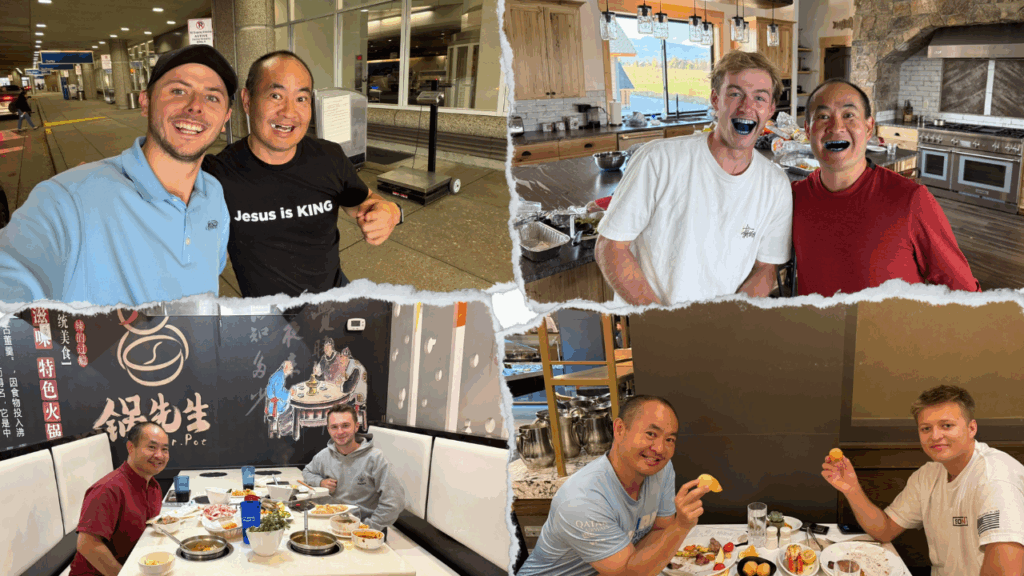
Behind the Scenes with Jack Wendt in Las Vegas: Eataly Eats, Paradox Museum & Comedy Nights

What do you get when you combine a day of grind with a Vegas food crawl? A behind-the-scenes look at how Jack Wendt and I turn a trip into content gold. We started at Eataly on the Strip for authentic Italian bites before diving into the mind-bending optical tricks at the Paradox Museum. Between the attractions we were talking shop about building brands and training our young agency apprentices – because when you love what you do, the line between work and play blurs.

From there, we hopped to a couple of comedy clubs to soak in some laughs and share stories from the trenches. And because no Vegas day is complete without overindulgence, we wrapped up with an all-you-can-eat sushi feast that tested our appetite and our ability to keep a straight face on camera.

Check out the full video above for the unfiltered, whirlwind day in Vegas — then head over to Jack Wendt for more of his adventures. For my insights on marketing, building agencies and making the phone ring for local businesses, visit Dennis Yu. Let us know your favorite Las Vegas spots in the comments — maybe we’ll feature them next time.

Train a Young Adult to Be a AI Apprentice Marketing Expert | Franchise Partner Program

Unlock the full potential of your franchise’s marketing by training a young adult—your son, daughter or a team member—to become a dedicated digital marketing and AI-powered social media expert. In this video, Dennis Yu and Jack Wendt explain how a one-year program equips them with the tools and strategies to manage the Content Factory process for your local service business.

This program includes:

  • Weekly Office Hours and coaching
  • Full access to all training materials
  • Hands-on support with analytics, ads, and websites
  • A community of peers and mentors

The curriculum is built on proven methods used by major brands like Red Bull and Nike and thousands of local service businesses. Think of it as trade school for digital marketing—tailored specifically for your franchise.

If you’re ready to give a young adult the opportunity to grow into your business’s marketing champion, watch the video and learn how to enroll them today.

Learn more about the AI Apprentice Program.

For Young Adults Wanting to Fix the Digital Marketing for Their Parents Businesses | Jack and Dennis

In this video, Jack and Dennis discuss how young adults can help fix the digital marketing for their parents’ businesses. They share practical insights into advertising, content creation, and SEO fundamentals.

If you’re a young adult looking to build real marketing skills and serve local businesses, check out the High Rise Academy program to get hands-on training and mentorship.

Claiming Your Google Knowledge Panel & Scaling Your Agency: Dennis Yu x Jack Wendt at DigiMarCon NYC

If you’re tired of vague “consulting” promises and want a repeatable blueprint for building a service agency that actually scales, this candid conversation is for you.

Dennis Yu and Jack Wendt pull no punches as they share how High‑Rise Influence helps 7‑ and 8‑figure founders earn a Google Knowledge Panel — the digital stamp of legitimacy most gurus can’t deliver. They reveal why clarity and proof matter more than hype, why you must draw a line on who you serve, and how to create an operations playbook that lets you hire and train without reinventing the wheel each time.

Highlights include:

  • Why “customizable” beats “custom” — and how to productize services without becoming a cookie cutter.
  • The hard truth about clients who think they’re the exception: you can’t make a beef Wellington out of baloney.
  • Real numbers: thousands of AI bots (from Claude, ChatGPT, and others) hitting their content, turning free education into actual leads.
  • How to leverage AI, social snippets and small ad spends to attract the right people — and repel the wrong ones.
  • Lessons from plumbing and HVAC agencies: focus on one niche, own your proof, and watch referrals snowball.

If you’re ready to stop selling air and start delivering results that even Google recognizes, hit play. Then let us know in the comments: what’s the one thing holding your agency back from scaling?

Don’t Tag Me in Basecamp — Here’s Why

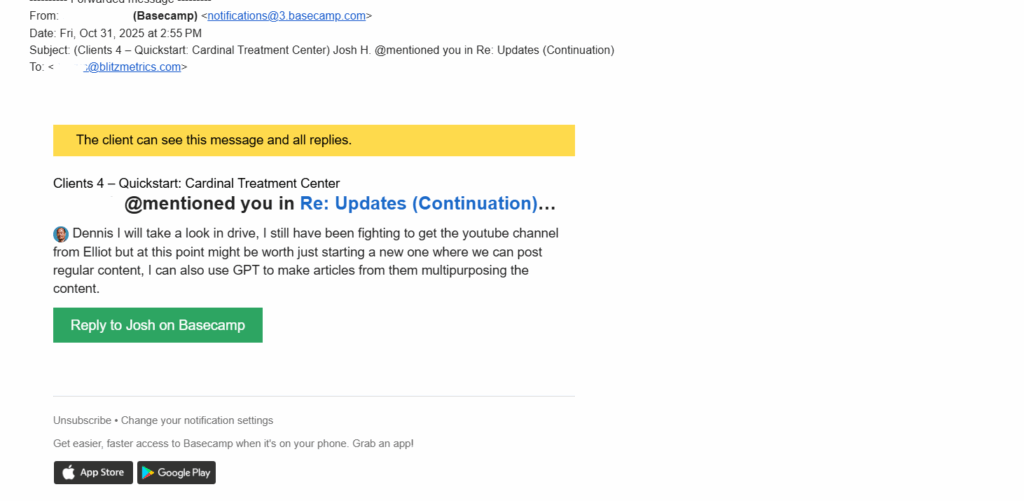
Every time someone tags me in Basecamp, I get two emails for the same message: one for the post, and one for the mention.

Multiply that by dozens of projects, and you’ve just doubled the noise in an inbox that already gets over a thousand emails a day.

I manage 1,000 emails a day. Every unnecessary ping pulls me away from the high-value work that keeps everything moving: strategy, client relationships, training, and developing the next generation of digital leaders.

Tagging me in Basecamp might seem like a quick way to get my attention, but it actually creates friction.

It breaks the system we built to keep communication smooth, focused, and accountable.

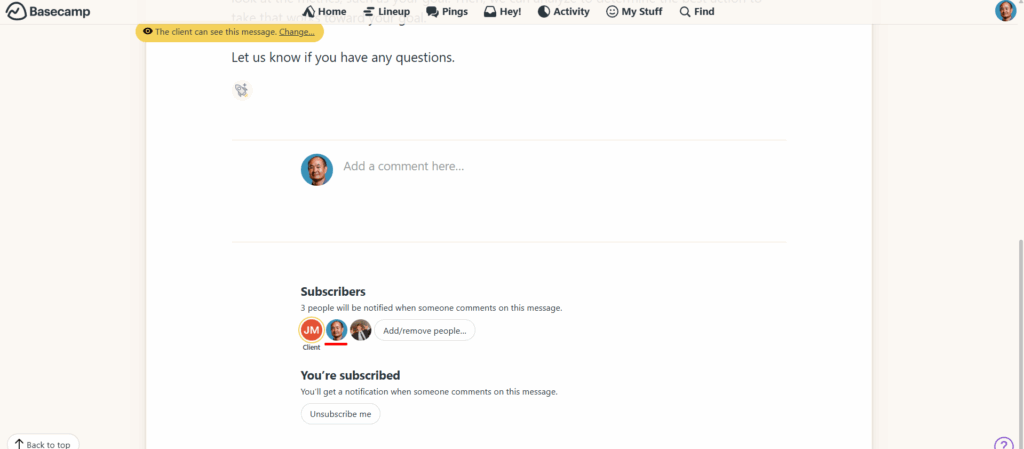
A team member tagged me in the Basecamp project of Cardinal Treatment Center

If I’m subscribed to a Basecamp thread, I already get the message.

Practice RACI

Basecamp is where we document work.

We always practice RACI:

  • R = Responsible (the person doing the work).
  • A = Accountable (the person ensuring it gets done).
  • C = Consulted (people giving input).
  • I = Informed (people who just need to know).

When you tag someone just to make sure they “saw it,” you’re bypassing that structure.

It’s like cutting across traffic because you don’t feel like waiting for the light; it might save a second, but it causes chaos.

We Built Systems for a Reason

We created the Level 1 Guide to make this process easy for new folks and anyone who hasn’t worked in a high-functioning team before. It’s all spelled out, who does what, where updates go, and how to communicate clearly without creating extra noise.

Following these systems is about protecting focus.
Every time you skip the system, you create work for someone else and that ripple effect slows everyone down.

Tag the Project Not Dennis — Here Is the Basecamp Rule

Don’t tag me in Basecamp.
If I need to be looped in, assign the task to the right person and let the process work.
If it’s truly urgent, use the proper channels.

We win by running clean systems, not by shouting louder in the digital hallway.

Meet the Coaches Behind High Rise Academy

Meet the Coaches

High Rise Academy is led by three practitioners who train students on real business projects using documented processes and live feedback.

Jack Wendt — Founder & CEO, High Rise Influence

Jack started young — at 12–13 he was buying and reselling watches, learning how to negotiate, reinvest profits, and build relationships. That early hustle turned into a passion for entrepreneurship and mentorship. He built High Rise Academy so motivated teens don’t have to guess their way forward or build businesses alone.

“When I was 13, I had to figure it out myself. Now we can give young people a system — and help real businesses along the way.” —Jack Wendt

How Jack mentors

  • Assigns live business tasks: editing vertical videos, writing platform-native captions, basic ad setups.
  • Shows students how to publish once, then distribute across channels without duplicating work, following our cross-posting guide.
  • Models client communication and simple reporting (before/after assets, notes, and next actions).
  • Helps students channel their entrepreneurial energy into real businesses — generating calls, creating content, and directly contributing to client revenue.

Dennis Yu — Former Search Engine Engineer & Co-Creator of the Content Factory

Dennis designs the systems our teams use to execute reliably at scale — checklists, SOPs, and feedback loops rooted in the Content Factory framework. Students don’t watch theory; they ship assets and get reviewed. He also emphasizes E-E-A-T — real people, real places, real work — to make content credible and reusable.

“There’s no age too early to start building a brand or learning how to learn.” —Dennis Yu

How Dennis coaches

  • Weekly reviews with concrete acceptance criteria (naming, thumbnails, captions, repost rules).
  • Layering proof — names, locations, client artifacts — to establish trust via E-E-A-T.
  • Avoiding common VA pitfalls by tying every task to a clear goal, content asset, and target.
  • Works with students from age 17 to 60, proving that the Academy’s structure supports all levels of experience — from teenagers just starting out to adults seeking to sharpen their skills.

Dylan Haugen — Professional Dunker & Creator

Dylan is a professional dunker who performs in contests and live shows while documenting his journey online. His creative background gives him a unique perspective on content and storytelling. After connecting with Dennis and Jack in late December, he discovered how to use the Academy’s structure to transform his passion into professional growth.

“After joining the program, I learned more in a few weeks than I had in years on my own.” —Dylan Haugen

How Dylan teaches

  • Short-form storytelling on real client pages (clear hook, proof, next step).
  • Batch capture and workflow hygiene (shot lists, b-roll banks, caption templates).
  • Practical feedback on pacing, framing, and retention.
  • Works with business owners — from local gyms to personal brands — showing them how consistent storytelling drives measurable results online.

What You’ll See in Practice

  • Live weekly coaching with screen-share reviews and action items.
  • Documented SOPs with examples for each step.
  • Real distribution on business accounts, followed by sensible republishing.
  • Proof built in — faces, places, and outcomes attached to the work.
  • Range of participants from teens to age 60; quality is driven by checklists, not age.
  • Students are paid as they demonstrate competency on production tasks.

Why High Rise Academy Matters

Students learn marketing by doing: edit videos, post on business accounts, and follow checklists until their work meets spec. Parents see consistent habits and professional communication develop over time. Business owners get useful assets instead of vague ideas.

For parents who want to see their teens develop real-world skills, build meaningful relationships, and gain confidence through hands-on experience, High Rise Academy provides a clear path — while also contributing real work for the businesses they support.

If you’d like to learn from mentors like Dennis, Jack, and Dylan, or know a young adult who would thrive in this environment, explore how to get involved with High Rise Academy. It’s a place where curiosity turns into capability, and learning turns into real results.

Welcome to the AI Apprentice Program

Congrats, you’ve joined the program.

Now that you’re officially inside, here’s the exact roadmap so you don’t feel lost staring at 140+ courses, 27 tools, and a pile of skills you think you “don’t have yet.” Let’s cut through the noise.

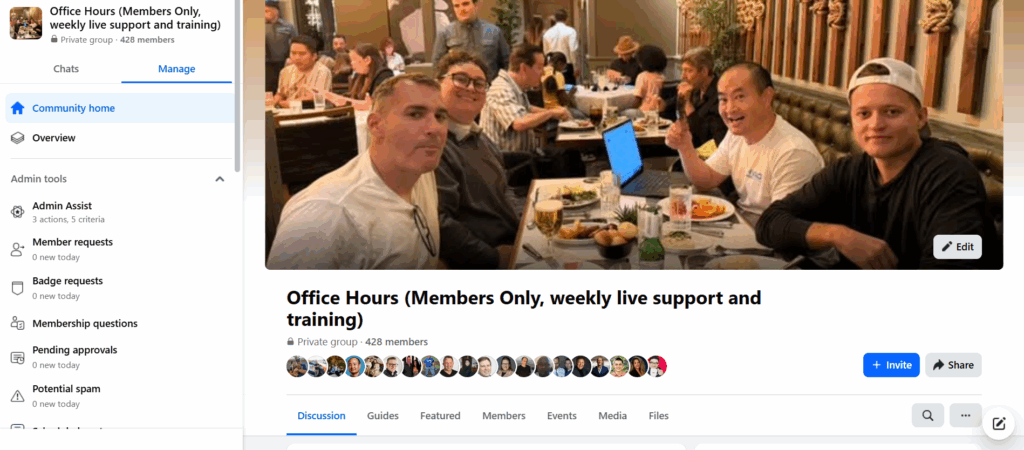
Join the Office Hours Facebook group

By now, you should have an email inviting you to our Office Hours Facebook Group.
If it didn’t arrive, give it a few minutes; it’s on the way.

This group is where everything happens:

  • Weekly Office Hours: Thursdays at 2 PM PST / 5 PM EST.
    We record all sessions, so if you miss one, no meltdown necessary.
  • Ask your questions here (not in the big public group).

We use Facebook because local service business owners live on Facebook.
If you want clients, you should too.

Join all required platforms

To get fully connected, knock these out immediately:

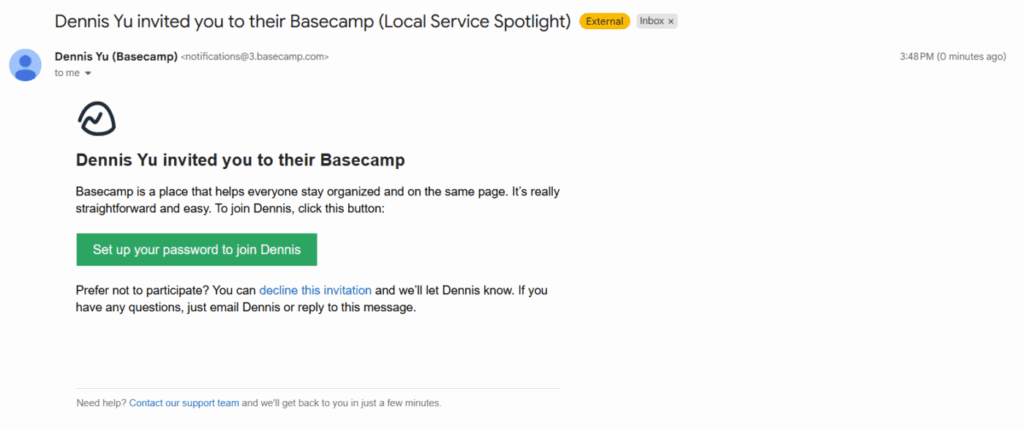
— Accept your Basecamp invite. Projects, training, assignments, and your Weekly MAA reports live here.

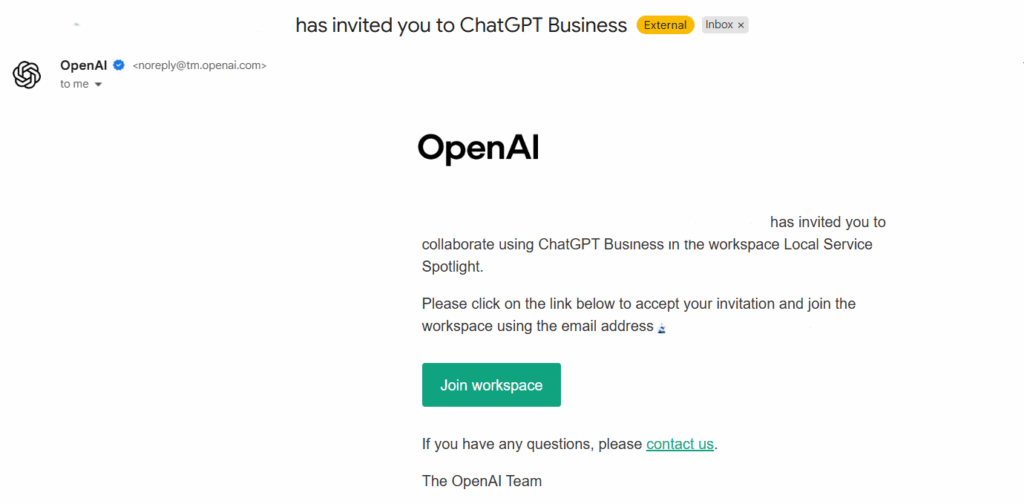
— Join the ChatGPT business account. Full access to our shared tools and workspace.

— Join the private Office Hours Facebook group. This is your real support channel.

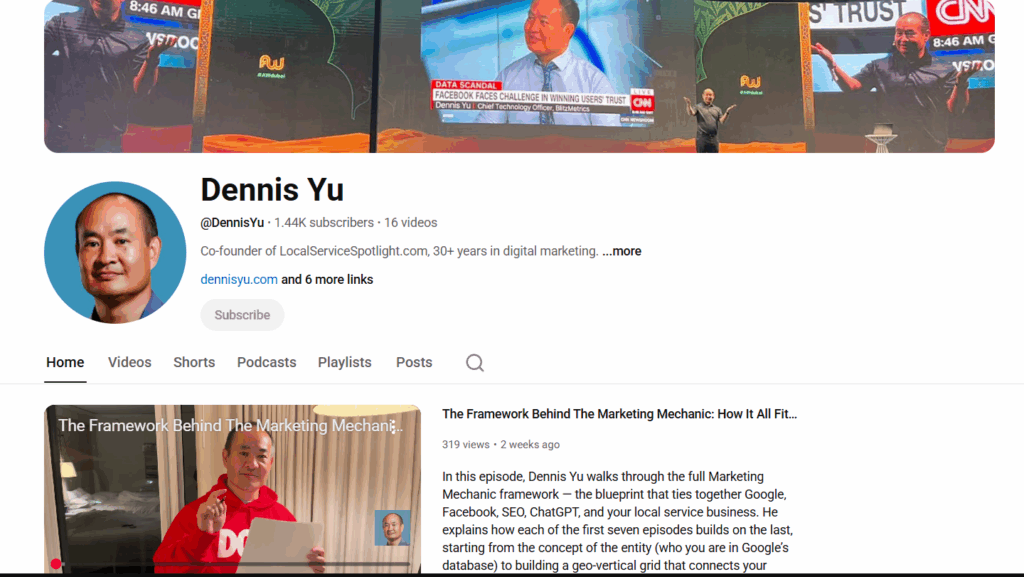
— Subscribe to the Dennis Yu YouTube channel.
Every Thursday at 11 AM EST, I drop the Marketing Mechanic episode.

Welcome to the AI Apprentice Program

Submit your weekly MAA report

Every Friday, by 5 PM Eastern, you’ll submit your MAA report in Basecamp.

It takes 5 minutes.
And here’s the raw truth:

People who submit consistently in the first 3–4 weeks succeed.
People who don’t, never do.

Even if you were sick, traveling, busy, or didn’t get access to a client account, you can always report something:

  • Ran a Local Falcon scan.
  • Watched a training.
  • Improved your LinkedIn.
  • Posted a video.
  • Learned one new skill.
  • Implemented a tool.

Two minutes of effort is enough.
It’s about building the habit.

Connect with other apprentices

This isn’t a solo sport.

Inside the Office Hours group, you’ll find people:

  • In your same city.
  • Working in the same niche (roofing, HVAC, dental, etc.).
  • Developing the same skills you want.
  • At the same stage of learning.

Reach out. Build relationships.
Many of our best agencies started from connections made here.

Use the tools & training we give you

You get access to tools that the public doesn’t:

  • Link Whisper (premium).
  • RankMath Pro.
  • WordPress resources.
  • Internal SOPs.
  • Meeting templates.
  • Project management training.
  • Agency operations training.

When we teach something publicly, you get the implementation version.
That’s a massive advantage; use it.

Manage email like a professional

If you’re a young adult, you probably live on your phone.
Nothing wrong with that, but handle client email on a laptop, not your thumbs.

Install Boomerang for Gmail (free is fine).
It helps you:

  • Track follow-ups.
  • Handle scheduling.
  • Keep your inbox from becoming a crime scene.

Email is where real business happens.
You need to treat it seriously.

Master meeting basics

We have training on:

  • What to do before a meeting.
  • What to do during a meeting.
  • What to do after a meeting.

Including:

  • Always send an agenda upstream.
  • Always record Zoom meetings.
  • Always share action items after.
  • Always update Basecamp with who’s doing what.

If you do this well for your parents’ business or first client, you will get more.
And when you’re reliably executing, we’ll promote you and send an opportunity your way.
(Not because you bought the program, but because you earned it.)

Where not to ask for help

There’s a giant free Facebook group called Digital Marketing with Dennis Yu (44k+ members).

That’s not your support channel.

Your help and team support are inside Office Hours, the private group.

Stay there.

If you’re ever truly stuck

  1. Message Stephanie (stephanie@blitzmetrics.com).
  2. If it’s something only I can solve (rare), you can email me.
  3. You can text me too. Just make sure it’s worth waking me up over.

Your first real assignment: Make a 1-minute video

Record a simple cell-phone introduction and post it in the Office Hours group.

No scripts.
No fancy camera.
No “I need to get ready first.”

Just you, talking for 60 seconds:

  • Who you are.
  • Where you’re from.
  • What you’re working on.
  • What you want to learn.

If we were sitting around a dinner table at a mastermind, you’d introduce yourself.
This is the same thing.

Do it now. Don’t overthink it.

Who the High Rise Academy Is NOT For — And What It Takes to Succeed

The Short Answer

High Rise Academy is designed for people who take action. Success comes from following the Metrics → Analysis → Action (MAA) process every week. Apprentices who do the work, communicate clearly, and follow through on assignments build measurable results and real skills.

Dennis Yu emphasized during the conversation that the Academy only works for those willing to “do the thing.” As he explained, people who collect metrics but never implement improvements are “getting paid to do nothing.”

The Foundation: Taking Consistent Action

Many projects fail because people spend too much time reporting and not enough time executing. Every week should include progress—new videos published, ads launched, or landing pages improved.

Our process relies on three steps:

  • Metrics: Track specific numbers tied to your work, such as video performance metrics or ad performance.
  • Analysis: Identify what changed and why.
  • Action: Implement the next improvement before the next report.

Jack Wendt mentioned how some participants kept producing the same weekly reports without changing a thing. He shared that those projects “looked busy on paper but delivered no new client results.” This reinforced the Academy’s focus on action, not appearance.

Dylan Haugen added that every weekly status report feeds the coaching process. “The more action they take,” he said, “the more feedback we can provide.” When students actually produce videos, launch ads, or adjust campaigns, coaches have data to work with and can give sharper guidance.

Communicating Effectively

Remote work depends on timely, organized communication. Team members are encouraged to apply the Do / Delegate / Delete framework:

  • Do the next task from your checklist.
  • Delegate when you hit a roadblock and need support.
  • Delete low-value items that don’t advance the goal.

Jack recalled several examples where simple communication lapses caused unnecessary delays—someone waited days to ask a question instead of flagging it early. “If they’d just said something, we could’ve solved it in five minutes,” he said. Clear updates keep everyone aligned and prevent small issues from slowing progress.

Skills that Support Success

Participants who think clearly, express ideas in writing, and approach problems logically tend to perform well. The program rewards those who take ownership of their work, stay organized, and use available tools to keep improving.

Dennis highlighted that being able to reason through tasks with AI tools or team members is key to growth. “Young adults who can talk through a problem and provide context always do well,” he said. This ability to explain intent and process mirrors how top performers handle real client projects.

Follow-Through Makes the Difference

Age and credentials matter less than reliability. Students as young as fourteen have produced outstanding results through consistent follow-through.

Dennis shared one story about a 14-year-old student who completed every assignment on time, produced content weekly, and analyzed results without prompting. That consistency led to measurable growth and personal confidence. In contrast, he mentioned older participants who “have to ask a question every single time” or constantly make excuses—and they rarely advance.

To stay on track:

  • Dedicate at least one hour per day to assignments.
  • Complete and submit a weekly status report summarizing what you shipped, what you learned, and what comes next.
  • Plan around vacations or other priorities so deadlines are met.

The goal is steady progress, not perfection.

What Success Looks Like Week to Week

Each week, successful participants:

  • Publish new work such as a video, ad, or content update.
  • Record clear performance metrics and note what improved.
  • Decide on the next concrete action to take.
  • Review targeted feedback from mentors and apply it immediately.

Dylan described one student who launched a short-form video campaign and then tracked its performance in the weekly report. “They took the feedback, adjusted the titles and tags, and doubled their watch time in a week,” he said. That’s the type of learning loop the program aims to build.

This cycle—action, reflection, improvement—builds measurable skill and momentum.

How to Prepare and Self-Assess

  1. Identify specific actions you can take this week.
  2. Choose one checklist and complete the first task today.
  3. Start your weekly status report document now and update it as you complete work.
  4. Set up a simple metric tracking sheet for your projects.
  5. Reserve your hour-a-day block on your calendar for the next two weeks.

These steps help you form the habits that lead to success inside the program.

High Rise Academy Works Only for Those Willing to Do the Work

High Rise Academy rewards people who act consistently, communicate clearly, and keep improving. Those habits matter more than background or prior experience. The more you build, measure, and refine, the more meaningful results you’ll achieve.

Dennis concluded the discussion by reminding parents and students that this program requires genuine interest. “We’re not here to babysit,” he said. “If they have that drive—whether it’s basketball, content creation, or entrepreneurship—they’ll thrive. If they don’t, they’ll struggle.”

From Zero to Results: How Henry Earned Real Client Wins Through High Rise Academy

Most young adults aren’t taught how to get meaningful work experience, let alone how to build systems that bring long-term value. That’s exactly why we started the High Rise Academy inside High Rise Influence.

We launched this program to help young people get real results for real clients, using a process that blends content creation, AI tools, and repeatable systems. And Henry Holm’s story is one of the best early examples of how it works.

Why Henry’s Client Wins Came From Doing Not Just Learning

Unlike traditional internships or online courses filled with busywork, this apprenticeship is rooted in action. Every apprentice works on real projects and meets weekly with the team to share wins, tackle challenges, and report results using MAA (Metrics, Analysis, Action).

Henry was one of the first people we brought on. At the time, he had no client experience and no marketing background. But in just a few weeks, he was creating content that helped a real dental practice in Atlanta grow its online presence.

“There’s a lot of freedom in this role. I work from my cabin, my house—wherever I have Wi-Fi. But there’s still accountability. That’s what helped me grow fast,” Henry told me.

From Setup to Strategy

During onboarding, Henry gained access to our systems, tools, and SOPs. He jumped in right away by doing real client work:

  • Writing blog posts from raw video footage
  • Creating short-form clips for YouTube, Facebook, and Instagram
  • Running Dollar-A-Day Ads on top performing content

“We don’t just get tasks and do them. We actually talk to the client, figure out what they need, and deliver based on that,” Henry said.

He also contributed to weekly MAA reports, which have evolved over time to include full SEO audits, performance tracking, and recommendations.

“Those reports started small,” he said. “But now we include way more—like SEO data and what we’re going to fix next.”

Building Systems, Not Just Skills

Henry quickly saw how one system could be applied across multiple clients. What we did for a dentist could just as easily work for a plumber, real estate agent, or gym.

  • Learn the framework
  • Document everything
  • Improve with each cycle

“A lot of the stuff we do is transferable. We build a model once and use it again,” Henry said.

Managing Time Like a Pro

Time commitment is flexible by design. Apprentices pick the projects they want and are expected to own results, instead of focusing on working a set amount of hours.

“Some weeks I have more time than others. If I’m too busy, I can pass something off, to another team member” Henry said.

He estimates that someone working on a single business, they could do great work with just an hour a day.

Confidence Without Experience

The biggest change Henry experienced was in how he thought about learning and ownership.

“When I started, I didn’t feel confident. I had no experience. But everything is documented. And there’s always someone to help,” he told me.

Whether it’s using our SOPs, Googling our public articles, or getting help on a team call, apprentices aren’t left guessing.

Want to Start Your Journey?

High Rise Academy isn’t about watching videos. It’s about doing real work with real clients—and building proof of your results as you go.

If you’re interested in joining or know someone who should, check out what we’re building and start your path toward meaningful work that actually grows with you.