In our inaugural High Rise Influence podcast, Dennis Yu and Jack Wendt discuss the blueprint for real influence from Neuschwanstein Castle. They explore how genuine accomplishments, relationships and reviews form the foundation of your digital authority.
In this conversation, Jack Wendt and Dennis Yu share how real influence comes from genuine accomplishments, meaningful relationships, and authentic reviews. They outline a step-by-step blueprint for building influence that includes identifying your target audience, systematizing your content production through a team of virtual architects, and nurturing authentic relationships rather than pushing sales. They emphasize preparing clients with a clear roadmap and setting expectations for long-term growth.
Key takeaways from the episode include:
Identify and serve a specific audience that already has proof of expertise to amplify.
Systematize influence by building a team of virtual architects to execute your strategy so you can stay focused on client relationships.
Build authentic relationships and partnerships instead of relying on aggressive sales; let real results and strategic partnerships speak for themselves.
Prepare clients with a clear journey and manage expectations—success is a long-term game that requires consistent effort over time.
Focus on authenticity and follow-through to build trust and long-lasting relationships
In this episode, Jack Wendt and Dennis Yu outline a blueprint for building real influence by focusing on genuine accomplishments, meaningful relationships, and credible reviews. They stress that influence isn’t about vanity metrics but about serving a defined audience, creating systems to scale your work, and nurturing authentic connections.
Key takeaways:
Identify and serve a specific audience that already has proof of expertise to amplify.
Systematize your influence by building a team of Virtual Architects (VAs) who handle content repurposing and amplification, freeing you to focus on strategy and relationships.
Build authentic relationships and partnerships instead of relying on aggressive sales; let real results and strategic partnerships speak for themselves.
Prepare clients with a clear journey and manage expectations—success is a long-term game that requires consistent effort over time.
Focus on authenticity and follow-through to build trust and long-lasting relationships.
Note: Steps 1 and 4 above are now automated through our Zapier integration. When a new apprentice purchases the program through Stripe, their Basecamp project is created automatically, the team is added, and the Keap welcome email sequence fires — with no manual steps required. Read How to Automate AI Apprentice Program Onboarding Using Stripe, Zapier, Keap, and Basecamp for the full technical setup guide.
Post a “✅ Onboarding Complete” message in Basecamp.
Tag the apprentice.
Done! They’re Officially Onboarded
Once the checklist is completed, the apprentice is now ready to start contributing to real projects, attend Office Hours, and advance through our levels of mastery.
Interested in the AI Apprentice Program?Learn more about High Rise Academy — hands-on AI marketing training with real clients and real results.
Learn more about the Content Factory framework — the 6-stage system behind everything we do at High Rise Influence.
If you run a local service business and want your son or daughter to take over the digital marketing, here’s a practical path—grounded in what actually worked on real projects, not theory. Dennis Yu, Jack Wendt, and Dylan Haugen recently sat down to discuss how parents can help their kids become successful AI apprentices through the High Rise Academy, sharing what’s working, what young adults are learning, and how families can apply these lessons to real businesses.
Why Teens are a Great Fit and how to Test it Fast
During the discussion, Dennis explains why young adults often pick up AI tools faster than seasoned professionals. They tend to reason with AI instead of treating it like a search bar. Jack suggests a simple test for parents: have your teen open voice mode and talk through a problem with the AI for five minutes—then ask it to outline next steps. Speaking out loud encourages richer prompts and better plans. A second quick test, mentioned by Dylan, is to record a simple one-minute video explaining what your business does and who it helps. That short clip becomes raw material for posts, a blog, and even a lightweight ad.
Dennis shares how this exact process helped a cosmetic dentist in Atlanta. The team started with plain, phone-shot videos about smile makeovers, the doctor’s process, and the office itself. Those clips were repurposed into website articles, Google Business Profile updates, Instagram/TikTok posts, and ad variants—a single shoot fueling weeks of distribution. Businesses that follow the properly repurpose videos can multiply their reach without multiplying effort.
Doing, Measuring, and Iterating Weekly
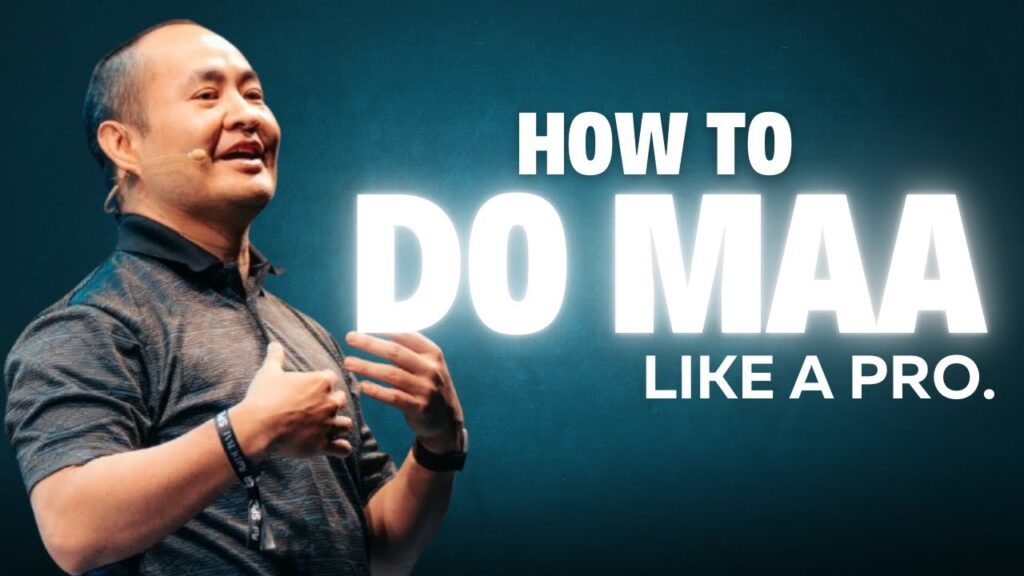
Jack and Dylan emphasize that success comes from consistent action and feedback. Apprentices wire the digital plumbing first—analytics and call tracking—so we can see exactly which videos, pages, and ads move the needle. Every Friday, they submit an MAA (Metrics → Analysis → Action) report, a system Dennis developed to help keep projects data-driven and accountable.
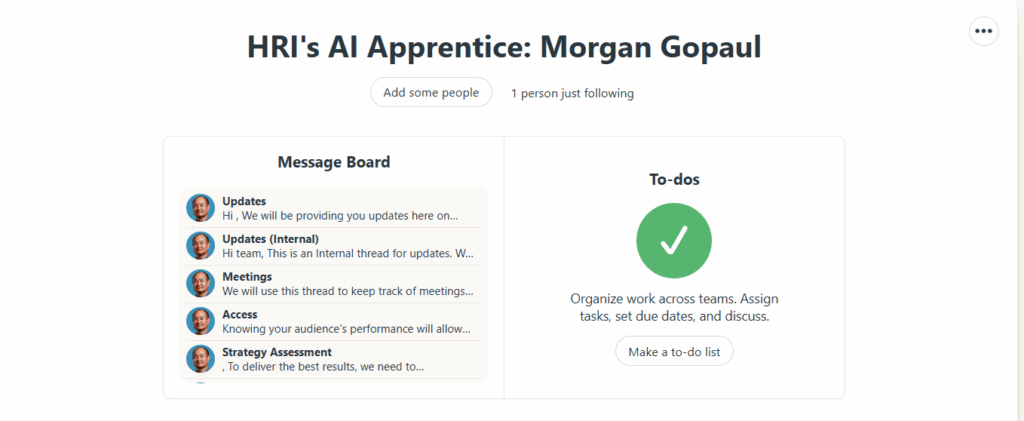
Accountability isn’t lonely: work is organized in Basecamp, and there are live office hours every Thursday at 2 p.m. Pacific where apprentices present campaigns and dashboards for critique. Dylan points out that this structure helps young marketers build confidence. On the dentist project, one weekly MAA revealed a patient-story clip outperforming equipment demos, leading the team to double down on testimonials across blog, reels, and ads.
Learning by Applying, not Just Taking a Course
Dennis and Jack share how this hands-on model grew from a six-week applied module at Johns Hopkins, where students paired with real local businesses—no simulated assignments. The same “learn → do → teach” framework powers the apprenticeship: learn a tactic, implement it on a live account, document it so the next person can repeat it. Dylan mentions that this approach taught him to solve real problems—like when he got stuck swapping a website image, used AI to troubleshoot it, and then documented the process so others could benefit.
What the Work Actually Looks Like
Capture: Short, authentic videos from the owner and team (think FAQs you answer daily).
Repurpose: Turn one clip into a blog post, a GBP update, two social cuts, and an ad variation—five outputs from one input.
Distribute: Publish across site, search, and social.
Measure: Track calls and form fills back to the specific asset and keyword.
Improve: Scale the winners, fix or drop the laggards.
On the dentist account, that flow moved the business from “invisible online” to a steady stream of measurable calls—because Google could finally “see” the same reputation locals already knew.
What Success can Look Like
Dennis recalls Sal Sciorta, from Plumbing Pros in Eastern Pennsylvania, which followed the same framework. Revenue grew from roughly $30–40k/month to nearly triple, and marketing was intentionally dialed down while the team hired to meet demand. Growth became manageable and repeatable, rather than chaotic.
Compensation also evolves with results. Dylan, who began as an apprentice, advanced from $17/hour to $25/hour through performance and client satisfaction—not time on the clock. Along the way, he built lasting professional assets like a personal brand website and Google Knowledge Panel, helping him stand out in search results. These principles mirror what we teach for building your personal brand on Google, where visibility and credibility reinforce one another.
Who Thrives in This Model
Jack notes that strong communication and self-management are key indicators of success. Apprentices who try, measure, and then ask targeted questions grow quickly. Remote teamwork is part of the experience—Dennis and his team span multiple time zones—but the shared MAA process and weekly reviews keep everyone on track.
Why This Beats Influencer Thinking
Dennis often reminds parents that their kids don’t need viral fame to make an impact. Local businesses grow by showing up consistently in maps, search, and social with authentic content. Genuine videos, regular updates, and measurable results build trust faster than follower counts ever could.
He and the team emphasize that success comes from visibility within your community, not popularity online. When your content reflects real stories, honest expertise, and steady improvement, Google and AI tools start recognizing your business as the local authority—helping you win right where it matters most.
Partnering to Build the Next Generation
The conversation between Dennis, Jack, and Dylan shows how this program blends mentorship, accountability, and applied learning. Parents who want to give their kids real-world marketing experience—and see results for their own business in the process—can join forces with High Rise Academy. The program pairs young adults with experts who guide them through real projects, helping them gain confidence, technical skill, and a clear career direction while supporting your local business growth.
Thinking of applying to our $7,500 AI Apprentice program? Before you step into the dojo, run yourself through this scorecard. It’s designed to separate builders from spectators and show you whether you’re ready to thrive in our high-velocity environment.
Tool Curiosity
Ask yourself: what’s a tool or app you recently discovered, and how did you learn it?
Good sign: you dove in, broke it, and figured it out by doing.
Red flag: you only watched tutorials but never touched it.
Execution Velocity
Ask yourself: what’s something you shipped within 48 hours of learning a new tool or concept?
Good sign: you value momentum over perfection.
Red flag: you research forever and never start.
Grit & Follow‑Through
Ask yourself: when you get stuck on a task you’ve never done, what’s your first move?
Good sign: you start Googling, ask ChatGPT, and try small iterations until it works.
Red flag: you wait for someone to tell you the answer.
Documentation Reflex
Ask yourself: how do you keep track of what you learn so others can reuse it?
Good sign: you record Looms, maintain a Notion page or write short SOPs.
Red flag: you keep it all in your head.
Attitude Toward Change
Ask yourself: AI is making some jobs obsolete — how do you feel about that?
Good sign: you’re excited and see opportunity in staying ahead.
Red flag: you feel threatened or insist AI can’t replace human creativity.
Scoring and Interpretation
Use the table below to assign yourself points in each area. Then total your score to see where you stand.
Category
Points Range
Tool Curiosity
0–30
Execution Velocity
0–25
Grit & Follow‑Through
0–20
Documentation
0–15
Attitude Toward Change
0–10
85–100 points – Builder: you’re ready for our program (think Marko / Danny tier).
60–84 points – Trainable: you have potential; expect a learning curve.
Below 60 points – Pass for now: you’ll need more self-drive before you can thrive here.
Use the Builder Mindset Scorecard to Track Apprentice Growth
Age isn’t the issue — mindset is. Younger applicants often adapt faster because they’re used to experimenting with new tools. But anyone with curiosity, humility and the will to tinker can become a builder. Use this scorecard honestly and decide if you’re ready to dive into our AI Apprentice program.
Interested in the AI Apprentice Program?Learn more about High Rise Academy — hands-on AI marketing training with real clients and real results.
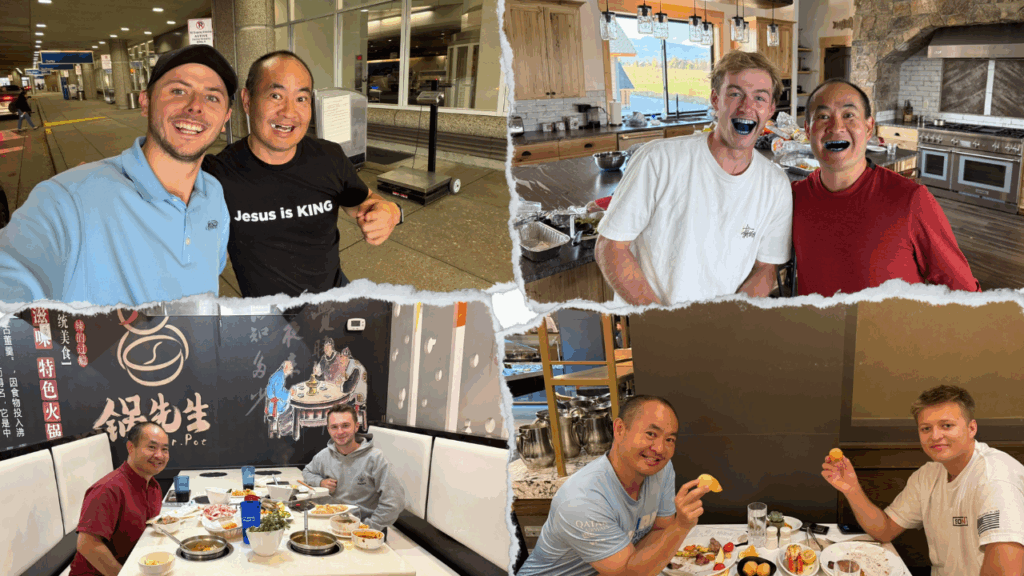
What do you get when you combine a day of grind with a Vegas food crawl? A behind-the-scenes look at how Jack Wendt and I turn a trip into content gold. We started at Eataly on the Strip for authentic Italian bites before diving into the mind-bending optical tricks at the Paradox Museum. Between the attractions we were talking shop about building brands and training our young agency apprentices – because when you love what you do, the line between work and play blurs.
From there, we hopped to a couple of comedy clubs to soak in some laughs and share stories from the trenches. And because no Vegas day is complete without overindulgence, we wrapped up with an all-you-can-eat sushi feast that tested our appetite and our ability to keep a straight face on camera.
Check out the full video above for the unfiltered, whirlwind day in Vegas — then head over to Jack Wendt for more of his adventures. For my insights on marketing, building agencies and making the phone ring for local businesses, visit Dennis Yu. Let us know your favorite Las Vegas spots in the comments — maybe we’ll feature them next time.
Unlock the full potential of your franchise’s marketing by training a young adult—your son, daughter or a team member—to become a dedicated digital marketing and AI-powered social media expert. In this video, Dennis Yu and Jack Wendt explain how a one-year program equips them with the tools and strategies to manage the Content Factory process for your local service business.
This program includes:
Weekly Office Hours and coaching
Full access to all training materials
Hands-on support with analytics, ads, and websites
A community of peers and mentors
The curriculum is built on proven methods used by major brands like Red Bull and Nike and thousands of local service businesses. Think of it as trade school for digital marketing—tailored specifically for your franchise.
If you’re ready to give a young adult the opportunity to grow into your business’s marketing champion, watch the video and learn how to enroll them today.
Interested in the AI Apprentice Program?Learn more about High Rise Academy — hands-on AI marketing training with real clients and real results.
Learn more about the Content Factory framework — the 6-stage system behind everything we do at High Rise Influence.
Want to see what franchise-level marketing looks like? Check out how we help Pure Green franchise owners become local celebrity brands using the same AI-powered content systems we teach in the program.
In this video, Jack and Dennis discuss how young adults can help fix the digital marketing for their parents’ businesses. They share practical insights into advertising, content creation, and SEO fundamentals.
If you’re a young adult looking to build real marketing skills and serve local businesses, check out the High Rise Academy program to get hands-on training and mentorship.
Interested in the AI Apprentice Program?Learn more about High Rise Academy — hands-on AI marketing training with real clients and real results.
If you’re tired of vague “consulting” promises and want a repeatable blueprint for building a service agency that actually scales, this candid conversation is for you.
Dennis Yu and Jack Wendt pull no punches as they share how High‑Rise Influence helps 7‑ and 8‑figure founders earn a Google Knowledge Panel — the digital stamp of legitimacy most gurus can’t deliver. They reveal why clarity and proof matter more than hype, why you must draw a line on who you serve, and how to create an operations playbook that lets you hire and train without reinventing the wheel each time.
Highlights include:
Why “customizable” beats “custom” — and how to productize services without becoming a cookie cutter.
The hard truth about clients who think they’re the exception: you can’t make a beef Wellington out of baloney.
Real numbers: thousands of AI bots (from Claude, ChatGPT, and others) hitting their content, turning free education into actual leads.
How to leverage AI, social snippets and small ad spends to attract the right people — and repel the wrong ones.
Lessons from plumbing and HVAC agencies: focus on one niche, own your proof, and watch referrals snowball.
If you’re ready to stop selling air and start delivering results that even Google recognizes, hit play. Then let us know in the comments: what’s the one thing holding your agency back from scaling?
High Rise Academy is led by three practitioners who train students on real business projects using documented processes and live feedback.
Jack Wendt — Founder & CEO, High Rise Influence
Jack started young — at 12–13 he was buying and reselling watches, learning how to negotiate, reinvest profits, and build relationships. That early hustle turned into a passion for entrepreneurship and mentorship. He built High Rise Academy so motivated teens don’t have to guess their way forward or build businesses alone.
“When I was 13, I had to figure it out myself. Now we can give young people a system — and help real businesses along the way.” —Jack Wendt
How Jack mentors
Assigns live business tasks: editing vertical videos, writing platform-native captions, basic ad setups.
Shows students how to publish once, then distribute across channels without duplicating work, following our cross-posting guide.
Models client communication and simple reporting (before/after assets, notes, and next actions).
Helps students channel their entrepreneurial energy into real businesses — generating calls, creating content, and directly contributing to client revenue.
Dennis Yu — Former Search Engine Engineer & Co-Creator of the Content Factory
Dennis designs the systems our teams use to execute reliably at scale — checklists, SOPs, and feedback loops rooted in the Content Factory framework. Students don’t watch theory; they ship assets and get reviewed. He also emphasizes E-E-A-T — real people, real places, real work — to make content credible and reusable.
“There’s no age too early to start building a brand or learning how to learn.” —Dennis Yu
Layering proof — names, locations, client artifacts — to establish trust via E-E-A-T.
Avoiding common VA pitfalls by tying every task to a clear goal, content asset, and target.
Works with students from age 17 to 60, proving that the Academy’s structure supports all levels of experience — from teenagers just starting out to adults seeking to sharpen their skills.
Dylan Haugen — Professional Dunker & Creator
Dylan is a professional dunker who performs in contests and live shows while documenting his journey online. His creative background gives him a unique perspective on content and storytelling. After connecting with Dennis and Jack in late December, he discovered how to use the Academy’s structure to transform his passion into professional growth.
“After joining the program, I learned more in a few weeks than I had in years on my own.” —Dylan Haugen
How Dylan teaches
Short-form storytelling on real client pages (clear hook, proof, next step).
Practical feedback on pacing, framing, and retention.
Works with business owners — from local gyms to personal brands — showing them how consistent storytelling drives measurable results online.
What You’ll See in Practice
Live weekly coaching with screen-share reviews and action items.
Documented SOPs with examples for each step.
Real distribution on business accounts, followed by sensible republishing.
Proof built in — faces, places, and outcomes attached to the work.
Range of participants from teens to age 60; quality is driven by checklists, not age.
Students are paid as they demonstrate competency on production tasks.
Why High Rise Academy Matters
Students learn marketing by doing: edit videos, post on business accounts, and follow checklists until their work meets spec. Parents see consistent habits and professional communication develop over time. Business owners get useful assets instead of vague ideas.
For parents who want to see their teens develop real-world skills, build meaningful relationships, and gain confidence through hands-on experience, High Rise Academy provides a clear path — while also contributing real work for the businesses they support.
If you’d like to learn from mentors like Dennis, Jack, and Dylan, or know a young adult who would thrive in this environment, explore how to get involved with High Rise Academy. It’s a place where curiosity turns into capability, and learning turns into real results.
Learn more about the Content Factory framework — the 6-stage system behind everything we do at High Rise Influence.
Now that you’re officially inside, here’s the exact roadmap so you don’t feel lost staring at 140+ courses, 27 tools, and a pile of skills you think you “don’t have yet.” Let’s cut through the noise.
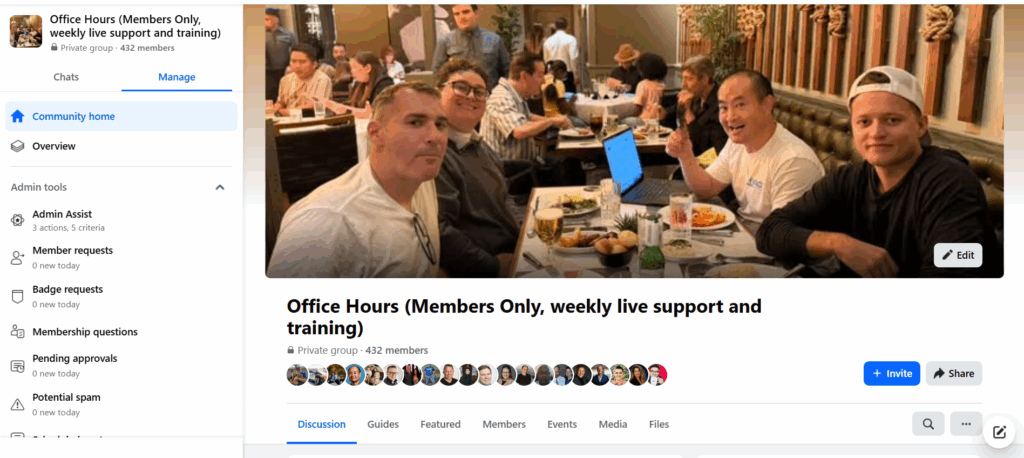
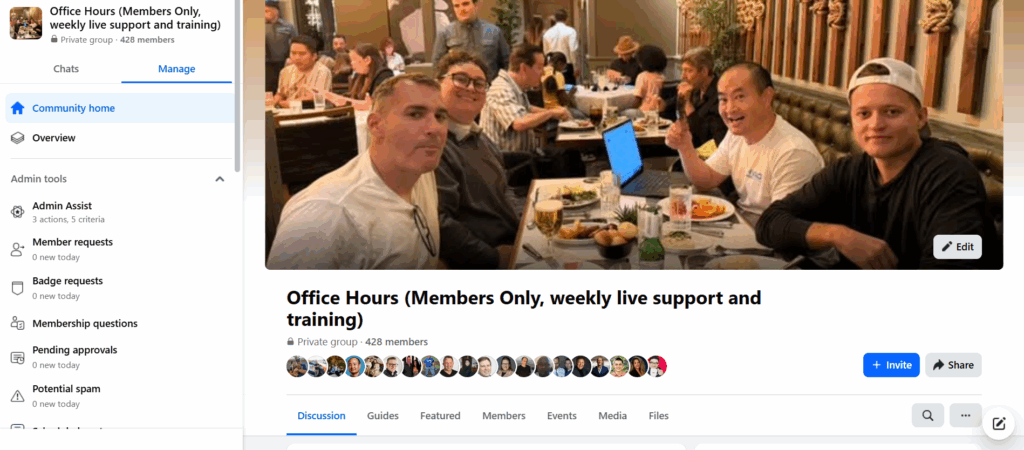
Join the Office Hours Facebook group
By now, you should have an email inviting you to our Office Hours Facebook Group. If it didn’t arrive, give it a few minutes; it’s on the way.
This group is where everything happens:
Weekly Office Hours: Thursdays at 2 PM PST / 5 PM EST. We record all sessions, so if you miss one, no meltdown necessary.
If you do this well for your parents’ business or first client, you will get more. And when you’re reliably executing, we’ll promote you and send an opportunity your way. (Not because you bought the program, but because you earned it.)
Where not to ask for help
There’s a giant free Facebook group called Digital Marketing with Dennis Yu (44k+ members).
That’s not your support channel.
Your help and team support are inside Office Hours, the private group.
Stay there.
If you’re ever truly stuck
Message Stephanie (stephanie@blitzmetrics.com).
If it’s something only I can solve (rare), you can email me.
You can text me too. Just make sure it’s worth waking me up over.
Your first real assignment: Make a 1-minute video
Record a simple cell-phone introduction and post it in the Office Hours group.
No scripts. No fancy camera. No “I need to get ready first.”
Just you, talking for 60 seconds:
Who you are.
Where you’re from.
What you’re working on.
What you want to learn.
If we were sitting around a dinner table at a mastermind, you’d introduce yourself. This is the same thing.