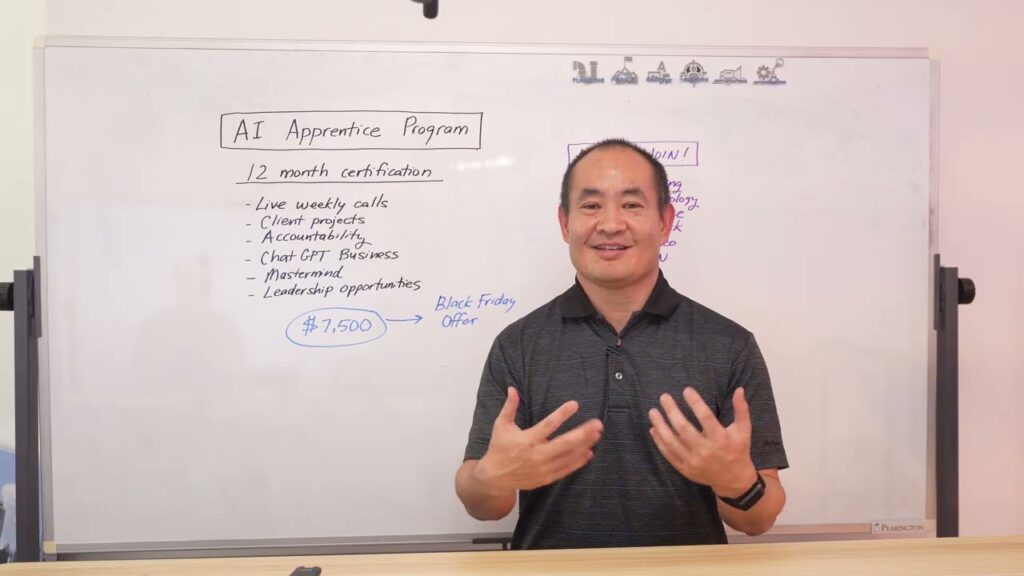
AI Apprentice Program

Imagine your young adult becoming the person who actually makes phones ring for real local businesses using AI, proven marketing systems, and hands-on apprenticeship.

This is learn-by-doing, directly with Dennis Yu and Jack Wendt, inside a community of 400+ motivated young adults building real skills, real experience, and real income.

Why this program exists

Local service businesses (plumbers, landscapers, roofers, dentists, HVAC, contractors ) are drowning in agencies that overcharge and underdeliver.

We train young adults to become the opposite.

Your young adult becomes the AI-powered marketing operator who:

  • Makes the phone ring.
  • Ranks businesses on Google.
  • Creates videos that convert.
  • Uses AI agents to scale execution.
  • Runs Dollar-a-Day ads.
  • Fixes bad SEO and exposes fake agencies.
  • Drives measurable revenue for a real client (often your business).

They don’t graduate because a calendar year passed.
They graduate when they can prove they can drive real leads at an acceptable cost per result.

Success stories

Dozens of professionals (from young apprentices to established business leaders) have sharpened their marketing skills and launched new opportunities through mentorship and collaboration with Dennis and Jack.
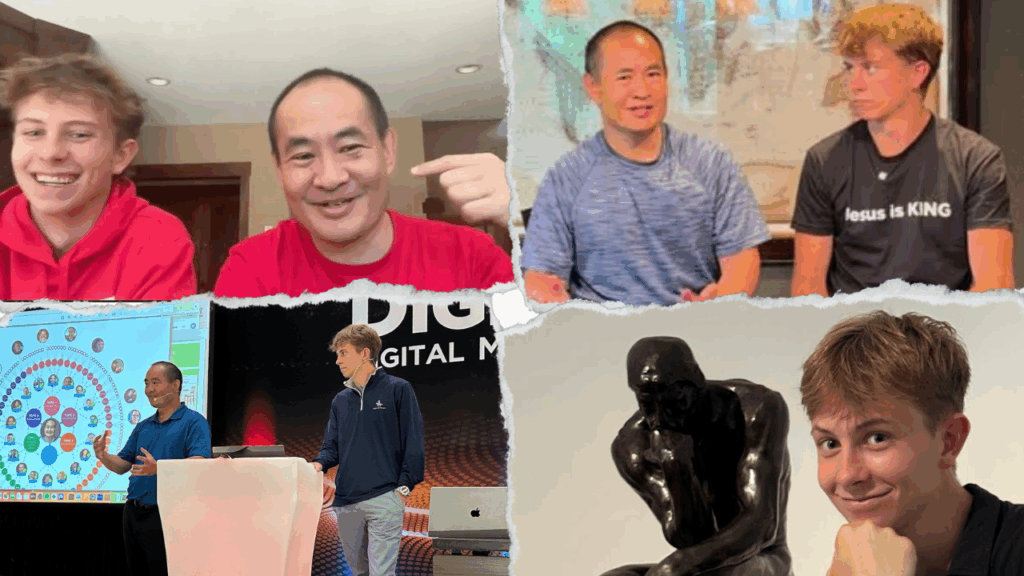
Ethan Van De Hey

Went from a stuck marketing role to leading campaigns at Infinity Exteriors.

After mentorship from Dennis, he mastered Dollar-a-Day ads and storytelling frameworks that now generate measurable ROI for a multimillion-dollar construction company.

Dylan Haugen

Former high-school athlete turned content creator and host of the Dunk Talk Podcast.

Under Dennis’s guidance, Dylan transformed his already extensive library of viral content (amassing over 100 million organic views) into a structured personal brand with real authority.

He learned how to make his online presence visible on Google through his personal brand website, articles, and structured data, ultimately earning his own Knowledge Panel.

This shift turned his reach into lasting digital credibility.

Marko Sipilä

Started with BlitzMetrics as a teen and built a seven-figure agency by applying Dennis’s mentorship framework.

He’s now mentoring other young marketers around the world.
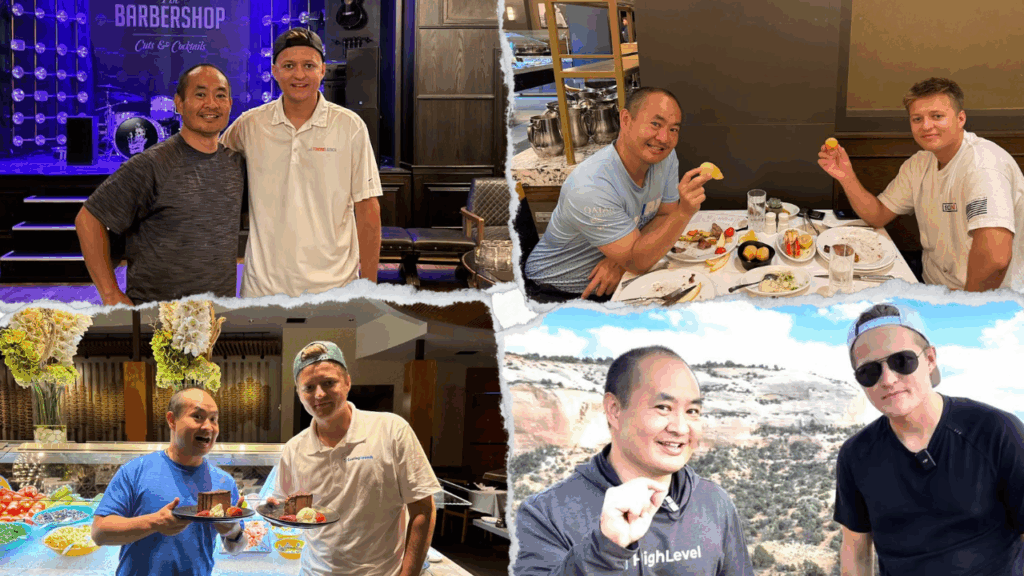
David Carroll

Agency owner who credits Dennis for his growth in digital marketing and strategy execution, applying the same processes that power Fortune 500 campaigns.

In 5 years, David Carroll has led his innovative print marketing company Dope Marketing to be evaluated at $100 million.
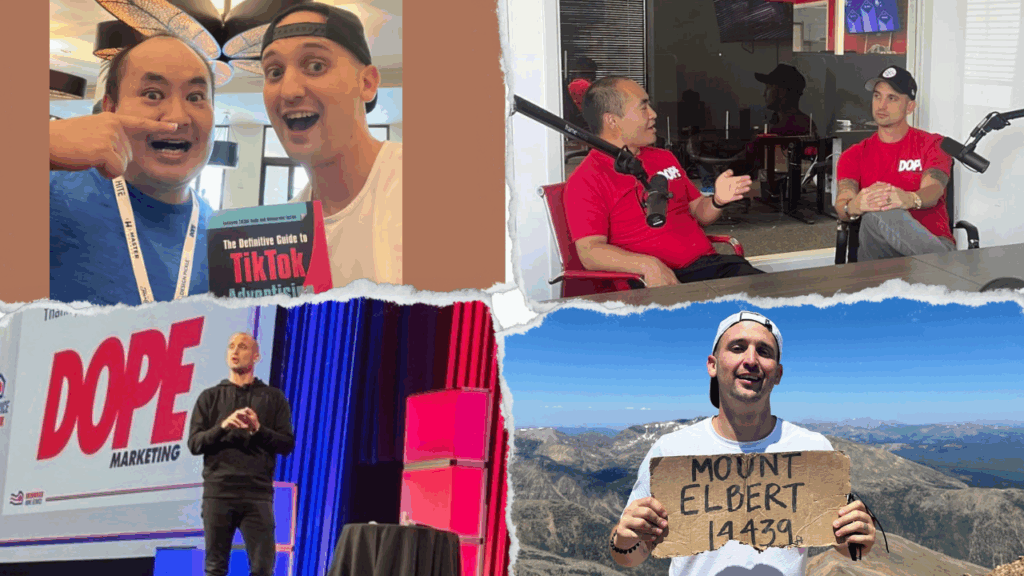
Heather Dopson

Industry leader and keynote speaker who collaborates with Dennis Yu on mentorship and professional development programs, embodying the “learn-do-teach” philosophy.

Caleb Guilliams

Founder of BetterWealth and long-time mentee of Dennis.

His storytelling-driven approach to financial education reflects the systems Dennis helped pioneer.
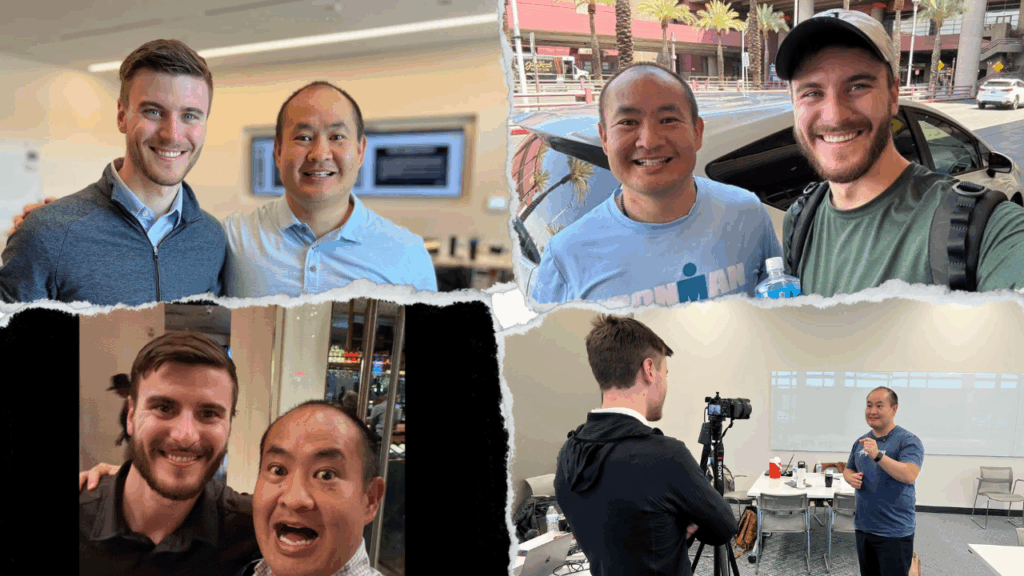
Natalie Ferreyra

From social media consultant to leading roles at Snap Inc. and now Netflix, Natalie’s career showcases how mastering core marketing frameworks and consistent execution can open doors to global opportunities.

Taylor James

Owner of Dumpster Dogs in Austin, TX.

Taylor was paying an SEO company $750 a month for “optimization” that delivered zero measurable results until he learned how to do it right through mentorship from Dennis.

In just a few weeks, he learned to spot fake SEO tactics, take control of his own analytics, and build true authority the right way by creating authentic one-minute videos, writing helpful blog posts, and connecting with other local businesses.
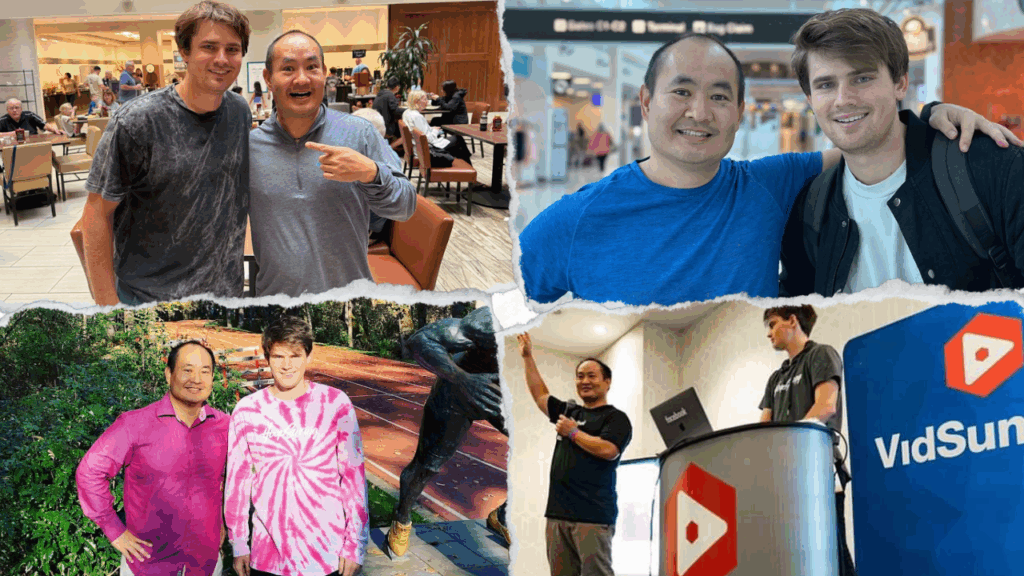
Brennan Agranoff

Six years ago, Brennan was stitching socks by hand in his parents’ garage.

Today he’s built a seven-figure sock brand, a logistics company, and a software platform while becoming one of the clearest examples of what happens when you combine grit with systems.

We’ve put him on stages across the country to teach how the Content Factory works in real life: hiring and training VAs, building scalable SOPs, and applying the 9 Triangles to grow from “kid with an idea” to a multi-business operator.

Brennan shows young entrepreneurs exactly what’s possible when you follow the framework and put in the reps.
 

What your young adult will actually do

All apprentices work on a live client project.

If they’re doing this for your business, perfect.
If they’re joining solo, we assign them a client.

During the first 90 days they:

Produce

— Capture authentic, short-form videos (15–60 sec) using just their phone.
— Coach business owners on what to say and how to say it.

Process

— Edit in Descript or CapCut.
— Subtitle, trim, format.
— Follow the SOPs step-by-step using AI agents.

Post

— Upload across YouTube, Facebook, Instagram, LinkedIn, and website.
— Use correct titles, descriptions, hashtags, schema markup.
— Fix broken websites and analytics setups.

Promote

— Boost top-performing content using Dollar-a-Day.
— Set up retargeting.
— Improve Google entity authority.
— Optimize Google Business Profiles.
— Run Google, Meta, and LSA campaigns.

Measure

— Track calls through CallRail, ServiceTitan, or similar.
— Submit weekly MAA (metrics, analysis, and action) reports.
— Identify what’s working and what’s not.
— Present findings clearly and confidently.

This system is the same framework we used with Nike, Adidas, Red Bull, Quiznos, The Golden State Warriors, Rosetta Stone, Johns Hopkins University, and thousands of local service businesses.

How the program works

Weekly live coaching

Every Thursday at 2 PM Pacific.
You bring real problems, we solve them live.

Hands-on implementation

Not homework.
Real campaigns.
Real budgets.
Real phone calls.

Weekly reports

Every apprentice submits a weekly MAA report.
Even if they’re traveling.
Even if it takes 3 minutes.

Active AI tools & agents

Each student gets access to our internal AI agents that we burn $15–20k/month maintaining in credits and tooling.

Your young adult learns to be the manager of these agents, the true skill of next-gen marketing.

Community & accountability

Inside the private Facebook group, students help each other, solve problems, and collaborate 24/7.

This is a group of A-players who compete, push each other, and level up.

Who this is for

Young adults who:

  • Want real skills and real-world results.
  • Can follow checklists.
  • Can communicate clearly on video.
  • Are humble, hungry, and willing to put in the reps.
  • Want a portfolio of work they can show to any employer.

Parents & business owners who want:

  • A capable young adult running their marketing.
  • Authentic content instead of agency BS.
  • More phone calls and better visibility.
  • A system that has already worked for hundreds of local businesses.

You must be:

  • Based in the United States.
  • Working with (or willing to work with) a Local Service Ads category business.
  • Willing to put in at least 5 hours per week.
  • Not afraid of learning new tools.
  • A decent human being who doesn’t complain, whine, or ask for refunds every time life gets hard.

If you’re an excuse-maker, a complainer, or someone who needs hand-holding, don’t join.

Who this is not for

  • People outside the U.S.
  • People running e-commerce, SaaS, or crypto projects.
  • People who want “motivation” instead of execution.
  • People terrified of video.
  • People not willing to submit weekly reports.
  • People who want babysitting.
  • People who want to “try it for a week.”
  • People who don’t want to give back or help others.

We’re building a culture of execution, accountability, and mentorship.
If that scares you, this isn’t for you.

Program cost

$7,500 for the full year.

You’re investing in weekly coaching, AI tools, SOP library (hundreds of checklists), full Content Factory pipeline, over 140 courses (constantly updated), access to our AI agent system, a real client project, accountability and mentorship, a community of peers, and a year of guided execution.

Before joining, we require a quick call to make sure it’s a mutual fit.

If we’ve already spoken and agreed you’re a fit:

If you’re all-in, committed, and willing to show up each week, you will win here.

If you’re looking for shortcuts, passive courses, or easy buttons, this isn’t for you.

We’re here to build the next generation of marketers who can run real businesses, manage AI agents, and drive measurable outcomes.

If that fires you up, welcome home.



Why This Simple 29-Second YouTube Ad Gets a 98.6% Watch Rate

When most people see a YouTube ad, they skip within seconds. Dennis Yu opened this section of his DigiMarCon session with the opposite scenario: a 29-second clip that holds 98.6% of viewers all the way through. No actors. No studio. No script. Just a raw moment with a real sales rep named Alex.

The knee-jerk reaction is to assume that the watch rate results are fake—bots, bad data, or some trick in the setup. But the numbers are real, and the leads they generate are very real. The reason they work comes down to a simple principle Dennis repeated throughout the training: the content itself is the targeting.

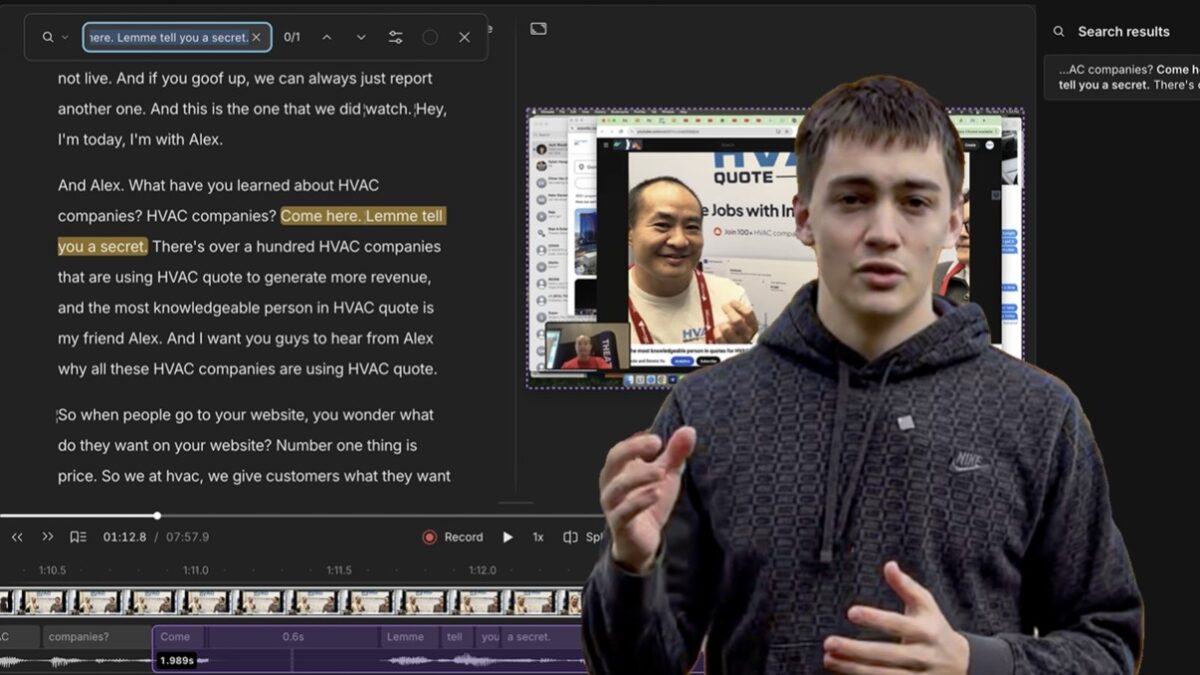
In the session, Dennis pulls up a short YouTube ad featuring Alex, one of HVAC Quote’s top sales reps. When leads come in, they get booked with her, and she’s the one walking HVAC owners through the tool and closing demos. Dennis explains that Alex was very shy and didn’t want to be on video at first, but he convinced her to try a quick, casual clip with the reassurance that it wasn’t live and they could always redo it. On camera, she simply talks through what she sees every day: homeowners want price first, HVAC companies worry about objections, and the quoting tool lets them show pricing upfront while still positioning against competitors. She’s not a marketer, not a “video person” — she just knows the product and the customers. That authenticity, combined with the high watch time on the ad, is what sends a strong signal to YouTube’s algorithm and keeps driving qualified leads.

Once that signal kicks in, the machine goes to work. YouTube shows the clip to more people who behave like the ones who watched the whole thing. Then it retargets the ones who stayed for the next set of clips. No complex targeting. No lookalikes. No giant ad budget. Just behavior doing the heavy lifting.

Dennis pointed out that the performance wasn’t an accident or an outlier. The video continues to deliver leads months later. Watch-time stays stable, cost per lead stays low, and the system keeps finding the right HVAC companies because the viewer reactions shape the audience far better than any manual filter ever could.

It’s a reminder that marketers often over-engineer what platforms already solve for. If the content is relevant in the first three seconds, if real people appear on camera, and if the message speaks directly to a specific group, the algorithm will route the video to the right viewers. And when you give the system this kind of proof, the results compound — clip after clip, lead after lead.

Want to learn how to apply this for your family’s or sponsor’s local service business?

This is exactly what we teach inside High Rise Academy—how to capture real proof, turn it into simple videos like this, and let the platforms do the sorting. Whether you’re helping a parent, a mentor, or a local business in your community, we train you step-by-step to run the same systems Dennis uses with companies like HVAC Quote.

How to Clean Up Training Videos, Presentations, and Zoom Clips Using Descript + ChatGPT

If you’re serious about building a real brand—whether you’re a local business owner, agency, or creator—you can’t avoid long-form content.

Webinars. Live presentations. Zoom trainings.
That’s where the real teaching happens.

The problem? Those recordings are usually messy. Crowd chatter, filler phrases, side stories, awkward transitions—all the stuff that makes sense in a room full of people, but drags on YouTube or inside a training library.

This article breaks down the exact system I use to turn a raw live presentation into a clean, focused training asset and a batch of short clips, using Descript and ChatGPT.

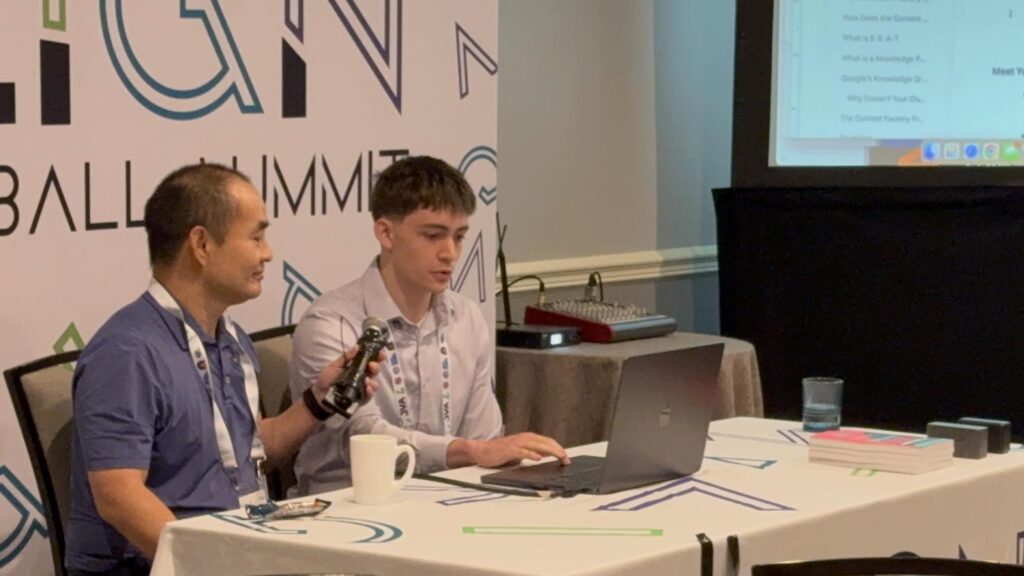
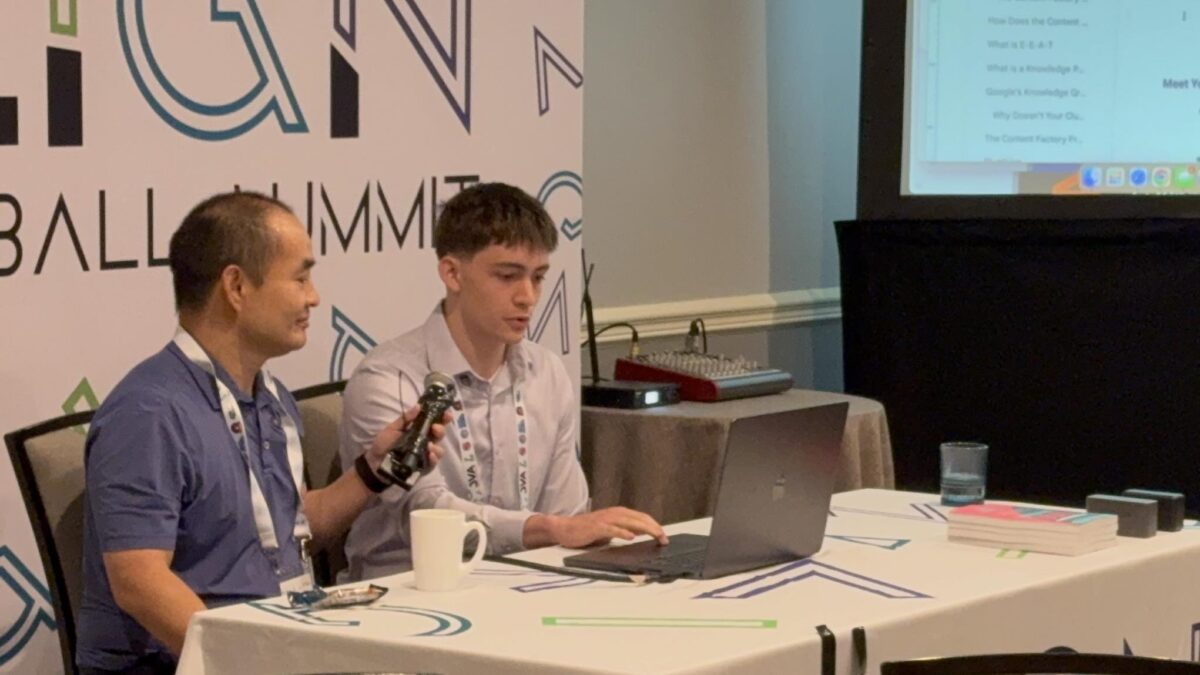
The working example: a session Dennis Yu gave at DigiMarCon Silicon Valley on Dollar-a-Day YouTube ads—recorded live while presenting, then edited afterward as if it were a planned training.

Why Long-Form Training Content Still Wins

It’s easy to obsess over short-form content. But the people who buy from you—coaching clients, sponsors, high-ticket service customers—usually come from deeper material:

  • A 30–60 minute webinar
  • A conference session
  • A live training inside your program

Those long videos do the real work: teaching, framing your system, and proving you know what you’re talking about.

The problem isn’t that people won’t watch long videos.
The problem is they won’t sit through 10 minutes of small talk to get to the good stuff.

So the goal is simple:
Keep the substance. Cut the fluff. Turn one talk into many assets.

The Raw Input: Dennis at DigiMarCon Silicon Valley

The video I edited for this workflow was a real talk Dennis gave at DigiMarCon Silicon Valley on Dollar-a-Day YouTube ads—the same framework we use for local service businesses and software companies.

Here’s what made the raw recording messy (and very normal):

  • It was recorded as a Zoom clip while he presented in front of a live audience.
  • He interacted with the crowd and reacted to the room.
  • Some parts were gold for training.
  • Other parts made sense live, but didn’t add much for someone watching on YouTube later.

Instead of re-filming a “perfect” studio version, we used that live talk as the master asset—and cleaned it up after the fact.

Step 1: Record Once, Use Everywhere

The first rule is simple: don’t overcomplicate recording.

In this case:

  • Dennis spoke live at DigiMarCon.
  • He hit record using Zoom.
  • The result was a standard screen + camera recording—nothing fancy.

Zoom Clips (or similar tools) make this easy. You can capture:

  • Conference sessions
  • Internal trainings
  • Client workshops
  • Coaching calls

All of those can become content after the fact. You don’t need studio time to get started—you just need to hit record when you’re already teaching.

Step 2: Edit Your Video Like a Document in Descript

Once the recording is done, everything moves into Descript.

Descript does two important things at once:

  1. Transcribes the full video into text.
  2. Links every word of that text to the exact frame in the video.

That means you can:

  • Scroll through the transcript.
  • Highlight a sentence or paragraph.
  • Hit delete.
  • And that portion disappears from the video.

You’re basically editing your video like an article.

For the DigiMarCon talk, this let me move quickly through the session and see the structure:

  • Main teaching sections
  • Stories and examples
  • Side comments to the crowd
  • Places where the pacing drifted

I didn’t have to scrub through a timeline guessing where each moment was—I could read it.

Step 3: Let ChatGPT Find the Off-Topic Moments

Here’s where the workflow gets faster.

Instead of manually deciding what to cut purely by feel, I grabbed the entire transcript from Descript (Command + A, Command + C) and dropped it into ChatGPT.

Then I asked it to:

  • Find sections that are unrelated to the main training goal.
  • Flag moments where the speaker is talking just to keep the pace going.
  • Identify spots that might confuse or distract a viewer watching this as a polished training.

ChatGPT responded with specific chunks of text—paragraphs and lines—that were likely non-essential.

From there, the process in Descript is simple:

  1. Copy a suggested sentence or phrase from ChatGPT.
  2. Go back to Descript, click inside the transcript.
  3. Use Command + F and paste that phrase.
  4. Descript scrolls straight to the exact spot in the video.
  5. Review it quickly, then cut the whole section if it doesn’t support the main point.

This alone removes a huge amount of “dead air” and side chatter—without watching the entire video in real time.

Why AI Still Needs a Human Editor

You might be thinking:
“Can’t this whole thing be automated?”

I’ve run transcripts through internal tools like Atlas and experimented with having AI not just suggest cuts, but try to decide what to remove on its own.

Here’s the current reality:

  • AI is good at spotting obvious filler and unrelated tangents.
  • It’s less reliable at knowing where a section actually starts and ends.
  • It often suggests cutting a sentence, when in practice the entire surrounding paragraph should go.

In other words, AI can point to the right neighborhood—but it still needs a human to mark the property line.

So the sweet spot right now is:

AI to highlight candidates. Human to make final decisions.

Once that balance is in place, you get the best of both:

  • AI speed
  • Human judgment

Step 4: Use Descript’s Built-In Cleanup Tools

Descript also has its own AI tools, which are perfect for the “boring but necessary” cleanup:

  • Remove filler words (uh, um, you know, like, etc.)
  • Studio Sound to improve audio quality
  • Basic cutting and rearranging

I recommend this order:

  1. Run filler word removal first to clean the obvious clutter.
  2. Apply Studio Sound if the room, mic, or environment wasn’t ideal.
  3. Then run your ChatGPT-assisted pass for bigger structural cuts.

By the time you’re done, you’ve got a training-ready version of the original talk: clear, focused, and much easier to watch.

Step 5: Turn the Training Into Short Clips

Once the main video is cleaned up, you can flip the process and ask:

“What’s the single most valuable moment here for someone scrolling on social?”

Back inside ChatGPT, using the same transcript, you can ask it to:

  • Identify the most relevant segment that stands alone as a clip.
  • Summarize the main idea of that segment.
  • Suggest a hook or headline based on that moment.

For the DigiMarCon session, that meant pulling out one strong section from a half-hour talk and turning it into a shorter clip we can post on:

  • YouTube Shorts
  • Instagram Reels
  • TikTok
  • LinkedIn

The long video becomes the source.
The short clips become the hooks that send people back to the full training.

The Content Factory Behind This Workflow

This whole process fits perfectly into the Content Factory model we teach:

  1. Produce
    • Record the live talk, webinar, or training (Zoom, in-person, whatever you have).
  2. Process
    • Drop the recording into Descript.
    • Copy the transcript into ChatGPT.
    • Clean filler words, remove noise, and make bigger context cuts with AI + human review.
  3. Post
    • Upload the polished full training to YouTube, your course platform, or internal library.
  4. Promote
    • Pull out the best segments as short clips.
    • Share those across social, email, and inside your programs.

Most people stall in the “Process” stage because they think editing has to be slow and technical.
With this system, a video editor or VA can move from raw recording to publishable asset in a fraction of the time—without sacrificing quality.

How to Train Your Team (or Kids) to Do This

This workflow isn’t just for you as the business owner.

It’s perfect for:

  • A teenage son or daughter helping with marketing
  • A virtual assistant inside your agency
  • An “AI apprentice” inside High Rise Academy
  • Any team member who can follow clear steps

They don’t need to be professional video editors. They need to:

  • Understand the goal of the video (who it’s for and what it should teach).
  • Follow the Descript + ChatGPT steps reliably.
  • Ask questions when they’re unsure whether something should stay or go.

Once someone can run this process, every live training, podcast episode, or presentation becomes fuel for your content factory—not just a one-off event.

A Simple Checklist You Can Follow Today

Here’s a condensed version you can hand to your editor or VA:

  1. Record
    • Capture the session in Zoom (or similar) while you teach live.
  2. Import
    • Upload the video into Descript and let it create the transcript.
  3. Baseline cleanup
    • Run “Remove Filler Words.”
    • Apply Studio Sound if needed.
  4. AI-assisted context cuts
    • Copy the full transcript into ChatGPT.
    • Ask it to flag off-topic, filler, and low-value sections.
    • Use Command + F in Descript to find each section and cut as needed.
  5. Clip creation
    • Ask ChatGPT to identify the strongest stand-alone segment.
    • Use that section in Descript to create a separate short clip.
    • Export both the full training and the clip.
  6. Publish and promote
    • Post the full version to YouTube or your training portal.
    • Post the clip across social channels with a clear call to action back to the full training.

Run that process once, write it up as an SOP, and you now have a repeatable system that anyone on your team can follow.

Want to Go Deeper?

Inside High Rise Academy, we train AI Apprentices to run this entire system—recording, processing, editing, and repurposing content the right way for local service businesses. If you want your business producing clean long-form videos, steady short-form clips, and real proof-based content every week, this is where they’ll learn how to do it. Reach out if you want to get someone enrolled.

The Dollar a Day System for B2B: Why Simple Cell Phone Videos Outperform Big Budget Ads

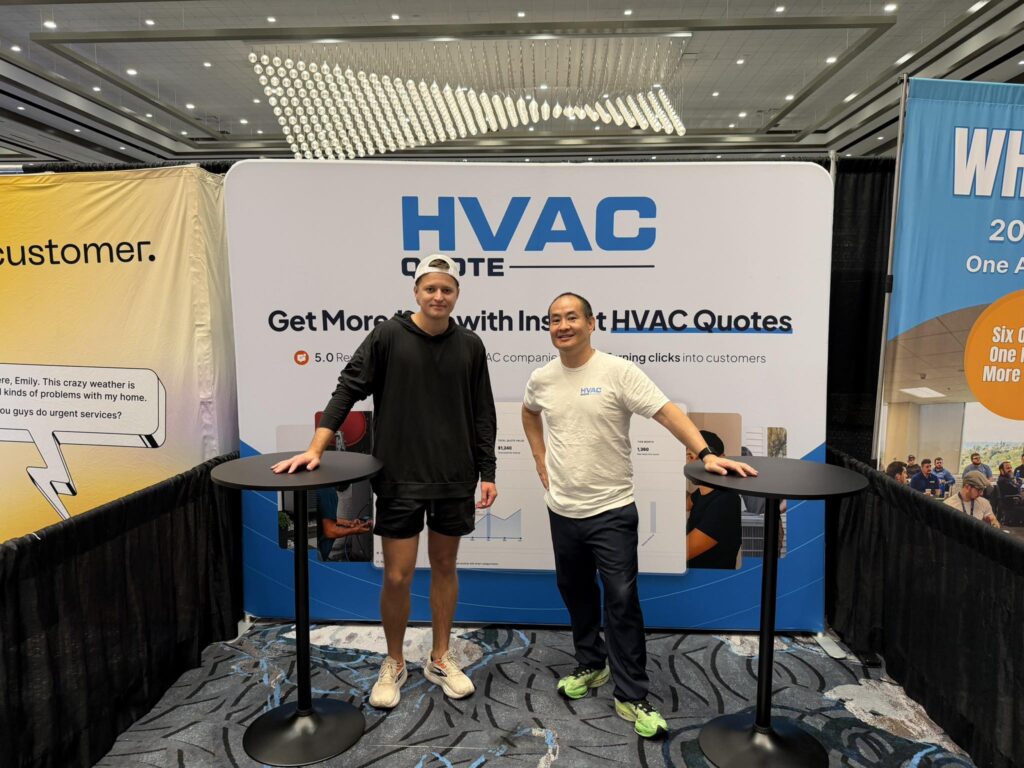
Most people in B2B think marketing has to look expensive to work. They hire production crews, build landing pages, buy lists, and spend months planning campaigns. But during his DigiMarCon Silicon Valley session, Dennis Yu demonstrated the opposite. The best-performing ads for a SaaS company called HVAC Quote weren’t polished at all — they were raw, one-take clips shot on an iPhone.

And those clips booked over 100 new SaaS customers in just a few months.

This training walks through exactly how the system works, why behavior does the targeting for you, and how Dollar-a-Day turns simple content into predictable B2B leads.

The Big Shift: From Polished Ads to Proof-Based Content

HVAC Quote sells a $350/month software tool for HVAC contractors. Like most B2B companies, they raised money, built a sales team, and attended industry events to get demos. But the real breakthrough came from something far simpler: recording everyday moments.

Interviews at the booth. Walk-and-talk conversations in the hallway. A clip shot at dinner where the founder explained the tool in 20 seconds while plates were still on the table. None of it was scripted. None of it was edited. Yet these videos became the most effective ads they’ve ever run.

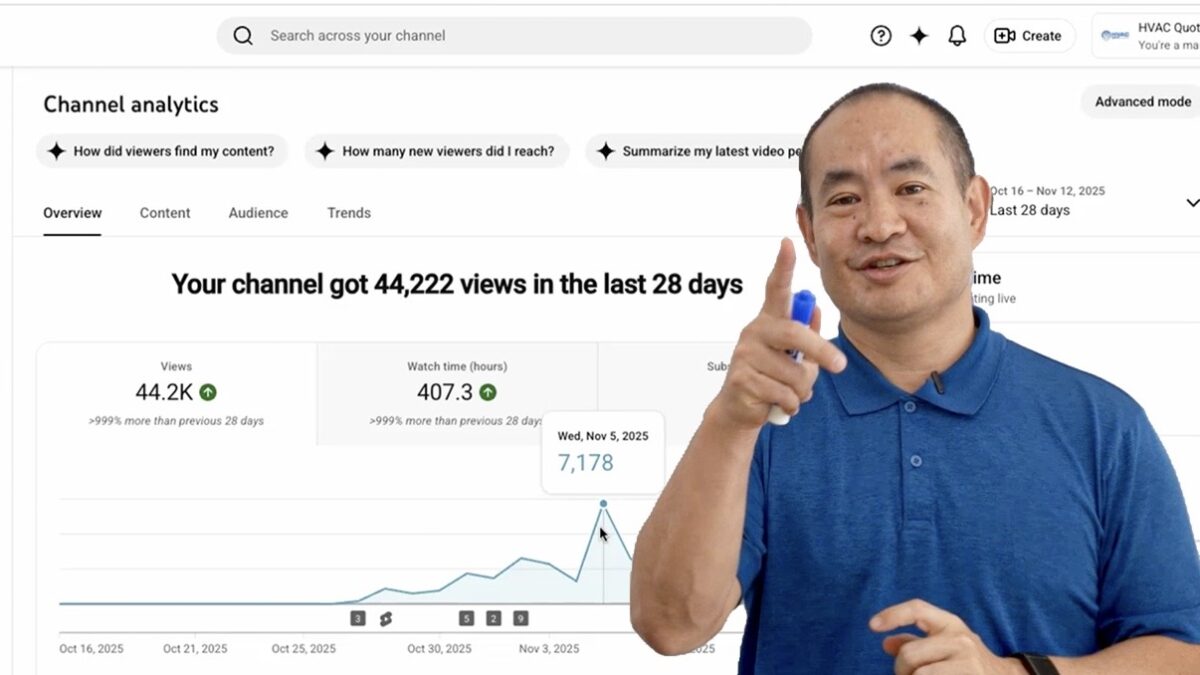
The reason is simple. B2B buyers want to see real people doing real work. They want to feel like they’re listening in on an industry conversation — not being pitched. When Dennis interviewed a well-known trainer in the HVAC space or asked a salesperson named Alex to explain how she closes deals, viewers stayed. One 29-second clip held a 98.6% watch rate on YouTube. That alone explains more than any targeting hack.

Why High Watch Time Beats Traditional Targeting

Dennis showed the analytics live. A three-minute video held viewers for over two minutes. A one-minute clip kept them for almost the entire runtime. None of these ads used custom audiences, job titles, lookalikes, or detailed demographic filters. They were broad.

The platforms did the sorting for them.

Here’s the underlying idea:
When people skip, scroll, or bounce quickly, the system learns who not to show the ad to. When people lean in, watch, and engage, the system finds more users like them.

That’s the actual targeting.

Once you understand this, Dollar-a-Day becomes obvious. You don’t try to force ads onto the perfect audience. You let the algorithm figure out who cares, because it already knows more about user behavior than any human could map manually. Dennis showed YouTube, Facebook, X, TikTok, and LinkedIn — all running the same raw clips — with each platform adapting based on how real viewers reacted.

Conferences, Zoom Calls, and Daily Work: The Real Content Factory

This session reinforced something we teach constantly inside High Rise Academy: the most powerful content in B2B isn’t staged. It comes from daily work.

HVAC Quote had:

• booth interviews
• customer testimonials
• informal conversations
• product walk-throughs
• reactions from agency partners
• short explanations filmed in the moment

Each one became a small asset that could be boosted for a dollar a day. Because the videos were authentic and tied to real industry relationships, they carried built-in trust. Buyers saw the founder, sales reps, trainers, and partner agencies all in the same ecosystem. That context made the content believable.

And as more clips accumulated, HVAC Quote gained more “proof pages” and more opportunities to retarget warm viewers. Dennis described this as a compounding loop — the more content you produce, the more signals you give the algorithm, and the easier it becomes to attract ideal customers.

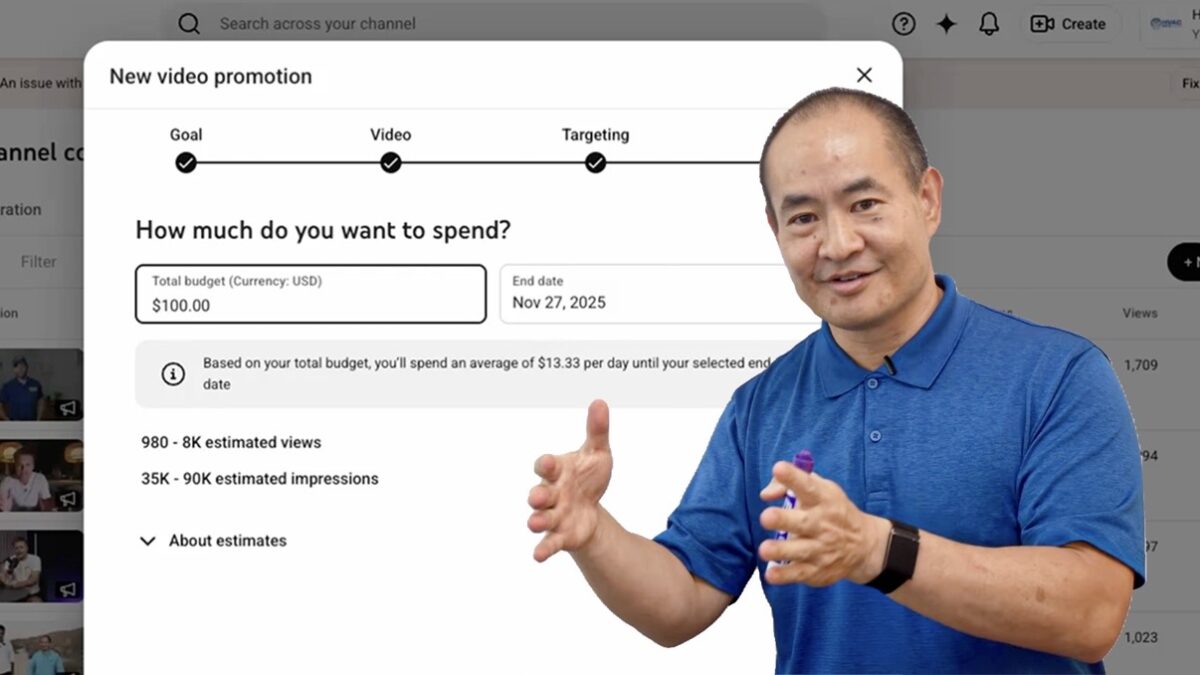
Dollar-a-Day Isn’t About Cheap Ads — It’s About Letting the System Learn

The reason these campaigns work so well is that they respect the full funnel.

The point of the first video isn’t to force a demo. It’s to filter the audience by behavior. The next clip explains a feature. Later, viewers see a testimonial. Eventually they hit a product walk-through or a strong offer.

The call-to-action happens when the viewer is already warmed up, not when they first meet the brand.

Dennis joked about sales reps who chase customers the moment they walk into a store — the type who ask for the credit card before giving the customer time to breathe. Dollar-a-Day avoids that trap. When the viewer is ready, they’ll book a call. The system naturally brings the right people to the bottom of the funnel because they’ve already self-selected through watch time.

LinkedIn Isn’t Enough — YouTube Often Outperforms It

One of the sharper moments in the training came when Dennis contrasted LinkedIn with the other platforms. LinkedIn still relies heavily on explicit targeting because its algorithm doesn’t learn from engagement the way YouTube, Facebook, and TikTok do. If you want to reach a CTO or a specific job title, you can. But targeting alone won’t save content that doesn’t resonate.

Dennis wasn’t dismissing LinkedIn; he showed how it fits into the system. You can boost posts through a personal profile, especially if the CEO has authority in the industry. But the real momentum still comes from the videos themselves — the signals buyers send when they watch or skip.

Good content connects across every channel. Weak content dies on every channel.

What Students Should Take Away

This session gave a clear message to anyone working inside a B2B company or training through High Rise Academy: the real advantage isn’t production quality or complex funnels. It’s consistency, authenticity, and the willingness to capture real proof every day.

Record at the booth. Record at dinner. Record a walkthrough with a customer. Record an answer to a question someone asks you after a meeting. Then boost it. Let the system learn. Let behavior do the targeting. And build a library of moments you can repurpose again and again.

When done right, Dollar-a-Day becomes the simplest and most sustainable way to build trust, fill your funnel, and spark real sales conversations.

Want to Learn How to Apply This for a Real Local Business?

Inside High Rise Academy, we train young adults to use these exact systems to help their parents’ or sponsors’ local service businesses. Students learn how to capture proof, run Dollar-a-Day the right way, build authority, and tie everything back to leads and revenue. If you want practical skills that drive real outcomes—not just theory—this is where we teach it step by step.

Why We Don’t Allow Multiple Participants Per AI Apprentice Enrollment

We’ve had a few cases where a client enrolled one person in the AI Apprentice program, then later tried to add a few more team members “just to listen in.”

While we love the enthusiasm and absolutely want teams to learn together, the program is intentionally one membership per person, not a group pass.

Think of it like a gym membership

When you buy a gym membership, it’s not a “family plan.”
You can’t bring your whole household to train under your name.

The same principle applies here. Each participant gets:

  • Personalized feedback from mentors.
  • Access to private calls and Office Hours.
  • Progress tracking and certification under their name.
  • Direct implementation coaching.

If we let extra people join under one registration, it defeats the purpose. The mentoring and accountability get diluted, and the program stops being effective.

Dylan Haugen

Marko Sipilä

David Carroll

Caleb Guilliams

The “awkward parent” analogy

Imagine paying for your son’s college tuition, then following him around campus, popping into his classes, and sitting in the back row.

You’d never want to be that mom who makes her kid look uncool to his classmates.

Of course, there are times when parents are welcome, open houses and parent–teacher conferences.

Likewise, we’ll host team-wide sessions or demo days where everyone can join and learn. But the core apprentice experience? That’s personal, hands-on, and meant for the enrolled student only.

What if your company has multiple team members?

That’s great, train them all!

Just enroll each person individually.

Each person gets one-on-one mentorship, feedback on their own work, and certification under their own name.

When we keep the structure this way:

  • Everyone stays accountable for their own growth.
  • Each person has a clear progress record.
  • The learning stays high-quality and hands-on.

Why this policy matters

Our mission is to train young adults to become competent digital marketers through doing the work, not just observing it.

When only one person is officially enrolled and others “listen in,” it short-circuits that process.

We don’t want spectators; we want implementers: people who follow the Content Factory process, take action, and see measurable growth.

One Enrollment Per Person — Why This Rule Protects Everyone

Each AI Apprentice membership = one student.

If you want to train multiple people, fantastic, just enroll each one properly so they all get the full experience, not the awkward “parent in the back row” version.

What Makes Young Professionals Like Dylan Haugen Succeed — And Why Most Don’t

When I first met Dylan Haugen, he was a 17-year-old student who somehow managed to balance school, dunk training, client work, and real business responsibilities — all while maintaining a 4.0 GPA. Most people at that age are still figuring out how to manage their homework, but Dylan was already managing clients, editing podcasts, creating content, and mentoring others in the High Rise Academy.

Over time, I’ve seen hundreds of young adults try to build digital marketing careers. Some thrive, others fade. The difference isn’t raw intelligence or talent — it’s execution and communication. Dylan proves that success comes down to a few fundamental habits.

1. Action Beats Overwhelm

When people join the High Rise Academy, they’re faced with dozens of tools, emails, and systems. Some freeze under the pressure; others dive in. Dylan’s first lesson was to take action — even if it’s messy. He doesn’t let a full inbox sit for weeks or overthink small details. He moves, adapts, and communicates.

It’s not about being perfect. It’s about not letting small tasks pile up until they become impossible. That simple discipline is what separates the professionals from the dreamers.

2. Time Management Is Everything

Dylan’s schedule isn’t forgiving — he’s in school from 8 to 3:30, trains daily for dunk contests, and still finds hours each day to deliver for clients. When I asked him how he does it, he said something simple: “There’s downtime everywhere. You just have to stop wasting it.”

Whether it’s 15 minutes between classes or an hour after dinner, Dylan uses those windows to move projects forward. That’s what real remote work looks like — not clocking in for a shift, but owning outcomes and using your time wisely.

3. Communication Creates Freedom

Remote work only works when people communicate. If Dylan’s traveling for a dunk contest or on a family trip, he doesn’t disappear — he lets his team know in advance, asks someone to cover tasks, and ensures the project stays on track.

That’s a skill most adults struggle with. But it’s the foundation of leadership: taking ownership and respecting others’ time.

4. From Hourly Work to Ownership

Dylan’s path in the High Rise Academy followed a clear progression. He started with hourly work, proved he could deliver consistently, then began managing others, leading projects, and now co-founding Local Service Spotlight with other graduates.

This is how real entrepreneurs are built — not through a single “big break,” but through structured progression: learning the basics, proving reliability, and earning ownership.

Why Dylan Haugen’s Work Ethic Sets a Standard for Young Professionals

There’s no shortage of young people who say they want to start a business. But very few understand what it actually takes: organization, communication, consistency, and initiative. Dylan embodies that.

If you’re a student or young professional who wants to build real skills — not just consume motivational content — the High Rise Academy is where you start. You’ll learn to manage projects, communicate with clients, and use AI tools that real businesses depend on.

Ready to build a career that actually matters?
Join the next cohort of High Rise Academy and start learning the skills that helped Dylan turn his education into real-world impact.

Announcing ‘The Complete Guide to Pest Control SEO’ – Grow Your Pest-Control Business Today

In this video, author Danny Leibrandt introduces his new book, “The Complete Guide to Pest Control SEO”. If you run or market a pest-control business and want to generate more leads, this video explains why SEO is essential and how this guide can help.

Danny Leibrandt is the founder of Pest Control SEO, a digital marketing agency for pest control companies, and co‑founder of Pest Partner. He also hosts the Local Marketing Secrets and Pest Control Legends podcasts, where he interviews industry experts and shares actionable local marketing advice. Known for his high‑energy speaking style at conferences like DigiMarCon, Danny aims to inspire others with his “Don’t know? just go.” approach.

His book, The Complete Guide to Pest Control SEO, spans over 280 pages and serves as a step‑by‑step playbook for pest‑control businesses looking to dominate local search. It explains how to optimise your website, set up call tracking and analytics, and make the most of your Google Business Profile. The guide walks you through keyword research, review generation, backlink acquisition and content planning, while warning about common pitfalls like broken tracking or thin content. With practical examples and checklists, the book offers DIY, hybrid and full‑service options so readers can choose the approach that fits their goals.

If you’re a young adult or the parent of one, consider joining High Rise Academy to learn marketing skills that actually get results.

AI Apprentice Builder Mindset Scorecard

Thinking of applying to our $7,500 AI Apprentice program? Before you step into the dojo, run yourself through this scorecard. It’s designed to separate builders from spectators and show you whether you’re ready to thrive in our high-velocity environment.

Portrait of a woman to represent our team in the AI Apprentice program.

Tool Curiosity

  • Ask yourself: what’s a tool or app you recently discovered, and how did you learn it?
  • Good sign: you dove in, broke it, and figured it out by doing.
  • Red flag: you only watched tutorials but never touched it.

Execution Velocity

  • Ask yourself: what’s something you shipped within 48 hours of learning a new tool or concept?
  • Good sign: you value momentum over perfection.
  • Red flag: you research forever and never start.

Grit & Follow‑Through

  • Ask yourself: when you get stuck on a task you’ve never done, what’s your first move?
  • Good sign: you start Googling, ask ChatGPT, and try small iterations until it works.
  • Red flag: you wait for someone to tell you the answer.

Documentation Reflex

  • Ask yourself: how do you keep track of what you learn so others can reuse it?
  • Good sign: you record Looms, maintain a Notion page or write short SOPs.
  • Red flag: you keep it all in your head.

Attitude Toward Change

  • Ask yourself: AI is making some jobs obsolete — how do you feel about that?
  • Good sign: you’re excited and see opportunity in staying ahead.
  • Red flag: you feel threatened or insist AI can’t replace human creativity.

Scoring and Interpretation

Use the table below to assign yourself points in each area. Then total your score to see where you stand.

CategoryPoints Range
Tool Curiosity0–30
Execution Velocity0–25
Grit & Follow‑Through0–20
Documentation0–15
Attitude Toward Change0–10
  • 85–100 points – Builder: you’re ready for our program (think Marko / Danny tier).
  • 60–84 points – Trainable: you have potential; expect a learning curve.
  • Below 60 points – Pass for now: you’ll need more self-drive before you can thrive here.

Use the Builder Mindset Scorecard to Track Apprentice Growth

Age isn’t the issue — mindset is. Younger applicants often adapt faster because they’re used to experimenting with new tools. But anyone with curiosity, humility and the will to tinker can become a builder. Use this scorecard honestly and decide if you’re ready to dive into our AI Apprentice program.

Train a Young Adult to Be a AI Apprentice Marketing Expert | Franchise Partner Program

Unlock the full potential of your franchise’s marketing by training a young adult—your son, daughter or a team member—to become a dedicated digital marketing and AI-powered social media expert. In this video, Dennis Yu and Jack Wendt explain how a one-year program equips them with the tools and strategies to manage the Content Factory process for your local service business.

This program includes:

  • Weekly Office Hours and coaching
  • Full access to all training materials
  • Hands-on support with analytics, ads, and websites
  • A community of peers and mentors

The curriculum is built on proven methods used by major brands like Red Bull and Nike and thousands of local service businesses. Think of it as trade school for digital marketing—tailored specifically for your franchise.

If you’re ready to give a young adult the opportunity to grow into your business’s marketing champion, watch the video and learn how to enroll them today.

Learn more about the AI Apprentice Program.

Don’t Tag Me in Basecamp — Here’s Why

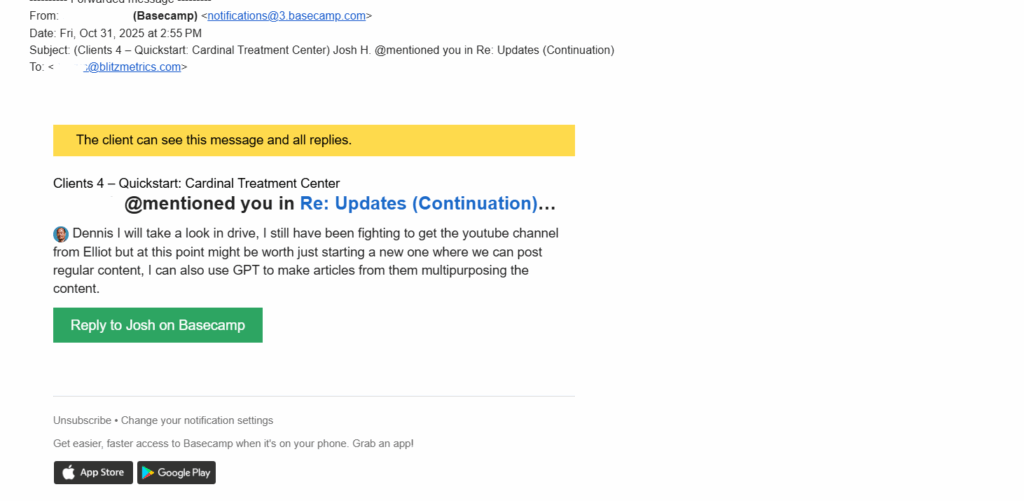
Every time someone tags me in Basecamp, I get two emails for the same message: one for the post, and one for the mention.

Multiply that by dozens of projects, and you’ve just doubled the noise in an inbox that already gets over a thousand emails a day.

I manage 1,000 emails a day. Every unnecessary ping pulls me away from the high-value work that keeps everything moving: strategy, client relationships, training, and developing the next generation of digital leaders.

Tagging me in Basecamp might seem like a quick way to get my attention, but it actually creates friction.

It breaks the system we built to keep communication smooth, focused, and accountable.

A team member tagged me in the Basecamp project of Cardinal Treatment Center

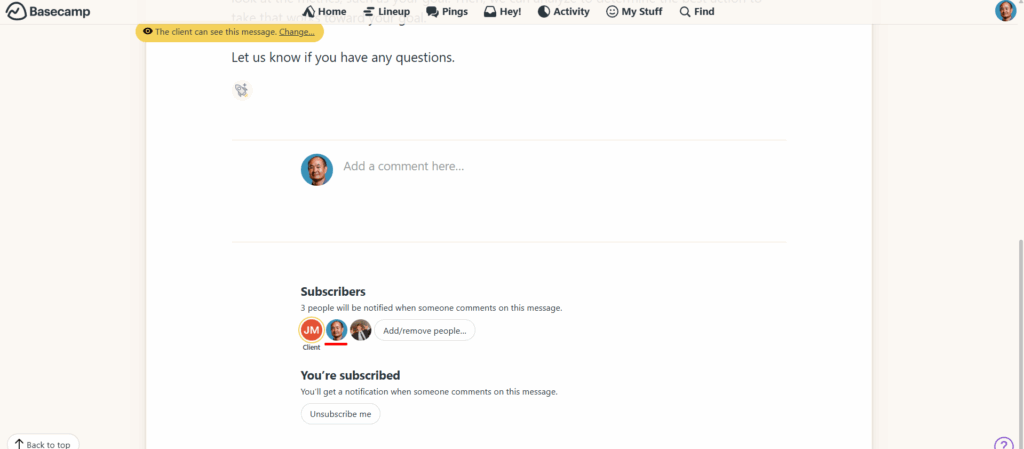
If I’m subscribed to a Basecamp thread, I already get the message.

Practice RACI

Basecamp is where we document work.

We always practice RACI:

  • R = Responsible (the person doing the work).
  • A = Accountable (the person ensuring it gets done).
  • C = Consulted (people giving input).
  • I = Informed (people who just need to know).

When you tag someone just to make sure they “saw it,” you’re bypassing that structure.

It’s like cutting across traffic because you don’t feel like waiting for the light; it might save a second, but it causes chaos.

We Built Systems for a Reason

We created the Level 1 Guide to make this process easy for new folks and anyone who hasn’t worked in a high-functioning team before. It’s all spelled out, who does what, where updates go, and how to communicate clearly without creating extra noise.

Following these systems is about protecting focus.
Every time you skip the system, you create work for someone else and that ripple effect slows everyone down.

Tag the Project Not Dennis — Here Is the Basecamp Rule

Don’t tag me in Basecamp.
If I need to be looped in, assign the task to the right person and let the process work.
If it’s truly urgent, use the proper channels.

We win by running clean systems, not by shouting louder in the digital hallway.