How Bad SEO Can Wreck a Local Business

One of the fastest ways to destroy a local business’s visibility is by doing bad SEO. We recently saw this happen when a virtual assistant (VA) working on the Plumbing Pros website spent hundreds of hours creating content that looked productive on paper—but ended up tanking performance in search.

This case has become one of our favorite teaching examples at High Rise Influence because it highlights a problem that happens all the time: people chase SEO volume instead of real value.

The Problem: A VA Who Thought More Pages = More SEO

When Dylan Haugen and I audited the project, it seemed fine at first glance. Traffic was up. The domain rating was higher. Keyword counts had increased. But when we looked deeper, those metrics told a very different story.

The VA had spent weeks creating location service pages for every nearby town—Helertown, Bath, Nazareth, Wind Gap, and more. Each page used the same copy, just swapping the city name:

“Plumbing services in Wind Gap.”
“Reliable plumbing in Wind Gap.”
“Expert plumbing for Wind Gap homeowners.”

That pattern repeated dozens of times. No photos, no examples, no videos, no proof of actual work—just empty repetition.

Why It Failed Miserably

Google doesn’t reward quantity—it rewards E-E-A-T: Experience, Expertise, Authority, and Trust. These pages had none of that.

They were:

  • Repetitive: Nearly identical sentences across dozens of URLs.
  • Shallow: No unique examples or local credibility.
  • Misleading: Designed to “trick” search engines instead of showing real expertise.

The result? Dozens of pages with zero traffic, zero rankings, and zero conversions—despite the VA billing over 100 hours for this project.

What Real SEO Looks Like

For local businesses, SEO success isn’t about how many pages you publish—it’s about how much proof you can show.

That means:

  • Short video clips of real jobs, like “Today we’re fixing a pressure tank in Helertown.”
  • Before-and-after project photos.
  • Reviews from real customers in specific towns.

That’s the kind of content Google can verify and users actually trust.

The Framework: Metrics → Analysis → Action

At High Rise, we teach MAA — Metrics, Analysis, Action.

  • Metrics: The site showed traffic, but not the right kind.
  • Analysis: Content was repetitive, low-quality, and off-target.
  • Action: Remove the filler, replace it with real examples and proof of work.

SEO doesn’t have to be complicated—it just has to be real.

What Every Young Marketer Should Learn

This case is a reminder that doing more work doesn’t mean doing better work. The VA wasn’t lazy; he just misunderstood what matters. SEO isn’t about making more pages—it’s about showing real experience.

When you build marketing around reality—actual projects, people, and results—you’re not just optimizing for Google. You’re building trust that lasts.

If you’re a young adult—or know one—who wants to learn how to apply strategies like this for real businesses, join High Rise Academy. We teach hands-on, proven methods that turn real work into marketing that ranks and converts.

AI Apprentice Onboarding Checklist

Welcome to the AI Apprentice program, where you’ll learn how to build, automate, and execute real marketing systems using AI the right way.

This checklist is what our Operations team follows every time we onboard a new apprentice.

It ensures each person has access to all the tools, training, and communities they need to succeed from day one.

Step 1: Create the Basecamp Project

Create a new Basecamp project for the apprentice.

Use the naming format:
HRI’s AI Apprentice – [Full Name]

Add:

  • The apprentice.
  • Program manager / mentor.
  • Operations team member for oversight.

Post the welcome article inside Basecamp:
Welcome to the AI Apprentice Program

Step 2: Give ChatGPT Business Account Access

Send an invite to the apprentice’s email for our ChatGPT Business Account.


This gives them full access to team workspaces and custom GPTs.

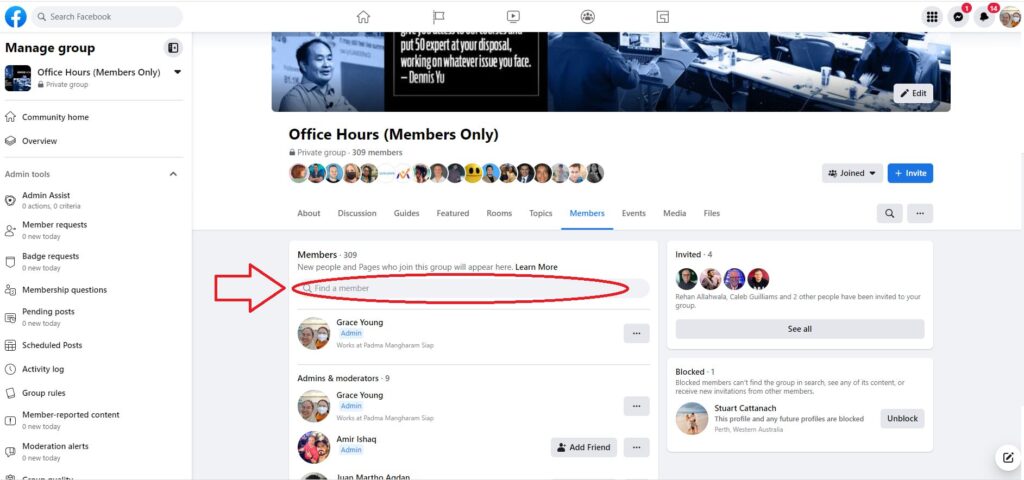
Step 3: Invite to Private Facebook Group

Invite the apprentice to our private community:
Office Hours with Dennis Yu Facebook Group

Encourage them to introduce themselves with a short video or post.

Step 4: Share Live Office Hours Info

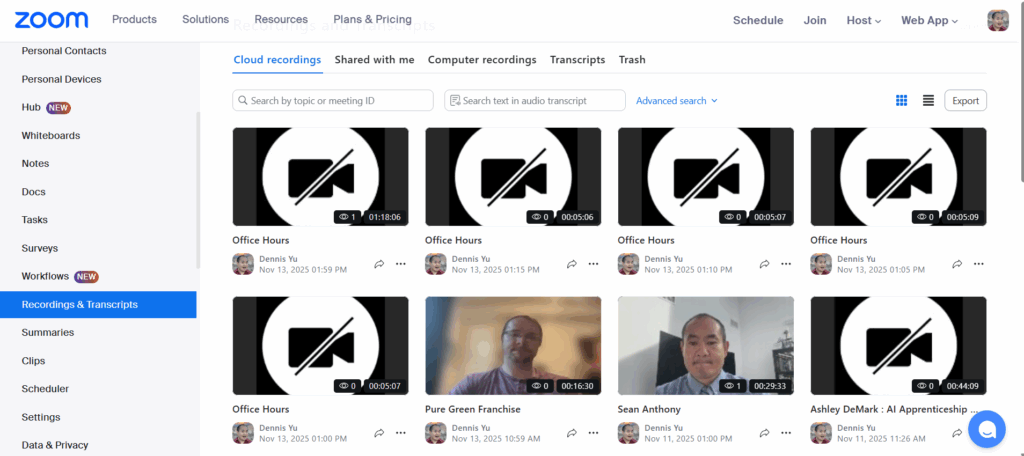
Give the apprentice the recurring link to our weekly Office Hours:

  • Every Thursday at 2 PM PST.
  • Format: Live Q&A, real-time audits, and apprentice showcases.

Remind them to come prepared with a progress update.

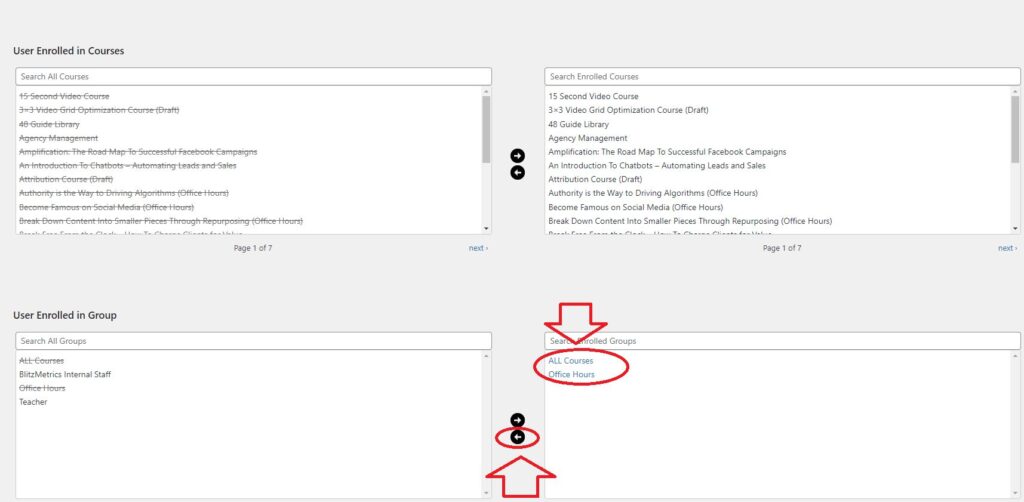
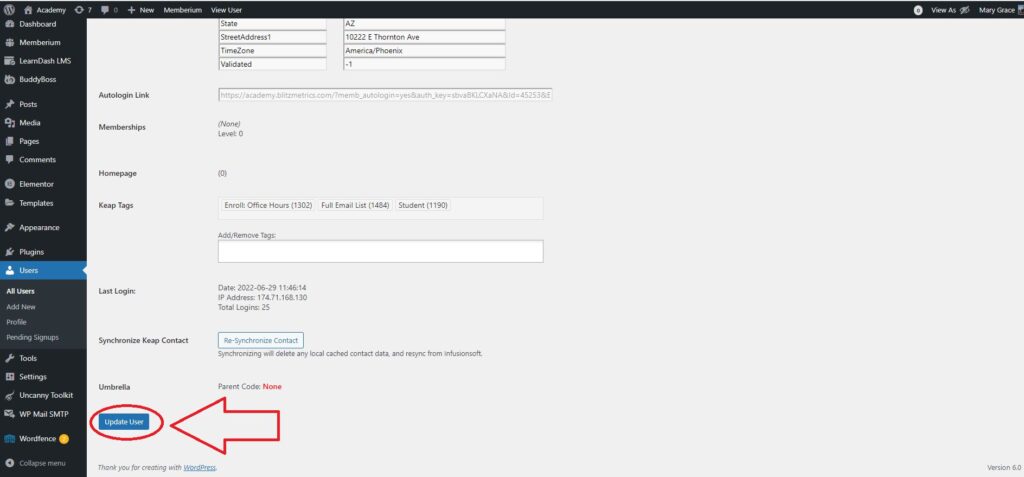
Step 5: Grant Academy Access

Provide login credentials to the Academy, which includes over 150+ paid courses they get free access to.

Confirm they can log in and navigate the dashboard.

Step 6: Share Level 1 VA Guide

Send the Level 1 VA Guide, which covers:

  • Our Content Factory process.
  • Task structure and documentation standards.
  • How to report daily updates and submit completed work.

Confirm they review it within their first 48 hours.

Step 7: Introduce MAA (Metrics > Analysis > Action)

Each apprentice must complete a weekly MAA every Friday to build real data analysis habits.

Share both reference articles:

Remind them:

Every Friday = MAA time.
Review data, analyze what it means, and suggest next actions.

Step 8: Encourage YouTube Learning

Share Dennis Yu’s YouTube Channel:
Dennis Yu on YouTube

Assign them to watch 3–5 recent videos.

Step 9: Confirm Completion

When all steps are done:

  • Tick each item in the internal tracking sheet.
  • Post a “✅ Onboarding Complete” message in Basecamp.
  • Tag the apprentice.
Done! They’re Officially Onboarded

Once the checklist is completed, the apprentice is now ready to start contributing to real projects, attend Office Hours, and advance through our levels of mastery.

Mindset Shifts for Local Service Success: Climbing in the Dolomites with Dennis Yu

In this episode, Dennis Yu discusses mindset shifts necessary for local service success while climbing in the Dolomites. He shares insights on how to achieve personal and professional growth while scaling up local service businesses.

If you’re a young adult or the parent of one, consider joining High Rise Academy to learn marketing skills that get results: https://highriseinfluence.net/high-rise-academy/

Parents: Prepare Your Teen to Be an AI Apprentice for Your Business with High Rise Academy

If you run a local service business and want your son or daughter to take over the digital marketing, here’s a practical path—grounded in what actually worked on real projects, not theory. Dennis Yu, Jack Wendt, and Dylan Haugen recently sat down to discuss how parents can help their kids become successful AI apprentices through the High Rise Academy, sharing what’s working, what young adults are learning, and how families can apply these lessons to real businesses.

Why Teens are a Great Fit and how to Test it Fast

During the discussion, Dennis explains why young adults often pick up AI tools faster than seasoned professionals. They tend to reason with AI instead of treating it like a search bar. Jack suggests a simple test for parents: have your teen open voice mode and talk through a problem with the AI for five minutes—then ask it to outline next steps. Speaking out loud encourages richer prompts and better plans. A second quick test, mentioned by Dylan, is to record a simple one-minute video explaining what your business does and who it helps. That short clip becomes raw material for posts, a blog, and even a lightweight ad.

Dennis shares how this exact process helped a cosmetic dentist in Atlanta. The team started with plain, phone-shot videos about smile makeovers, the doctor’s process, and the office itself. Those clips were repurposed into website articles, Google Business Profile updates, Instagram/TikTok posts, and ad variants—a single shoot fueling weeks of distribution. Businesses that follow the properly repurpose videos can multiply their reach without multiplying effort.

Doing, Measuring, and Iterating Weekly

Jack and Dylan emphasize that success comes from consistent action and feedback. Apprentices wire the digital plumbing first—analytics and call tracking—so we can see exactly which videos, pages, and ads move the needle. Every Friday, they submit an MAA (Metrics → Analysis → Action) report, a system Dennis developed to help keep projects data-driven and accountable.

Accountability isn’t lonely: work is organized in Basecamp, and there are live office hours every Thursday at 2 p.m. Pacific where apprentices present campaigns and dashboards for critique. Dylan points out that this structure helps young marketers build confidence. On the dentist project, one weekly MAA revealed a patient-story clip outperforming equipment demos, leading the team to double down on testimonials across blog, reels, and ads.

Learning by Applying, not Just Taking a Course

Dennis and Jack share how this hands-on model grew from a six-week applied module at Johns Hopkins, where students paired with real local businesses—no simulated assignments. The same “learn → do → teach” framework powers the apprenticeship: learn a tactic, implement it on a live account, document it so the next person can repeat it. Dylan mentions that this approach taught him to solve real problems—like when he got stuck swapping a website image, used AI to troubleshoot it, and then documented the process so others could benefit.

What the Work Actually Looks Like

  • Capture: Short, authentic videos from the owner and team (think FAQs you answer daily).
  • Repurpose: Turn one clip into a blog post, a GBP update, two social cuts, and an ad variation—five outputs from one input.
  • Distribute: Publish across site, search, and social.
  • Amplify: Layer Local Services Ads, Google Ads, and Facebook Ads (Dollar a Day) once the content proves itself.
  • Measure: Track calls and form fills back to the specific asset and keyword.
  • Improve: Scale the winners, fix or drop the laggards.

On the dentist account, that flow moved the business from “invisible online” to a steady stream of measurable calls—because Google could finally “see” the same reputation locals already knew.

What Success can Look Like

Dennis recalls Sal Sciorta, from Plumbing Pros in Eastern Pennsylvania, which followed the same framework. Revenue grew from roughly $30–40k/month to nearly triple, and marketing was intentionally dialed down while the team hired to meet demand. Growth became manageable and repeatable, rather than chaotic.

Compensation also evolves with results. Dylan, who began as an apprentice, advanced from $17/hour to $25/hour through performance and client satisfaction—not time on the clock. Along the way, he built lasting professional assets like a personal brand website and Google Knowledge Panel, helping him stand out in search results. These principles mirror what we teach for building your personal brand on Google, where visibility and credibility reinforce one another.

Who Thrives in This Model

Jack notes that strong communication and self-management are key indicators of success. Apprentices who try, measure, and then ask targeted questions grow quickly. Remote teamwork is part of the experience—Dennis and his team span multiple time zones—but the shared MAA process and weekly reviews keep everyone on track.

Why This Beats Influencer Thinking

Dennis often reminds parents that their kids don’t need viral fame to make an impact. Local businesses grow by showing up consistently in maps, search, and social with authentic content. Genuine videos, regular updates, and measurable results build trust faster than follower counts ever could.

He and the team emphasize that success comes from visibility within your community, not popularity online. When your content reflects real stories, honest expertise, and steady improvement, Google and AI tools start recognizing your business as the local authority—helping you win right where it matters most.

Partnering to Build the Next Generation

The conversation between Dennis, Jack, and Dylan shows how this program blends mentorship, accountability, and applied learning. Parents who want to give their kids real-world marketing experience—and see results for their own business in the process—can join forces with High Rise Academy. The program pairs young adults with experts who guide them through real projects, helping them gain confidence, technical skill, and a clear career direction while supporting your local business growth.

Behind the Scenes with Jack Wendt in Las Vegas: Eataly Eats, Paradox Museum & Comedy Nights

What do you get when you combine a day of grind with a Vegas food crawl? A behind-the-scenes look at how Jack Wendt and I turn a trip into content gold. We started at Eataly on the Strip for authentic Italian bites before diving into the mind-bending optical tricks at the Paradox Museum. Between the attractions we were talking shop about building brands and training our young agency apprentices – because when you love what you do, the line between work and play blurs.

From there, we hopped to a couple of comedy clubs to soak in some laughs and share stories from the trenches. And because no Vegas day is complete without overindulgence, we wrapped up with an all-you-can-eat sushi feast that tested our appetite and our ability to keep a straight face on camera.

Check out the full video above for the unfiltered, whirlwind day in Vegas — then head over to Jack Wendt for more of his adventures. For my insights on marketing, building agencies and making the phone ring for local businesses, visit Dennis Yu. Let us know your favorite Las Vegas spots in the comments — maybe we’ll feature them next time.

Train a Young Adult to Be a AI Apprentice Marketing Expert | Franchise Partner Program

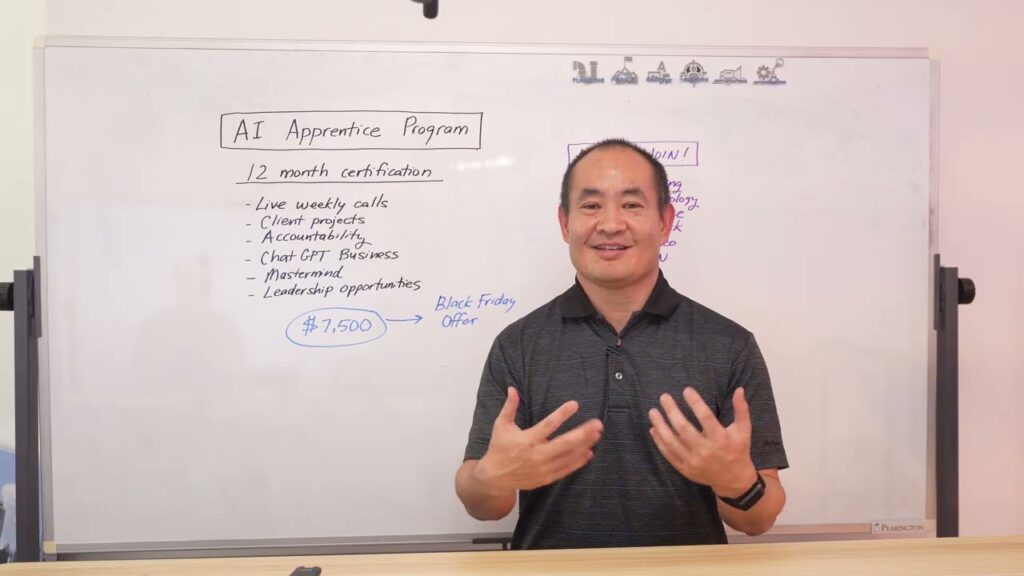
Unlock the full potential of your franchise’s marketing by training a young adult—your son, daughter or a team member—to become a dedicated digital marketing and AI-powered social media expert. In this video, Dennis Yu and Jack Wendt explain how a one-year program equips them with the tools and strategies to manage the Content Factory process for your local service business.

This program includes:

  • Weekly Office Hours and coaching
  • Full access to all training materials
  • Hands-on support with analytics, ads, and websites
  • A community of peers and mentors

The curriculum is built on proven methods used by major brands like Red Bull and Nike and thousands of local service businesses. Think of it as trade school for digital marketing—tailored specifically for your franchise.

If you’re ready to give a young adult the opportunity to grow into your business’s marketing champion, watch the video and learn how to enroll them today.

Learn more about the AI Apprentice Program.

For Young Adults Wanting to Fix the Digital Marketing for Their Parents Businesses | Jack and Dennis

In this video, Jack and Dennis discuss how young adults can help fix the digital marketing for their parents’ businesses. They share practical insights into advertising, content creation, and SEO fundamentals.

If you’re a young adult looking to build real marketing skills and serve local businesses, check out the High Rise Academy program to get hands-on training and mentorship.

Claiming Your Google Knowledge Panel & Scaling Your Agency: Dennis Yu x Jack Wendt at DigiMarCon NYC

If you’re tired of vague “consulting” promises and want a repeatable blueprint for building a service agency that actually scales, this candid conversation is for you.

Dennis Yu and Jack Wendt pull no punches as they share how High‑Rise Influence helps 7‑ and 8‑figure founders earn a Google Knowledge Panel — the digital stamp of legitimacy most gurus can’t deliver. They reveal why clarity and proof matter more than hype, why you must draw a line on who you serve, and how to create an operations playbook that lets you hire and train without reinventing the wheel each time.

Highlights include:

  • Why “customizable” beats “custom” — and how to productize services without becoming a cookie cutter.
  • The hard truth about clients who think they’re the exception: you can’t make a beef Wellington out of baloney.
  • Real numbers: thousands of AI bots (from Claude, ChatGPT, and others) hitting their content, turning free education into actual leads.
  • How to leverage AI, social snippets and small ad spends to attract the right people — and repel the wrong ones.
  • Lessons from plumbing and HVAC agencies: focus on one niche, own your proof, and watch referrals snowball.

If you’re ready to stop selling air and start delivering results that even Google recognizes, hit play. Then let us know in the comments: what’s the one thing holding your agency back from scaling?

Don’t Tag Me in Basecamp — Here’s Why

Every time someone tags me in Basecamp, I get two emails for the same message: one for the post, and one for the mention.

Multiply that by dozens of projects, and you’ve just doubled the noise in an inbox that already gets over a thousand emails a day.

I manage 1,000 emails a day. Every unnecessary ping pulls me away from the high-value work that keeps everything moving: strategy, client relationships, training, and developing the next generation of digital leaders.

Tagging me in Basecamp might seem like a quick way to get my attention, but it actually creates friction.

It breaks the system we built to keep communication smooth, focused, and accountable.

A team member tagged me in the Basecamp project of Cardinal Treatment Center

If I’m subscribed to a Basecamp thread, I already get the message.

Practice RACI

Basecamp is where we document work.

We always practice RACI:

  • R = Responsible (the person doing the work).
  • A = Accountable (the person ensuring it gets done).
  • C = Consulted (people giving input).
  • I = Informed (people who just need to know).

When you tag someone just to make sure they “saw it,” you’re bypassing that structure.

It’s like cutting across traffic because you don’t feel like waiting for the light; it might save a second, but it causes chaos.

We Built Systems for a Reason

We created the Level 1 Guide to make this process easy for new folks and anyone who hasn’t worked in a high-functioning team before. It’s all spelled out, who does what, where updates go, and how to communicate clearly without creating extra noise.

Following these systems is about protecting focus.
Every time you skip the system, you create work for someone else and that ripple effect slows everyone down.

The Bottom Line

Don’t tag me in Basecamp.
If I need to be looped in, assign the task to the right person and let the process work.
If it’s truly urgent, use the proper channels.

We win by running clean systems, not by shouting louder in the digital hallway.

How to Keep Clients Happy Before Problems Start

Congratulations, you’ve got your first client!
That’s a huge milestone. But here’s the thing: the easiest time to keep a client happy is before they’re upset. Once things spin out of control, you’re in damage-control mode and that’s exhausting.

When you care early, communicate often, and follow the right process, you won’t have to “save” accounts. You’ll grow them.

Why Clients Stay: Results + Communication

Our clients don’t stay because of contracts.
They stay because we drive real results, and they feel cared for.

Retention happens when you:

  1. Deliver results consistently through the MAA process — Metrics → Analysis → Action.
  2. Communicate clearly every week, no matter what.

We don’t hide behind a one-year lock-in. Clients stay with us because they want to, not because they have to.

The MAA Process (Metrics → Analysis → Action)

This isn’t just another framework or template; it’s a mindset.
Every week, you’ll move through these three steps:

  1. Metrics: Gather the numbers. What happened?
  2. Analysis: What do the numbers mean?
  3. Action: What will we do next?

It doesn’t matter whether you’re running Google Ads, Facebook, SEO, or content. The same process applies everywhere.
Your goal? Drive more qualified phone calls that lead to real customers for your client.

The Power of the Friday Report

Every Friday (or Thursday if you’re ahead), send your optimization report.
Even if you don’t have big changes to announce, your consistency shows you care.

Weekly MAA for Plumbing Pros PA

Clients should never wonder, “What’s happening?”
The moment they stop hearing from you, they assume you’ve stopped caring. And that’s the #1 reason clients leave, not bad performance, but lack of perceived care.

If you’re sick, traveling, or have weak Wi-Fi, still message them. Even a quick “Hey, I’ll send the update tomorrow, just want you to know I’m on it” goes a long way.

Handling the Unexpected

Stuff breaks, websites crash, ads stop running, Google updates happen.
That’s life in digital marketing.

When things go sideways:

  • Don’t panic.
  • Triage. Figure out what matters most.
  • Communicate. Tell the client what’s happening and what you’re doing.

Most clients are understanding, especially compared to their last three agencies that ghosted them or sent useless, automated reports.
When you care, analyze, and take action, you stand out instantly.

Learn Before You Lead

You’re part of a team now, and eventually, you’ll lead one.
But before you manage others, master the process yourself.

Do the work first. Learn the system.
Then, when your teammates get stuck, you’ll know how to guide them.

That’s how we grow.

Why Feedback is Gold

Weekly reports aren’t just for clients; they’re feedback loops for you.

Sometimes clients will say:

“This looks awesome, great job!”

Or even:

“Turn the marketing down, we’re booked out for two weeks!”

Other times, they’ll raise concerns. That’s fine too. It keeps communication alive and helps you improve faster than any course ever could.

Keep Optimizing

No one ever becomes “done learning.”
Even the most experienced marketers keep refining how they use data and tools.

Treat every week like another rep in the gym, small, steady improvements that add up over time.

Remember: you don’t win by sprinting. You win by showing up consistently.

Final Thought

Client success isn’t about being a “guru.” It’s about being reliable, thoughtful, and proactive.
Do what you say you’ll do, communicate clearly, and improve week after week.

That’s how you build a career. That’s how you make clients stay.
And that’s how you win, one Friday report at a time.