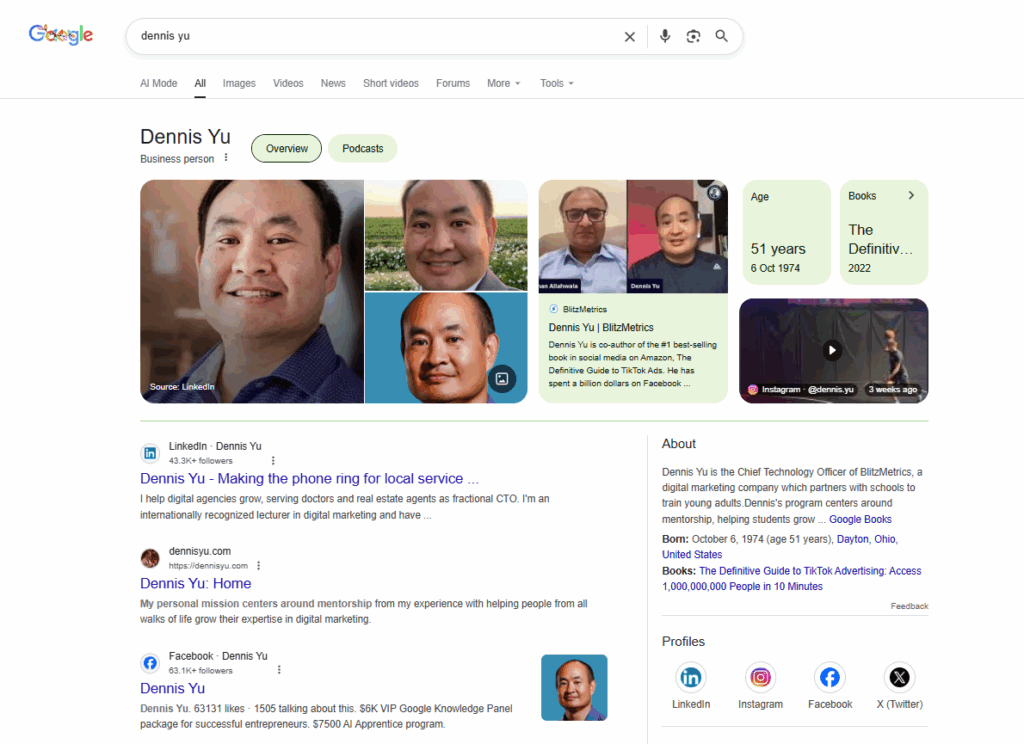
When people search for your name online, what do they find? Scattered information or outdated social media profiles?
A Google Knowledge Panel is like a personal billboard, highlighting your expertise, achievements, and key links in one central spot. But how do you get one, and why does it matter?
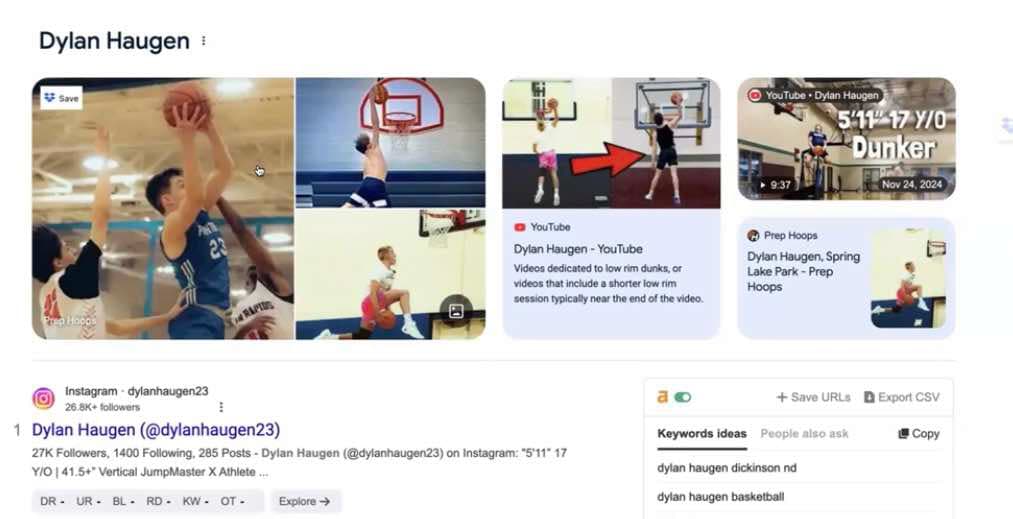
Dylan Haugen is a 5’11” basketball player with a rare talent: he can dunk. He didn’t set out to build a personal brand. Instead, he focused on sharing his story. He posted videos of his training sessions, highlighted his failures and successes, and showed his journey to achieving impressive dunking skills.
These authentic posts caught the attention of credible sports blogs and basketball influencers. Without running ads or launching a heavy-handed marketing campaign, Dylan built trust and credibility online. Over time, Google’s Knowledge Graph recognized the links between his name, verified social media accounts, and mentions in reputable outlets. The result: Dylan earned a Knowledge Panel.
Now, when you search “Dylan Haugen,” you’ll find a detailed Knowledge Panel displaying his achievements, social profiles, and a concise bio. This result didn’t appear overnight. It emerged from his consistent efforts to post genuine content and establish a network of credible sources that referenced him.
What does this mean for entrepreneurs, coaches, or professionals trying to build their reputation? You don’t need to be a celebrity. Instead of pushing hard to sell your services, focus on sharing your journey. Post valuable insights, interact with your audience, and showcase your expertise.
Re-purpose your content across multiple platforms. The more value you provide, the more credibility you’ll gain. Over time, Google’s Knowledge Graph will reflect that credibility.
A Knowledge Panel isn’t about quick fixes. It’s the result of consistent effort. By staying authentic and persistent, you can earn the trust of both your audience and Google’s algorithms.
What if Google instantly recognized your expertise and displayed your name at the top of search results? A Google Knowledge Panel isn’t reserved for celebrities, it’s the result of properly documenting your work, serving your clients, and establishing authority in your field.
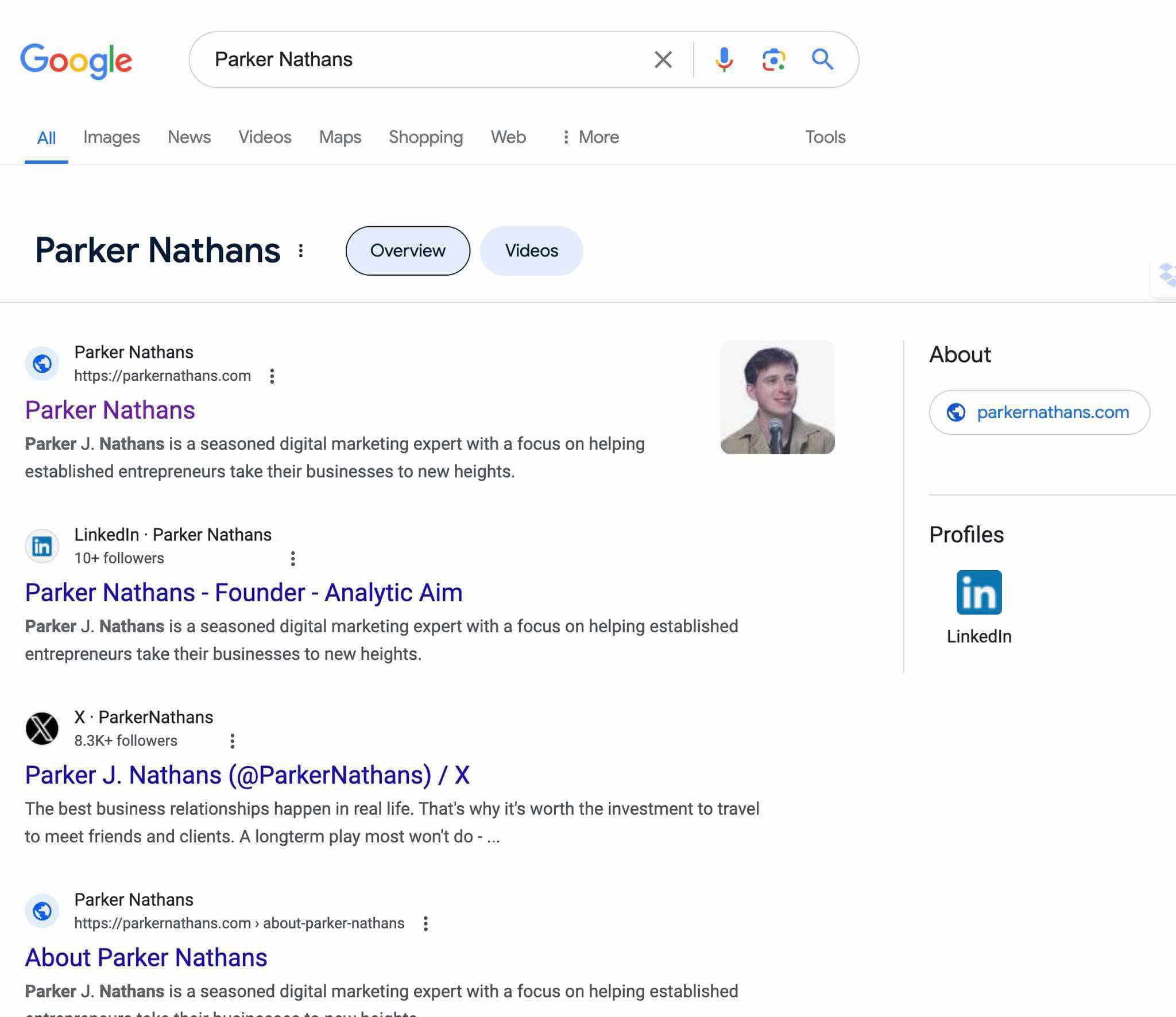
Parker Nathans’ Google Knowledge Panel now appears when you search for him, highlighting his expertise and growing influence in digital marketing for home service businesses.
The Power of a Strong Digital Footprint
Parker didn’t rely on shortcuts to get there. He built his authority the right way, by rolling up his sleeves and doing the work himself. He transitioned from cold calling and outdated marketing tactics to truly mastering SEO, local service ads, WordPress, and other tools that deliver tangible business results.
Unlike many agency owners who depend on low-quality, white-label services, Parker dedicated countless hours to learning, testing, and implementing strategies that actually work. Because of his diligent efforts, Google recognized his authority, reflected in his Knowledge Panel.
Parker’s personal brand site ranks first, seamlessly connected to his content and social profiles, reinforcing his online presence.
Parker followed a structured process that anyone can replicate:
Documenting his work: He showcased the results his clients achieved.
Building a strong online presence: He connected his website, social media accounts, and business profiles.
Publishing valuable content consistently: He reinforced his expertise in digital marketing.
Assembling the right support team: He brought virtual assistants (VAs) to scale his agency effectively.
By focusing on building real authority rather than relying on SEO gimmicks, Parker positioned himself as a leader in his field. His agency now generates nearly $10,000 per month, and with a structured growth plan, he’s on track to reach $50,000 per month.
A significant part of Parker’s success comes not only from his expertise but also from the team he built. Rather than hiring low-cost VAs without a clear plan, he used a structured vetting process to ensure high-quality results.
Parker’s journey shows that any entrepreneur or business owner can establish themselves as an authority, not just influencers or celebrities.
If you provide undeniable proof of your abilities, Google, social media platforms, and AI will recognize you, just as they did for Parker.
Do you want to position yourself as a top authority in your field? Start by structuring your online presence the right way.
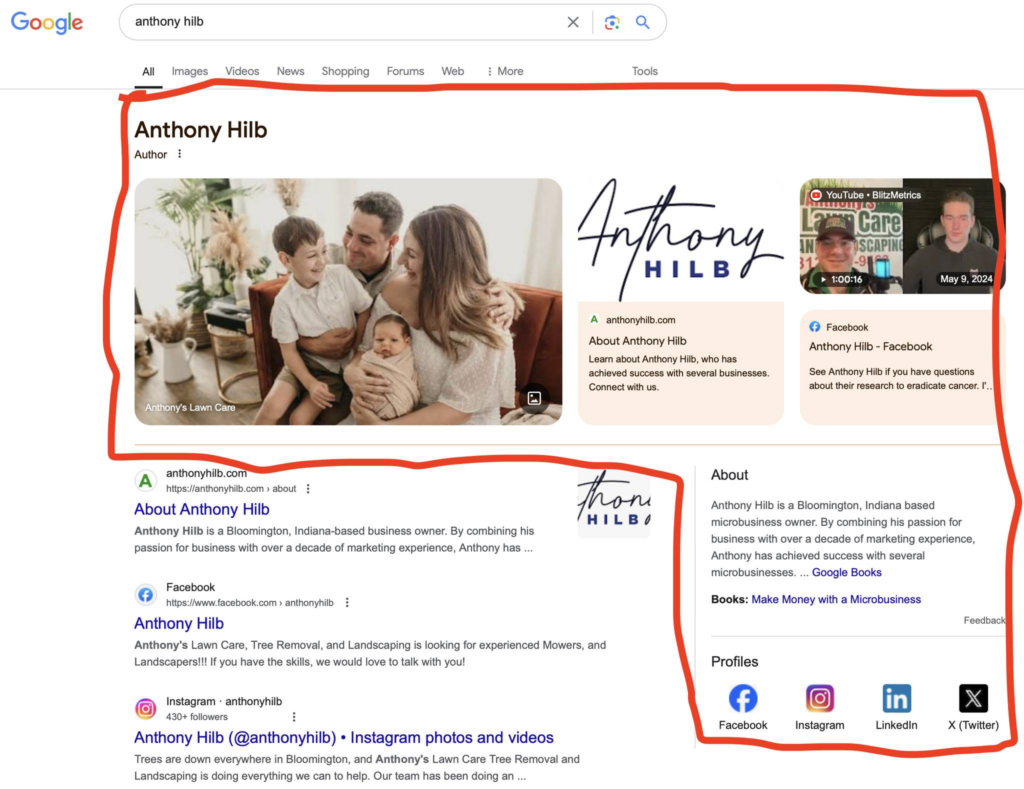
Anthony Hilb’s Google Knowledge Panel is a prime example of how visibility and authority can transform your online presence. Imagine if every time someone searched your name on Google, the results showcased you as the top authority in your field. Google Knowledge Panels display key information about individuals or businesses at the top of search results, instantly boosting online visibility and credibility.
When you search Anthony Hilb, his full Google Knowledge Panel appears right at the top. It highlights his expertise, community involvement, and business accomplishments, making him the go-to name in Bloomington, Indiana.
What’s remarkable is that Anthony didn’t rely on complicated SEO tactics or shortcuts. Instead, he built his online presence the right way, consistently sharing valuable content, engaging with his audience, and providing exceptional service. This authentic approach not only earned him a Knowledge Panel but also established him as a trusted figure in Bloomington, Indiana.
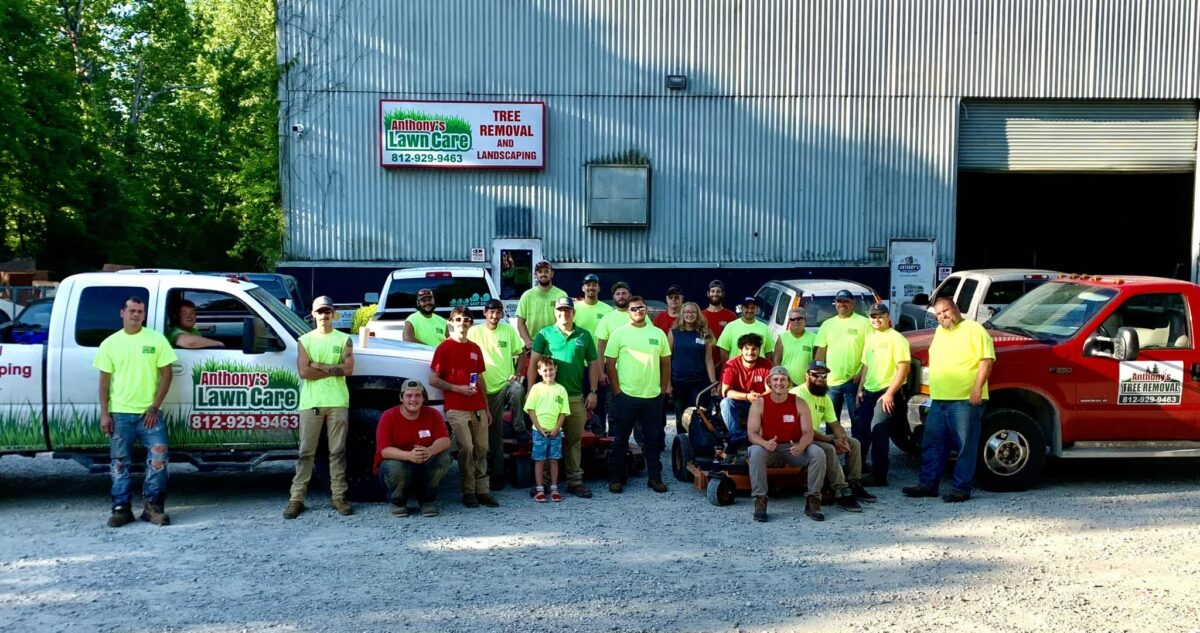
His team documented their tree removal work in Bloomington and uploaded a one-minute video to Facebook and YouTube. Within just two minutes, the video ranked at the top of Google.
By promoting the YouTube video to local Bloomington residents for just $1 a day, Google quickly recognized the engagement and authority signals.
Now, when you search for “tree removal Bloomington, Indiana,” Anthony not only holds the top spot, but also benefits from a Knowledge Panel that highlights both his business and himself.
The Right Strategy to Build Your Knowledge Panel
Many professionals face the challenge of competing with others who share their name, sometimes even celebrities or well-known public figures.
If a high-profile individual already dominates search results, the solution isn’t to add a middle initial or company name. Instead, focus on driving more relevant traffic to your name so you naturally outrank others.
If your Knowledge Panel isn’t appearing or is incomplete, a common remedy is to find your Knowledge Graph ID through related searches and complete Google’s verification process. This helps Google accurately link your online presence.
Many individuals already have the necessary elements to trigger a Knowledge Panel, they’re just not properly structured. Key steps include:
This page is free training for local service business owners who want to understand how marketing actually works before delegating it to an agency or investing further.
Most businesses don’t struggle because they aren’t trying hard enough. They struggle because the systems behind search, social, ads, and content aren’t explained in a way that connects actions to real business outcomes.
Each resource below focuses on a specific area where confusion is common—how platforms interpret your business, why content often fails to perform, and how to evaluate what is (and isn’t) producing revenue.
You don’t need to watch everything. Start with the section that best matches where you feel uncertain, and use the rest as reference as questions come up.
Below is a curated collection of videos selected because they address the most common points of confusion and failure.
How SEO actually works
Start here. This video explains the underlying framework the rest of these trainings build on.
This is the first episode in my Marketing Mechanic series, which focuses on identifying the underlying mechanism that actually drives performance in a marketing channel.
SEO continues to be a frustrating mystery for home service businesses.
Much of that confusion comes from focusing on tactics instead of understanding how search engines interpret businesses at a structural level.
As a search engineer who helped build Yahoo! over 25 years ago, I explain how search engines, social platforms, and tools like ChatGPT interpret entities, and why this matters far more than traditional SEO checklists.
This episode establishes a foundation you’ll see repeated throughout the rest of the trainings: once you understand the mechanic, decisions become simpler and more controllable.
The first seven Marketing Mechanic episodes are designed to build on each other, moving from foundation to execution.
Content strategy that drives sales
Most home service businesses fail spectacularly at content marketing because they pursue a content calendar approach instead of the evergreen Topic Wheel.
In this video, we cover how to go from random posts that get no engagement and die out to revenue-producing assets that continue to live forever.
We’ll discover the 90/90 rule, 3×3 grid, and Greatest Hits, which you can implement immediately.
Own your name on Google
If you don’t own your name on Google, you don’t own your business.
Type your name into search right now. Do you see you… or do you see LinkedIn’s rented billboard?
That’s like running a million-dollar company but letting someone else hold the keys to your front door.
In this video, I break down exactly how to take back your name, structure your personal brand site, and trigger Google’s Knowledge Panel so you become the undisputed authority on you.
If Google can’t tell who you are, neither can AI. And that means customers can’t either.
5 steps to own your own marketing
Whether you use an agency or do it in-house, you should always OWN your own marketing.
Not just to verify you have ownership across all your assets, but to also understand what’s actually driving revenue and where calls are coming from.
Even if you’re not “technical”, you as the business owner deserve to know from your service providers how much money is incrementally being generated by each tactic, without having to ask.
And you should be able to see the actual numbers in your own systems, not a 3rd party interface dressed up to make them look good.
Here are 5 steps to take back control.
There are thousands of legitimate marketers out there who aren’t afraid of letting the client own their own systems and to show them the data.
+ Get access to all your assets (web, social, email).
+ Look at the spend and change history in ad accounts.
Clients can be unhappy with our results, even though we’re working hard.
Each of us is doing what appears to be good work, but must understand MAA (business impact) to truly deliver.
Content creation and website tweaking is only half of the equation (conversion), while the other half is traffic (getting people to these pages).
The combination of traffic x conversion = qualified customers.
And that’s what we should all be looking at, no matter what part of the puzzle we’re working on– Google ads, tweaking the new veneer landing page, building links, editing videos, posting on YouTube, answering the phone, etc…
The Social Amplification Engine
Most people post randomly and hope something works. The Social Amplification Engine turns that chaos into a precise, repeatable system.
This guide walks you through the full stack of digital marketing (plumbing, goals, content, targeting, amplification, and optimization) and shows how each layer works together to generate consistent leads.
You’ll see how to build the infrastructure, set measurable objectives, create content that actually performs, target the right audiences, and measure what’s driving real revenue instead of chasing vanity metrics.
This is the original framework we’ve used for years with seven- and eight-figure local service companies.
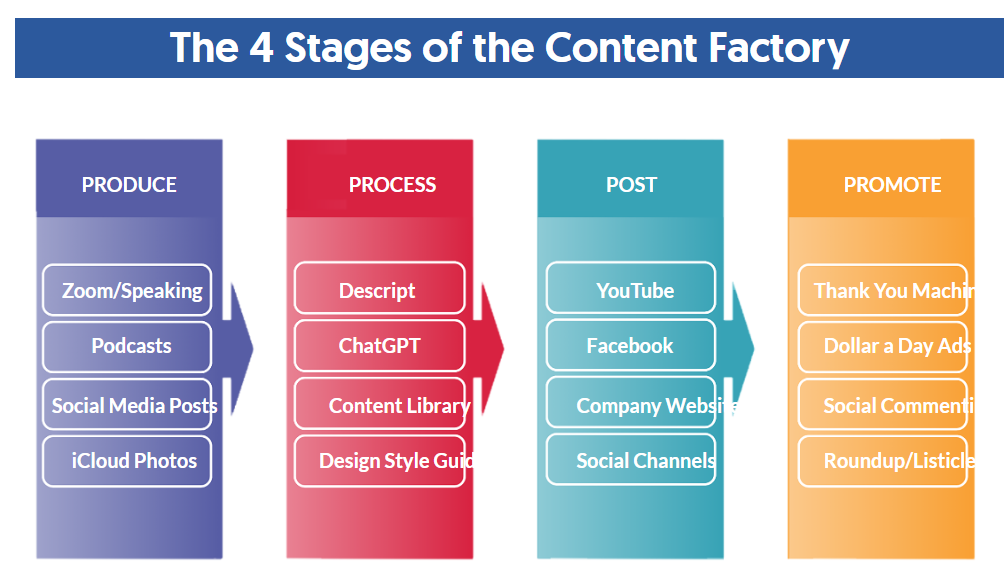
How to build a Content Library
The articles I’ve written, social posts I’ve made, speaking, marketing materials have been scattered all over the place.
I’ve figured out an effective process to centralize it– which has helped me trigger a Google knowledge panel and help my companies grow.
Give this training to your marketing person to build and organize your Content Library.
For your company and your personal brand– to drive your content strategy, advertising, podcast, and other content efforts.
Want to accelerate? Join the AI Apprentice program
The free trainings above are designed to help you understand how modern marketing systems work and how to evaluate what’s driving real business outcomes.
Some business owners, however, want to apply these ideas inside their own businesses by developing a capable young adult who can execute, learn quickly, and grow with the company.
That’s why the AI Apprentice Program exists—a structured, year-long group coaching program led by me and a hand-picked expert team, focused on implementation, skill-building, and accountability.
What you get:
Hands-on work applied directly inside your business
Weekly live coaching every Thursday at 2pm PST.
Private Facebook group for daily support.
Full OpenAI Teams access (we pay for it).
API credits + tools we’ve built and licensed.
A structured path to mastery.
Accountability to ensure you execute.
This allows your marketing to be handled internally, rather than outsourced to an agency you can’t see into, and instead carried out by a trusted young adult inside your business. You know what’s being done, why it’s being done, and how it connects to real business results.
Investment:
$7,500 for a full year (Yes, people charge more for a weekend workshop.)
This is the same system that helps young adults do in 3 months what normally takes 3 years trying to learn alone.