Verifying your Google Business Profile (GBP) is crucial for visibility and customer trust. This guide covers the verification process, methods, and the importance of verification. For more techniques and troubleshooting tips, join our GBP course.
Why Verifying And Claiming Your Business Is Important
Verifying your business on Google enhances visibility, increasing your chances of appearing in local search results and the coveted local three-pack. It builds trust and credibility with potential customers, showing them your business is legitimate and well-maintained.
Step 1: Sign in to Google Business Profile
Go to www.google.com/business to sign in.
Step 2: Click Verify now
If you have multiple Google Business Profile accounts, make sure you choose the correct one.
Step 3: Choose a way to verify
Postcard by Mail is the default verification option. If your business is eligible for other methods, such as phone or email, choose the one you prefer. Fill in the required details.
Double-check to make sure you’ve entered it correctly, then submit the form.
It can take a few days to two weeks for the postcard to arrive.
When you receive your postcard, sign in and click Verify location from the menu. Enter the five-digit verification code from your postcard.
Note: It may take a few weeks for your business listing to appear on Google. While waiting, download the Google Business Profile app so you can manage your account.
Claim Your Business on Google
Do you need to claim an existing Google Business Profile? There are three options:
Option 1: Sign up or log in to your Google Business Profile. Search for your business, and select it. Then follow the steps to confirm that you are the owner.
Option 2: Look up the business listing in Google Search and click Own this business.
If someone has already claimed the business, and you work for the same company, ask them to add you as a user. If you don’t recognize the owner, follow the steps to reclaim your business.
Edit Your Business on Google
Do you need to edit information on your Google Business Profile? Here’s how:
Sign in to Google Business Profile.
Open the location you’d like to edit.
In the menu on the left, click Info.
Click the pencil icon to make your edits. If you want to remove a section, click the X. When you are finished, click Apply.
Keep in mind that it can take up to 60 days for the edit to appear. There may be some information from other sources that cannot be edited.
That means more calls and more customers to service.
Firstly – Google LSA ads aren’t everywhere.
They’re only available in:
United States
Canada
Germany
United Kingdom
France
Austria
Belgium
Ireland
Italy
Netherlands
Spain
Switzerland
There are also specific regulations depending upon the country.
To name a few:
United States: For certain categories like locksmiths and garage door services, advanced verification is required to prevent fraud.
Canada: Similar to the U.S., there might be additional verification processes for specific service categories.
Germany, United Kingdom, and other European countries: Data protection regulations like GDPR are more stringent, impacting how customer information is handled.
France: Specific regulations might apply to trades like plumbing or electrical work, requiring specific certifications or qualifications.
Here Are the Businesses Types That Qualify
Are you in one of these categories?
1. Air Duct Cleaning Service
2. Appliance Repair Service
3. Carpet Cleaner
4. Countertop Service
5. Electrician
6. Flooring Service
7. Foundation Repair Contractor
8. Garage Door Service Provider
9. House Cleaner
10. HVAC (Heating, Ventilation, and Air Conditioning) Service Provider
11. Junk Removal Provider
12. Lawn Care Provider
13. Locksmith
14. Moving Company
15. Painter
16. Pest Control Service
17. Plumber
18. Roofer
19. Siding Contractor
20. Tree Service Provider
21. Upholstery Cleaner
22. Water Damage Service Provider
23. Window Cleaner
24. Handyman
25. Home Inspector
26. Home Organizer
27. Home Stager
Automotive Services
28. Auto Glass Service
29. Auto Service Technician
Professional Services
30. Event Planner
31. Financial Planner
32. Real Estate Agent
33. Photographer
34. Tutor
35. Web Designer
36. Wedding Planner
37. Architect
38. Attorney
39. Computer Repair Service
40. Financial Consultant
41. Interpreter
42. Language Instructor
Personal Services
43. Pet Care Provider
44. Pet Groomer
45. Animal Trainer
46. Dog Trainer
47. Dog Walker
48. Fitness Trainer
49. Funeral Director
50. House Sitter
Retail and Rental Services
51. Appliance Installation Service
52. Auto Rental Service
53. Bicycle Repair Service
54. Boat Repair Shop
55. Cabinet Maker
56. Furniture Maker
Delivery and Transportation Services
57. Courier Service
58. Limo Service
Repair Services
59. Auto Detailing Service
60. Glass Repair Service
Construction and Home Improvement Services
61. Deck Builder
62. Fence Contractor
63. Landscape Designer
Cleaning and Janitorial Services
64. Dry Cleaner
65. Janitorial Service Provider
Google continues to add more every year!
If you fit into any of these categories, here’s how you can get started:
Before running LSA, you need a GMB (Google My Business).
A good example is Anthony’s Lawn Care, which offers tree removal and lawn care services in Bloomington, Indiana.
Before they run LSA, they need a proper GMB (Google My Business) so they can get started.
Now, when you type in “Anthony’s Tree Removal” into Google, they show up.
Anthony’s Tree Removal GMB
Remember to setup your digital plumbing (ads tracking) before you start spending money. We have an entire course on how to do so here.
Here’s How to Setup Your Local Service Ads
Verify Your Business
Ensure your business is eligible for LSA by verifying your business information on Google My Business (GMB). This includes providing accurate business details such as name, address, and phone number. We made a guide on how to do this you can find here.
GMB Optimization
Optimize your GMB profile by adding relevant business information, such as business hours, services offered, and photos. This helps improve your visibility in local searches. Make sure the photos are relevant and actually yours, as Google prioritizes this. This is how you start ranking in the top 3 on Google My Business.
In Anthony’s case, we wanted to make sure all photos listed were from his team’s trucks.
Anthony’s Lawn Care LSA
Get Verified
Verify your GMB listing to confirm your business details and ensure your business appears on Google Maps and local search results. This part is easy, as you simply need to submit documentation of your business’ existence and answer a few security questions.
Choose the category that best describes your business from the list of eligible categories for LSA.
Set Your Service Area
Define the geographical area where you offer services. You can choose specific cities or regions where you want your ads to appear.
Create Your Profile
Enter your business information, including your business name, address, phone number, and website.
Select Your Services
Maybe you’re an HVAC company that also does electric work. Why only choose one when you can help others, too? Choose the services you offer from the list provided. You can select multiple services that your business provides.
Set Your Budget
Determine your budget for LSA. You can set a weekly budget based on the number of leads you want to receive. Initially, we recommend going with what Google offers.
Set Your Availability
Specify your business hours and when you are available to receive calls or messages from customers.
Verify Your License and Insurance
Upload copies of your license and insurance documents to verify your qualifications for the services you offer.
Review and Submit
Review your information to ensure it’s accurate, then submit your application for review by Google.
Receive Approval
Once your application is reviewed and approved by Google, your LSA campaign will be activated, and your ads will start appearing to potential customers.
The beauty of LSA is visibility of your business, without breaking the bank on expensive SEO or paid ads agencies. Remember to work on your local service pages as well – as this can directly impact your ranking through giving greater authority to Google.
We want to prove to Google that you’re a real business, doing real services, in the area you say you operate in.
And because this is such a common problem with local service businesses, we have a $297 Quick Audit which you can purchase now that can diagnose exactly the issues your business has online.
As a project manager, virtual assistant, or agency owner, you should always be looking to improve your work and your client’s results. Luckily, there’s a simple blueprint to follow which guarantees success with enough iterations.
Not only that – but you can use the same blueprint for personal efficiency and decision making as a part of our 9 triangles framework.
9 Triangles Framework
It’s called MAA.
MAA stands for metrics, analysis, and action. MAA is a requirement to measure the success of your work and what needs to be done to ensure happy clients and a thriving business.
Each letter is instrumental, since without metrics we can’t have analysis, and without analysis we can’t have action.
In this article, we’ll go through each with examples, show you how to conduct weekly MAA cycles, and why it’s so important to do.
Metrics
We recently onboarded Star Heating & Cooling, an HVAC local service business in Fishers, IN. In the first week, we wanted to show MAA in action and how simply writing out our metrics can point us in the right direction for getting more calls in the door.
Becca’s MAA for Star Heating & Cooling
As you can see, we’ve had 19 booked calls this week. 13 from existing customers, 3 from our GMB, 2 from our website, and 1 from Facebook.
We can then move to analysis. What the metrics tell us is that GMB calls are the primary source for new client acquisition, even above LSA and PPC which are barely getting us any calls at all right now.
And since we’ve only received 3 new customers from GMB this week, we should prioritize getting PPC and LSA ads going for more call volume since their business qualifies for LSA and wasn’t already spending much before.
Therefore, the action for this week should be getting PPC and LSA set up and running for more inbound new customers.
MAA isn’t just for local service businesses, either. Take the example of a recent VA we’ve hired named Asifa. We’ve asked all of our new hires to reflect and write MAA about their performance so far.
Asifa’s Response to our MAA Prompt
Any full time content VA should be writing more than just 5 articles a day, which equals 1.5 hours per article. So understanding the results of work completed (metrics) means we can then move on to analysis.
Asifa’s analysis isn’t wrong per say, but what we’re also looking for is the reason for the existing metrics before we move on to action.
For example, “I wasn’t as familiar with our clients GCT, and therefore moved slower than I should have when writing these articles” is great, since it addresses the underlying concerns for why the metrics are what they are.
Once we understand the metrics and write an analysis of them, we can then move on to the action. In Asifa’s case, it was to understand more about our process through existing materials and complete more work.
What doesn’t get measured, doesn’t get improved.Which is why the M in MAA is the center of everything else we discuss for analysis and action.
Analysis
The analysis section of MAA is what everyone gets confused on. Most project managers go from Metrics -> Action and skip this crucial step. But without it, the actual actions which need to be taken are vague.
For example, we recently had American Epoxy, a concrete coating company, reach out to us since they were disappointed with their agency. The lead quality most of these leads were coming from outside of Arizona. Since American Epoxy is based in Tucson, they were frustrated that they were getting form submissions from Texas and Florida.
In response, Dennis Yu and myself joined a call where the client manager acknowledged the out of state leads, and then went into the action they would take to address them.
But wait a moment, how would you know what action to take without analysis on why these leads were out of state?
This is like if you were on a boat taking in water in the middle. Sure, you could grab a bucket and start shoveling water… or you could simply plug in the hole where the water is coming from.
But without analysis, everything is a sinking ship and no-one knows where the water is coming in from.
Take the example of All About Pressure Cleaning, a client of ours in Pompano Beach, Florida. All About recently had a big influx of poor quality calls and folks in South Florida looking for jobs.
Since All About Pressure Cleaning does pressure cleaning and other related services, they were (rightfully) frustrated with folks calling them looking for maids and other unrelated services.
Knowing these metrics and the poor quality of them, here was my analysis.
Our Analysis On Poor Client Metrics
You can see me addressing the obvious problem, why this problem has happened, and the solution, which is to start iterating more on Google PPC ads and remove PMAX campaigns.
But without proper analysis, I could have easily said “Okay, we’re working on it!” and tried a dozen other things. Instead, we got to the root cause and offered a solution based on the existing data.
We would not have found the solution had we not conducted proper analysis of our metrics.
Action
Tying MAA together, we have action. When done properly, this is the easiest step since the analysis leads to an obvious conclusion.
For example, if lead volume is low, we can see why that’s the case in analysis and take action based on it. Just like how if you’re bad at writing content and acknowledge the reason for that being your lack of experience, the answer is to clearly learn and do more.
Or if a client is mad about lack of communication, poor lead quality, or lack of lead volume. The solution is almost always visible once you conduct proper analysis.
You can almost view the action section as a to-do list for the following week before the next MAA cycle. Therefore, there’s always new metrics to iterate from and progress to be made, regardless of the situation.
Why is MAA so important?
Besides fitting into our 9 triangles framework, MAA is your universal compass for decision making. Even though we use it for client success, you can use it for personal efficiency, planning priorities, and making important life decisions.
If you care about making money as an agency owner, MAA can reduce your churn rate an enormous amount, since clients can clearly see progress being made and iteration taking place. The iteration and weekly cycles make it so things don’t get stuck either.
If you care about leveling up your skill set, MAA can make your priorities clear since you know your metrics and have analyzed why things are the way that they are.
If you care about building relationships, you can use MAA as a reason for why people act the way that they do and why.
In short – you can use MAA as your professional decision maker since there’s always logic and flow. As long as MAA is being completed, iteration is happening and we’re moving closer to our goals.
AI Apprentices struggle because their work isn’t visible without structure.
When you’re managing marketing for plumbers, roofers, landscapers, or HVAC companies, activity alone doesn’t count. Clients want proof. Weekly MAA reports need to be clear. Progress needs to be documented in a way that makes sense to someone who didn’t do the work.
The Success Tracker is where that structure lives.
It is the single document where AI Apprentices collect, organize, and present their weekly MAA reports. Every task completed, metric tracked, insight discovered, and next step planned rolls up into this one framework. Instead of scattered updates across tools and messages, everything is anchored in one place.
In the embedded video, AI Apprentices can watch me walk through multiple real Success Trackers so they can see exactly how strong reporting looks in practice. You’ll see how different clients, stages, and challenges are reflected clearly using the same structure.
The Success Tracker turns effort into evidence. It gives AI Apprentices a repeatable way to stay organized internally while confidently showing clients what happened this week, why it matters, and what’s coming next.
The Success Tracker is a living discussion document. It’s used during weekly calls, monthly reviews, and quarterly planning to keep everyone aligned on the same reality.
Instead of jumping between tools, screenshots, and half-remembered tasks, the Success Tracker consolidates everything into one place. It shows where the project started, where it currently stands, and what needs to happen next. Because it’s updated continuously, it becomes the single source of truth for both the internal team and the client.
It’s the document that runs the relationship.
Task Checklist
Required Tools
☐ Success Tracker template. ☐ Google Analytics access. ☐ Google Tag Manager access. ☐ Ad account access (Meta / Google Ads if applicable). ☐ Google Business Profile access. ☐ Website admin access. ☐ Screenshot tool (native OS or browser).
Why Local Service Businesses Need This Structure
Local service business owners want clarity.
They want to know whether phone calls are increasing, whether leads are coming in, and whether money spent is producing something tangible. The Success Tracker frames all activity around three stages that mirror how real buying decisions happen: audience, engagement, and conversion.
By organizing work this way, marketing stops feeling mysterious. When performance improves, the reason is visible. When something stalls, the bottleneck is obvious. That clarity builds trust, especially when the person managing the account is an AI Apprentice who may be younger than the client.
The Six-Phase Framework That Prevents Chaos
The Success Tracker follows a six-phase implementation process that reflects how effective digital marketing actually works over time.
It begins with a strategic overview so anyone can understand the big picture without digging through details.
It moves into digital plumbing to ensure tracking and attribution are correct before money is scaled.
Goals are clearly defined so success isn’t subjective.
Content is cataloged and evaluated so effort compounds instead of repeating itself.
Targeting is measured so audiences grow stronger instead of broader.
Because every phase builds on the previous one, gaps are easy to spot. Nothing important stays hidden for long.
Weekly Progress Without the Awkward Explanations
One of the biggest advantages of the Success Tracker is how it transforms weekly client calls.
Instead of scrambling to remember what happened, the document shows it. Completed tasks are visible. In-progress items are clear. Blockers and dependencies are documented. The conversation shifts from defending effort to deciding next steps.
This removes tension from the relationship. Clients don’t feel like they have to interrogate. Teams don’t feel like they have to justify their existence. The work speaks for itself.
Metrics That Actually Tell the Truth
Most marketing reports fail because they collapse everything into a single average number. The Success Tracker does the opposite.
By separating performance into audience, engagement, and conversion, it becomes clear where costs are rising, where efficiency is improving, and where effort should be redirected.
Trends are tracked over time, not just week to week, so decisions are based on patterns instead of panic.
This approach allows young operators to explain results with confidence because they understand what’s driving them.
A System Designed to Scale With Real Teams
The Success Tracker is built so execution doesn’t depend on one person remembering everything.
Much of the documentation and updating can be handled by trained assistants, while account leads and strategists focus on analysis and decision-making.
When leaders step into a meeting, the groundwork is already done. Just like a doctor reviewing a patient chart prepared by a nurse, time is spent diagnosing and prescribing, not gathering basics.
That’s how one person manages multiple clients without burning out, and how AI Apprentices grow into operators instead of task-doers.
The Point of the Success Tracker
The Success Tracker exists because “we’re working on it” is not a strategy.
If you’re responsible for local service clients, you need a system that makes progress visible, decisions grounded, and conversations productive. The Success Tracker provides that structure.
Once you use it properly, client calls stop feeling stressful. Reporting stops feeling defensive. And your work finally looks as organized and valuable as it actually is.
Verification Checklist
This checklist is used after updating the Success Tracker (before a call or internal review).
☐ All sections relevant to the current phase are filled.
☐ No empty slides that should be updated this week.
☐ No outdated numbers or screenshots.
☐ Dates and reporting period are correct.
☐ A third party could understand what’s happening without explanation.
☐ Progress is visible without interpretation.
☐ Bottlenecks are obvious.
☐ Next steps are unambiguous.
☐ Cost trends are visible.
☐ Improvements or declines are explained.
☐ Work completed is documented.
☐ Work planned is documented.
☐ Missing client inputs are clearly listed.
☐ Ownership is clear (who is responsible for what).
When we evaluate a Google Business Profile for a real local business (a dentist serving a defined city, a plumber covering specific neighborhoods, or a treatment center relying on phone calls) we need to see exactly where that business appears and where it does not.
That is the problem Local Falcon solves for us.
Local Falcon shows local search results as customers experience them, street by street, instead of collapsing visibility into a single averaged ranking.
Where Local Falcon Fits in Our Workflow
In a Quick Audit, it allows us to diagnose visibility gaps immediately. We can see where a business stops appearing, where competitors dominate, and whether perceived strength is driven by authority or proximity.
In the AI Apprentice program, apprentices learn how local rankings shift by distance, how competitors rotate across a grid, and why a single ranking screenshot has no diagnostic value.
For active clients, we run Local Falcon scans weekly. This lets us track whether visibility is expanding, identify sudden drops early, and confirm that changes produced measurable movement instead of theoretical improvement.
The Mistake Almost Everyone Makes at the Beginning
Most people approach local SEO as if it behaves like traditional rankings.
They check one keyword, look at one position, and assume they understand performance. Local search does not work that way.
A business can appear dominant within a few blocks of its address and disappear entirely a short distance away. One position tells you nothing about coverage. What matters is where visibility is consistent and where it collapses.
A proper local SEO tool shows distribution, not a single number.
How to Use a Local Rank Tool
Step 1: Start With One Real Keyword
The first step is choosing a keyword that would realistically lead to a call, booking, or visit. If the keyword would not generate revenue, it is not the place to start.
Set a scan radius that reflects how customers actually behave. A radius that is too small creates a false sense of dominance. A radius that is too large blurs the signal.
Results for the keyword “softwash services” from Ad Astra Softwash within Overland Park, KS
Step 4: Run the Scan and Read the Map First
When the scan runs, read the map before looking at scores. The colors show the truth faster than the numbers. Green indicates consistent visibility. Red indicates areas controlled by competitors.
As distance increases, visibility should gradually taper. Sudden drop-offs usually indicate authority or relevance issues rather than normal proximity decay.
Step 6: Identify the Actual Competitors
Pay close attention to which businesses appear where you do not. Those are your real competitors, regardless of brand size or reputation.
Step 7: Make One Improvement
Make one change at a time. Adjust the profile, reviews, or service content, then wait. Changing multiple variables at once removes your ability to learn.
After the change, re-run the scan. If the map improves, the change worked. If it does not, it didn’t. This is why we scan weekly instead of guessing monthly.
Agape’s LocalFalcon search results
Why This Matters
If you can see where a business appears and where it disappears, you can make informed decisions. If you cannot see that clearly, you are guessing, regardless of which tool you use.
That is why we use Local Falcon in audits, training, and weekly client work.
If your Facebook Page looks normal but refuses to connect to ad accounts, agencies, or partners, this article explains what’s happening and how to fix it.
This issue usually appears with Pages that were created years ago or originally set up by a former agency, employee, or partner. Even though your Facebook page access may list you as an admin, business-level actions silently fail.
It’s a Business Manager ownership problem.
What’s Actually Broken
Every Facebook Page can be owned by only one Business Manager.
When that owning Business Manager is no longer accessible (because it was deleted, locked, or controlled by someone who is no longer involved) Meta blocks all business-level actions on the Page.
You might still be able to post, change settings, and add individual admins. That creates the illusion that everything is fine. But behind the scenes, Meta will not allow the Page to connect to ad accounts, agencies, analytics tools, or partner businesses.
Personal admin access does not override Business Manager ownership.
Why Access Requests Look Like They Work (But Don’t)
Meta allows business access requests to be sent and even “accepted,” but when a Page is owned by another Business Manager, the connection never completes.
There is no error message.
Meta simply rejects the request silently because only the owning Business Manager is allowed to approve business-level access. Any request made outside of it is automatically blocked.
This is why people get stuck in loops adding admins and resending requests that never stick.
How to Confirm This Is Your Problem
Log into business.facebook.com using the Business Manager you control and open Business Settings.
If your Page is missing entirely, or if you can see it but cannot assign partners, connect ad accounts, or manage assets properly, it is almost certainly owned by another Business Manager.
Once that happens, the Page instantly becomes fully usable. Ads, analytics, and partner access work without any review or approval from Meta.
If this option is available, take it. Nothing else is faster or cleaner.
Option Two: Request Page Ownership From Meta
When the original Business Manager is no longer accessible, ownership must be transferred by Meta.
To do this, log into the Business Manager you control and go to the Meta Business Help Center.
Choose Pages, then Page access or ownership, and select the option indicating that another business owns your Page.
If the exact option doesn’t appear, searching for “Facebook Page ownership dispute” will lead you to the correct form.
Meta will ask for documentation proving that your business legally owns the brand represented by the Page. This usually includes a business license or incorporation documents, along with a utility bill or tax document showing the same business name and address. You will also need to provide the Page URL and your Business Manager ID.
All information must match the Page’s business name. If it doesn’t, Meta will reject the request with little or no explanation.
What Happens After Submission
Meta reviews the request manually. This typically takes several business days, though it can take longer if additional verification is required.
Responses are sent by email, often to spam folders, so checking regularly is important.
If the request is approved, ownership of the Page is transferred to your Business Manager automatically. No additional steps are required.
Why Adding Individual Admins Never Solves This
Meta treats people and businesses as separate entities.
Adding a person as a Page admin only grants surface-level control. It does not transfer business ownership and does not unlock ads, partners, or asset management.
Only the owning Business Manager can perform those actions. Until ownership is corrected, business access will continue to fail no matter how many admins are added.
What to Do After Ownership Is Fixed
Once the Page is owned by the correct Business Manager, everything works normally again.
You can assign partners using Business Manager IDs, connect ad accounts, and grant agencies proper access without restrictions.
If you’re creating content today, you’re competing with the scroll.
People spend hours a day moving past content without thinking. On most social platforms, you have a few seconds (often less) to earn attention before someone scrolls past and never sees you again. That’s the context 15-second videos live in. They exist because attention spans are short, feeds move fast, and algorithms reward engagement, not effort.
It’s how Facebook, YouTube, TikTok, Instagram, X, and LinkedIn all work right now.
Attention Has to Be Earned Immediately
Adult attention spans, especially under age 30, are extremely short. If you don’t engage someone in the first three seconds, they’re gone. Not later. Not after the hook. Immediately.
That’s why longer videos fail for people who don’t already have an audience. No one is going to watch a three-minute video from someone they don’t recognize. The average watch time on Facebook is around six seconds. That alone tells you everything you need to know about how your content needs to be structured.
Short video isn’t a creative choice. It’s a practical one.
Teaching Alone Isn’t Enough
If all you do is teach, people scroll past. If all you do is entertain, you don’t build trust.
The goal is edutainment—teaching something while keeping it interesting enough that someone stays. Think of it like wrapping medicine in food. The value is inside, but it has to be delivered in a way people will actually consume.
That’s what a 15-second video does well. It forces clarity. It forces focus. It forces you to get to the point.
Algorithms Don’t Care About Your Intentions
Every major platform measures engagement. If users stop, watch, and interact, your content gets shown to more people. If they don’t, it disappears.
The algorithm doesn’t know your credentials. It doesn’t know how smart your idea is. It only knows whether someone paid attention.
That’s why the first few seconds matter more than the rest of the video combined.
This Works for Serious Professionals
There’s a misconception that short video means you have to be silly, dance, or chase trends. That’s not true.
Fifteen-second videos work for business owners, consultants, service professionals, and experts because the format rewards clarity, not gimmicks. You don’t need to act differently. You need to communicate more clearly.
The format is short. The message can still be professional.
Why the Format Exists Everywhere
Instagram Stories are 15 seconds. TikTok is built on short vertical video. YouTube Shorts follow the same pattern. These formats weren’t chosen randomly. They exist because that’s how people consume content now.
If you want visibility, reach, and efficient advertising, this is the format every platform is pushing.
Why Templates Make This Easy
People ask why a one-minute video can’t be taught in one minute. It’s because the strategy behind short video takes longer to understand than the video itself.
Once you understand the framework, execution becomes simple. Templates remove decision fatigue. They tell you how to start, what to say, and how to end without rambling or overthinking.
That’s how people go from avoiding video to producing it consistently.
The Goal Isn’t Virality
The goal is visibility across platforms, repeated exposure, and trust built over time. Fifteen-second videos make that possible because they’re easy to produce, easy to distribute, and easy for people to consume.
Short video is how you get seen before people decide whether to listen longer.
Learn the Process
If you want to understand the strategy behind 15-second videos and use templates to create them consistently, the full walkthrough is inside the course.
When Anuran Das asked me to speak with his community of Indian entrepreneurs, I knew immediately this session would be different.
His audience isn’t made up of tech insiders or agency veterans who already have knowledge panels or perfectly polished websites and PR teams,
These are founders, traders, network marketers, salon owners, and young strivers who want what every entrepreneur wants: a chance to build something meaningful, to increase their income, and to earn trust in a global marketplace.
Many of them are doing impressive things offline. But online? Google barely knows they exist.
And in 2025, that gap is no longer a small inconvenience. It determines who gets clients, who gets recommended by AI tools, who appears credible, and who never quite breaks through.
This training was a conversation about identity (digital identity) and how Indian entrepreneurs can take control of how the world sees them.
Why Indian Entrepreneurs Struggle With Online Identity More Than Most
Within the first few minutes of the session, it became painfully clear: most people in the room had never searched their own names in the Knowledge Graph.
They didn’t know what Google saw when it tried to assemble their identity. They didn’t know whether their achievements were connected properly, or scattered across the internet like broken puzzle pieces.
For Indian entrepreneurs, this fragmentation is extremely common. A single name can belong to dozens of people across industries, regions, and social platforms.
Algorithms struggle to distinguish one “Ravi,” “Jobin,” or “Rohan” from the next.
Even those who are well-known within their local markets often appear online as partial versions of themselves; half-formed profiles, mismatched facts, weak signals, low confidence scores.
When we looked up Anuran himself, Google didn’t show one identity. It showed several.
All of them real, all of them incomplete, each one competing with the others. This is what happens when your accomplishments outpace your digital structure.
You grow faster than Google can understand you.
It’s a technical reality.
And it means the world can’t trust what it can’t verify.
Your Income Follows Your Identity
The people in Anuran’s community are working to increase their income, whether that’s through Facebook ads, network marketing, trading, local services, or digital consulting. They want growth, stability, opportunity. But none of that can happen when platforms can’t confidently identify who you are.
If Facebook doesn’t know which “you” is running the ads, it can’t optimize your campaigns properly.
If Google doesn’t know who you are, it can’t show the right information (or any information) when clients search for you.
If ChatGPT doesn’t recognize your name, it can’t recommend you when someone asks a question in your niche.
This is about survival in a world where AI is the front door to opportunity.
The entrepreneurs in the room understood it immediately. Once they saw their broken or incomplete online identities, the question wasn’t “Why does this matter?” but “How do I fix this right now?”
The Real Lessons Came Through Real People
What made this session special was the live examples. I didn’t want to talk about Indian entrepreneurs. I wanted to talk with them.
So we looked up Ravi, assuming Google had something (anything) about him. Instead, we found a famous director with the same name overshadowing every result.
We searched Jobin, expecting at least a minimal footprint.
Instead, he was invisible, even on Facebook, despite wanting to run Facebook ads for corporate events.
We explored Rohan’s salon business, which in real life is thriving with award-winning stylists and hundreds of five-star reviews.
But his website, social structure, and digital signals weren’t strong enough for Google or ChatGPT to understand the scale of his success.
Each of these examples revealed the same underlying truth: your offline reputation cannot help you until it becomes visible online.
And becoming visible isn’t about buying followers or posting motivational quotes. It’s about giving search engines enough structured information to confidently say, “This is the real person.”
That is the doorway to being Googleable.
Why ChatGPT Became the Surprise Breakthrough of the Training
Most people treat ChatGPT as a writing assistant. They ask shallow questions and accept shallow answers. But in this training, we used ChatGPT in a completely different way: as a diagnostic tool for reputation.
When I typed, “Who is the top pest control company in Portland?”
Google showed my friend, who ranks #1 locally.
When I asked ChatGPT to describe Jobin, it returned almost nothing because Jobin hasn’t given the internet enough evidence that he exists.
But when I gave ChatGPT context (business details, goals, examples, achievements) it transformed. It produced strategic plans, clarified opportunities, identified weaknesses, and highlighted what was missing.
This shocked the audience.
Not because ChatGPT is powerful, they knew that. But because ChatGPT mirrored back the truth about their digital identities.
One moment in the session shifted the energy completely.
Someone asked how to become a billionaire.
The room went quiet. Not because of the money but because of the ambition behind the question.
I told them a story I rarely share. When I was young, the CEO of American Airlines mentored me. Later, I was introduced to other billion-dollar CEOs, not because I was special but because I honored the people who taught me. I served them. I learned from them. I created value before I ever asked for anything in return.
Mentorship and gratitude built every opportunity I have today.
For Indian entrepreneurs (who understand the power of lineage, community, and respect), this resonated more deeply than any technical advice ever could.
Google measures that. ChatGPT measures that. Clients measure that.
Authority is a network effect.
When you show who you learn from, who you help, who you collaborate with, and who trusts you, your identity becomes stronger, not just in the real world, but in the digital world too.
Why This Training Mattered for Anuran’s Community
It was a candid, real-time mentorship session tailored to people who are capable of enormous growth but haven’t had the structure, clarity, or visibility to unlock it.
Indian entrepreneurs are stepping onto a global stage. AI has collapsed geographic barriers. Opportunities that once required money, connections, or access are now available to anyone who is understood by the machines deciding visibility.
But machines need clarity. They need structure. They need identity.
This group is ready for it.
And with leaders like Anuran creating environments where learning, mentorship, and community actually matter, there is no limit to how high they can rise.
The world is watching. Google is watching. ChatGPT is watching. Your future clients are watching.
Make it easy for them to understand who you are.
Because becoming Googleable isn’t a technical achievement. It’s the foundation of trust in the age of AI and it starts with entrepreneurs like the ones in Anuran’s community who are ready to step into the spotlight with confidence and clarity.
People walk past stall after stall without stopping. Not because the ingredients are bad but because nothing’s been prepared well enough to earn attention.
Your knowledge, experience, and ideas are the raw ingredients. The difference between being ignored and being remembered is how intentionally you package them.
This article breaks down how to become a better “content chef”, using the same video-first, multi-platform approach we teach and use at Storyy every day.
The Currency of Attention Is Finite
Attention is the only real currency online.
People don’t “owe” you views. They pay attention when the content is meaningful, relevant, and respectful of their time.
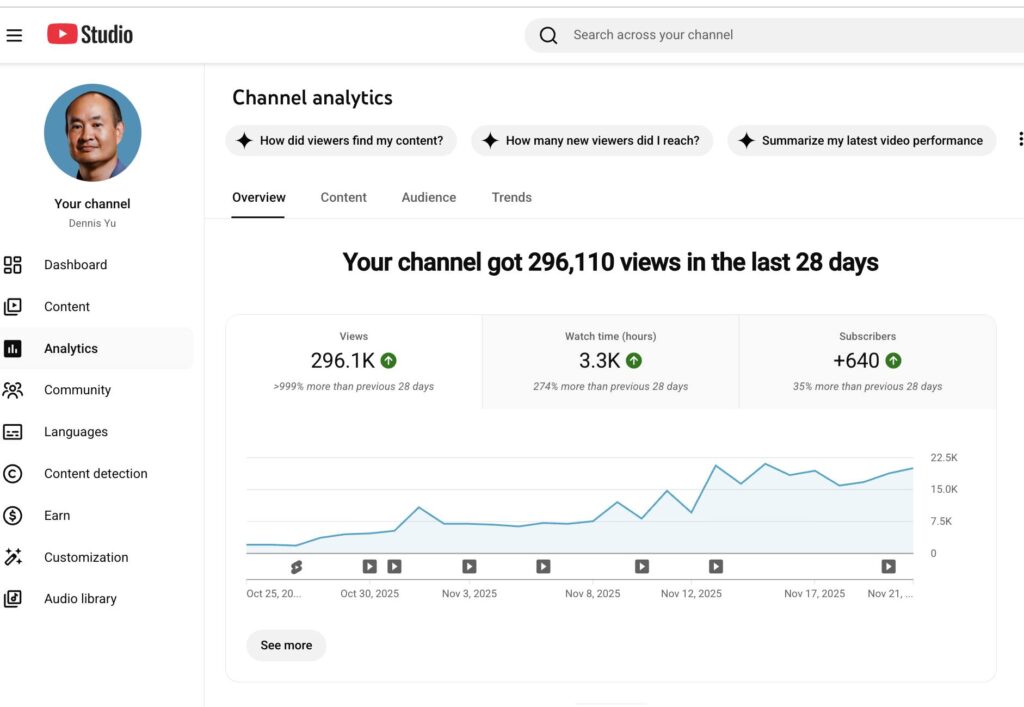
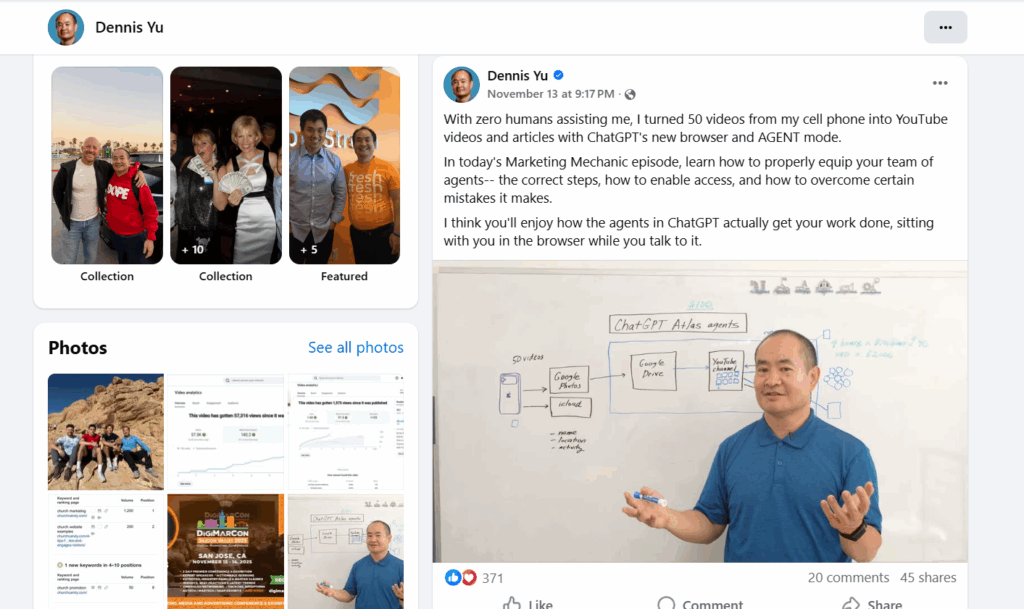
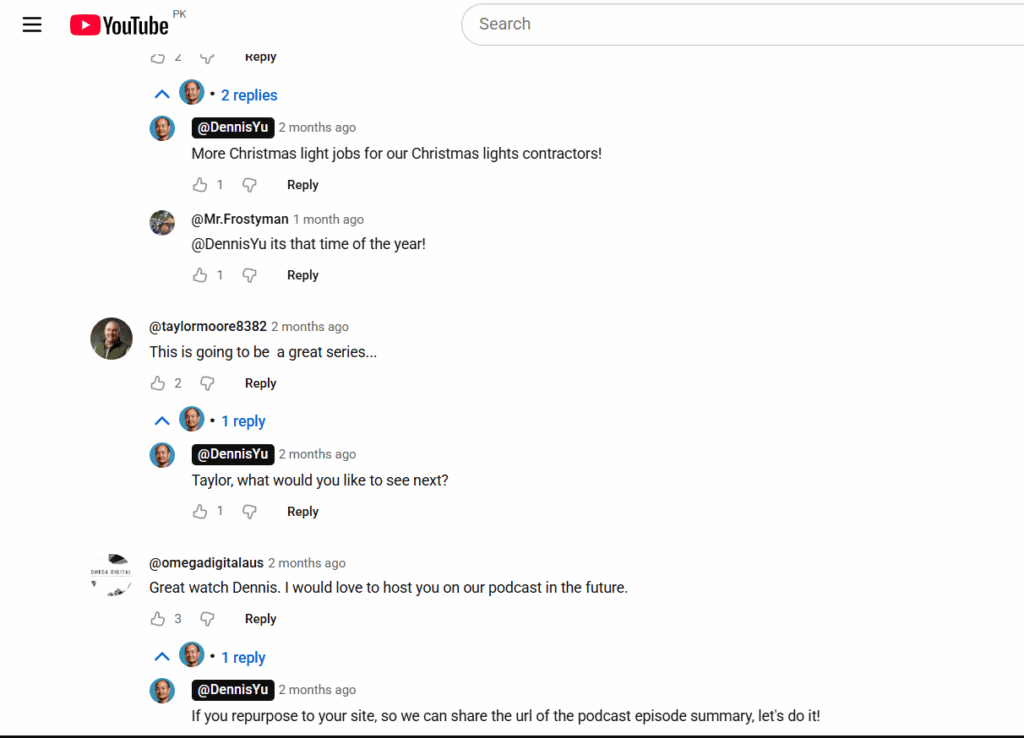
People engaging on Dennis Yu‘s YouTube channel as the content is relevant
A Real Example: Winning an Election With Content
We worked with Eva Lopez, who ran for City Council in Salt Lake City against an incumbent. She didn’t rely on generic political ads or tired campaign tactics.
Instead, she:
Created short-form videos about issues voters actually cared about.
Spoke directly to community concerns.
Promoted those videos to the exact people who would be voting,
She beat the incumbent by six points.
Not because she looked polished but because she was useful.
That lesson applies to local businesses, founders, consultants, and operators just as much as it does to politicians.
Social Media Is Not an Ego Contest
One of the most common objections I hear from business owners is:
“I don’t want to seem full of myself.”
Good. You shouldn’t be.
Social media is about helping. If your content feels self-centered, it probably is. The fix isn’t to stop posting; it’s to shift the focus outward.
A great litmus test:
Are you trying to look impressive?
Or are you trying to make the audience smarter?
Even Big Brands Learn This the Hard Way
We saw this firsthand working with Cardone Ventures.
Early content leaned heavily into jets, cars, and wealth imagery. Eventually, engagement dropped.
When we pivoted toward educational, practical content (things people could actually use) growth returned.
Substance beats posturing. Every time.
What Facebook Actually Rewards
I had a direct conversation with Facebook’s team about what gets content recommended.
Two things matter most:
1. Consistency
2. Quality
Consistency is how the algorithm is trained.
If you disappear for months and pop back up randomly, both people and platforms forget you exist.
We applied this exact approach with Sylvie di Giusto, a speaker and author. Within one month, her engagement increased by 1,128%. Later that year, she was invited to keynote the National Speakers Association conference.
That’s not luck. That’s systems.
Why a One-Platform Strategy Is a Risky Bet
Building your audience on one platform is like renting a storefront you don’t own.
You can delegate editing, publishing, and strategy. But there needs to be a face of expertise. People trust people, not logos.
Give Attention to Get Attention
Social media is networking at scale.
If you never engage, comment, respond, or acknowledge others, growth becomes an uphill battle. You don’t need to interact with everyone but you do need to be present.
When I opened Dennis Yu’s speaker reel, my first reaction was straightforward: this was already a strong video. The pacing worked, the arc was clear, and the production quality felt polished. It didn’t need a rebuild.
What it did need was a small credibility lift — a few proof-driven moments that made Dennis’s authority clearer. Instead of rebuilding anything, I focused on replacing weaker visuals with real footage that supported the message already in place.
The Editing Approach I Used
As I watched, I looked for places where real proof could replace weaker visuals so the expertise in the reel becomes more visible.
I wasn’t chasing extra b-roll just to fill space. The goal was lightweight, context-matching authority inserts.
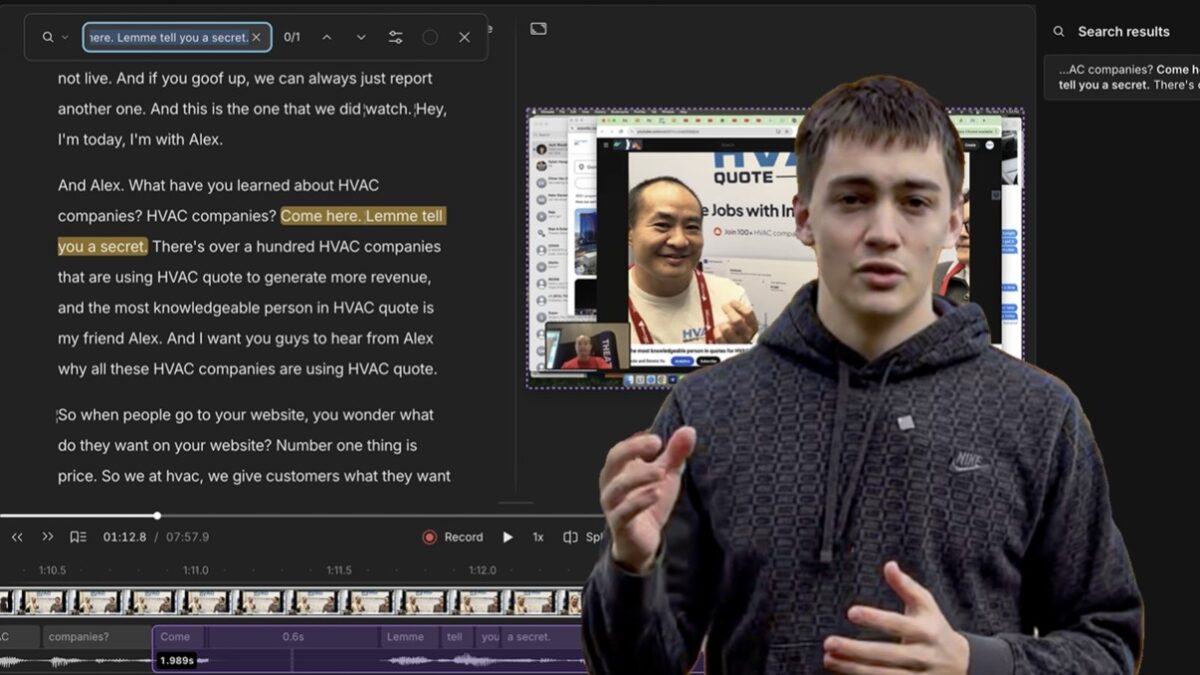
Doing this meant going back into Descript and editing the reel directly, which is exactly the kind of hands-on refinement that’s part of our Content Factory workflow. In this case, the video required small, context-matching authority inserts rather than big structural edits.
How I Selected the Clips (Blitzmetrics 30-Point Authority Rubric)
Who is saying it (10 points): Is Dennis clearly positioned as the expert?
Where is it being said (10 points): Is the platform or venue high-trust (major media, respected institution, credible event)?
What is being said (10 points): Is the message expertise-forward and specific (not generic hype)?
Only clips that scored strong across all three categories made the cut.
So I followed two simple placement rules:
Fill Low-Variety Sections With Real Proof
Where the visuals stayed the same for too long, I added short clips that brought both energy and credibility. That way, the reel stays engaging and the viewer keeps seeing Dennis in real authority contexts.
Replace Stock Moments When It Clearly Raised Authority
Where stock visuals were doing the job of “filler,” I replaced select moments with real footage that carried more credibility.
The High-Authority Clips I Added
1. Speaking at Loyola University Chicago (School of Communication)
What the Clip Shows: Dennis speaking on a Chicago business/digital webinar hosted through Loyola University Chicago’s School of Communication, seated on a panel alongside other professionals, with a live student audience present.
Why It Adds Authority: University setting + professional panel context adds institutional credibility, and the message is expertise-forward (urging students to help small businesses learn online promotional methods and tools).
2. On The Day (DW News) Covering Zuckerberg’s Congressional Hearings
What the Clip Shows: Dennis appearing on The Day (DW News) as a Facebook expert, commenting on Mark Zuckerberg’s congressional hearings.
What the Clip Shows: Dennis on CNN discussing how Facebook faces a challenge in winning users’ trust.
Why It Adds Authority: Another top-tier news outlet reinforces that he’s sought out to explain Facebook and content-related issues at a professional level.
4. Speaking at Social Media Day in Jacksonville
What the Clip Shows: Dennis speaking at Social Media Day in Jacksonville in front of a large audience about digital marketing.
Why It Adds Authority: Stage authority + crowd size + event credibility signal he’s trusted to teach at scale because he’s an expert in the field.
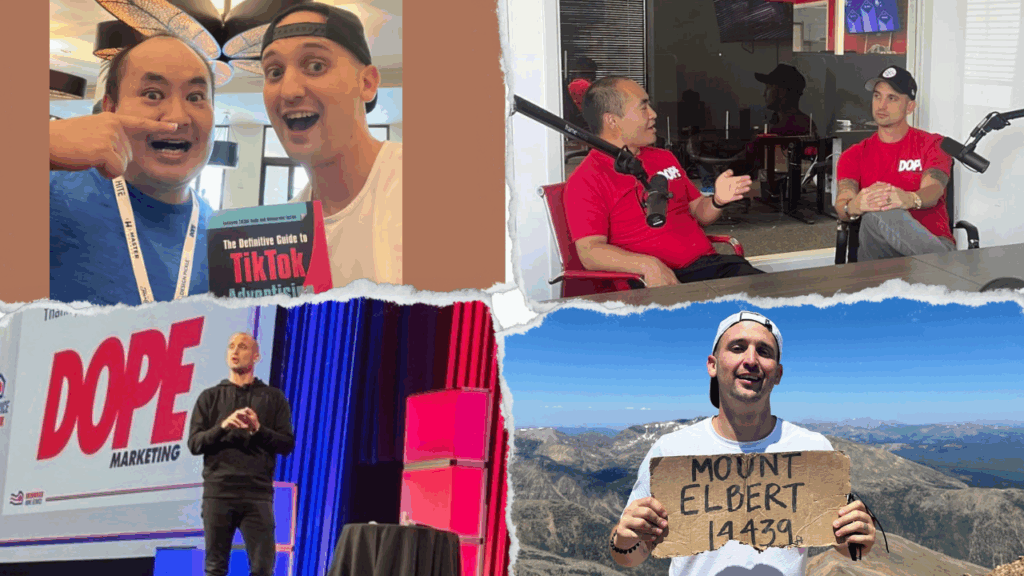
5. Creating a Video with Jake Paul
What the Clip Shows: Dennis and Jake Paul speaking directly to the camera for a video.
Why It Adds Authority: Jake Paul’s high public visibility signals that Dennis operates within prominent creator and media circles, reinforcing his credibility in high-visibility digital environments.
6. With Dan Antonelli (Home Service Branding Conversation)
What the Clip Shows: Dennis sitting down with Dan Antonelli for a recorded conversation (YouTube/interview style).
Why It Adds Authority:Dan Antonelli is the founder and creative director of KickCharge Creative, a leading branding agency in the home services industry, and is widely recognized for helping contractors build strong, differentiated brands. Being positioned in a peer-level conversation with one of the most established names in home service branding reinforces Dennis’s authority as someone operating at the same professional tier.
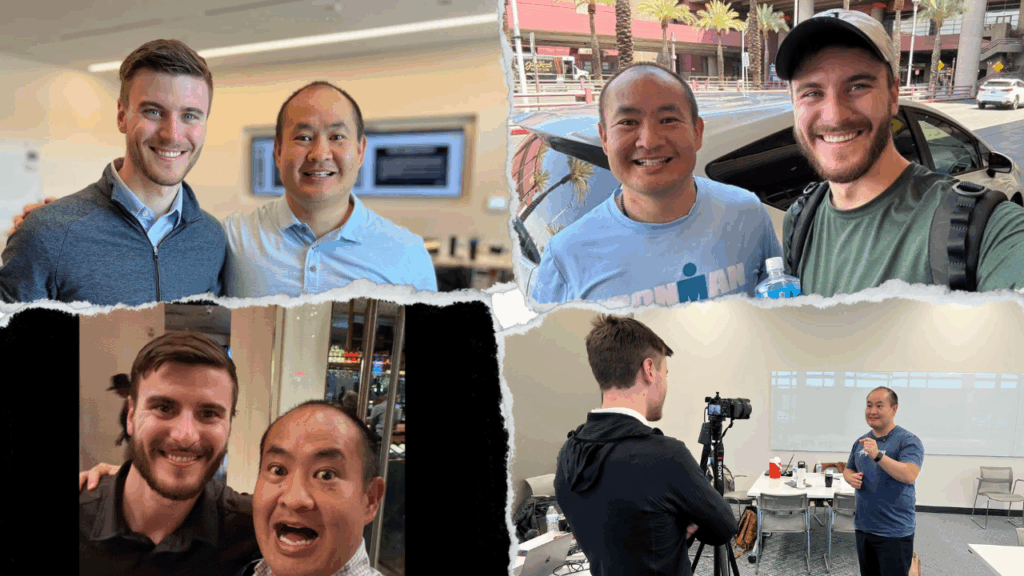
7. Mentoring Jack Wendt (Mentorship / Coaching)
What the Clip Shows: Dennis coaching/mentoring Jack Wendt in a working session context.
Why It Adds Authority: Mentorship footage is “authority in action” — it positions Dennis as the teacher/operator guiding other builders. Jack Wendt is a successful AI Apprentice, and a founder of High Rise Influence, reinforcing that Dennis is training real operators, not hypothetical students.
8. Speaking with Marko Sipilä (HVACQuote.ai / CoatingLaunch)
What the Clip Shows: Dennis speaking with Marko Sipilä on video, explaining concepts and sharing insights.
Why It Adds Authority: Marko is a successful AI Apprentice mentored by Dennis, founder of HVACQuote.ai (helping home service contractors convert leads with instant quotes) and previously scaled CoatingLaunch into a powerhouse in the concrete coatings industry. Training a proven operator reinforces Dennis’s authority as someone successful entrepreneurs learn from.
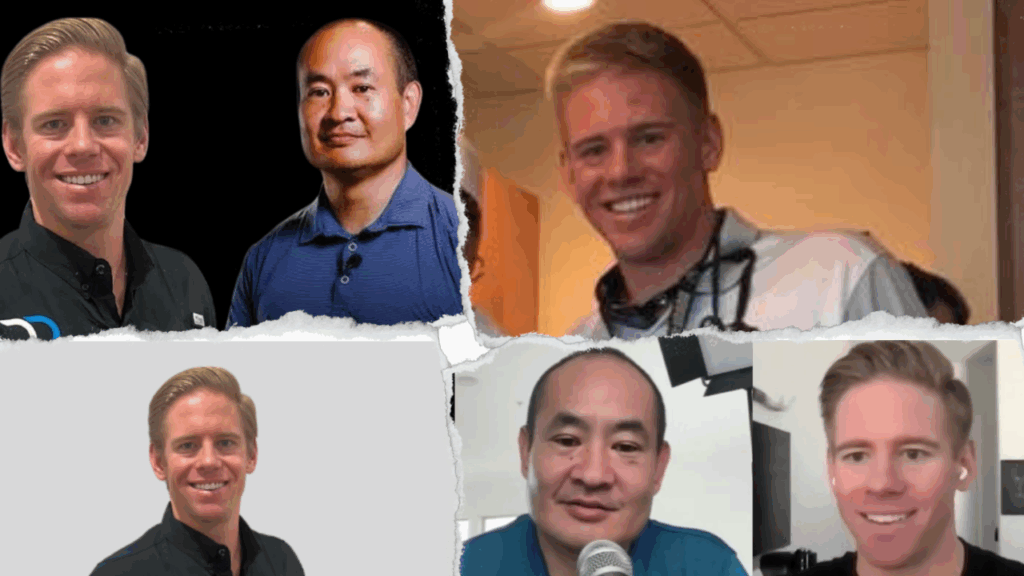
Why It Adds Authority: This is industry-proof — Dennis is working with a recognized dentistry leader and practice owner, reinforcing “trusted by professionals with real businesses.”
10. With Michael Stelzner (Industry Conversation)
What the Clip Shows: Dennis in conversation with Michael Stelzner.
Why It Adds Authority: Michael Stelzner is the founder of Social Media Examiner, so this adds strong peer/industry credibility and signals Dennis is connected to respected leaders in the social marketing space.
Why These Small Inserts Matter
Edits like these are small individually, but they raise the authority signal of the entire asset. These edits don’t change the story — they reinforce it with clearer visual proof. When the strongest moments are easier to see, every future reuse of the asset performs better.
The original reel already communicated Dennis’s message well. My edits didn’t change the story — they strengthened the evidence behind it.
By adding real-world authority footage in the right places, the reel gains:
Higher credibility density
Better pacing (fewer flat stretches)
Less “generic” feel where stock visuals used to carry the load
The structure stays the same; the evidence on screen is stronger.
What This Demonstrates
Small, precise upgrades like these make an already strong reel feel more grounded and more representative of Dennis’s real-world authority. The structure stays the same, but the presence feels sharper and more credible.
It’s a small edit, but it makes the final piece line up more clearly with how Dennis actually works and shows up in real life.