How Our YouTube Optimization and Boosting Process Works

How the Boosting & Access-Onboarding Process Works

When we take on a YouTube channel, especially one with solid content but limited traction, the first thing we do is get inside the machine.

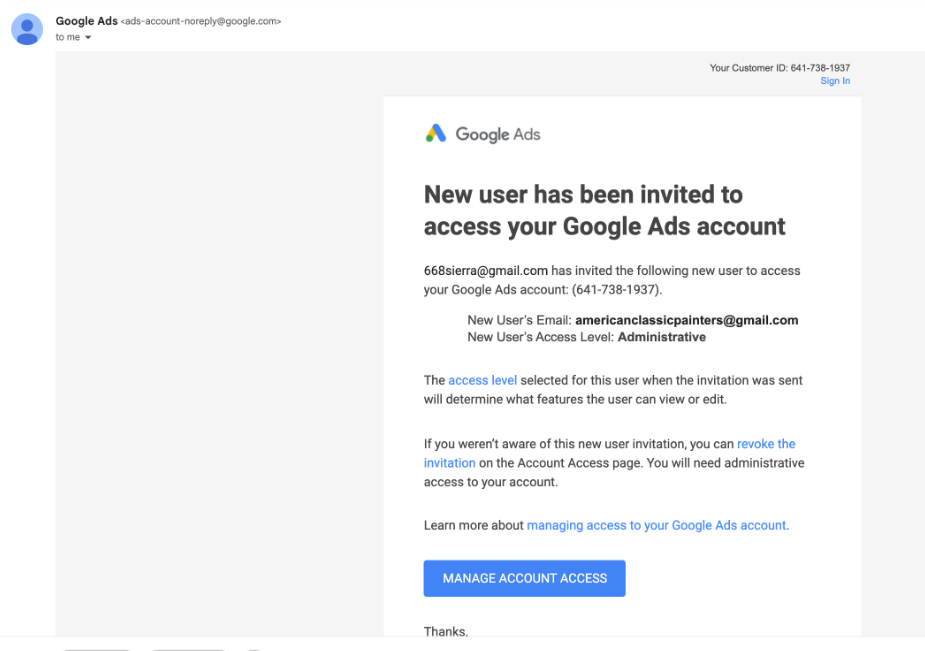
Below is the exact process we follow once you add us as managers to your channel and connect the channel to our Google Ads account.

Gaining Manager Access

Once you add us as a channel manager, we can:

  • Clean up the channel structure.
  • Fix metadata and playlists.
  • Create geo-relevant signals Google actually recognizes.
  • Connect the channel to Google Ads.
  • And most importantly, start boosting videos.

Without manager access, none of that happens. We can advise, but we can’t execute.

Establishing the Baseline

Before touching anything, we benchmark the channel.

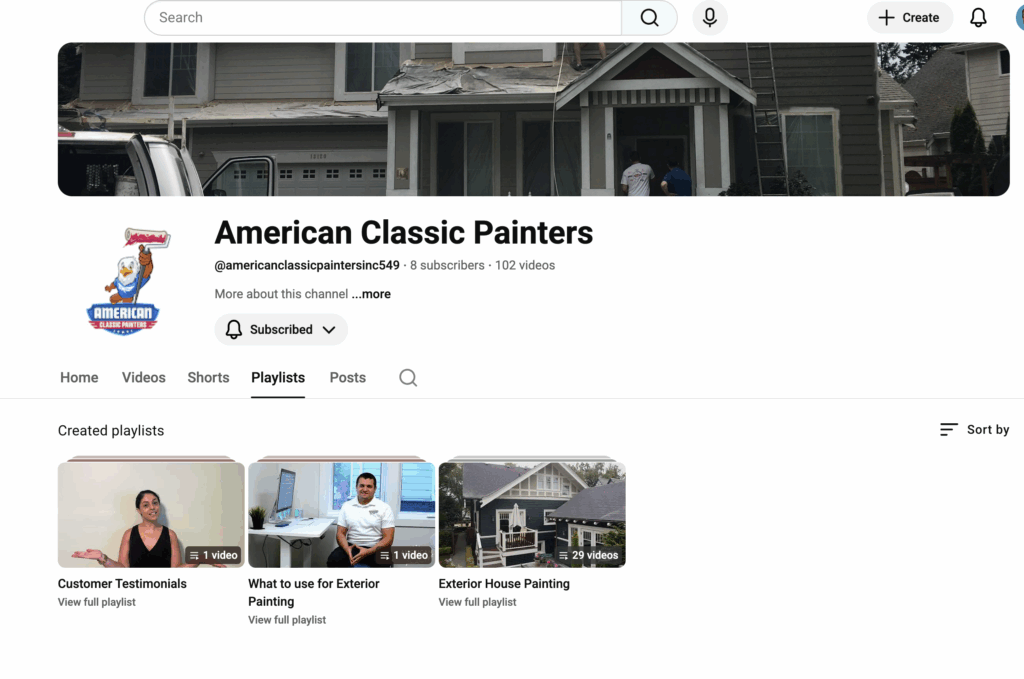
In the case of American Classic Painters:

  • 102 videos were jammed into only 3 playlists.
How the Boosting & Access-Onboarding Process Works

  • Titles, descriptions, and end cards had no geographic signals.
How the Boosting & Access-Onboarding Process Works

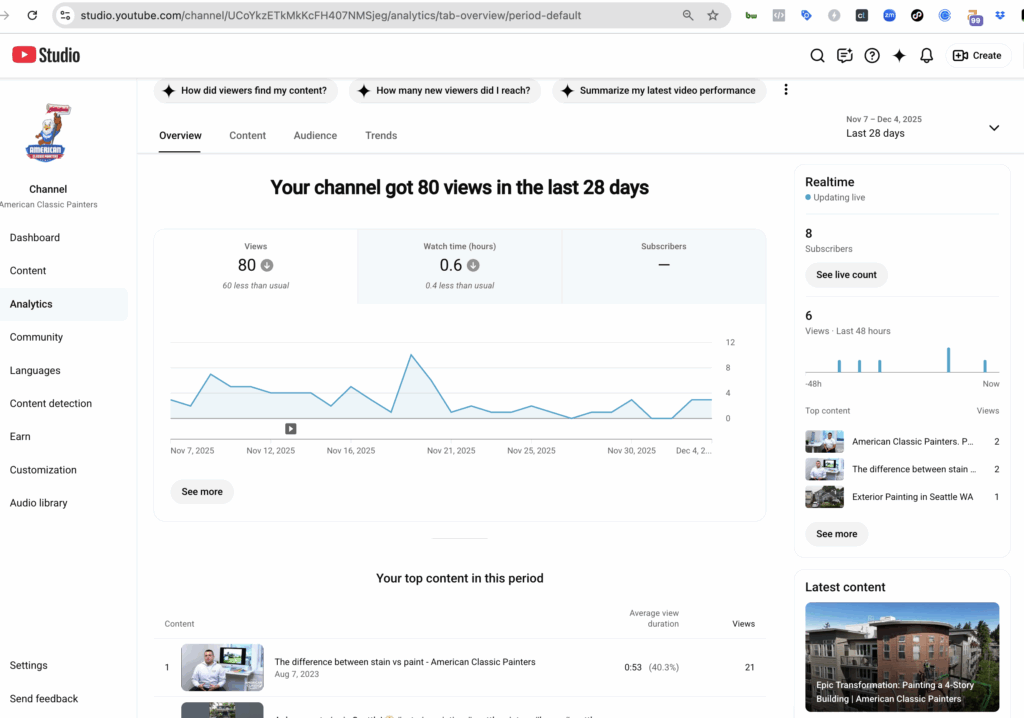
  • Engagement was near zero, because there was no traffic.
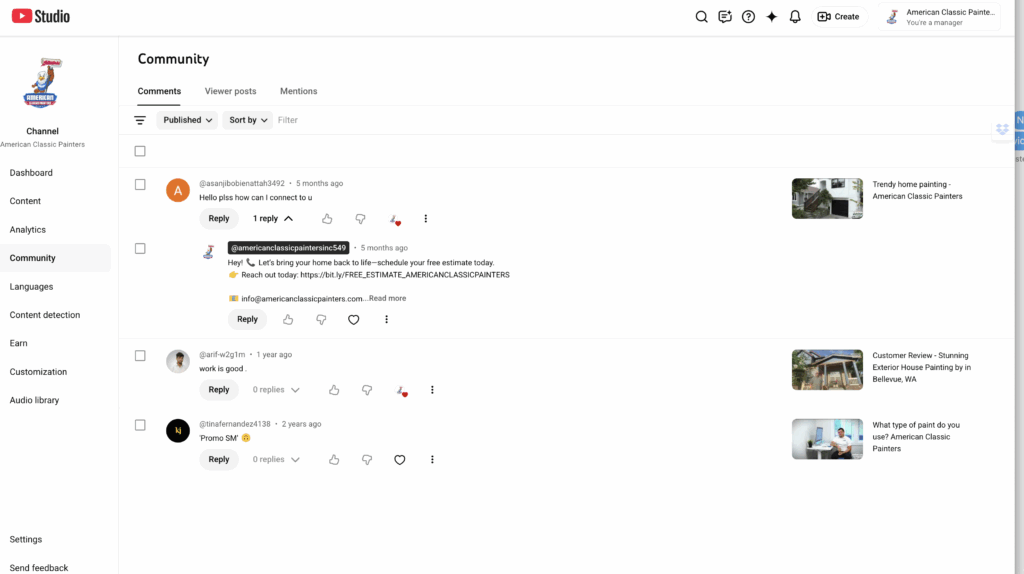
  • Which meant the videos couldn’t rank, because YouTube had nothing to learn from.
How the Boosting & Access-Onboarding Process Works

Classic chicken-and-egg problem:
No traffic → no engagement → no distribution → no growth.

Boosting is how we break the loop.

Channel Optimization

While boosting gives us initial momentum, optimization is what lets the channel grow organically after the paid push.

Our optimization process includes:

Creating properly themed playlists

Playlists should follow your “topic wheel,” not be a dumping ground of everything you’ve ever uploaded.
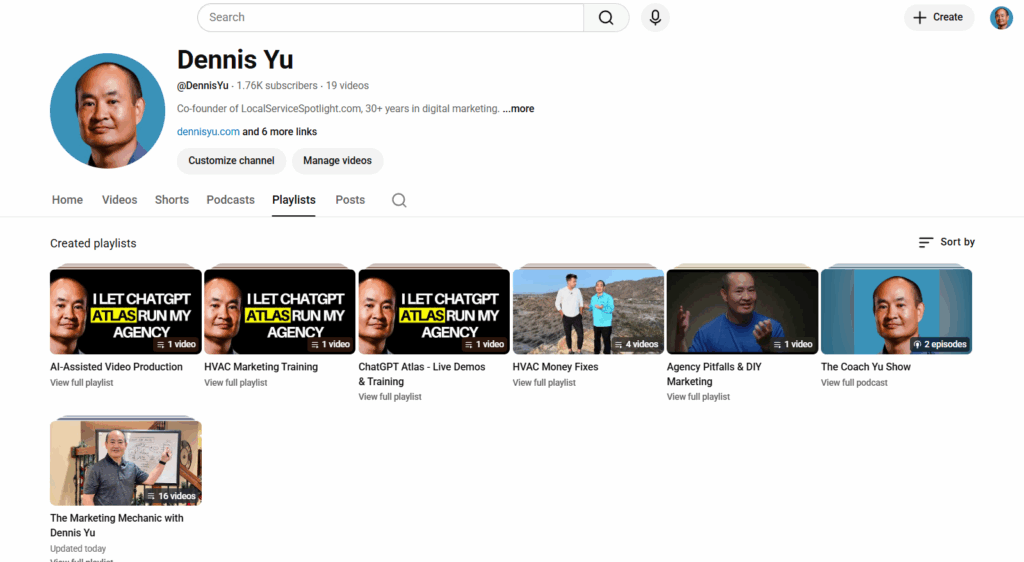
Playlists of Dennis Yu‘s YouTube channel

Adding geo-relevant cues

City + service data in titles, descriptions, and end cards tell YouTube:
“This content is for people in this location searching for this type of provider.”
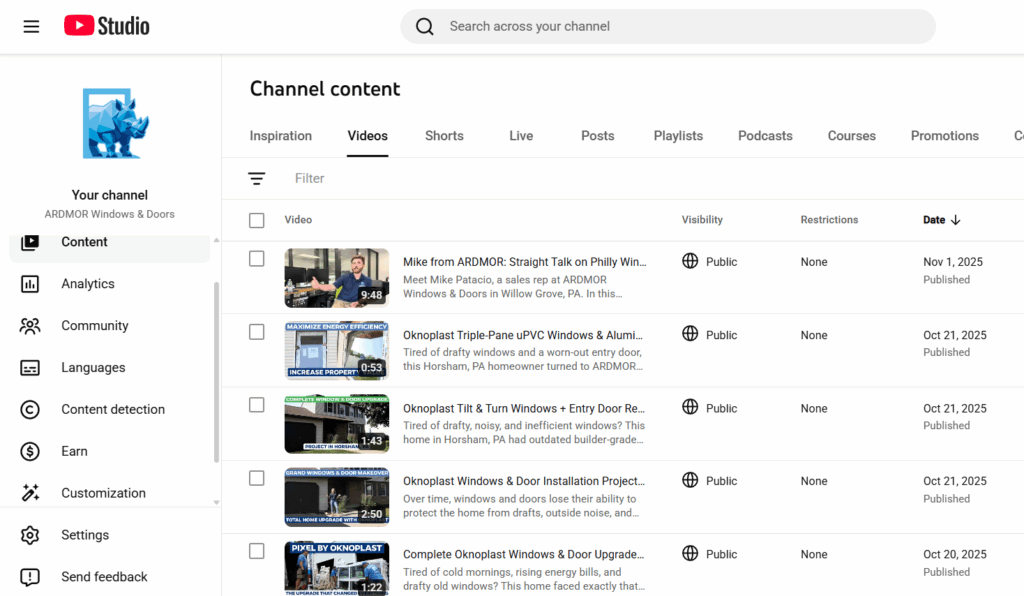
YouTube videos of ARDMOR Windows & Doors

Improving metadata that YouTube actually reads

This includes:

  • Tags.
  • Captions.
  • Default upload templates.
  • Thumbnails.
  • Cards & endscreens.

None of this is glamorous, but it works. It’s the SEO of video.

Optimization is ongoing, not a one-time sweep; just like tuning a car before every race.

Brady Sticker‘s YouTube channel

Boosting YouTube Videos

If the client wants us to run direct boosting from our side, they can fund it at Power Hour.

What we do with the boost:

Promote selected videos

We intentionally choose:

  • Videos with strong messaging.
  • Clear calls to action.
  • Relevance to your local market.
  • Content that best represents you as the expert.

We don’t boost everything; only what deserves amplification.

Build remarketing audiences

Most channels start with zero audience data.

Boosting gives us:

  • Viewers.
  • Clickers.
  • Engagers.
  • People who hit 25%, 50%, 75%, 100% watch time.

Those signals allow us to create remarketing pools we later use across platforms.

Train the algorithm

By forcing initial traffic, we teach YouTube:

  • Who watches to completion.
  • Who skips.
  • What geographic areas respond.
  • What interest profiles match your content.

This is crucial, because YouTube’s algorithm is basically a giant “lookalike engine.”
It can’t find your perfect viewers until it sees who your actual viewers are.

Weekly Reporting & Iteration

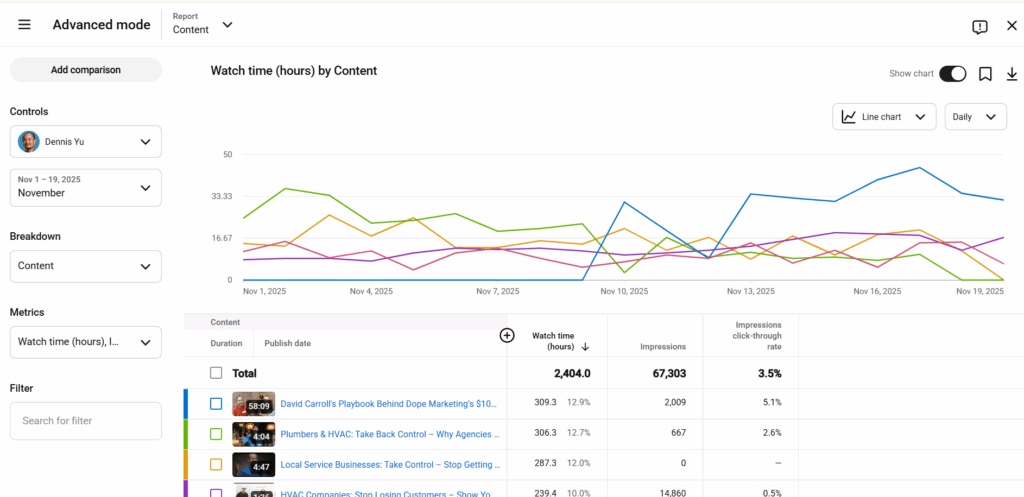
As boosting runs, we monitor:

  • Cost per view.
  • Average view duration.
  • Viewer retention at key moments.
  • Geo performance.
  • Playlist contribution.
  • Watch time growth.
  • Rising vs. falling videos.

The project manager posts MAA in the appropriate updates thread:
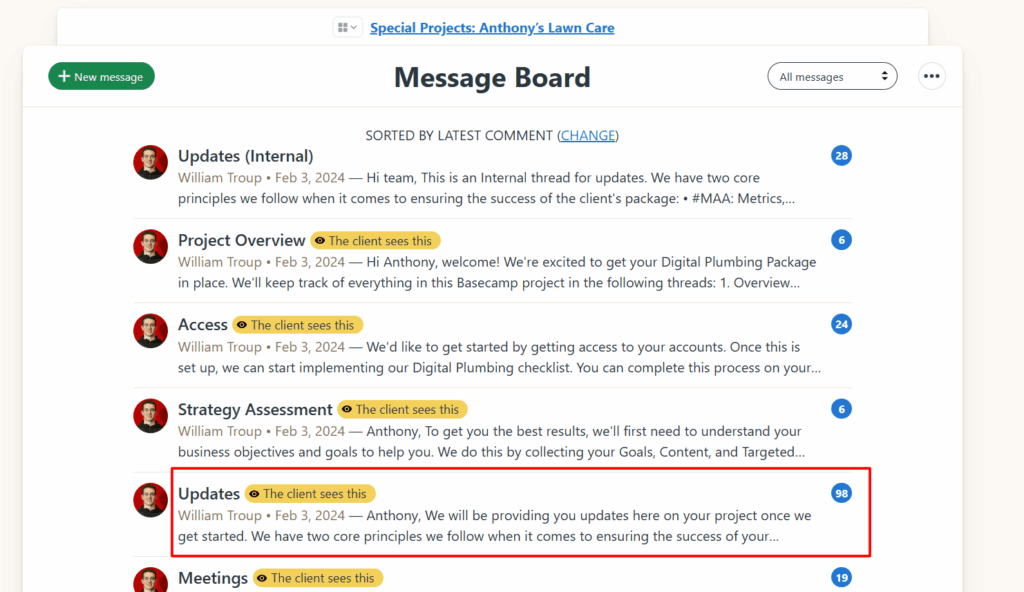
Anthony Hilb‘s Basecamp project

What Happens After the Boost

The boost gives us:

  • Data.
  • Momentum.
  • An initial audience.
  • Watch time.
  • Engagement signals.
  • A trained algorithm.

From there, the channel becomes far easier to grow organically.

We keep optimizing thumbnails, playlists, descriptions, and continue adding geo-relevant content.

This is a “build authority and traffic predictably over time” strategy.
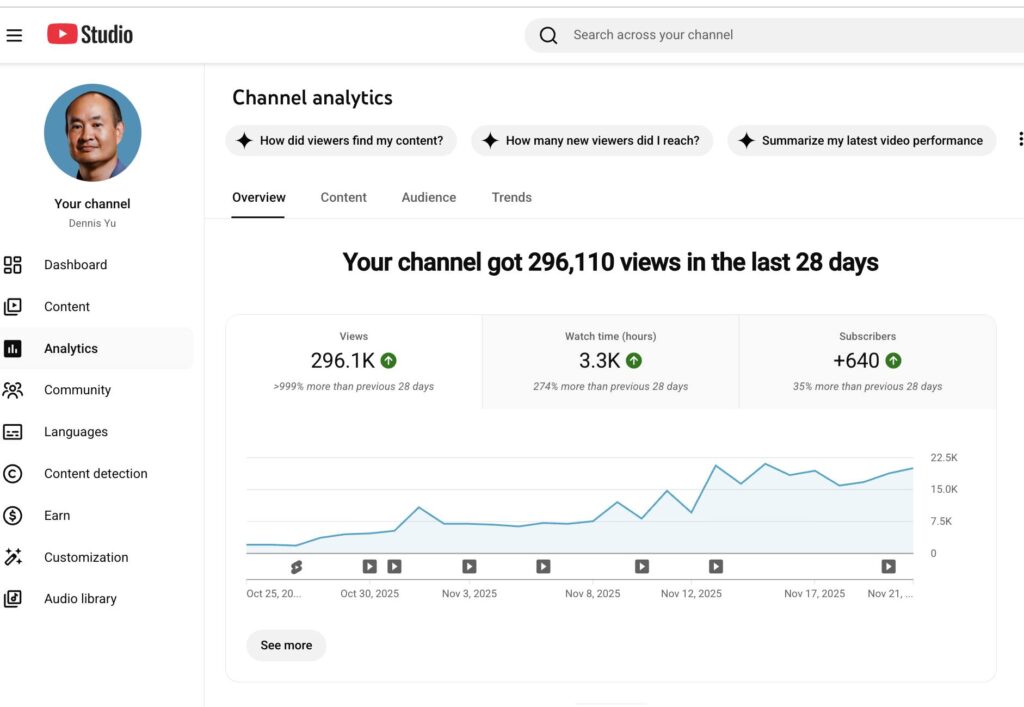
How to Publish a YouTube Video and Maximize Your Reach

Publishing a YouTube video isn’t simply uploading a file.

The way the video is titled, packaged, structured, and positioned determines whether it gets traction or disappears into the void.

If your thumbnail is weak, your chapters are generic, or your description lacks EEAT context, the algorithm has no reason to promote your content.

And if you skip these steps entirely, you fall into the #1 VA mistake: posting videos that produce zero measurable value and end up hurting ROI.

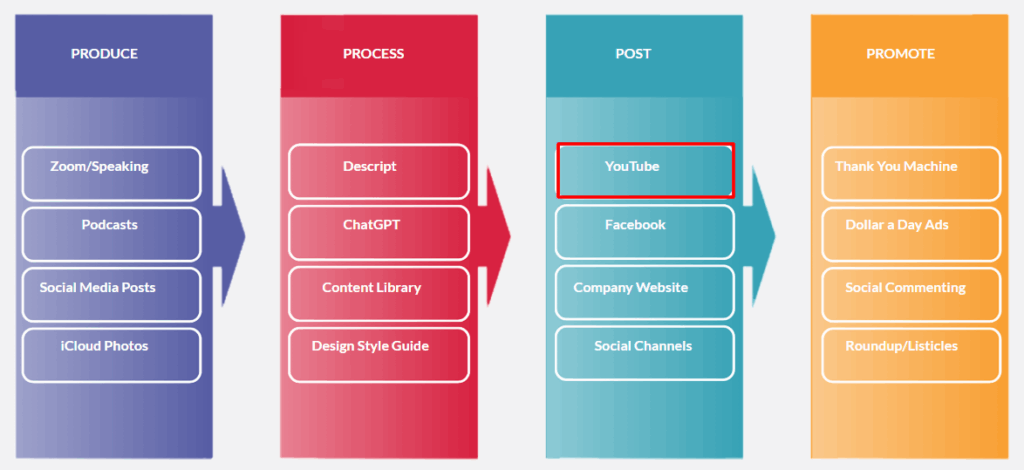
This guide shows you the exact process we use inside the Content Factory after a video is fully processed and QA’d.

Follow this checklist and your video will be positioned to get higher click-through rates, stronger retention, deeper engagement, and better long-term discoverability.

Step 1: QA the processed video

Before uploading, verify the video is 100% ready:

  • Ensure all names, titles, and proper nouns are spelled correctly.
  • Make sure the background music is balanced and not overpowering.
  • Confirm branding elements (lower thirds, banners, colors) are consistent.
  • Check that the final title reflects the message and contains the right keywords.

If the video isn’t perfect before uploading, it won’t magically fix itself afterward.

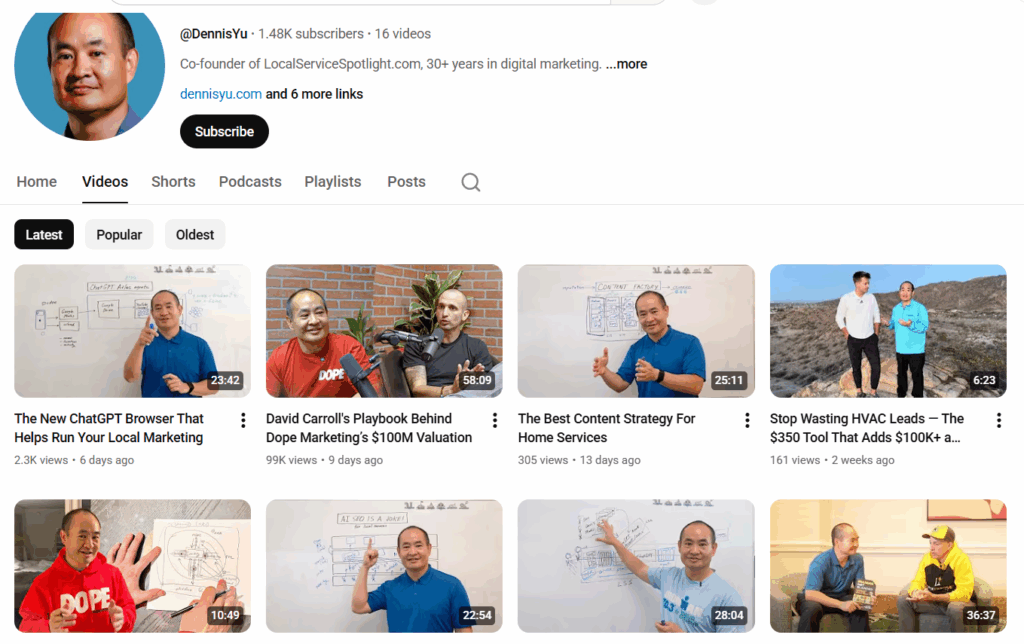
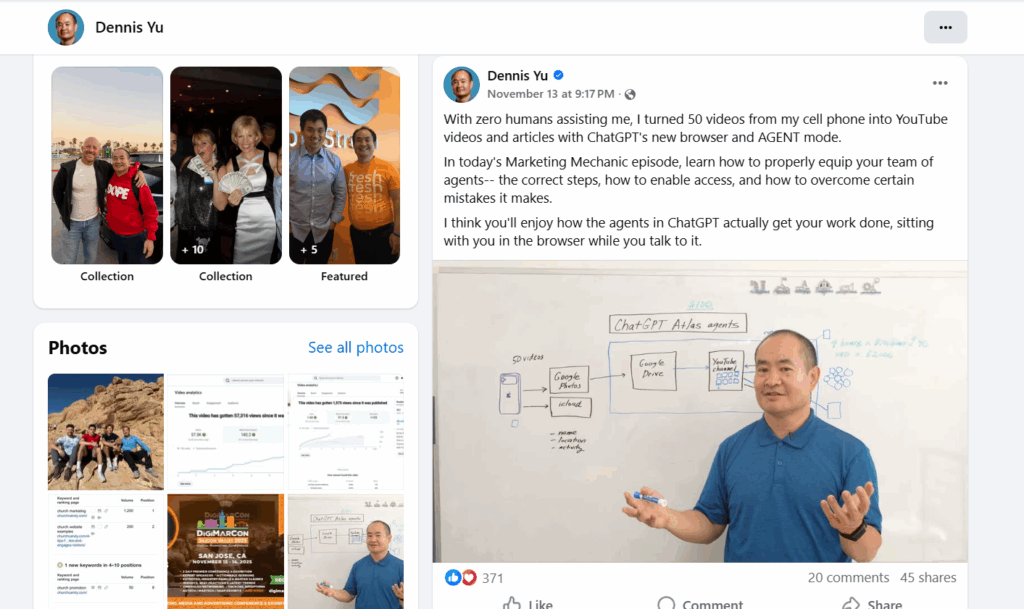
Dennis’ video that got 99K views in 9 days

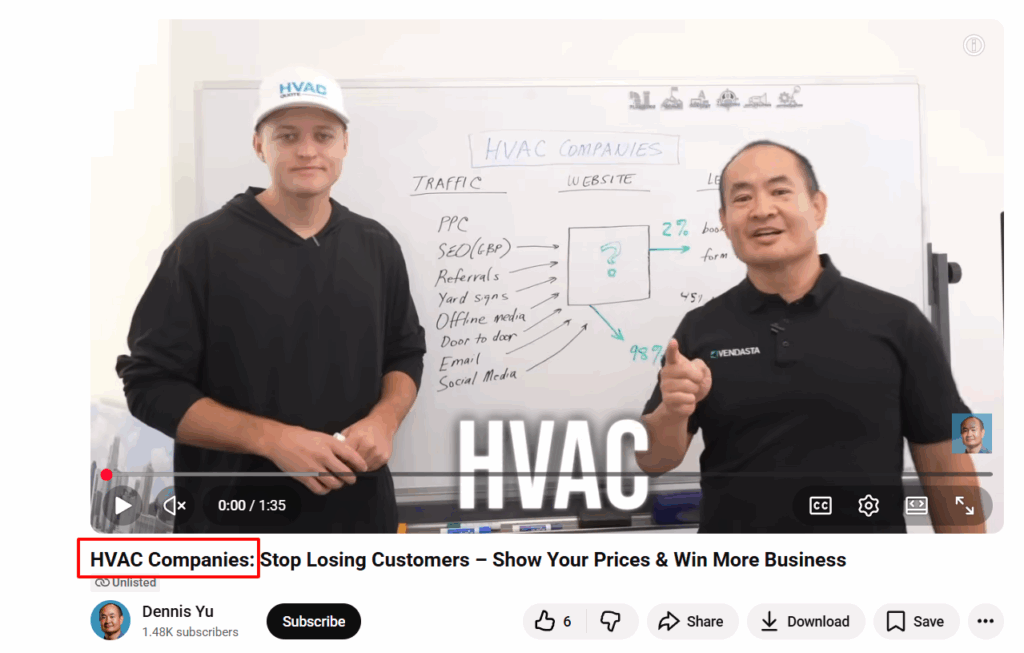
Step 2: Thumbnails — the most important element

The thumbnail determines whether anyone even gives your video a chance.

Requirements for a good thumbnail:

  • Clean, high-quality image.
  • Big, bold text (3–5 words max).
  • Brand colors used sparingly but effectively.
  • Visual clarity even when tiny on mobile.
  • Clear emotion or visual hook.
  • No clutter, no tiny fonts, no “mystery screenshots.”

Small changes make a big difference, bright colors, sharp contrast, and a clear subject often double click-through rates.

Thumbnails of Dennis’ YouTube channel

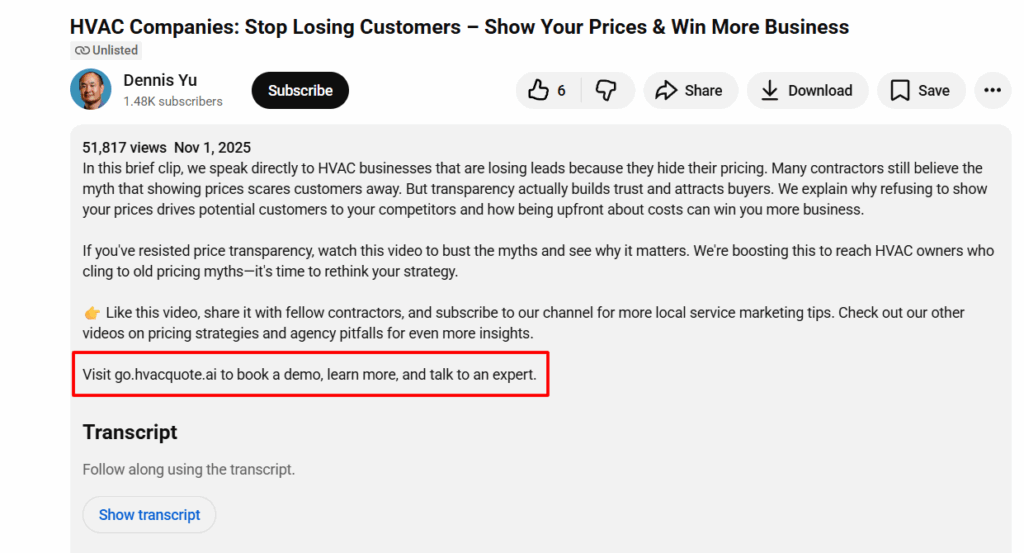
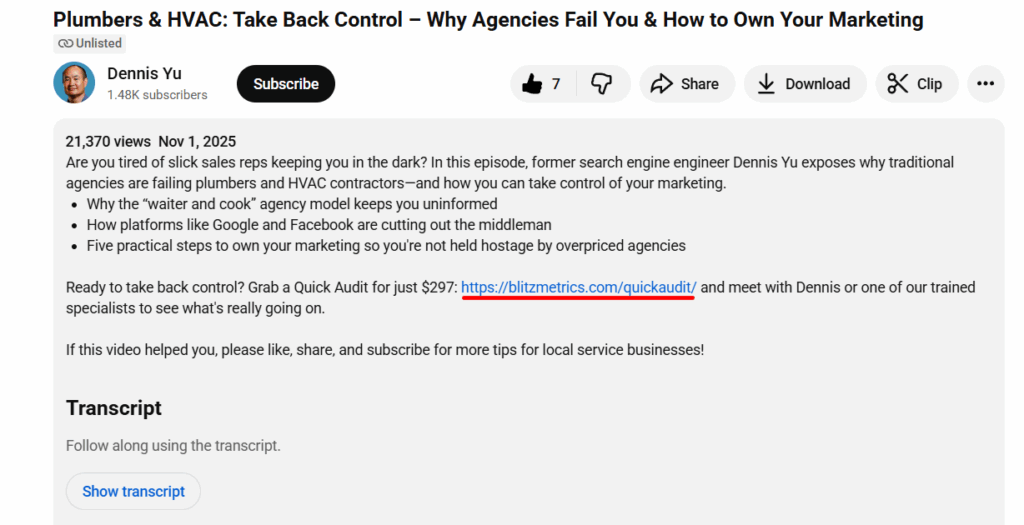
Step 3: Write a strong description with EEAT

A good description helps viewers understand the video and helps YouTube understand whom to recommend it to.

Include:

  • Business name and location.
  • Services or expertise shown in the video.
  • A concise summary of what the video covers.
  • A clear CTA (book a call, learn more, visit website).
  • Links to relevant videos or articles.

A description is free SEO.

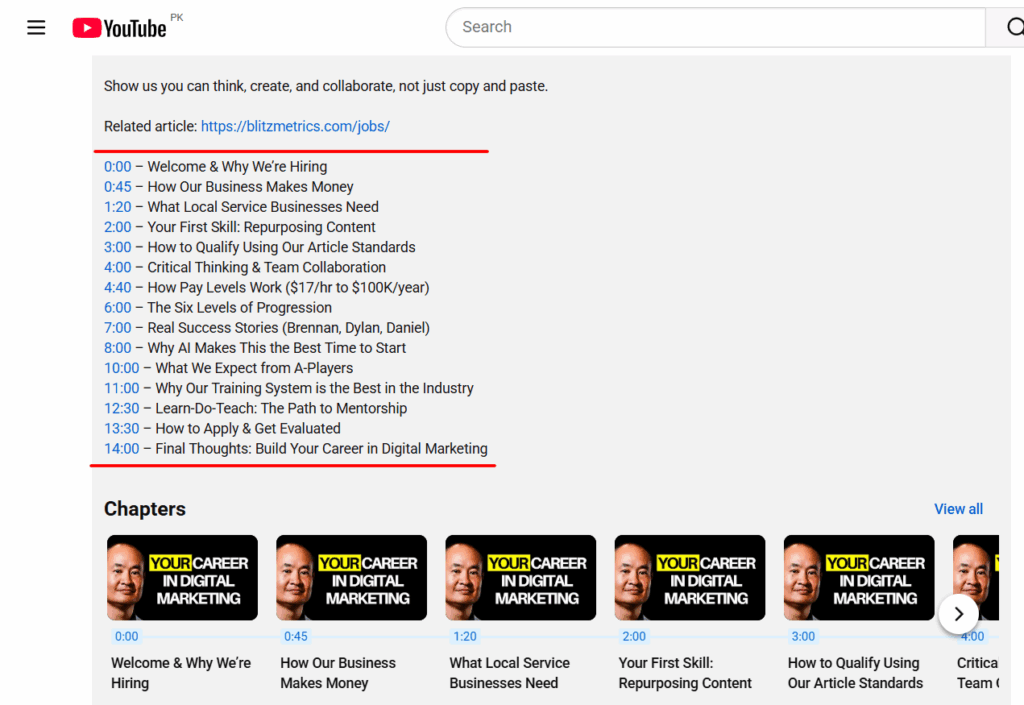
Step 4: Use smart chapters

Chapters make the video more skimmable, add context, and improve watch time.

Guidelines:

  • Use timestamps that reflect real topic shifts.
  • 6–12 chapters for an hour-long video is common, but not mandatory.
  • Avoid flooding the video with micro-chapters.
  • For podcasts: break by topic or guest.
  • For training videos: break by lesson or module.

Smart chapters make the content easier to consume and easier to rank.

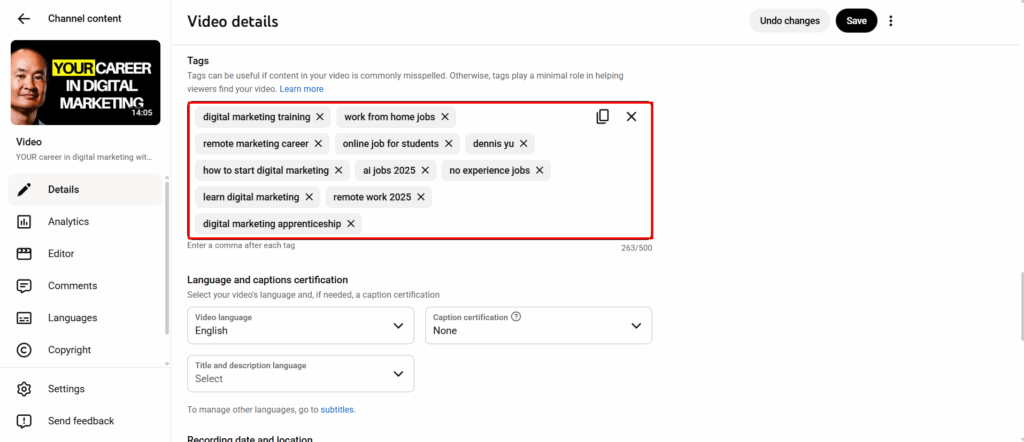
Step 5: Add tags that reinforce discoverability

Tags are not the main ranking factor, but they help with variations, misspellings, and context.

Include:

  • Service keywords.
  • City + service (“Dallas roof repair”).
  • Brand names or tools mentioned.
  • The business name (if available on Google Maps).
  • Collaborator channels or guest names.

Tags shouldn’t be random; they should support the video’s core topic.

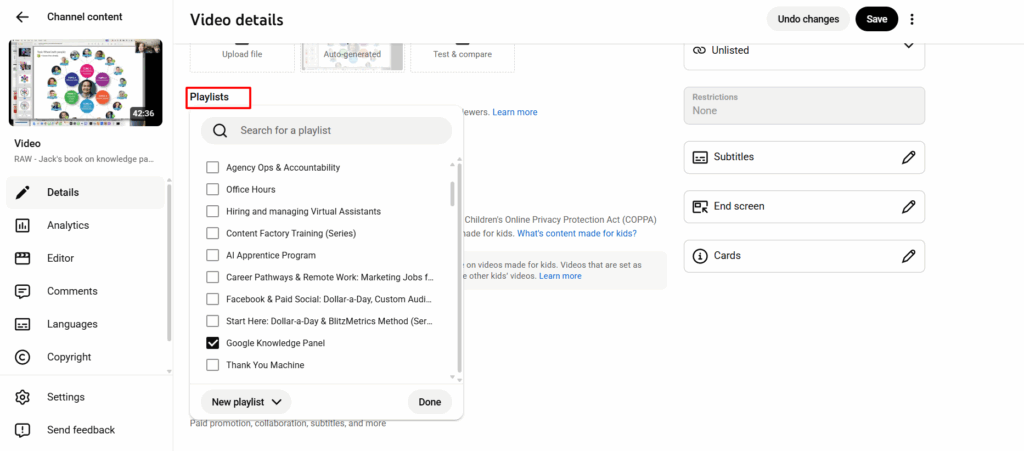
Step 6: Add the video to the correct playlists

Playlists help YouTube understand the topic cluster your video belongs to.

Tips:

  • Add the video to an existing playlist that matches the topic.
  • Use “smart playlists” to group binge-able content together.
  • Don’t leave videos floating on their own, it weakens discoverability.

The more organized your channel is, the easier YouTube can recommend your videos.

Step 7: Monitor for copyright issues or removed content

After publishing:

  • Check YouTube Studio for copyright claims or strikes.
  • If content is removed, review the reason → fix → reupload.
  • Ensure every video has required licensing, disclaimers, and metadata.

Prevention here saves hours of cleanup later.

After uploading: promote and analyze

Once the video is published:

  • Share across social media.
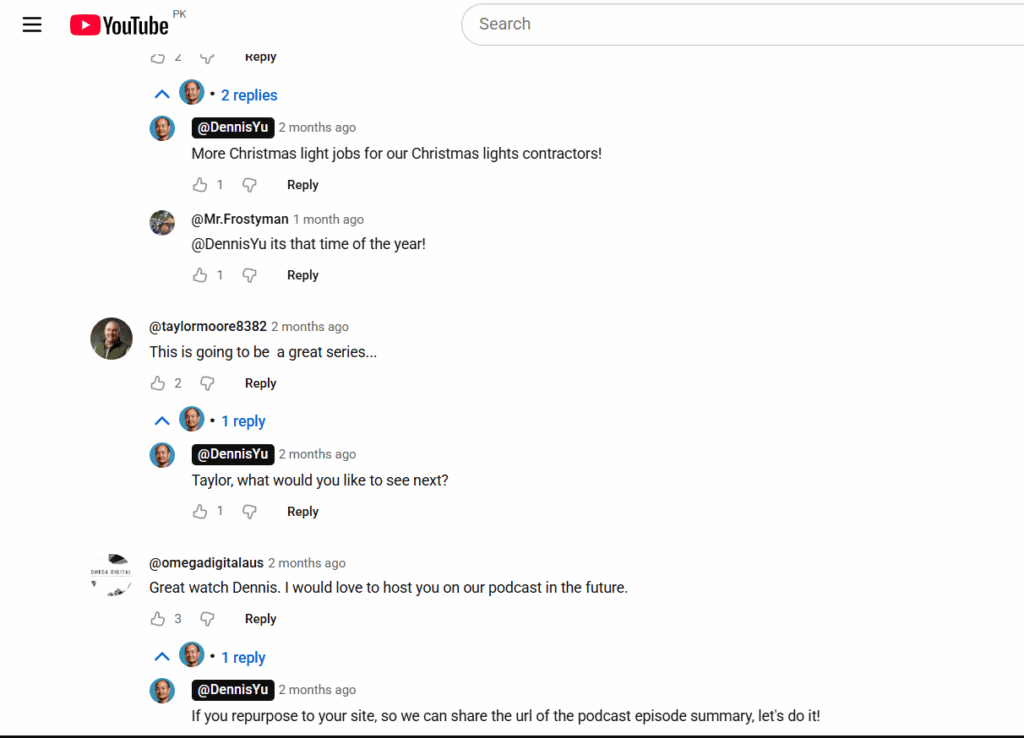
  • Respond to viewer comments to build engagement.
  • Monitor key metrics:
    • Click-through rate.
    • Watch time.
    • Audience retention.
    • Suggested/recommended traffic.
  • Apply insights to improve your next videos.

This is a loop: publish, measure, improve, repeat.

Verification checklist

  • Video is fully processed and QA’d.
  • Thumbnail is high quality and click-worthy.
  • Description includes EEAT details and links.
  • Chapters are clear and helpful.
  • Tags and playlists are correctly assigned.
  • YouTube sheet is updated without breaking previous links.
  • Copyright/licenses checked.
  • Performance tracking initiated.