
The True Cost of Low-Quality Work in Your Business

Incompetence is incredibly expensive in business, whether it comes from an employee, contractor, freelancer, or virtual assistant. Low-quality work plagues everyone, not just VAs. Whenever we’re hiring or delegating, we always screen for quality and understanding of GCT (Goals, Content, Targeting), not just price.
You’ll often see business owners and agencies hire solely based on price, since $3/hour sounds better than $8/hour. But what difference does a few dollars make if poor work ends up costing ten times more in revisions, delays, and oversight?
In this article, let me walk you through what happens when someone (anyone) makes the #1 VA mistake of working without full understanding and how it ends up costing far more than most realize.
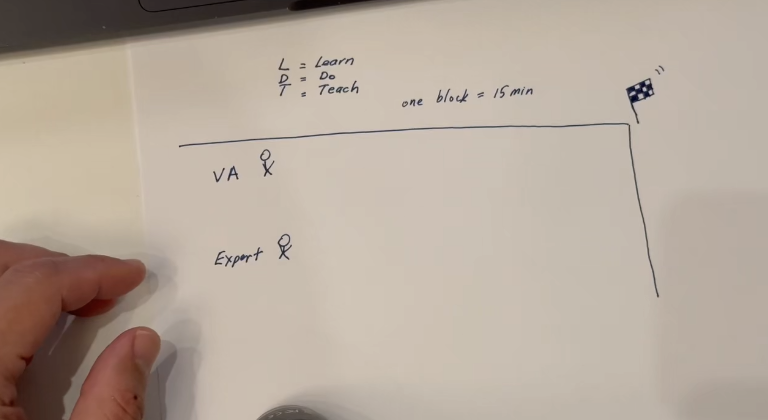
Understanding the Cycle of Inefficiency
Let’s say we hire someone to repurpose a video into an article. Sounds simple, right? Here’s what usually happens:
The time and effort it takes to review, correct, and manage their output far exceeds the time they save. For example, let’s break this into 15-minute units.
First, they must learn the material, that’s the “L” in LDT (Learn, Do, Teach). This might take 30 minutes or more because they need to understand the topic deeply before they start producing.
If they’re writing about ARDMOR Windows & Doors, a window installation company in Willow Grove, Pennsylvania, they need to know the owner, service area, offerings, and customer experience. Without context, they’re flying blind.
Then comes the “Do” phase. the actual writing. That’s where mistakes creep in: missing links, weak structure, poor grammar, or a complete misunderstanding of the topic. Even with clear standards and examples, many skip steps or ignore guidance.
So we bring in an expert to teach them what went wrong. Ironically, that explanation often takes as long as creating the original content from scratch.

They go back, fix it, and still miss the mark. The cycle repeats (sometimes over 15 iterations) for something that could’ve been done right the first time in 15 minutes.
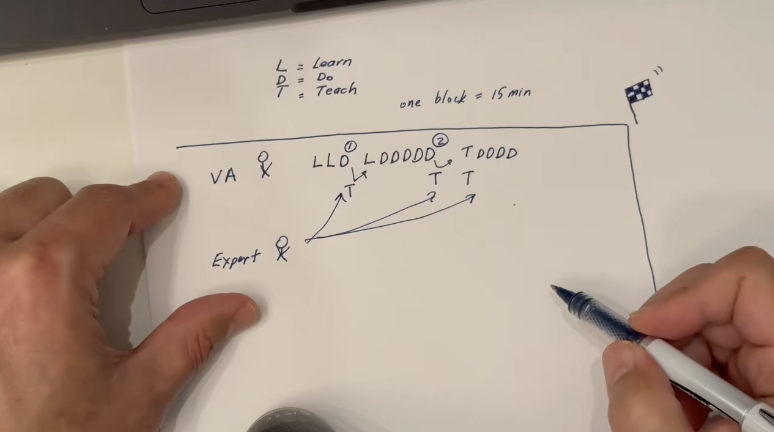
Every round adds cost. Not just the worker’s time, but the manager’s time, the expert’s time, the overhead of project management tools, and the opportunity cost of delays.
Sound familiar?
The Hidden Costs Add Up
Imagine paying someone $5/hour who takes 20 hours to finish a task. That’s $100. Then imagine hiring someone for $15/hour who completes it perfectly in two hours, $30 total.
Which one’s actually cheaper?
As business owners, we don’t care about hourly rates. We care about results: finished, accurate, and on time.
The Marines say: “Slow is smooth and smooth is fast.”
A skilled worker might look more expensive at first glance, but fewer mistakes and iterations make them the better deal every time.
The real waste comes from paying people to learn on the job while you or your senior team members act as their personal tutors. That’s not training; that’s paying twice for the same task.
Why Revisions Are the Real Problem
People often say, “This task took too long.” But that’s not the right question.
The right question is: Does this person have the competence to get it right without needing corrections?
If we were training surgeons, would we ask whether they should practice on patients for 10 minutes or 10 hours? No. The real concern is whether they should be operating at all until they understand what they’re doing.
The same applies in business.
The litmus test for any contributor is this:
Can they submit work that requires zero revisions?
Most of the QA issues come from:
- Missing or incorrect context.
- Weak comprehension of the subject (the #1 VA mistake).
- Grammar and formatting errors.
When I create content myself (videos, articles, or training) it’s done in one take. No scripts, no edits, no corrections. Eighteen minutes, start to finish.

But when someone without that depth of understanding tries to “improve” or repurpose it, it can take 4–5 hours across multiple revisions. That’s time spent correcting, teaching, and chasing; all unproductive overhead.
The Failure of Competence Is a Failure of Learning
Doctors don’t do 25 iterations of a simple surgery because they learned properly before operating. In business, repetitive cycles are a sign someone skipped the learning part of LDT.

Someone who studies the material, asks the right questions, and pays attention can produce a finished piece in under an hour. Someone who doesn’t might take a full month.
Quality Above All
Hiring skilled people might look expensive on paper, but it’s the cheapest decision you can make in practice. You wouldn’t choose the cheapest heart surgeon, right? You’d pick the one who gets it right the first time.
We believe in limiting iteration cycles because the only way to scale output is to reduce rework. It’s that simple.
In the end, what matters isn’t how many hours someone works; it’s how much gets done right without supervision.
So, next time you’re hiring or delegating, think beyond the hourly rate. Think about how much it costs to get the job done right, once.