Most young adults face three common choices after high school: go into debt for college, work minimum-wage jobs, or drift without direction. High Rise Academy offers a fourth option—one that’s skill-based, paid, and directly tied to real-world work.
This program, built by High Rise Influence with Jack Wendt and Dennis Yu, trains young people to become digital marketing practitioners by doing real work for actual clients.
What Apprentices Actually Do
Apprentices:
Work with local businesses to improve their digital presence
Turn raw content (videos, FAQs, photos) into posts and ads
Use the MAA framework—Metrics, Analysis, Action—to track progress
Attend live office hours every Thursday at 2:00 p.m. PT for direct feedback from mentors like Dennis Yu, Jack Wendt, and others
The work is tracked weekly, with feedback loops baked into the structure.
What Skills They Build
Participants learn by doing. They:
Manage real business accounts
Publish content on websites and social media
Edit video clips for campaigns
Set up and run local ad campaigns with measurable goals
They finish the program with published client work and proven, transferable skills.
Why This Works for Young People
Young adults already understand how attention works online. They’re consuming content daily. What they need is structure, mentorship, and real clients. The apprenticeship gives them that.
Instead of passively consuming AI tools, they use them to plan, write, and execute faster. This approach makes them efficient operators in a content economy.
What Sets This Program Apart
As Jack Wendt put it:
“Most jobs extract value from you. This one builds it.”
Apprentices often earn income while building long-term assets—client relationships, published content, and measurable campaign results.
If You’re Already Creating, You’re Closer Than You Think
If you’re already posting videos, testing AI tools, or managing your own page—you’re ready. You don’t need a degree. You need the right environment and accountability to grow.
Jack Wendt is the founder of High Rise Academy, an AI Apprenticeship Program that teaches young adults how to market for their parents’ businesses or sponsor businesses. In less than two years, Jack went from having no marketing experience to teaching applied digital marketing at Johns Hopkins University and managing national franchise accounts. His journey shows how young adults can become marketing heroes for their parents’ businesses by applying a clear process.
Why Young Adults Are Positioned to Help
Parents know their trade — whether it’s running a medical practice, repairing appliances, or remodeling homes — but most don’t know how to manage Google rankings, reviews, or social media. Young adults already understand smartphones, apps, and how people search for services. With training from High Rise Academy, they can convert that intuition into measurable ROI.
“Your parent is already doing great things. You don’t have to create anything new. Just amplify what they’re already doing.” — Jack Wendt
Getting Onboarded Into High Rise Academy
When a young adult joins High Rise Academy, they begin by learning the core systems and AI-powered tools that make digital marketing manageable. They don’t go through this process alone. Each new member collaborates with other students working on real businesses, gaining hands-on experience from day one. They also gain access to a library of resources, templates, and step-by-step checklists.
Support is built into the program through weekly office hours held every Thursday at 2 PM Pacific. During these sessions, Jack Wendt, Dylan Haugen, and Dennis Yu answer questions, review progress, and help students troubleshoot issues with their Metrics Analysis Action (MAA) or client work. This combination of structured training, real-world projects, and live mentorship prepares young adults to confidently start improving the businesses they work with.
Step 1: Run a Quick Audit
At High Rise Academy, the starting point is an quick audit — a way to quickly see what’s missing in a business’s digital presence.
Jack’s first project was helping his best friend’s parents, an orthopedic surgeon and an ophthalmologist in Minnesota. Their websites lacked detailed bios and clear service pages. By fixing those gaps and creating simple blog posts about knee, hip, and cataract surgeries, they began ranking higher on Google and booking more patients.
During a training session at Johns Hopkins, Jack and Dennis Yu ran live audits for businesses owned by students and faculty. One landscaping business had no reviews and an incomplete Google Business Profile. Within days of updating these, they began receiving new calls.
Step 2: Build a Content Factory
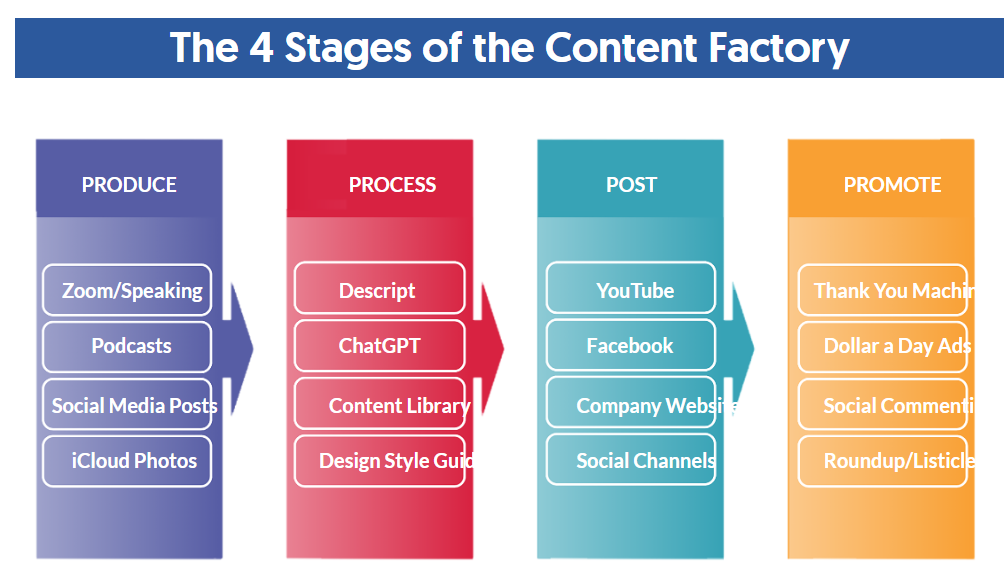
Once gaps are identified, the next step is content production. The Content Factory framework breaks this into four steps: produce, process, post, promote.
Jack used this framework to help a client with 190 franchise locations. By recording short Q&A videos with the founder and rolling them out across all locations, the business gained consistent visibility on Google and Facebook.
Dennis and Jack also worked with a roofing company in Texas. They filmed short walkthroughs of completed roof repairs and turned them into posts, blogs, and ads. Calls to the business increased as customers could now see real projects in their own community.
Step 3: Strengthen Reputation
Strong bios, customer testimonials, and online reviews drive trust — and trust drives rankings.
A husband-and-wife team running a $10M appliance repair company in Maryland attended a High Rise Academy session. Their website lacked case studies and their Google reviews were sparse. After adding detailed stories from happy customers and cleaning up their online presence, they called the training “the best ROI we’ve ever gotten in business.”
Another High Rise Academy student helped his father, a dentist in Sacramento, gather video testimonials from patients. Publishing those clips across YouTube and embedding them on the practice’s site quickly boosted local rankings and drove more inquiries.
Personal branding is essential for local leaders, as it shapes how they’re perceived in the community. Building a strong personal brand not only highlights expertise and values but also fosters trust, credibility, and long-term influence.
Step 4: Amplify With Dollar a Day
Once content and reviews are in place, the Dollar a Day method is used to scale.
In Salt Lake City, Chris Miles, a 22-year-old student of High Rise Academy, used Dollar a Day ads to promote his father’s remodeling company. Within the first week, they booked two kitchen remodel projects worth more than $40,000.
In Tampa, another student promoted educational videos for his mother’s chiropractic practice. Local visibility improved immediately, and new patients began booking directly through their site.
Proof From the Classroom
Teaching at Johns Hopkins gave Jack and Dennis a chance to prove the system in front of academics and administrators. Senior staff admitted that the live audits provided more actionable takeaways than many courses offered through their own departments. Students left with real improvements made to their businesses in real time.
A High Rise Academy participant in Denver put the same system into practice for his uncle’s contracting business. By building a proper bio page and publishing project content, the business began ranking for “kitchen remodeling Denver” within weeks.
Building Jobs Through Micro-Agencies
High Rise Academy’s goal goes beyond helping one family business. The program is designed to create a million jobs through micro-agencies. Young adults learn to run audits, build content factories, and manage reputation, then hire virtual assistants to execute the system.
Jack himself now manages a team of overseas VAs who edit videos and distribute content. These jobs, often paying $500–$1,000 per month, are significant sources of income in places like Pakistan and the Philippines.
Why High Rise Academy Matters
Joining High Rise Academy gives young adults the training and mentorship needed to put these systems into practice. Running a quick audit, building a content factory, collecting reviews, and amplifying content with Dollar a Day are all outcomes of the program. By becoming part of High Rise Academy, you gain the structure, community, and live support to apply these methods to your parents’ business or a sponsor business.
Jack used these systems to help surgeons in Minnesota, a $10M appliance company in Maryland, a roofing company in Texas, and a multi-location franchise. Other students have repeated the process for dentists, chiropractors, contractors, and remodelers. The results come as a byproduct of following the program and working alongside peers and mentors.
High Rise Academy is a pathway for young adults who want to build marketable skills, help their families, and create opportunities for themselves. You can learn more and apply by visiting High Rise Academy website. “In just a year and a half, I went from knowing nothing about digital marketing to teaching it at Johns Hopkins. Anyone can do this if they follow the steps.” — Jack Wendt
Featured Image: Henry on a video call sharing his first week in High Rise Academy (placeholder)
When Dylan and I started High Rise Academy, our goal was simple: give young adults the tools, mentorship, and confidence to do real work for real businesses. Henry is one of the first apprentices to join, and his journey shows exactly how this program works in practice.
This story comes from a Youtube interview we did with Henry, reflecting on his early months in the program. What he shared provides a clear picture of what new apprentices can expect.
Flexibility From Day One
When we asked Henry what he loved most about the program, his answer was immediate: freedom and versatility.
He explained: “I can basically work from wherever I want as long as I have internet access and Wi-Fi.”
That flexibility meant Henry could work from his family’s cabin or his home without missing deadlines. For him, work-life balance wasn’t theory — it was lived experience.
This is the same principle Dennis Yu, Dylan, and I experienced when we spent a month traveling to eight countries and five U.S. states while speaking at conferences. Our output didn’t dip, because we follow documented processes like the Content Factory model.
Starting With No Experience
Henry admitted he had “little to no experience” before joining. His only teamwork experience came from school projects.
Within weeks, he built professional habits:
Communicating directly with clients.
Finishing projects on time.
Following through on commitments.
As Henry put it: “It’s greatly helped me to communicate with others, get work done on time, and finish what you said you would finish.”
Henry proves that even with no experience, the system works.
Building Transferable Skills
Henry quickly realized that the methods we used for a dentist could apply to almost any local service business — landscapers, plumbers, roofers, and more.
He learned to:
Build repeatable workflows for repurposing.
Adapt formats to each platform’s audience.
Use tools like Descript and Underlord to speed up editing.
Henry discovered that while tools help, real skill lies in understanding client goals and target audiences. That’s why we built documented processes like the Content Factory model: they create scalable systems anyone can learn and apply.
Weekly Reports and SEO Growth
Every Friday, Henry contributed to our MAA End-of-Week Reports. In week one, the reports simply listed content produced.
As weeks progressed, Henry learned how to:
Add SEO tracking.
Summarize keyword performance.
Include engagement numbers from social posts.
These reports became the backbone of client communication. Henry moved from never having written a report to producing one that guided business decisions. To see exactly how to structure these reports, check out our full guide on how to write Weekly MAA reports for local service businesses.
Support From the Team
Henry didn’t navigate this alone. He had access to mentors like Dennis Yu, Dylan, and myself, along with a full library of playbooks and processes.
As he explained: “Everything is documented. Everything that Dennis and BlitzMetricshas done is out there. You can literally just search whatever you’re saying.”
When apprentices run into obstacles, they’re never stuck. They can:
Reference documented checklists.
Ask team members who’ve executed these tasks thousands of times.
Henry is clear about the time investment. He doesn’t log hours for the sake of it. He focuses on getting projects done.
For apprentices managing one client, Henry estimated “probably no more than an hour a day” is sufficient. That makes High Rise Academy accessible for students, part-time workers, and young adults balancing other commitments.
Advice to Future Apprentices
When we asked Henry what advice he’d give someone just starting, he said: “At the beginning, I didn’t really know much. But there are so many resources. And even if you end up getting stuck, there are team members who’ve done this thousands of times you can fall back on.”
That mindset is exactly what makes High Rise Academy work: you don’t need to start as an expert. You need to start willing to learn.
Closing Thoughts
Henry’s journey represents what High Rise Academy is about: taking motivated young adults, giving them real-world work with real clients, and surrounding them with mentorship and repeatable processes that lead to success.
Key takeaways from Henry’s story:
Flexibility to work from anywhere.
Transferable skills that apply to any local business.
Step-by-step guidance through reporting, SEO, and content creation.
Supportive mentors and documented playbooks.
Realistic time commitment that fits into everyday life.
Want to build these skills while helping real businesses? Start by applying what Henry did — commit to doing the work, ask questions, and follow the process.
This expanded guide builds on our overview of the High Rise Influences AI Apprenticeship Program, or High Rise Academy, giving you deeper insight into how we help apprentices turn passion into a professional career. From paid client work to mentorship and advanced certifications, here’s what sets our program apart.
Hands-On Paid Work & Real Client Experience
Our apprentices don’t just study theory – they learn by doing. After completing the foundational courses, apprentices can qualify to become part of the Digital Marketing Training System. Entry-level specialists start at $10 per hour, with tiered raises of $5 per hour as they earn certifications. This paid work isn’t busywork; apprentices produce deliverables for real clients, gaining the experience and case studies needed to build personal brands and portfolios.
Mentorship & Career Guidance
Mentorship is at the core of our program. Dennis Yu credits his own success to mentors and encourages apprentices to follow the same path. We teach a simple four-step approach: follow the mentor’s content, show you’ve done your homework, demonstrate gratitude, and offer small favors in return. Our faculty members and industry professionals guide apprentices through project reviews and career planning, helping them make the leap from apprentice to marketing professional.
Entrepreneurial Skills & Building Agencies
Many of our apprentices aim to start their own agencies. That’s why our curriculum covers practical advice on scaling, managing freelancers, and working with big clients. We emphasize balancing learning with networking and execution to avoid common startup pitfalls. Whether you want to launch your own agency or become a high-impact marketer in a larger organization, this program equips you with entrepreneurial skills.
Faculty & Administrator Options
We offer a range of options for universities and organizations interested in collaborating. These include one-hour live webinars on topics like Facebook Ads for $1 a day, project management, personal branding, content marketing, and measuring social media ROI. Qualifying apprentices can join the specialist program to earn while they learn, advancing based on performance. For colleges and student groups, Dennis Yu waives his standard speaking fee for on-campus workshops and keynotes, sharing his experiences from Yahoo! and his predictions for the future of digital marketing.
Partnerships & Schools
The High-Rise Influence University Program collaborates with a growing list of educational institutions. Partners have included the University of Louisville, UC San Diego, BYU, Hofstra University, Ridgewater College, Syracuse University, the University of Connecticut, the University of San Diego, LDS Business College, and Baruch College. These partnerships help integrate our curriculum into degree programs and create employment pipelines for apprentices.
Real-World Systems & Processes
We use checklists and processes similar to those found in aviation and surgery to ensure repeatable excellence. Frameworks like the Topic Wheel and 3×3 Goals help apprentices structure their personal brands and content strategies. Our specialist and virtual assistant collaboration model ensures that tasks such as video editing, ad management, and micro-targeting are handled efficiently.
Scale & Ongoing Growth
The program offers access to over 44 professional courses, with more added every month. This ensures apprentices can continue advancing their skills long after they complete the core curriculum. As the program grows, we measure social media ROI and define the impact of likes, comments, shares, and reviews to set the standard for social measurement.
Conclusion & Next Steps
The High-Rise Influence University Program doesn’t just teach marketing; it creates employable, experienced marketers with personal brands and real client results. Whether you’re an aspiring marketer, a university partner, or a business seeking certified talent, we invite you to explore the program and discover how it can accelerate your goals.
Interested in joining? Read our main overview of the High-Rise Influence University Program here: https://highriseinfluence.net/high-rise-influence-university-program/. Or contact us to learn more about partner packages and opportunities.
In this video, Dennis Yu, Dylan Haugen, and I, Jack Wendt, explain how High Rise Academy equips young adults to deliver results local businesses can measure—leads, calls, and customers.
Goals: Creating Jobs Through Mentorship
High Rise Academy is built on Dennis Yu’s mission to create one million jobs for young adults. That idea comes from mentorship Dennis received 30 years ago from the CEO of American Airlines, who helped him see opportunities as a young professional.
That mentorship model defines the Academy. Students learn by doing and then teaching others. Dylan Haugen explained: “Since starting this, all my friends have been implementing this into their personal branding. I’ve helped them get Knowledge Panels just by sharing what I learned.”
Dylan and I documented the steps to trigger a Google Knowledge Panel so peers could follow the same process. Each student builds a public portfolio of campaigns, dashboards, and videos that employers or clients can verify.
Content: Documented Systems That Deliver
The Content Factory
Apprentices follow BlitzMetrics’ Content Factory framework, the same workflow applied with Nike and the Golden State Warriors. It turns one video into many outputs across TikTok, YouTube, Facebook, and LinkedIn.
Tools like Descript and CapCut simplify editing, so even first-time students can caption and repurpose clips.
The 3×3 Video Grid
Students start with a 3×3 video grid: nine short clips—three “Why,” three “How,” and three “What.” For example, a dentist might record why they entered the field, how they calm nervous patients, and what treatments they offer. These build authenticity and become ads or blog content.
This method reflects BlitzMetrics’ personal branding guide: authentic storytelling is the backbone of effective marketing.
Dennis commented: “Most local businesses say they’ve been burned by three agencies before us.” Documented dashboards help rebuild that trust.
Targeting: Parents and Local Businesses
Parents and Students
Parents want skills that translate into work. At High Rise Academy, apprentices launch campaigns in their first month.
Instead of theory, each student documents campaigns that prove competence.
Local Service Providers
For dentists, roofers, and lawyers, marketing is often a struggle. The Academy prepares someone they trust—a son, daughter, or local student—to manage it.
Why Real Client Work Produces Better Marketers Than Classroom Theory
The Academy succeeds because apprentices run live campaigns, not simulations. Every assignment delivers measurable results—calls, leads, or video views.
Dennis explained: “This isn’t about tuition or replacing college. These are individual lives. When these young adults succeed, I feel pride.”
By documenting their work publicly—through checklists, YouTube videos, and blogs—students create repeatable paths for others to follow. That cycle scales the mission from dozens of jobs to thousands.
High Rise Academy Training Is Built on Documented Proof
High Rise Academy is grounded in execution. Apprentices create content, run ads, and manage analytics that businesses can measure. Parents see confidence grow. Business owners get work tied to visible data.
The systems behind it—the Content Factory framework, the Dollar-a-Day method, and steps to trigger a Google Knowledge Panel—have been tested with global brands and adapted for local providers.
Want to equip your young adult with these skills? Enroll in High Rise Academy and give them hands-on experience running real campaigns.
Many young adults wonder what comes after high school. Retail or fast food jobs are easy to get, but don’t provide transferable skills. College is an option, but it doesn’t always connect directly to real work. High Rise Academy offers an alternative: apprentices work with real businesses, apply AI tools, and learn by producing measurable outcomes.
This article is based on a session led by Jack Wendt and Dylan Haugen, where they discussed how the program works in practice. You can watch the original video session here.
Who This Is For
The GCT framework—Goals, Content, Targeting—is a simple way to clarify who a program is designed for and how it delivers value. It helps align expectations by showing what you’ll learn, how you’ll learn it, and who the program is best suited for.
Goal: Learn practical digital marketing and business skills by working with real clients. Content: Apprentices apply frameworks, such as the Content Factory, to show results and accountability. Target: Young adults who want to build portfolios and experience instead of settling for jobs that don’t transfer into long-term skills.
It’s also for parents who run local service businesses and want their kids to gain meaningful work experience early—whether by contributing to the family business or working with other real clients. High Rise Academy provides proof of work—real numbers, real businesses, and clear documentation. Anyone who values learning through action rather than theory will find this program a fit.
What Apprentices Do
Apprentices are matched with real businesses and given practical tasks. They gather raw content from business owners, create social media posts, manage advertising campaigns, and document outcomes. Every week they submit reports following the MAA framework—showing metrics, providing analysis, and outlining actions for the next week.
The focus is on producing measurable improvements for businesses. Apprentices learn to set up campaigns, analyze performance, and present results in a professional format. They also get practice in communication, coordination, and accountability by working with both clients and mentors.
Learning Beyond Technical Skills
Jack described it this way:
“Most jobs extract value from you. Get a job that you can extract value from. Learning from the job, adding to your resume, improving your interpersonal skills and your soft skills—all those things are going to be huge and you’ll never lose that value.”
The program develops more than technical expertise. Apprentices practice project management, communication, and leadership on every campaign. Writing weekly reports, presenting results, and coordinating with teams mirrors what’s expected in professional roles.
Dennis Yu—who has worked with major organizations like Nike and the Golden State Warriors—personally leads weekly office hours, which are open to every member of the academy. Apprentices review campaigns, identify weak points, and adjust strategy on the spot. Understanding what happens in office hours and why documenting progress is critical helps ensure steady growth and accountability.
Building a Portfolio That Matters
Every campaign turns into a case study. Apprentices save screenshots, MAA reports, and before-and-after analytics. This evidence becomes the backbone of their portfolio.
Instead of saying “I know social media marketing,” apprentices can show:
A Facebook campaign that generated a specific number of leads.
A Google Ads report showing cost per lead reduced by half.
An SEO dashboard proving month-over-month traffic growth.
This level of documentation prevents fluff and builds credibility. It aligns with industry best practices such as E-E-A-T principles. Apprentices present their portfolios in review sessions with mentors, practicing how to explain results clearly and answer questions.
Visuals include:
Screenshots from campaigns.
Sample MAA reports.
Quote cards from apprentices and clients.
Analytics charts showing measurable improvements.
Employers and clients value proof. By the end of the program, every apprentice has a body of work they can point to as evidence of skill.
Get Started Here
If you want to stop guessing about your future and start working on real projects, apply to High Rise Academy. You’ll build campaigns, work with mentors, and graduate with a portfolio of documented results. This is not theory. It is work you can prove.
This page is free training for local service business owners who want to understand how marketing actually works before delegating it to an agency or investing further.
Most businesses don’t struggle because they aren’t trying hard enough. They struggle because the systems behind search, social, ads, and content aren’t explained in a way that connects actions to real business outcomes.
Each resource below focuses on a specific area where confusion is common—how platforms interpret your business, why content often fails to perform, and how to evaluate what is (and isn’t) producing revenue.
You don’t need to watch everything. Start with the section that best matches where you feel uncertain, and use the rest as reference as questions come up.
Below is a curated collection of videos selected because they address the most common points of confusion and failure.
How SEO actually works
Start here. This video explains the underlying framework the rest of these trainings build on.
This is the first episode in my Marketing Mechanic series, which focuses on identifying the underlying mechanism that actually drives performance in a marketing channel.
SEO continues to be a frustrating mystery for home service businesses.
Much of that confusion comes from focusing on tactics instead of understanding how search engines interpret businesses at a structural level.
As a search engineer who helped build Yahoo! over 25 years ago, I explain how search engines, social platforms, and tools like ChatGPT interpret entities, and why this matters far more than traditional SEO checklists.
This episode establishes a foundation you’ll see repeated throughout the rest of the trainings: once you understand the mechanic, decisions become simpler and more controllable.
The first seven Marketing Mechanic episodes are designed to build on each other, moving from foundation to execution.
Content strategy that drives sales
Most home service businesses fail spectacularly at content marketing because they pursue a content calendar approach instead of the evergreen Topic Wheel.
In this video, we cover how to go from random posts that get no engagement and die out to revenue-producing assets that continue to live forever.
We’ll discover the 90/90 rule, 3×3 grid, and Greatest Hits, which you can implement immediately.
Own your name on Google
If you don’t own your name on Google, you don’t own your business.
Type your name into search right now. Do you see you… or do you see LinkedIn’s rented billboard?
That’s like running a million-dollar company but letting someone else hold the keys to your front door.
In this video, I break down exactly how to take back your name, structure your personal brand site, and trigger Google’s Knowledge Panel so you become the undisputed authority on you.
If Google can’t tell who you are, neither can AI. And that means customers can’t either.
5 steps to own your own marketing
Whether you use an agency or do it in-house, you should always OWN your own marketing.
Not just to verify you have ownership across all your assets, but to also understand what’s actually driving revenue and where calls are coming from.
Even if you’re not “technical”, you as the business owner deserve to know from your service providers how much money is incrementally being generated by each tactic, without having to ask.
And you should be able to see the actual numbers in your own systems, not a 3rd party interface dressed up to make them look good.
Here are 5 steps to take back control.
There are thousands of legitimate marketers out there who aren’t afraid of letting the client own their own systems and to show them the data.
+ Get access to all your assets (web, social, email).
+ Look at the spend and change history in ad accounts.
Clients can be unhappy with our results, even though we’re working hard.
Each of us is doing what appears to be good work, but must understand MAA (business impact) to truly deliver.
Content creation and website tweaking is only half of the equation (conversion), while the other half is traffic (getting people to these pages).
The combination of traffic x conversion = qualified customers.
And that’s what we should all be looking at, no matter what part of the puzzle we’re working on– Google ads, tweaking the new veneer landing page, building links, editing videos, posting on YouTube, answering the phone, etc…
The Social Amplification Engine
Most people post randomly and hope something works. The Social Amplification Engine turns that chaos into a precise, repeatable system.
This guide walks you through the full stack of digital marketing (plumbing, goals, content, targeting, amplification, and optimization) and shows how each layer works together to generate consistent leads.
You’ll see how to build the infrastructure, set measurable objectives, create content that actually performs, target the right audiences, and measure what’s driving real revenue instead of chasing vanity metrics.
This is the original framework we’ve used for years with seven- and eight-figure local service companies.
How to build a Content Library
The articles I’ve written, social posts I’ve made, speaking, marketing materials have been scattered all over the place.
I’ve figured out an effective process to centralize it– which has helped me trigger a Google knowledge panel and help my companies grow.
Give this training to your marketing person to build and organize your Content Library.
For your company and your personal brand– to drive your content strategy, advertising, podcast, and other content efforts.
Want to accelerate? Join the AI Apprentice program
The free trainings above are designed to help you understand how modern marketing systems work and how to evaluate what’s driving real business outcomes.
Some business owners, however, want to apply these ideas inside their own businesses by developing a capable young adult who can execute, learn quickly, and grow with the company.
That’s why the AI Apprentice Program exists—a structured, year-long group coaching program led by me and a hand-picked expert team, focused on implementation, skill-building, and accountability.
What you get:
Hands-on work applied directly inside your business
Weekly live coaching every Thursday at 2pm PST.
Private Facebook group for daily support.
Full OpenAI Teams access (we pay for it).
API credits + tools we’ve built and licensed.
A structured path to mastery.
Accountability to ensure you execute.
This allows your marketing to be handled internally, rather than outsourced to an agency you can’t see into, and instead carried out by a trusted young adult inside your business. You know what’s being done, why it’s being done, and how it connects to real business results.
Investment:
$7,500 for a full year (Yes, people charge more for a weekend workshop.)
This is the same system that helps young adults do in 3 months what normally takes 3 years trying to learn alone.