Does Your Business Qualify For Google’s Local Service Ads? Here’s How To Tell

Google Local Service Ads (LSA) are a pay-per-lead advertising platform that allows local service companies to promote their services on Google.
LSA Google only charges you for qualified calls.
Meaning that if potential customers aren’t actively searching for your service, you don’t pay.
Just like having a GMB profile helps you show up when someone is searching for your offer, LSA ads allow your ideal customers to reach you easier.
That means more calls and more customers to service.
Firstly – Google LSA ads aren’t everywhere.
They’re only available in:
- United States
- Canada
- Germany
- United Kingdom
- France
- Austria
- Belgium
- Ireland
- Italy
- Netherlands
- Spain
- Switzerland
There are also specific regulations depending upon the country.
To name a few:
- United States: For certain categories like locksmiths and garage door services, advanced verification is required to prevent fraud.
- Canada: Similar to the U.S., there might be additional verification processes for specific service categories.
- Germany, United Kingdom, and other European countries: Data protection regulations like GDPR are more stringent, impacting how customer information is handled.
- France: Specific regulations might apply to trades like plumbing or electrical work, requiring specific certifications or qualifications.
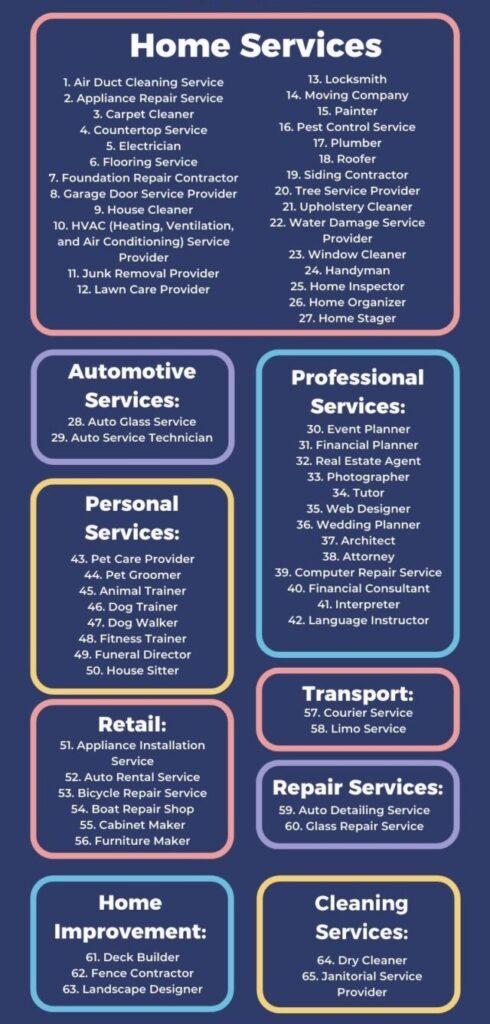
Here Are the Businesses Types That Qualify
Are you in one of these categories?
1. Air Duct Cleaning Service
2. Appliance Repair Service
3. Carpet Cleaner
4. Countertop Service
5. Electrician
6. Flooring Service
7. Foundation Repair Contractor
8. Garage Door Service Provider
9. House Cleaner
10. HVAC (Heating, Ventilation, and Air Conditioning) Service Provider
11. Junk Removal Provider
12. Lawn Care Provider
13. Locksmith
14. Moving Company
15. Painter
16. Pest Control Service
17. Plumber
18. Roofer
19. Siding Contractor
20. Tree Service Provider
21. Upholstery Cleaner
22. Water Damage Service Provider
23. Window Cleaner
24. Handyman
25. Home Inspector
26. Home Organizer
27. Home Stager
Automotive Services
28. Auto Glass Service
29. Auto Service Technician
Professional Services
30. Event Planner
31. Financial Planner
32. Real Estate Agent
33. Photographer
34. Tutor
35. Web Designer
36. Wedding Planner
37. Architect
38. Attorney
39. Computer Repair Service
40. Financial Consultant
41. Interpreter
42. Language Instructor
Personal Services
43. Pet Care Provider
44. Pet Groomer
45. Animal Trainer
46. Dog Trainer
47. Dog Walker
48. Fitness Trainer
49. Funeral Director
50. House Sitter
Retail and Rental Services
51. Appliance Installation Service
52. Auto Rental Service
53. Bicycle Repair Service
54. Boat Repair Shop
55. Cabinet Maker
56. Furniture Maker
Delivery and Transportation Services
57. Courier Service
58. Limo Service
Repair Services
59. Auto Detailing Service
60. Glass Repair Service
Construction and Home Improvement Services
61. Deck Builder
62. Fence Contractor
63. Landscape Designer
Cleaning and Janitorial Services
64. Dry Cleaner
65. Janitorial Service Provider
Google continues to add more every year!
If you fit into any of these categories, here’s how you can get started:
Before running LSA, you need a GMB (Google My Business).
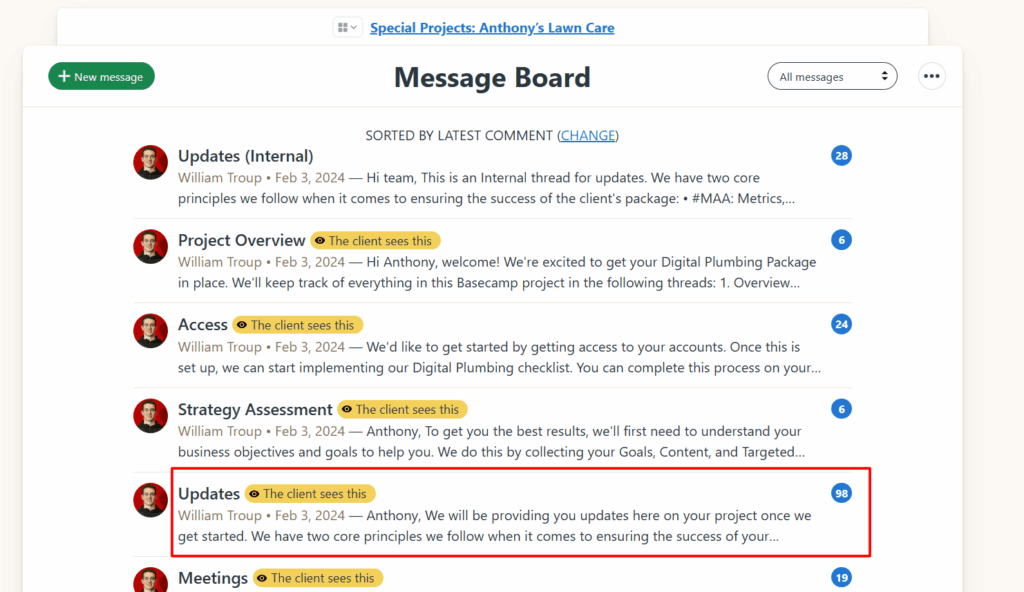
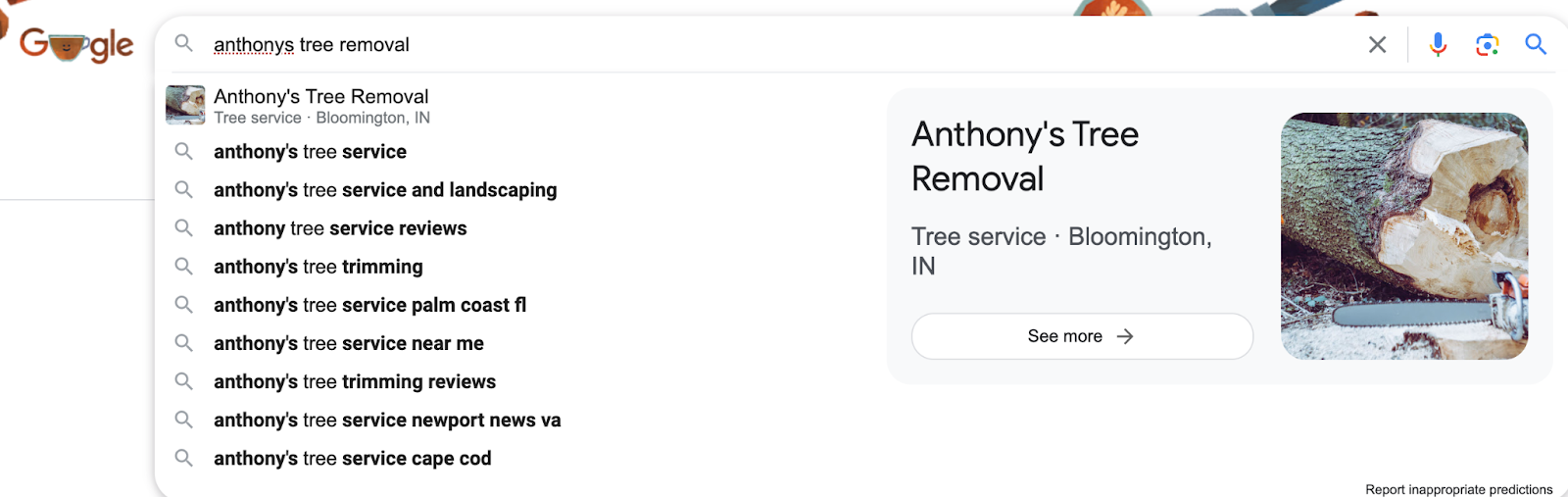
A good example is Anthony’s Lawn Care, which offers tree removal and lawn care services in Bloomington, Indiana.
Before they run LSA, they need a proper GMB (Google My Business) so they can get started.
Now, when you type in “Anthony’s Tree Removal” into Google, they show up.
Remember to setup your digital plumbing (ads tracking) before you start spending money. We have an entire course on how to do so here.
Here’s How to Setup Your Local Service Ads
Verify Your Business
Ensure your business is eligible for LSA by verifying your business information on Google My Business (GMB). This includes providing accurate business details such as name, address, and phone number. We made a guide on how to do this you can find here.
GMB Optimization
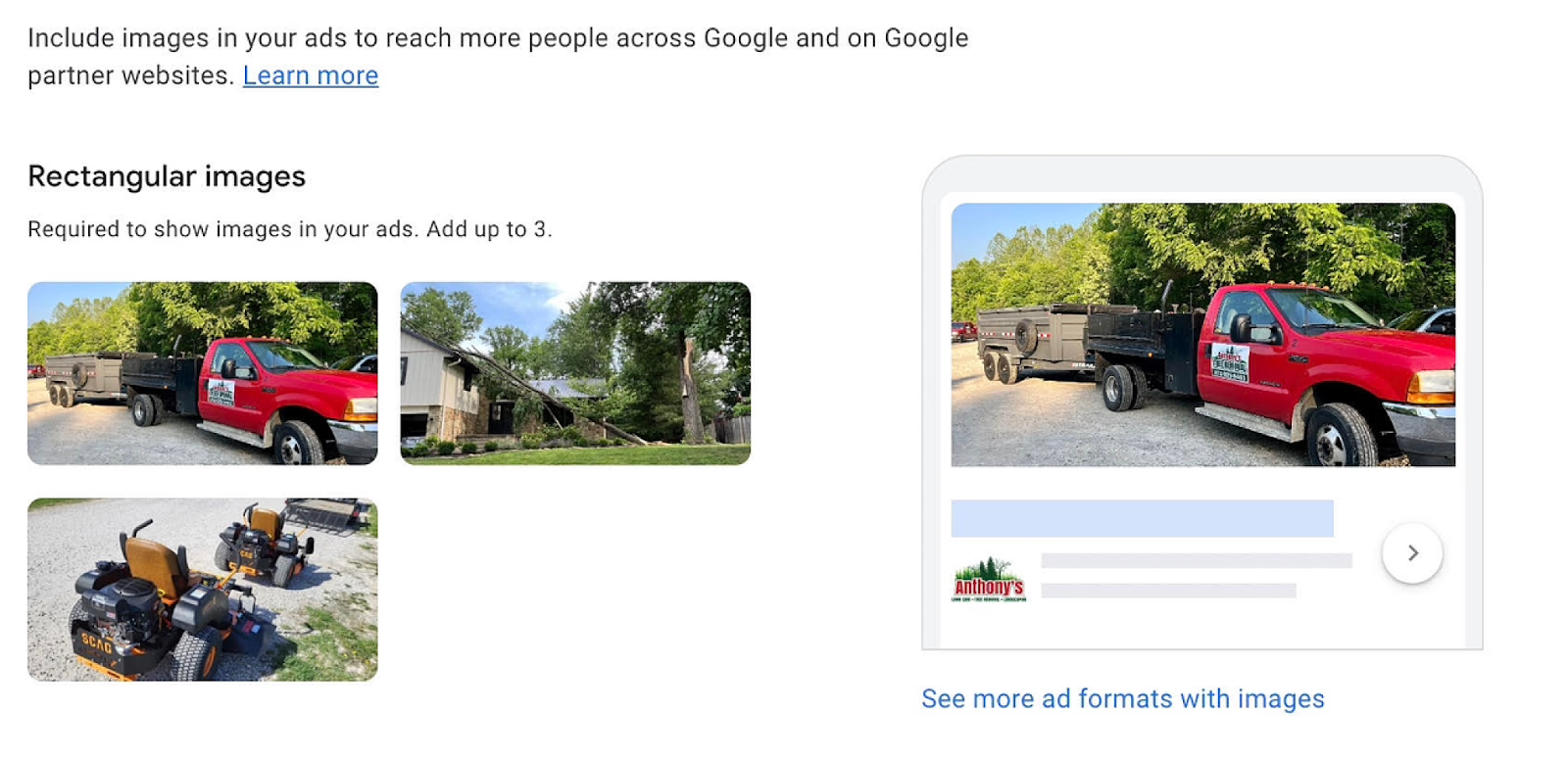
Optimize your GMB profile by adding relevant business information, such as business hours, services offered, and photos. This helps improve your visibility in local searches. Make sure the photos are relevant and actually yours, as Google prioritizes this. This is how you start ranking in the top 3 on Google My Business.
In Anthony’s case, we wanted to make sure all photos listed were from his team’s trucks.
Get Verified
Verify your GMB listing to confirm your business details and ensure your business appears on Google Maps and local search results. This part is easy, as you simply need to submit documentation of your business’ existence and answer a few security questions.
Setting Up LSA
Access Local Service Ads
Go to the Local Service Ads website and click on “Get Started.”
Select Your Business Type
Choose the category that best describes your business from the list of eligible categories for LSA.
Set Your Service Area
Define the geographical area where you offer services. You can choose specific cities or regions where you want your ads to appear.
Create Your Profile
Enter your business information, including your business name, address, phone number, and website.
Select Your Services
Maybe you’re an HVAC company that also does electric work. Why only choose one when you can help others, too? Choose the services you offer from the list provided. You can select multiple services that your business provides.
Set Your Budget
Determine your budget for LSA. You can set a weekly budget based on the number of leads you want to receive. Initially, we recommend going with what Google offers.
Set Your Availability
Specify your business hours and when you are available to receive calls or messages from customers.
Verify Your License and Insurance
Upload copies of your license and insurance documents to verify your qualifications for the services you offer.
Review and Submit
Review your information to ensure it’s accurate, then submit your application for review by Google.
Receive Approval
Once your application is reviewed and approved by Google, your LSA campaign will be activated, and your ads will start appearing to potential customers.
The beauty of LSA is visibility of your business, without breaking the bank on expensive SEO or paid ads agencies. Remember to work on your local service pages as well – as this can directly impact your ranking through giving greater authority to Google.
We want to prove to Google that you’re a real business, doing real services, in the area you say you operate in.
And because this is such a common problem with local service businesses, we have a $297 Quick Audit which you can purchase now that can diagnose exactly the issues your business has online.