Young Entrepreneurs: Stop Waiting and Take Action

If you’re a young entrepreneur trying to build a personal brand, you’re not “behind.” Most of the time, you’re simply stuck at the starting line.

This YouTube video was filmed in Las Vegas with the High Rise Influence team, and they walk through a real coaching moment with a young entrepreneur named George Paladichuk who is the founder of NaiL, An A.I. company for home services, and they explain why the reason most young adults don’t move forward has less to do with a lack of resources and more to do with hesitation and over-prep.

Video Context: What Happened With George

George joined the AI Apprenticeship Program by paying for it himself (not a scholarship, not a parent, not a free trial). That’s relevant because it signals commitment—and it usually means the person is willing to follow through when they get direction.

A week earlier, George told the team he wanted to start creating content, but he felt like he needed a full setup first:

  • a whiteboard
  • a camera
  • “the right equipment”
  • a perfect place to record

Instead of letting him stall, the team told him something simple:

The team’s message is direct:

“You just got to get started.”

When they checked back in, the results were immediate.

The Biggest Problem: Self-Limiting Beliefs (Not Skill)

This is a pattern you see over and over with young entrepreneurs: progress comes from publishing consistently and building a repeatable routine—not waiting for perfect conditions.

The entrepreneurs who move fastest don’t “prepare” for months. They start posting, get feedback, and improve in public.

This mirrors MAA (Metrics, Analysis, Action), because once he started posting, he finally had real data to work with. He could look at what was performing, what wasn’t, and then make adjustments and take action to improve. But if he never posted in the first place, he wouldn’t have any metrics to analyze—and nothing to improve on.

The team calls out the most common pattern they see in young entrepreneurs:

  • they overthink
  • they wait until they feel “ready”
  • they assume they’re too young to be taken seriously

That turns into self-limiting beliefs like:

  • “I’m too young for this.”
  • “They know more than me.”
  • “People will look down on me.”
  • “I need to have everything figured out first.”

The problem isn’t the belief itself—it’s what it does.

It delays execution.

George Posted 5 YouTube Videos

George stopped planning and started publishing.

By the time the team talked to him again, he had already posted five YouTube videos.

That’s the shift most people never make.

Most people stall on video #1.

George posted five and kept moving.

The Team Promoted His Videos (Same Day)

George didn’t just post and hope.

The team helped him promote the videos the same day.

That matters because content alone isn’t enough—you also need distribution. If something is working, put a little extra push behind it so it reaches the right people faster.

The best way to do this is using the Dollar a Day system which is a proven amplification strategy used to turn existing credibility, content, and customer trust into consistent visibility, leads, and sales without gambling on large ad budgets or guessing what works.

The team didn’t just tell George “good job.” They helped him push the content in the right direction and get distribution.

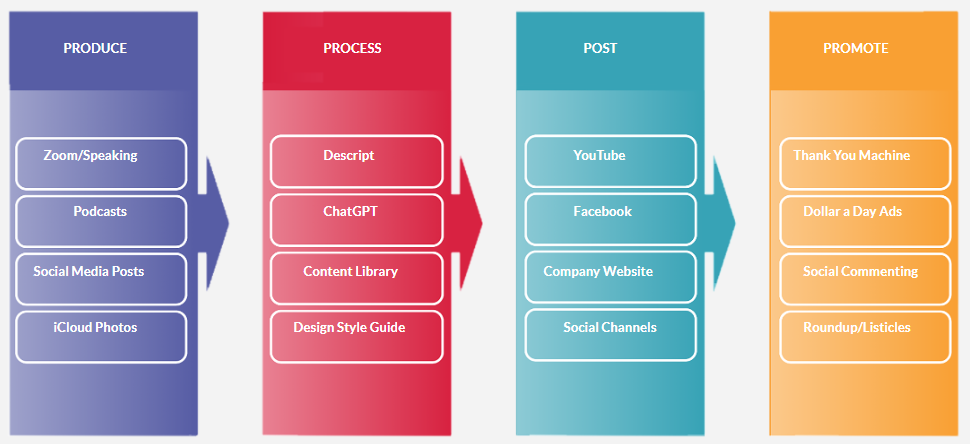
Promotion is the final stage of the Content Factory and it’s what turns content into:

  • Reach
  • Conversations
  • Opportunities

George Booked 8 Podcasts With Big Names

George took the next step that actually creates opportunities: conversations.

The most important part of the story wasn’t the five videos.

It was what happened next.

George booked eight podcast interviews with major players in his industry—people the team described as “titans.”

Not acquaintances.

Not friends.

People he didn’t already have access to.

100% Conversion Rate on Cold Outreach

George reached out to eight high-level people.

All eight said yes.

That’s a 100% conversion rate from cold outreach.

Jack Wendt pointed out how rare that is:

“Since when have you heard of a cold email campaign that had a 100% conversion rate?”

Most entrepreneurs assume cold outreach doesn’t work.

It works when:

  • the ask is clear
  • the message is honest
  • the person reaching out shows initiative

Why Being Young Can Actually Help You

A lot of young entrepreneurs treat youth as a disadvantage:

  • “They won’t respect me.”
  • “I don’t have credibility yet.”

The team argues that youth is a double-edged sword.

It can feel like a disadvantage at the beginning.

But when you reach out to established people who are already successful, many of them are open to helping because:

  • they remember what it was like starting out
  • they recognize effort
  • they respect initiative

In other words, youth can work in your favor when your execution backs it up.

The Actual Lesson: Execution Creates Credibility

George didn’t need a long track record to get responses—he needed visible work and a clear request.

In this case, the proof was simple:

  • five YouTube videos already published
  • outreach that led to eight podcast bookings

That sequence makes it easier for other people to take him seriously because they can see what he’s doing and where he’s headed.

What to Copy If You’re Starting From Zero

  • Let results build your confidence
  • Publish before you “upgrade”
  • Aim for volume early
  • Use content as proof, not performance
  • Reach out to people above you
  • Don’t assume “no” before you send the message

Final Takeaway

A lot of young entrepreneurs don’t fail because they lack talent.

They fail because they lack commitment.

George had commitment because he paid for the program himself—and then proved it by posting the videos and doing the outreach.

And because he was inside High Rise Academy, he also had direct coaching and feedback as he started putting content out.

This helped him post and promote the videos, sent the outreach, and book conversations.

That’s the difference between staying stuck and building real momentum.

Inside High Rise Academy: What You Can See in the Students

High Rise Academy exists because there’s a lot of noise in the AI and marketing space, and it’s hard to tell what training actually holds up in the real world. In this High Rise Influence YouTube video, Dennis Yu gave a simple filter for sorting that out. As he put it, “Don’t judge a program by the person selling it. Judge it by the students it produces.”

After Dennis lays out that idea, the video shifts to student builders and lets you hear directly from us about what we’re working on and how we’re applying the training with local service businesses.

The Principle Dennis Shared

Dennis’ point is blunt: it’s easy to make a program look good on the surface. The harder test is what students can actually produce once they’re inside it — their work, their thinking, and how that work holds up when applied to real clients.

That’s why the video centers on the people inside the program. You get to see how students talk about their work, what they’re building, and the kinds of problems they’ve learned to solve for clients.

What High Rise Academy Trains

High Rise Academy is an apprenticeship for young adults who want to build a concrete skill set in AI‑assisted marketing. The training is tied to local service businesses because the work is practical and the feedback is immediate.

Students practice:

  • Building and improving personal brand sites and business sites
  • Using AI tools to speed up research, content production, and operational tasks
  • Running and refining ads using proven systems like Dollar a Day, while tracking performance
  • Managing deliverables, communication, and client relationships

The idea is to learn repeatable systems and apply them on live accounts, so students leave with work they can stand behind.

Student Examples From the Videos

Dylan Haugen (Me)

I came into the program as a content creator and professional dunker. I knew how to grow an audience, but most of that lived on platforms I didn’t control. The shift for me was learning how to turn content skill into owned assets and clear client value.

What that looked like:

  • Building a personal brand website I control
  • Strengthening search presence, including my Knowledge Panel
  • Learning to package content and relationships into services for local businesses
  • Delivering real marketing outputs alongside the team

Jack Wendt

Jack’s story shows what happens when someone combines big‑picture vision with consistent execution. He’s been able to travel and still build because he runs work like a professional: projects stay on track, communication stays clear, and relationships keep compounding.

What stands out in his path:

  • He builds partnerships and opportunities through strong relationships
  • He keeps a steady operating rhythm even while moving across time zones
  • He treats marketing like a long game, not a short sprint

Luke Crowson

Luke started in fitness coaching, and Dennis noticed something that carries over into marketing: he cares about outcomes and sticks with a process. Inside the program, Luke applies that mindset to client work that’s built on steady improvement.

His focus areas include:

  • Campaign structure and ongoing tuning
  • Landing page and site improvements
  • Lead quality and follow‑up alignment with owners

The takeaway here is straightforward: consistent, client‑first execution plus good process is what drives dependable results.

Sam McLeod

Sam is still in school and leans heavily into engineering. His role is building tools and workflows that remove repetitive work for students and standardize delivery for clients.

Where that shows up:

  • Automating tedious steps so students focus on high‑value tasks
  • Turning proven processes into repeatable workflows
  • Supporting scale without lowering quality

One Shared Thread

Different backgrounds, same direction: we’re learning practical systems and applying them to real businesses. And the four of us you saw in the video are also building this alongside Dennis. We are founders of High Rise Influence and Local Service Spotlight, so we’re learning how to create an agency, start a business, and pressure‑test what we learn by using it every week.

Advice We Shared at the End

We wrapped the video with short advice for anyone considering this path:

  • Use AI like a teammate. It helps you draft, research, and troubleshoot faster, but you still steer the work.
  • Mindset drives follow‑through. Skill only compounds if you stay in the game long enough to apply it.
  • Aim for steady improvement. Getting a little better daily beats waiting for a perfect moment.
  • Learn by doing. You grow fastest when you ship work, get feedback, and refine.

Takeaway

Dennis’ filter is simple: student work tells you more than marketing ever will. The video applies that idea by showing what students are building and how they think about the work.

If you’re evaluating any program in AI or marketing, whether it be the High Rise Academy or something else, look for a trail of real output: projects you can inspect, processes students can explain, and progress that shows up across more than one person. That’s the safest way to decide what’s worth your time.

Taylor James: The AI Apprentice Who Took Charge and Stopped Getting Played by “SEO Experts”

There’s a moment in every entrepreneur’s life when the lightbulb flips on, and they realize, “Hold up, I’m paying for what, exactly?”
For Taylor James, owner of Dumpster Dogs in Austin, that moment hit like a 30-yard roll-off container landing on a driveway at 7 a.m.

For six months, Taylor had been dropping $750 a month on “SEO services” from the software company powering his website and CRM. They told him the same thing every shady agency tells every small business owner:

“Just give us six months. You’ll rank.”

Fast-forward six months:
Zero ranking. Zero results. Zero transparency.
But plenty of excuses.

Taylor didn’t get angry.
Taylor got educated.

And that, right there, is exactly what defines a successful AI Apprentice.

The Turning Point: When Data Replaces Hope

When Taylor hopped on a call and opened his actual analytics, the truth came out immediately:

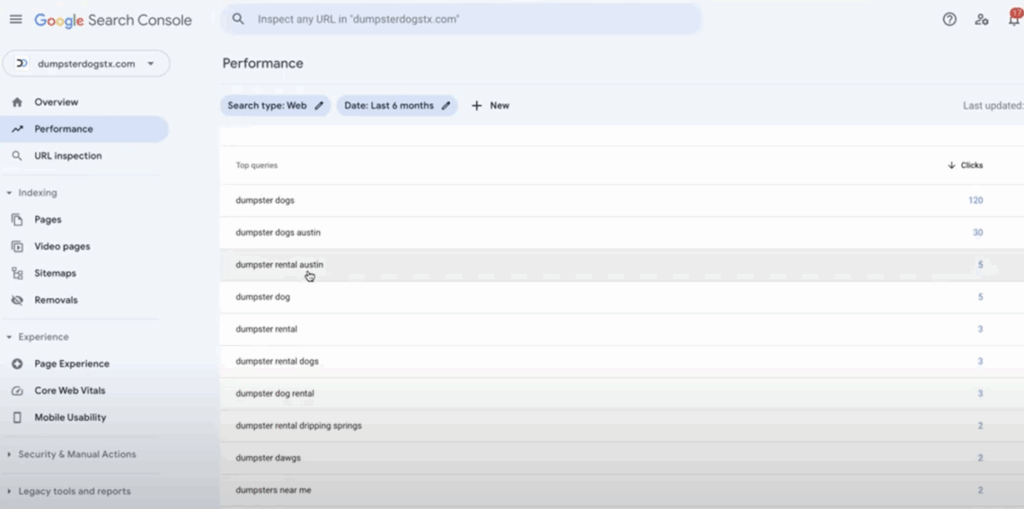
  • All his organic traffic was coming from people searching his own brand name; meaning HE created the demand, not the SEO agency.
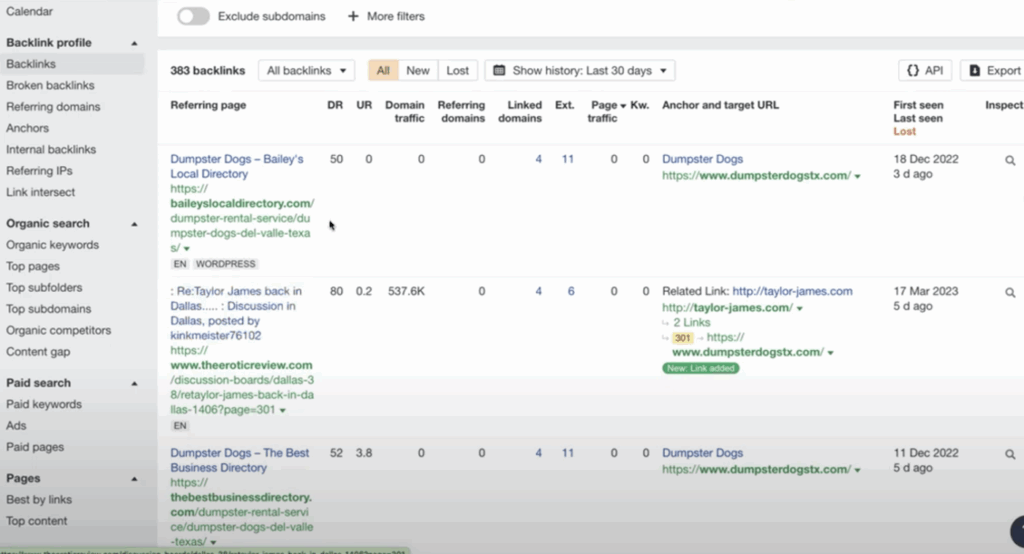
  • His backlink profile was stuffed with garbage: adult sites, spammy directories, fake citation networks, and Fiverr-level nonsense that Google ignores (or penalizes).
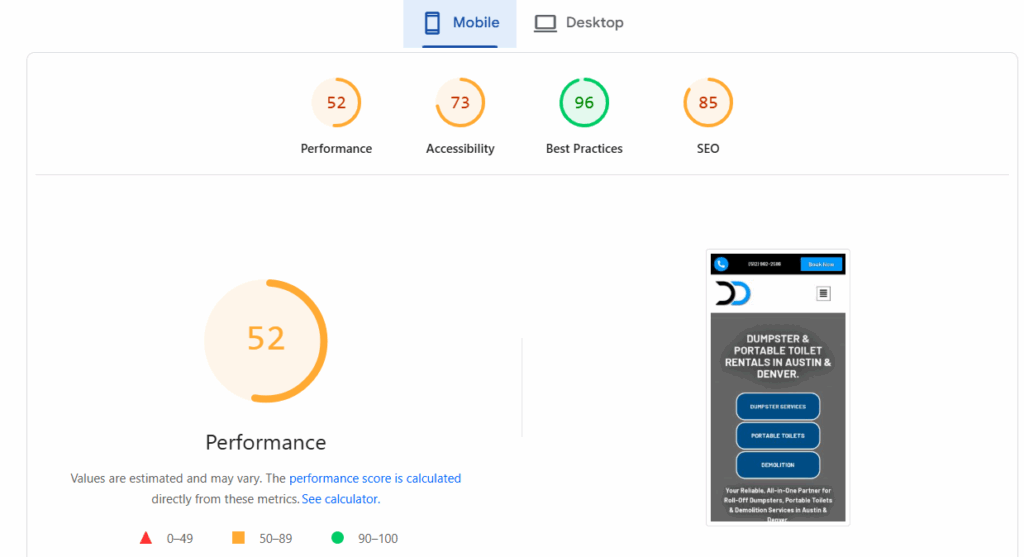
  • His website was slow on mobile (a 52 score, yikes).
  • His site structure was thin, duplicated, and clearly auto-generated.
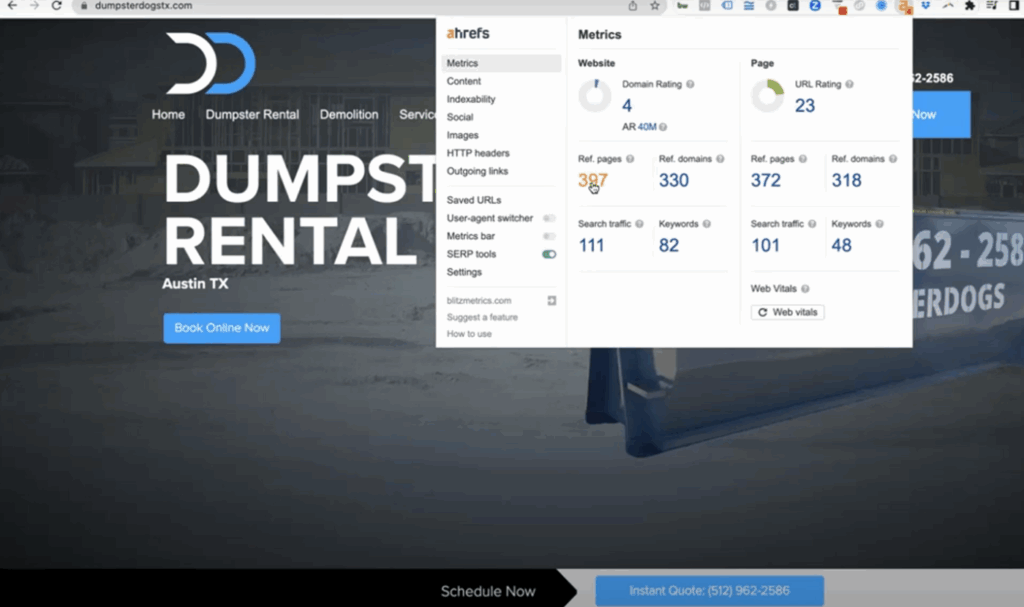
  • And his domain rating was 4.
    That’s “garage sale” level SEO juice.

Taylor realized quickly:
He wasn’t lazy.
He wasn’t stupid.
He was simply uninformed and 99% of business owners would’ve fallen for the same pitch.

But here’s where Taylor separates himself from the pack.

He didn’t shrug it off.
He didn’t keep paying for false hope.
He didn’t kick the can down the road.

He stepped fully into the AI Apprentice mindset:

Learn the system. Leverage the tools. Take control.

What Makes Taylor a Successful AI Apprentice

Most people dabble with AI.
Taylor embraced it.

1. He Looked at the True Data

AI Apprentices don’t rely on vendor dashboards designed to make things look good.
They go straight into:

  • Google Analytics.
  • Google Search Console.
  • PageSpeed Insights.
  • Real backlink audits.

Taylor learned exactly what mattered and what didn’t. And he saw the scam clearly when the numbers didn’t lie.

2. He Learned How SEO Actually Works

He simply needed the truth:

  • 90% of SEO is backlinks.
  • Backlinks come from relationships, not robots.
  • Every ranking page is built on trust, not templates.
  • Google wants helpful content, not keyword-stuffed spam.
  • One-minute videos answering real questions beat a thousand auto-generated pages.

Once Taylor saw the blueprint, he understood exactly why he wasn’t ranking and exactly how to fix it.

3. He Learned How to Use AI the Right Way

Most people treat AI like a vending machine.
Taylor treats it like an assistant.

He learned to combine:

  • His iPhone videos.
  • His real-world experience.
  • AI-written structure.
  • AI-polished blog posts.
  • YouTube-first distribution.

Suddenly, content creation wasn’t a chore; it was became part of the Content Factory system.

And AI wasn’t replacing him.
It was amplifying him.

4. He Took Action

When Taylor realized the agency did nothing, he didn’t mope.
He didn’t blame.
He got solutions in motion:

  • Requested a refund.
  • Gathered proof.
  • Rebuilt his strategy.
  • Started recording.
  • Planned his Youtube and blog stacking
  • Understood his local Austin ecosystem.
  • Built real connections with real businesses.

An AI Apprentice doesn’t wait for miracles.
They build momentum.

Taylor did exactly that.

The Part Most Business Owners Miss

SEO isn’t magic.
AI isn’t magic.
Marketing isn’t magic.

It’s relationships + relevance + proof.

Taylor now understands this deeply:

You can’t outsource what you don’t understand.
You can’t rank where you don’t exist.
You can’t win without being present.

The moment he took ownership of his content and used AI as a superpower instead of a shortcut, he went from “victim of a bad SEO contract” to a rising authority in his market.

That’s what an AI Apprentice is.

Why Taylor’s Story Matters

Taylor is now doing what actually moves the needle:

  • One-minute educational videos.
  • Local content with real Austin partners.
  • YouTube-first posting.
  • Blog posts that answer actual questions.
  • Improved site structure.
  • Faster mobile performance.
  • Real backlinks from real relationships.
  • Authentic stories.
  • Consistency.
  • Ownership.

And here’s the punchline:

It costs way less than paying a sketchy SEO company.

Taylor is building an asset that compounds for years.

Taylor James: Proof That Any Small Business Owner Can Win With AI

No fancy degree required.
No coding.
No technical background.

Just a willingness to:

  • Learn.
  • Try.
  • Ask questions.
  • Use tools.
  • Take action.
  • Tell stories.
  • Build relationships.
  • Stay consistent.

That’s what makes Taylor a successful AI Apprentice.

He represents the new era of business owners: the ones who don’t get bullied by agencies, don’t get tricked by jargon, and don’t hand over their marketing future to strangers.

He took control of his brand, his content, his SEO, and his growth.

And this is just the beginning.

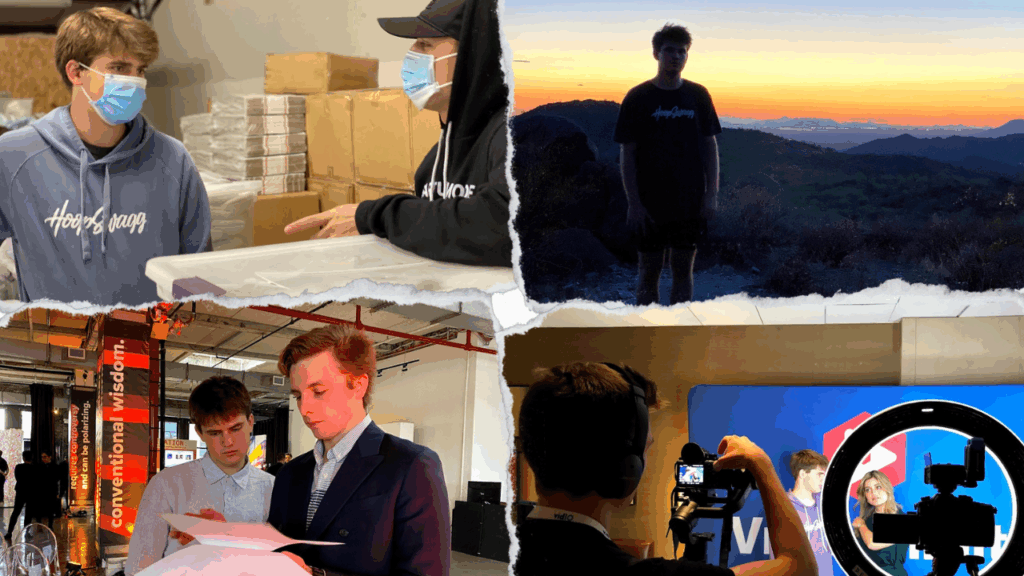
From Garage Socks to a Global System: How Brennan Agranoff Became an AI Apprentice

Six years ago, Brennan Agranoff was in his parents’ garage making socks by hand.

Not figuratively.
Actually pressing them. Packing them. Shipping them. Learning the hard way what happens when demand outgrows hustle.

Today, he runs a seven-figure sock brand, a logistics company, a software company, and a growing ecosystem of businesses that reinforce each other instead of draining him.

People like calling him a “teenage millionaire.”
It’s catchy.
It also explains almost nothing.

Calling Brennan successful because he made money young is like calling Steph Curry successful because he shoots threes. True, but you miss the point.

What matters is how Brennan built leverage.

He became a full-stack AI Apprentice long before the term even existed.

The work nobody screenshots

Early on, Brennan plugged into our ecosystem: the Content Factory, 9 Triangles, VA training, and process-first thinking.

He showed up as an apprentice.

He documented what he did while he was doing it.
He handed off tasks instead of hoarding them.
He built processes so progress didn’t depend on memory or motivation.
He tested ideas until they failed, fixed what mattered, and dropped what didn’t.

Over time, the business stopped depending on a teenager pressing socks in a garage.

That was the real breakthrough.

The long game people didn’t see

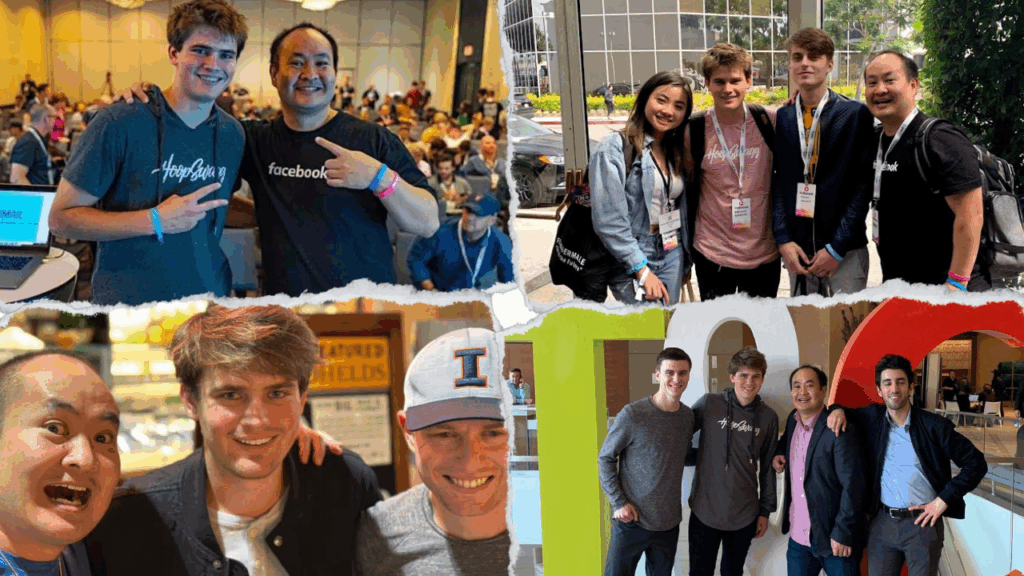
We put Brennan on stages in New York, Los Angeles, San Diego, Phoenix, and Portland.

Some were big.
Some were small.
The smaller ones usually mattered more.

We recorded everything: workshops, interviews, behind-the-scenes conversations, collaborations with operators who actually build things.

Google saw it.
Cataloged it.
Connected the dots.

Today, his digital footprint looks like the résumé of someone who’s been operating at a high level for decades.

Why Brennan became the prototype

AI magnified what Brennan was already doing right.

AI replaces people who won’t learn.

With guidance, systems, reps, and accountability, AI becomes leverage instead of noise.

Brennan figured out how to scale output without scaling stress, how to turn content into authority, and how to let systems carry weight that most founders try to carry themselves.

That’s what makes him the template for an AI Apprentice.

Execution, week after week, without complaining.

The lesson for young adults paying attention

If you’re 17–25 and wondering where your shot is, this is what it looks like in real life.

You start small.
You do real work.
You document it.
You train someone else.
You systemize it.
You publish enough proof that search engines know who you are.

Then momentum replaces motivation.

That’s how Brennan won.

What happens next

Now imagine the next generation seeing the full journey instead of the headline.

The garage.
The reps.
The structure.
The mentors.
The process.

Imagine algorithms pushing stories like this to people with drive but no direction.

That future already exists.
It just depends on telling the truth instead of selling the myth.

Brennan Agranoff proves what happens when hunger, humility, systems, and AI line up.

If one kid from rural Oregon can build global leverage starting in a garage, the ceiling is structure.

And structure is learnable.