High Rise Academy mentors young adults to run real marketing campaigns for local service businesses. Students gain hands-on experience, build public portfolios, and apply proven systems like the Content Factory and Dollar-a-Day strategy under guidance from Dennis Yu and team.
Unlock the full potential of your franchise’s marketing by training a young adult—your son, daughter or a team member—to become a dedicated digital marketing and AI-powered social media expert. In this video, Dennis Yu and Jack Wendt explain how a one-year program equips them with the tools and strategies to manage the Content Factory process for your local service business.
This program includes:
Weekly Office Hours and coaching
Full access to all training materials
Hands-on support with analytics, ads, and websites
A community of peers and mentors
The curriculum is built on proven methods used by major brands like Red Bull and Nike and thousands of local service businesses. Think of it as trade school for digital marketing—tailored specifically for your franchise.
If you’re ready to give a young adult the opportunity to grow into your business’s marketing champion, watch the video and learn how to enroll them today.
In this video, Jack and Dennis discuss how young adults can help fix the digital marketing for their parents’ businesses. They share practical insights into advertising, content creation, and SEO fundamentals.
If you’re a young adult looking to build real marketing skills and serve local businesses, check out the High Rise Academy program to get hands-on training and mentorship.
High Rise Academy is led by three practitioners who train students on real business projects using documented processes and live feedback.
Jack Wendt — Founder & CEO, High Rise Influence
Jack started young — at 12–13 he was buying and reselling watches, learning how to negotiate, reinvest profits, and build relationships. That early hustle turned into a passion for entrepreneurship and mentorship. He built High Rise Academy so motivated teens don’t have to guess their way forward or build businesses alone.
“When I was 13, I had to figure it out myself. Now we can give young people a system — and help real businesses along the way.” —Jack Wendt
How Jack mentors
Assigns live business tasks: editing vertical videos, writing platform-native captions, basic ad setups.
Shows students how to publish once, then distribute across channels without duplicating work, following our cross-posting guide.
Models client communication and simple reporting (before/after assets, notes, and next actions).
Helps students channel their entrepreneurial energy into real businesses — generating calls, creating content, and directly contributing to client revenue.
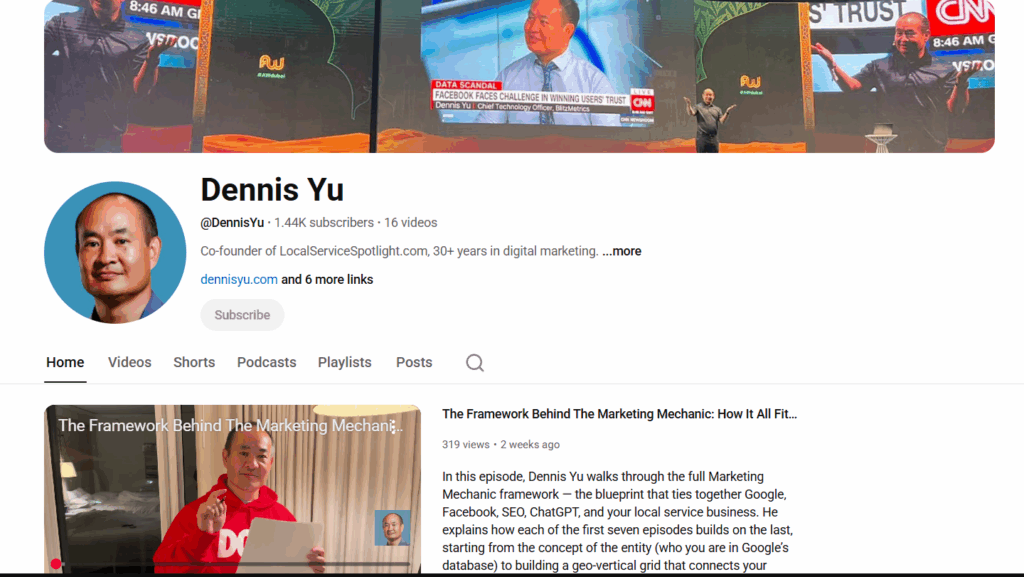
Dennis Yu — Former Search Engine Engineer & Co-Creator of the Content Factory
Dennis designs the systems our teams use to execute reliably at scale — checklists, SOPs, and feedback loops rooted in the Content Factory framework. Students don’t watch theory; they ship assets and get reviewed. He also emphasizes E-E-A-T — real people, real places, real work — to make content credible and reusable.
“There’s no age too early to start building a brand or learning how to learn.” —Dennis Yu
Layering proof — names, locations, client artifacts — to establish trust via E-E-A-T.
Avoiding common VA pitfalls by tying every task to a clear goal, content asset, and target.
Works with students from age 17 to 60, proving that the Academy’s structure supports all levels of experience — from teenagers just starting out to adults seeking to sharpen their skills.
Dylan Haugen — Professional Dunker & Creator
Dylan is a professional dunker who performs in contests and live shows while documenting his journey online. His creative background gives him a unique perspective on content and storytelling. After connecting with Dennis and Jack in late December, he discovered how to use the Academy’s structure to transform his passion into professional growth.
“After joining the program, I learned more in a few weeks than I had in years on my own.” —Dylan Haugen
How Dylan teaches
Short-form storytelling on real client pages (clear hook, proof, next step).
Practical feedback on pacing, framing, and retention.
Works with business owners — from local gyms to personal brands — showing them how consistent storytelling drives measurable results online.
What You’ll See in Practice
Live weekly coaching with screen-share reviews and action items.
Documented SOPs with examples for each step.
Real distribution on business accounts, followed by sensible republishing.
Proof built in — faces, places, and outcomes attached to the work.
Range of participants from teens to age 60; quality is driven by checklists, not age.
Students are paid as they demonstrate competency on production tasks.
Why High Rise Academy Matters
Students learn marketing by doing: edit videos, post on business accounts, and follow checklists until their work meets spec. Parents see consistent habits and professional communication develop over time. Business owners get useful assets instead of vague ideas.
For parents who want to see their teens develop real-world skills, build meaningful relationships, and gain confidence through hands-on experience, High Rise Academy provides a clear path — while also contributing real work for the businesses they support.
If you’d like to learn from mentors like Dennis, Jack, and Dylan, or know a young adult who would thrive in this environment, explore how to get involved with High Rise Academy. It’s a place where curiosity turns into capability, and learning turns into real results.
Now that you’re officially inside, here’s the exact roadmap so you don’t feel lost staring at 140+ courses, 27 tools, and a pile of skills you think you “don’t have yet.” Let’s cut through the noise.
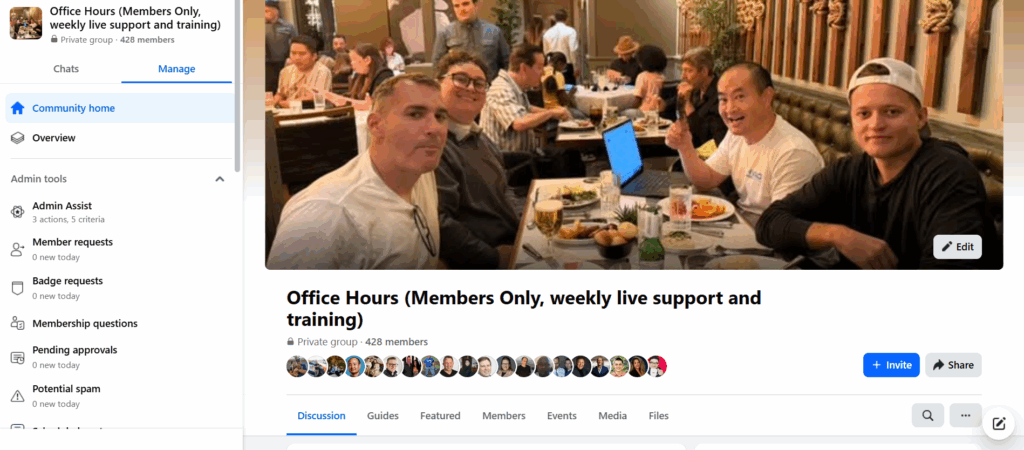
Join the Office Hours Facebook group
By now, you should have an email inviting you to our Office Hours Facebook Group. If it didn’t arrive, give it a few minutes; it’s on the way.
This group is where everything happens:
Weekly Office Hours: Thursdays at 2 PM PST / 5 PM EST. We record all sessions, so if you miss one, no meltdown necessary.
If you do this well for your parents’ business or first client, you will get more. And when you’re reliably executing, we’ll promote you and send an opportunity your way. (Not because you bought the program, but because you earned it.)
Where not to ask for help
There’s a giant free Facebook group called Digital Marketing with Dennis Yu (44k+ members).
That’s not your support channel.
Your help and team support are inside Office Hours, the private group.
Stay there.
If you’re ever truly stuck
Message Stephanie (stephanie@blitzmetrics.com).
If it’s something only I can solve (rare), you can email me.
You can text me too. Just make sure it’s worth waking me up over.
Your first real assignment: Make a 1-minute video
Record a simple cell-phone introduction and post it in the Office Hours group.
No scripts. No fancy camera. No “I need to get ready first.”
Just you, talking for 60 seconds:
Who you are.
Where you’re from.
What you’re working on.
What you want to learn.
If we were sitting around a dinner table at a mastermind, you’d introduce yourself. This is the same thing.
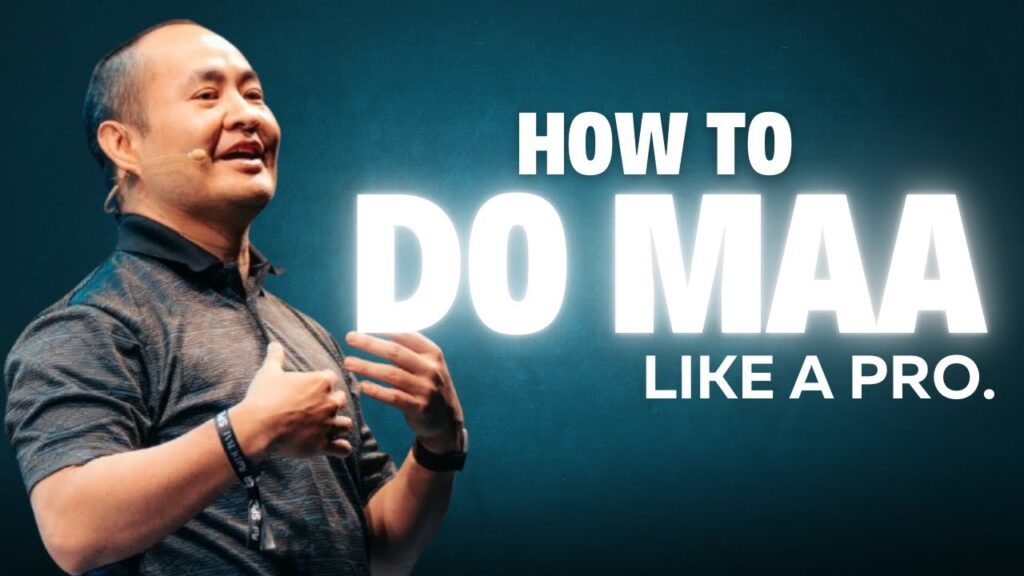
High Rise Academy is designed for people who take action. Success comes from following the Metrics → Analysis → Action (MAA) process every week. Apprentices who do the work, communicate clearly, and follow through on assignments build measurable results and real skills.
Dennis Yu emphasized during the conversation that the Academy only works for those willing to “do the thing.” As he explained, people who collect metrics but never implement improvements are “getting paid to do nothing.”
The Foundation: Taking Consistent Action
Many projects fail because people spend too much time reporting and not enough time executing. Every week should include progress—new videos published, ads launched, or landing pages improved.
Our process relies on three steps:
Metrics: Track specific numbers tied to your work, such as video performance metrics or ad performance.
Analysis: Identify what changed and why.
Action: Implement the next improvement before the next report.
Jack Wendt mentioned how some participants kept producing the same weekly reports without changing a thing. He shared that those projects “looked busy on paper but delivered no new client results.” This reinforced the Academy’s focus on action, not appearance.
Dylan Haugen added that every weekly status report feeds the coaching process. “The more action they take,” he said, “the more feedback we can provide.” When students actually produce videos, launch ads, or adjust campaigns, coaches have data to work with and can give sharper guidance.
Communicating Effectively
Remote work depends on timely, organized communication. Team members are encouraged to apply the Do / Delegate / Delete framework:
Do the next task from your checklist.
Delegate when you hit a roadblock and need support.
Delete low-value items that don’t advance the goal.
Jack recalled several examples where simple communication lapses caused unnecessary delays—someone waited days to ask a question instead of flagging it early. “If they’d just said something, we could’ve solved it in five minutes,” he said. Clear updates keep everyone aligned and prevent small issues from slowing progress.
Skills that Support Success
Participants who think clearly, express ideas in writing, and approach problems logically tend to perform well. The program rewards those who take ownership of their work, stay organized, and use available tools to keep improving.
Dennis highlighted that being able to reason through tasks with AI tools or team members is key to growth. “Young adults who can talk through a problem and provide context always do well,” he said. This ability to explain intent and process mirrors how top performers handle real client projects.
Follow-Through Makes the Difference
Age and credentials matter less than reliability. Students as young as fourteen have produced outstanding results through consistent follow-through.
Dennis shared one story about a 14-year-old student who completed every assignment on time, produced content weekly, and analyzed results without prompting. That consistency led to measurable growth and personal confidence. In contrast, he mentioned older participants who “have to ask a question every single time” or constantly make excuses—and they rarely advance.
To stay on track:
Dedicate at least one hour per day to assignments.
Complete and submit a weekly status report summarizing what you shipped, what you learned, and what comes next.
Plan around vacations or other priorities so deadlines are met.
The goal is steady progress, not perfection.
What Success Looks Like Week to Week
Each week, successful participants:
Publish new work such as a video, ad, or content update.
Record clear performance metrics and note what improved.
Decide on the next concrete action to take.
Review targeted feedback from mentors and apply it immediately.
Dylan described one student who launched a short-form video campaign and then tracked its performance in the weekly report. “They took the feedback, adjusted the titles and tags, and doubled their watch time in a week,” he said. That’s the type of learning loop the program aims to build.
This cycle—action, reflection, improvement—builds measurable skill and momentum.
How to Prepare and Self-Assess
Identify specific actions you can take this week.
Choose one checklist and complete the first task today.
Start your weekly status report document now and update it as you complete work.
Reserve your hour-a-day block on your calendar for the next two weeks.
These steps help you form the habits that lead to success inside the program.
Final thoughts
High Rise Academy rewards people who act consistently, communicate clearly, and keep improving. Those habits matter more than background or prior experience. The more you build, measure, and refine, the more meaningful results you’ll achieve.
Dennis concluded the discussion by reminding parents and students that this program requires genuine interest. “We’re not here to babysit,” he said. “If they have that drive—whether it’s basketball, content creation, or entrepreneurship—they’ll thrive. If they don’t, they’ll struggle.”
Colby Joseph Davis’ journey in the trades began when he was still a teenager. Working alongside his father in the plumbing business and later in pool renovation, roofing and painting, he learned the value of craftsmanship, customer service and honesty early on. Those hands‑on experiences across multiple trades would shape his entrepreneurial vision.
In 2013 he founded Davis Painting, and under his leadership the company has become one of Pennsylvania and New Jersey’s fastest‑growing residential and commercial painting firms. Davis Painting is known for its spotless trucks, coordinated uniforms and meticulous job‑site preparation—details Colby insists on because, as he says, “People notice the little things”. By hiring for character as much as skill and instilling pride in every team member, he’s built a brand that stands for excellence in every brushstroke.
Seeing a fragmented home‑services industry ripe for consolidation, Colby launched Indy Capital and its operating arm, Indy Brands. Through Indy Brands, his team acquires, scales and sells top‑performing home‑service companies—including Davis Painting, SUDS Power Washing, Light Your Night and Honest Roofing. He admits he never expected to start his own private‑equity firm, but after spotting a need for honesty, integrity and high‑quality service in the sector he knew it was time.
From apprentice to entrepreneur, Colby Joseph Davis shows what’s possible when vision, craftsmanship and care for people come together.
If you’d like to learn more about Colby Joseph Davis’s approach to leadership, check out our post on his leadership philosophy here: https://dennisyu.com/earning-respect-the-leadership-philosophy-of-colby-joseph-davis/
For more on how he built his painting empire, read this article: https://jackwendt.com/from-paintbrush-to-portfolio-how-colby-joseph-davis-built-a-multi-state-painting-empire-and-beyond/
Discover the launch of Indy Capital and Indy Brands in our previous post: https://highriseinfluence.net/launching-indy-capital-a-new-chapter-for-home-services/
Most young adults aren’t taught how to get meaningful work experience, let alone how to build systems that bring long-term value. That’s exactly why we started the High Rise Academy inside High Rise Influence.
We launched this program to help young people get real results for real clients, using a process that blends content creation, AI tools, and repeatable systems. And Henry Holm’s story is one of the best early examples of how it works.
What Makes This Different
Unlike traditional internships or online courses filled with busywork, this apprenticeship is rooted in action. Every apprentice works on real projects and meets weekly with the team to share wins, tackle challenges, and report results using MAA (Metrics, Analysis, Action).
Henry was one of the first people we brought on. At the time, he had no client experience and no marketing background. But in just a few weeks, he was creating content that helped a real dental practice in Atlanta grow its online presence.
“There’s a lot of freedom in this role. I work from my cabin, my house—wherever I have Wi-Fi. But there’s still accountability. That’s what helped me grow fast,” Henry told me.
From Setup to Strategy
During onboarding, Henry gained access to our systems, tools, and SOPs. He jumped in right away by doing real client work:
Writing blog posts from raw video footage
Creating short-form clips for YouTube, Facebook, and Instagram
Running Dollar-A-Day Ads on top performing content
“We don’t just get tasks and do them. We actually talk to the client, figure out what they need, and deliver based on that,” Henry said.
For example, with Flax Dental in Atlanta, Henry and I worked together on a full content engine. He repurposed raw videos from the dentist into:
Website blog posts
YouTube videos
Social clips with captions and headlines
He also contributed to weekly MAA reports, which have evolved over time to include full SEO audits, performance tracking, and recommendations.
“Those reports started small,” he said. “But now we include way more—like SEO data and what we’re going to fix next.”
Building Systems, Not Just Skills
Henry quickly saw how one system could be applied across multiple clients. What we did for a dentist could just as easily work for a plumber, real estate agent, or gym.
Learn the framework
Document everything
Improve with each cycle
“A lot of the stuff we do is transferable. We build a model once and use it again,” Henry said.
Managing Time Like a Pro
Time commitment is flexible by design. Apprentices pick the projects they want and are expected to own results, instead of focusing on working a set amount of hours.
“Some weeks I have more time than others. If I’m too busy, I can pass something off, to another team member” Henry said.
He estimates that someone working on a single business, they could do great work with just an hour a day.
Confidence Without Experience
The biggest change Henry experienced was in how he thought about learning and ownership.
“When I started, I didn’t feel confident. I had no experience. But everything is documented. And there’s always someone to help,” he told me.
Whether it’s using our SOPs, Googling our public articles, or getting help on a team call, apprentices aren’t left guessing.
Want to Start Your Journey?
High Rise Academy isn’t about watching videos. It’s about doing real work with real clients—and building proof of your results as you go.
If you’re interested in joining or know someone who should, check out what we’re building and start your path toward meaningful work that actually grows with you.
Most young adults face three common choices after high school: go into debt for college, work minimum-wage jobs, or drift without direction. High Rise Academy offers a fourth option—one that’s skill-based, paid, and directly tied to real-world work.
This program, built by High Rise Influence with Jack Wendt and Dennis Yu, trains young people to become digital marketing practitioners by doing real work for actual clients.
What Apprentices Actually Do
Apprentices:
Work with local businesses to improve their digital presence
Turn raw content (videos, FAQs, photos) into posts and ads
Use the MAA framework—Metrics, Analysis, Action—to track progress
Attend live office hours every Thursday at 2:00 p.m. PT for direct feedback from mentors like Dennis Yu, Jack Wendt, and others
The work is tracked weekly, with feedback loops baked into the structure.
What Skills They Build
Participants learn by doing. They:
Manage real business accounts
Publish content on websites and social media
Edit video clips for campaigns
Set up and run local ad campaigns with measurable goals
They finish the program with published client work and proven, transferable skills.
Why This Works for Young People
Young adults already understand how attention works online. They’re consuming content daily. What they need is structure, mentorship, and real clients. The apprenticeship gives them that.
Instead of passively consuming AI tools, they use them to plan, write, and execute faster. This approach makes them efficient operators in a content economy.
What Sets This Program Apart
As Jack Wendt put it:
“Most jobs extract value from you. This one builds it.”
Apprentices often earn income while building long-term assets—client relationships, published content, and measurable campaign results.
If You’re Already Creating, You’re Closer Than You Think
If you’re already posting videos, testing AI tools, or managing your own page—you’re ready. You don’t need a degree. You need the right environment and accountability to grow.
Jack Wendt is the founder of High Rise Academy, an AI Apprenticeship Program that teaches young adults how to market for their parents’ businesses or sponsor businesses. In less than two years, Jack went from having no marketing experience to teaching applied digital marketing at Johns Hopkins University and managing national franchise accounts. His journey shows how young adults can become marketing heroes for their parents’ businesses by applying a clear process.
Why Young Adults Are Positioned to Help
Parents know their trade — whether it’s running a medical practice, repairing appliances, or remodeling homes — but most don’t know how to manage Google rankings, reviews, or social media. Young adults already understand smartphones, apps, and how people search for services. With training from High Rise Academy, they can convert that intuition into measurable ROI.
“Your parent is already doing great things. You don’t have to create anything new. Just amplify what they’re already doing.” — Jack Wendt
Getting Onboarded Into High Rise Academy
When a young adult joins High Rise Academy, they begin by learning the core systems and AI-powered tools that make digital marketing manageable. They don’t go through this process alone. Each new member collaborates with other students working on real businesses, gaining hands-on experience from day one. They also gain access to a library of resources, templates, and step-by-step checklists.
Support is built into the program through weekly office hours held every Thursday at 2 PM Pacific. During these sessions, Jack Wendt, Dylan Haugen, and Dennis Yu answer questions, review progress, and help students troubleshoot issues with their Metrics Analysis Action (MAA) or client work. This combination of structured training, real-world projects, and live mentorship prepares young adults to confidently start improving the businesses they work with.
Step 1: Run a Quick Audit
At High Rise Academy, the starting point is an quick audit — a way to quickly see what’s missing in a business’s digital presence.
Jack’s first project was helping his best friend’s parents, an orthopedic surgeon and an ophthalmologist in Minnesota. Their websites lacked detailed bios and clear service pages. By fixing those gaps and creating simple blog posts about knee, hip, and cataract surgeries, they began ranking higher on Google and booking more patients.
During a training session at Johns Hopkins, Jack and Dennis Yu ran live audits for businesses owned by students and faculty. One landscaping business had no reviews and an incomplete Google Business Profile. Within days of updating these, they began receiving new calls.
Step 2: Build a Content Factory
Once gaps are identified, the next step is content production. The Content Factory framework breaks this into four steps: produce, process, post, promote.
Jack used this framework to help a client with 190 franchise locations. By recording short Q&A videos with the founder and rolling them out across all locations, the business gained consistent visibility on Google and Facebook.
Dennis and Jack also worked with a roofing company in Texas. They filmed short walkthroughs of completed roof repairs and turned them into posts, blogs, and ads. Calls to the business increased as customers could now see real projects in their own community.
Step 3: Strengthen Reputation
Strong bios, customer testimonials, and online reviews drive trust — and trust drives rankings.
A husband-and-wife team running a $10M appliance repair company in Maryland attended a High Rise Academy session. Their website lacked case studies and their Google reviews were sparse. After adding detailed stories from happy customers and cleaning up their online presence, they called the training “the best ROI we’ve ever gotten in business.”
Another High Rise Academy student helped his father, a dentist in Sacramento, gather video testimonials from patients. Publishing those clips across YouTube and embedding them on the practice’s site quickly boosted local rankings and drove more inquiries.
Personal branding is essential for local leaders, as it shapes how they’re perceived in the community. Building a strong personal brand not only highlights expertise and values but also fosters trust, credibility, and long-term influence.
Step 4: Amplify With Dollar a Day
Once content and reviews are in place, the Dollar a Day method is used to scale.
In Salt Lake City, Chris Miles, a 22-year-old student of High Rise Academy, used Dollar a Day ads to promote his father’s remodeling company. Within the first week, they booked two kitchen remodel projects worth more than $40,000.
In Tampa, another student promoted educational videos for his mother’s chiropractic practice. Local visibility improved immediately, and new patients began booking directly through their site.
Proof From the Classroom
Teaching at Johns Hopkins gave Jack and Dennis a chance to prove the system in front of academics and administrators. Senior staff admitted that the live audits provided more actionable takeaways than many courses offered through their own departments. Students left with real improvements made to their businesses in real time.
A High Rise Academy participant in Denver put the same system into practice for his uncle’s contracting business. By building a proper bio page and publishing project content, the business began ranking for “kitchen remodeling Denver” within weeks.
Building Jobs Through Micro-Agencies
High Rise Academy’s goal goes beyond helping one family business. The program is designed to create a million jobs through micro-agencies. Young adults learn to run audits, build content factories, and manage reputation, then hire virtual assistants to execute the system.
Jack himself now manages a team of overseas VAs who edit videos and distribute content. These jobs, often paying $500–$1,000 per month, are significant sources of income in places like Pakistan and the Philippines.
Why High Rise Academy Matters
Joining High Rise Academy gives young adults the training and mentorship needed to put these systems into practice. Running a quick audit, building a content factory, collecting reviews, and amplifying content with Dollar a Day are all outcomes of the program. By becoming part of High Rise Academy, you gain the structure, community, and live support to apply these methods to your parents’ business or a sponsor business.
Jack used these systems to help surgeons in Minnesota, a $10M appliance company in Maryland, a roofing company in Texas, and a multi-location franchise. Other students have repeated the process for dentists, chiropractors, contractors, and remodelers. The results come as a byproduct of following the program and working alongside peers and mentors.
High Rise Academy is a pathway for young adults who want to build marketable skills, help their families, and create opportunities for themselves. You can learn more and apply by visiting High Rise Academy website. “In just a year and a half, I went from knowing nothing about digital marketing to teaching it at Johns Hopkins. Anyone can do this if they follow the steps.” — Jack Wendt
Featured Image: Henry on a video call sharing his first week in High Rise Academy (placeholder)
When Dylan and I started High Rise Academy, our goal was simple: give young adults the tools, mentorship, and confidence to do real work for real businesses. Henry is one of the first apprentices to join, and his journey shows exactly how this program works in practice.
This story comes from a Youtube interview we did with Henry, reflecting on his early months in the program. What he shared provides a clear picture of what new apprentices can expect.
Flexibility From Day One
When we asked Henry what he loved most about the program, his answer was immediate: freedom and versatility.
He explained: “I can basically work from wherever I want as long as I have internet access and Wi-Fi.”
That flexibility meant Henry could work from his family’s cabin or his home without missing deadlines. For him, work-life balance wasn’t theory — it was lived experience.
This is the same principle Dennis Yu, Dylan, and I experienced when we spent a month traveling to eight countries and five U.S. states while speaking at conferences. Our output didn’t dip, because we follow documented processes like the Content Factory model.
Starting With No Experience
Henry admitted he had “little to no experience” before joining. His only teamwork experience came from school projects.
Within weeks, he built professional habits:
Communicating directly with clients.
Finishing projects on time.
Following through on commitments.
As Henry put it: “It’s greatly helped me to communicate with others, get work done on time, and finish what you said you would finish.”
Henry proves that even with no experience, the system works.
Real Client Work: Flax Dental in Atlanta
One of Henry’s first major projects was with Flax Dental, a dentist in Atlanta.
Instead of just being handed a task list, Henry collaborates directly with the client to define what success looks like. That means listening, asking questions, and aligning deliverables with business goals.
His work included:
Repurposing long-form dentist videos into SEO-optimized blog posts.
Creating short-form video clips for YouTube and Facebook.
Uploading and formatting website content.
These are practical skills every local business needs. For apprentices learning to serve small businesses, this is where training meets real-world impact. See our detailed walkthrough: read our full guide to repurposing video content.
Building Transferable Skills
Henry quickly realized that the methods we used for a dentist could apply to almost any local service business — landscapers, plumbers, roofers, and more.
He learned to:
Build repeatable workflows for repurposing.
Adapt formats to each platform’s audience.
Use tools like Descript and Underlord to speed up editing.
Henry discovered that while tools help, real skill lies in understanding client goals and target audiences. That’s why we built documented processes like the Content Factory model: they create scalable systems anyone can learn and apply.
Weekly Reports and SEO Growth
Every Friday, Henry contributed to our MAA End-of-Week Reports for Flax Dental. In week one, the reports simply listed content produced.
As weeks progressed, Henry learned how to:
Add SEO tracking.
Summarize keyword performance.
Include engagement numbers from social posts.
These reports became the backbone of client communication. Henry moved from never having written a report to producing one that guided business decisions. To see exactly how to structure these reports, check out our full guide on how to write Weekly MAA reports for local service businesses.
Support From the Team
Henry didn’t navigate this alone. He had access to mentors like Dennis Yu, Dylan, and myself, along with a full library of playbooks and processes.
As he explained: “Everything is documented. Everything that Dennis and BlitzMetricshas done is out there. You can literally just search whatever you’re saying.”
When apprentices run into obstacles, they’re never stuck. They can:
Reference documented checklists.
Ask team members who’ve executed these tasks thousands of times.
Henry is clear about the time investment. He doesn’t log hours for the sake of it. He focuses on getting projects done.
For apprentices managing one client, Henry estimated “probably no more than an hour a day” is sufficient. That makes High Rise Academy accessible for students, part-time workers, and young adults balancing other commitments.
Advice to Future Apprentices
When we asked Henry what advice he’d give someone just starting, he said: “At the beginning, I didn’t really know much. But there are so many resources. And even if you end up getting stuck, there are team members who’ve done this thousands of times you can fall back on.”
That mindset is exactly what makes High Rise Academy work: you don’t need to start as an expert. You need to start willing to learn.
Closing Thoughts
Henry’s journey represents what High Rise Academy is about: taking motivated young adults, giving them real-world work with real clients, and surrounding them with mentorship and repeatable processes that lead to success.
Key takeaways from Henry’s story:
Flexibility to work from anywhere.
Transferable skills that apply to any local business.
Step-by-step guidance through reporting, SEO, and content creation.
Supportive mentors and documented playbooks.
Realistic time commitment that fits into everyday life.
Want to build these skills while helping real businesses? Start by applying what Henry did — commit to doing the work, ask questions, and follow the process.