
The Success Tracker: The Operating System for Getting Stuff Done

Young adults who run local service agencies (plumbers, roofers, landscapers, and others) need a simple way to organize their work and show clients real results.
That’s what the Success Tracker is built for: a framework to manage deliverables, track performance, and prove ROI.
This article walks through how it works, why it’s indispensable, and how to use it to run projects like a pro without drowning in vague goals, random meetings, or wasted effort.
Why the Success Tracker exists
If you want outcomes bigger than what your own two hands can produce, you need:
- Clear goals.
- Clear content.
- Clear targeting.
- Clear metrics.
- Clear next steps.
- And a system to glue it all together.
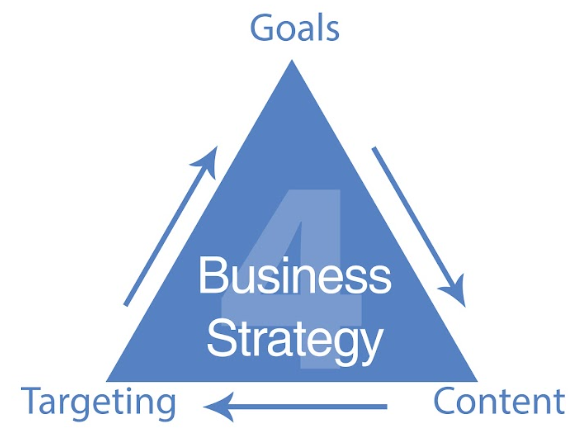
The Success Tracker provides exactly that. It acts like the “patient chart” in a medical practice: the prep is done ahead of time, every metric is visible, and when the expert walks in, everyone’s time is used efficiently.
Just a structured system where every action ties back to a defined strategy.
The 6-phase process
At the core of the Success Tracker is the 6-phase Social Amplification Engine:

This is the spine of the whole operation:
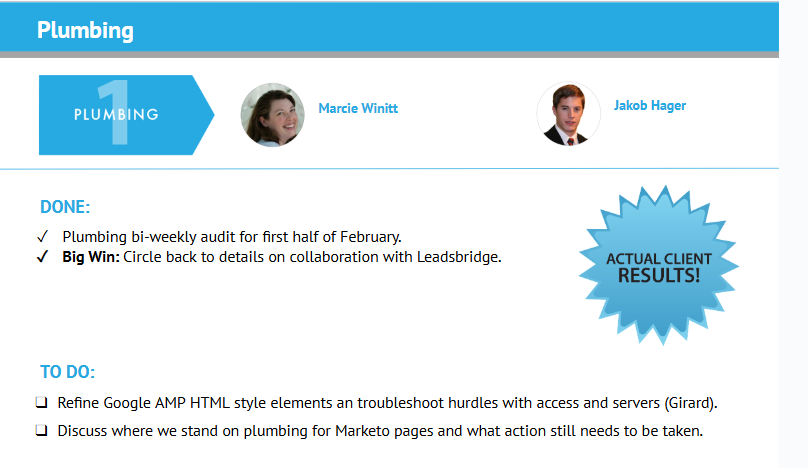
1. Digital Plumbing
Tracking, pixels, tags, analytics, all the boring stuff that makes everything else powerful.
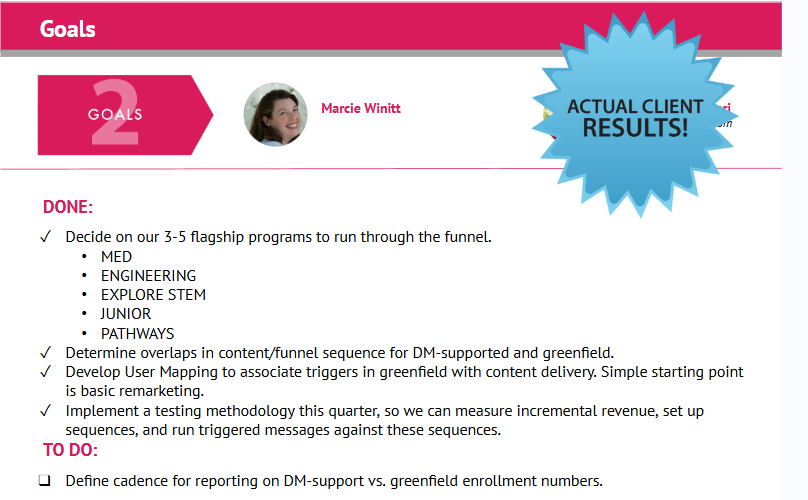
2. Goals
Collected upfront so the strategy is built on facts, not assumptions.
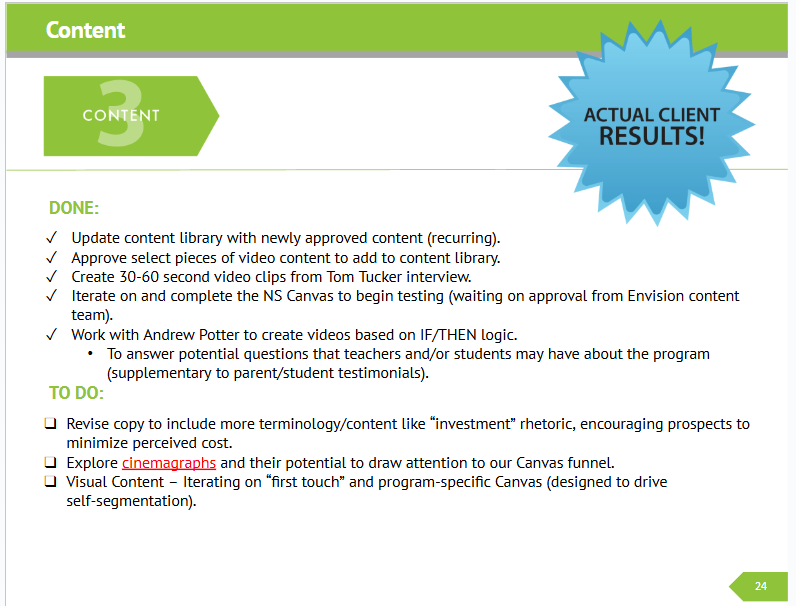
3. Content
What message supports those goals? What assets already exist? What needs to be created?
4. Targeting
Which audiences matter, and how do we segment them?

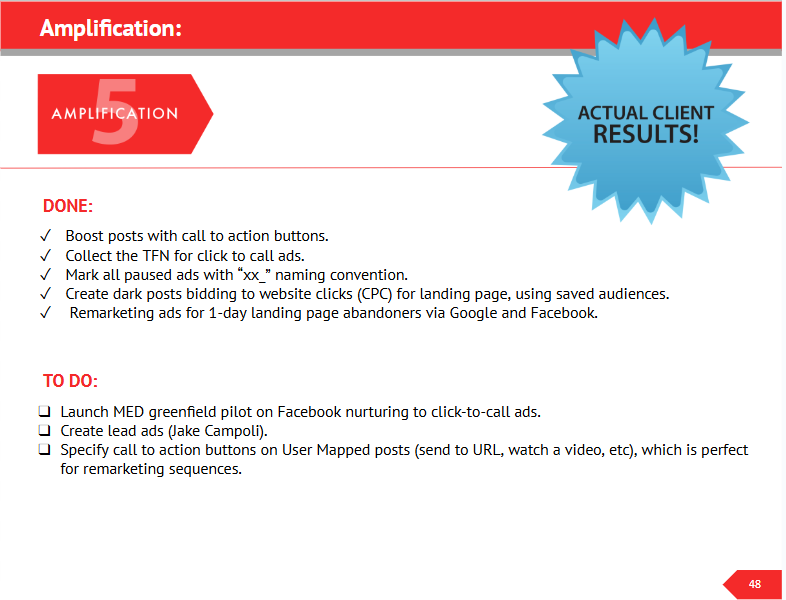
5. Amplification
Where the ads run, how we boost, and how we scale winning posts.
6. Optimization
Ongoing tweaks for cost efficiency, conversions, and performance.

This framework prevents chaos. When the conversation wanders, the framework brings it back. When the client asks for something random, the framework clarifies whether it actually ties to the goal.
Metrics → Analysis → Action (MAA)
One of the biggest mistakes people make is reporting stats with no meaning:
- “You got 10,000 impressions!”
- Okay — so what?
The Success Tracker forces metrics, analysis, and action, not vanity charts.
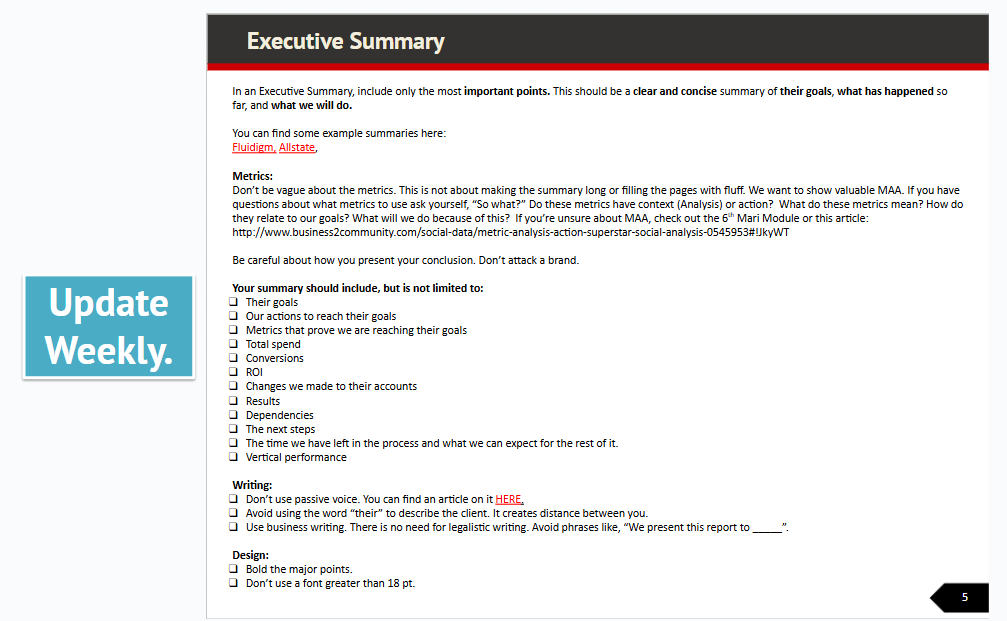
Each report section in the template (executive summary, funnel performance, audience performance, and so on) is designed to answer:
- What happened? (Metrics)
- What does it mean? (Analysis)
- What do we do next? (Action)

If it doesn’t lead to action, it doesn’t belong.
Preparing for client meetings the right way
The biggest failure point in agency work?
Meetings with too many people and no preparation.
The more people in the meeting, the lower your chance of success. Ten people in a meeting? Congratulations, you’ve got a 1% chance of getting anything done.
So before a kickoff call, we always gather:
- The GCT form (Goals, Content, Targeting).
- Access to all platforms.
- Analytics screenshots.
- Current ad performance.
- Website behavior.
- Owned audience size.
- Pending tasks, issues, and gaps.
The Success Tracker template organizes all of this in advance so that the call is strategic, not random chatting.
Getting Stuff Done (GSD)
Every project needs three things documented every week:
✔ What’s done
Demonstrates progress and closes loops.
✔ What’s next
Clear, specific, and tied to the goals.
✔ Dependencies
Items required from the client or team, each with an owner and deadline.

GSD keeps projects moving.
Owned audiences & cross-channel strength
The Success Tracker pulls together:
- Website retargeting pools.
- Email lists.
- Fans and followers.
- Lookalike models.
- Media audiences.
- Platform-specific remarketing buckets.

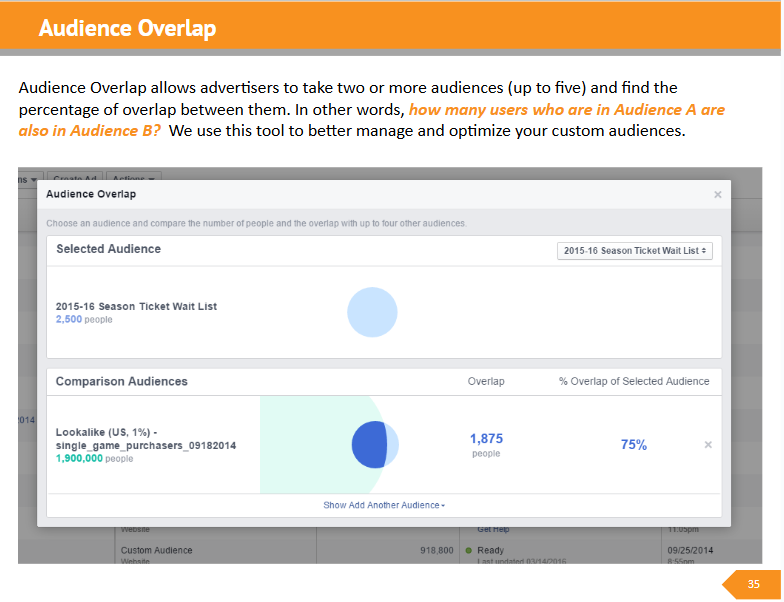
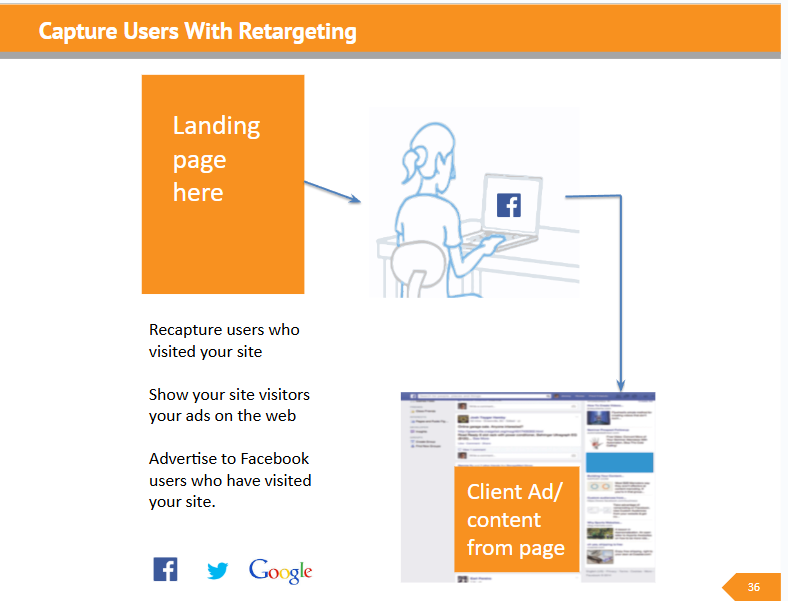
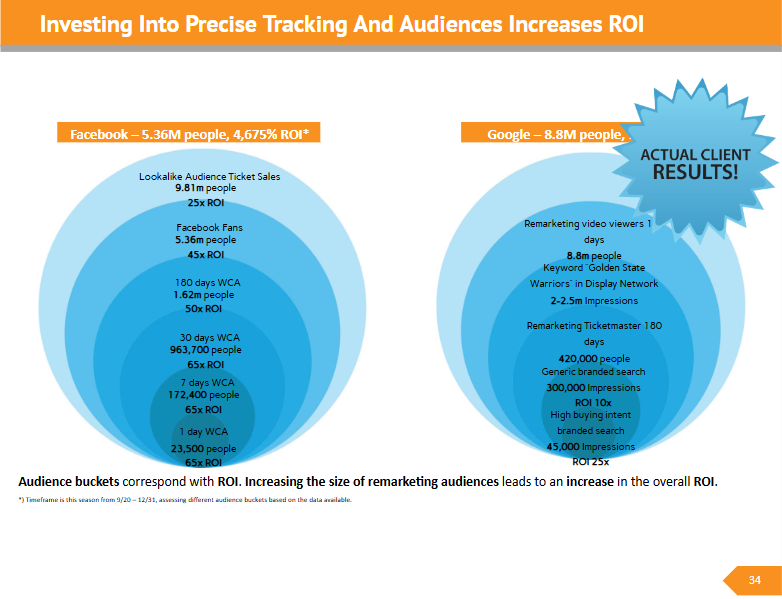
The bigger and more precise these audiences are, the stronger the amplification engine becomes.
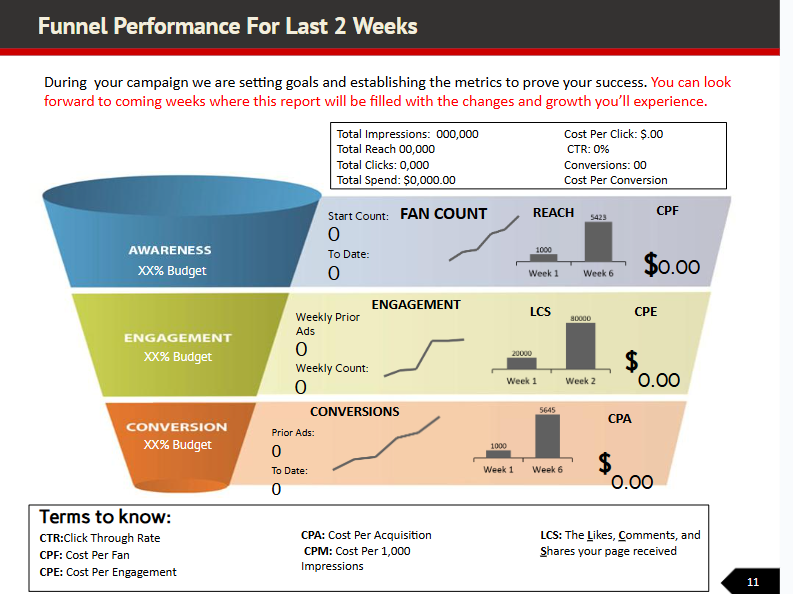
The funnel: Awareness → engagement → conversion
The Success Tracker maps performance across:
- Impressions.
- Clicks.
- Engagement metrics (LCS: likes, comments, shares).
- Leads.
- Revenue.
- Cost per action.
This makes it easy to spot bottlenecks:
- Great awareness but terrible conversions?
→ Fix landing pages or content sequencing. - Expensive clicks but high engagement?
→ Targeting issue. - Cheap video views but no downstream conversions?
→ Weak remarketing.
Why the Success Tracker works
Because it:
- Reduces decision fatigue.
- Eliminates ambiguity.
- Makes every meeting efficient.
- Let the strategist stay in a high-leverage role.
- Documents everything.
- Ties actions directly to goals.
This is the operating system that allows agencies and entrepreneurs to run at scale without falling apart.
It’s not glamorous. It’s not magic. It’s simply the disciplined execution of a repeatable process.
Conclusion
The Success Tracker is the blueprint for doing real work, not random activity. It’s how we assemble the “747” instead of hoping wings magically appear.
If you use it consistently, it becomes:
- Your shield against chaos.
- Your map for every project.
- Your proof of performance.
- Your leverage for growth.
- Your team’s central nervous system.
And it ensures that when you show up to a meeting, you’re not scrambling; you’re orchestrating.