Knowledge Panel Claim: What to Prepare Before Our Call

We’re looking forward to our call and to helping you claim your Google Knowledge Panel and get verified on Google! This one‑pager outlines exactly what we need from you so our meeting runs quickly and smoothly and we can get your panel claimed on the first attempt. Please read carefully and have everything ready for the call.

For anyone who hasn’t been sent this article, here’s a quick overview: we work with individuals and brands whose online presence has been recognized by Google as credible enough to receive an official entity within the Knowledge Graph — the data source behind Google Knowledge Panels. Our team hosts guided calls to help these clients verify their identity and successfully claim their panel.

If you’d prefer to have this handled for you from start to finish, you can also explore our Done-For-You Knowledge Panel package.

Goal: make the claim/verification call quick and successful. Please gather the items below before we meet.

Time estimate: If you come prepared with all the required materials, the call should take about 10–20 minutes; without them, it may extend to 30–45 minutes, which is why we ask that you carefully review this list and have everything ready before we meet.

Who Should Be on the Call

The person whose Knowledge Panel we’re claiming should ideally be present on the call. This is because Google requires identity verification through personal documentation, and the individual must be logged into their own Gmail account during the process.

However, if a representative joins on their behalf, that person must:

  • Have all materials listed in this document (ID selfie, profile screenshots, supporting links, etc.)
  • Be logged into the Gmail account of the individual whose Knowledge Panel is being claimed

1) Identity & ID Photo (Required)

What to bring:

  • One selfie of you holding your government photo ID.
  • File types: .jpg / .jpeg / .png / .pdf

Must be true

  • Your face and the ID are fully visible and in focus.
  • Name on the ID matches the legal name you provide.
  • Text on the ID is readable (good lighting; avoid glare; don’t mirror/flip the image).
  • You may black out sensitive details (national ID number, home address, date of birth) as long as your name, photo, and document type are visible.

Google states it deletes the document within ~30 days after verification. 

2) Ownership Proof: Signed-in Screenshots (Required)

For each profile you want linked in your panel (we suggest 5 social media accounts or sites), provide (a) the URL and (b) a screenshot proving you control it. Make it obvious that you’re logged in and have edit/admin access.

Examples of acceptable screenshots

  • Website: WordPress (or other CMS) dashboard with site name visible.
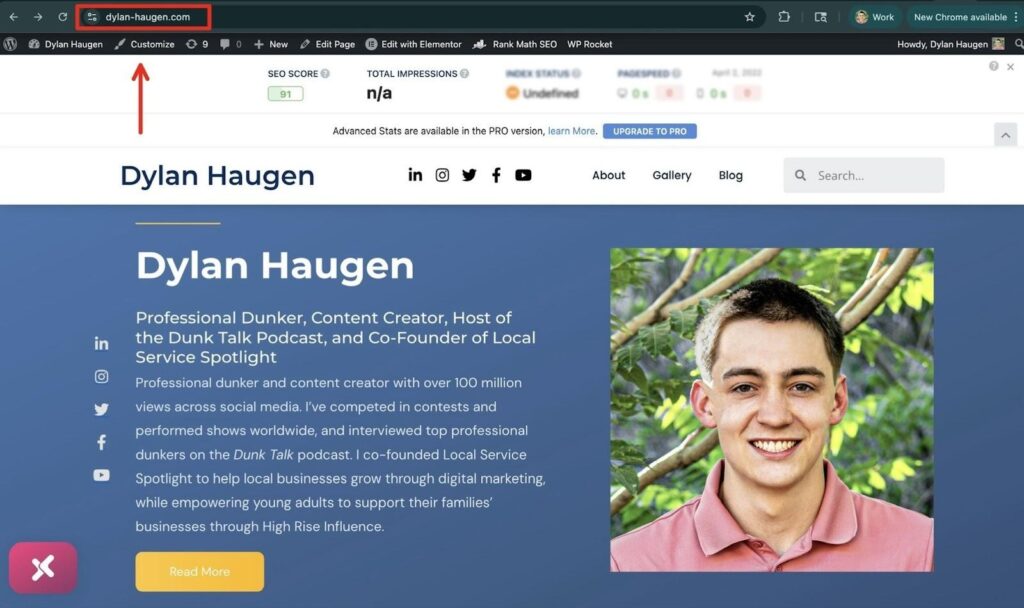
Example for personal site
  • LinkedIn: Your profile while logged in (show the Edit controls or “Me” menu).
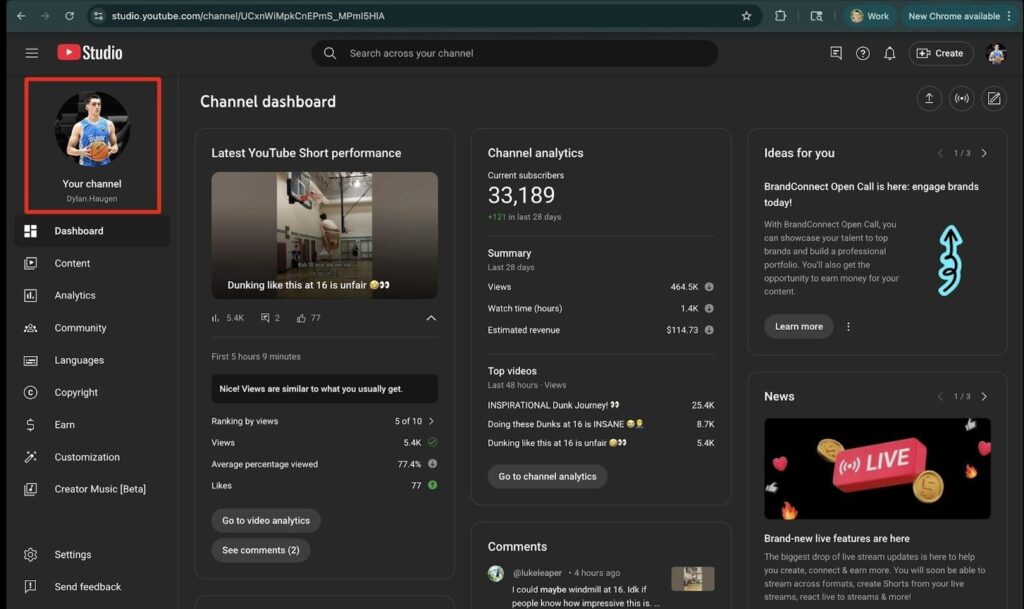
  • YouTube: YouTube Studio dashboard.
Example for YouTube – within Studio
  • Instagram: Your profile while logged in showing Edit Profile.
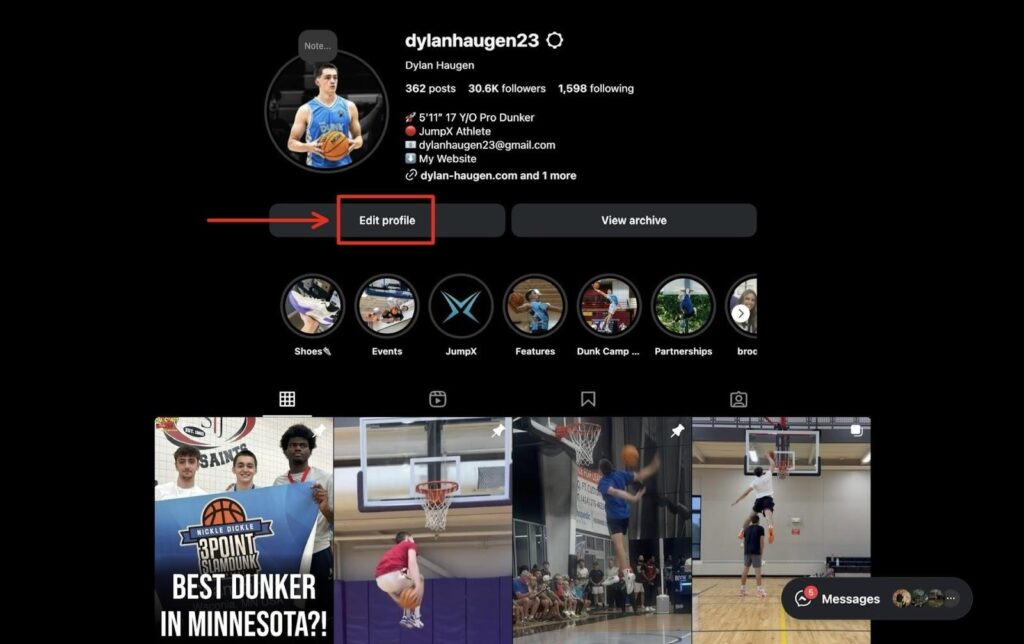
Example for Instagram (similar for other social profiles)
  • X/Twitter: Account settings or profile while logged in.
  • TikTok: Profile while logged in (edit controls visible).
  • Facebook Page: Page Professional Dashboard or Page settings.

Screenshot tips

  • Capture the full browser window with the URL bar in view.
  • Include your user avatar/initial and any “Edit”/“Admin” indicators.
  • Don’t crop away the elements that prove access.

Suggestion:
You’ll want to prioritize your strongest assets, but no matter what, aim to bring 5.

3) Claim Statement (We’ll polish this together)

Our team will generally provide the claim statement, which answers the question: “Tell us why you’re claiming this Knowledge Panel.” However, we can always adjust it if something doesn’t make sense or if you’d like to add additional context before submitting.

Template Example:

I am [Full Name], a [profession/field], best known as [primary title or project]. I’ve [achievement or milestone #1], and my work has been featured by [press or media name]. I collaborate with brands such as [brand list], and am part of [organization or group], contributing to [area of impact]. Having a verified Google Knowledge Panel supports my credibility, sponsorships, and visibility within [your industry/community].

This statement should reflect the areas where you have strong Experience, Expertise, Authority, Trust (EEAT):

  • Press mentions or interviews (news features, podcasts, articles)
  • Competition results or event listings
  • Brand partnership announcements or sponsor features
  • Bylined content or published materials
  • Coaching, organizational, or leadership roles
  • Media appearances or coverage

4) What We’ll Do on the Call

During our session, we’ll use our Knowledge Graph Explorer tool to locate the correct entity that best represents you — the one most filled with your content, media appearances, and other verified references across the web.

Once we’ve confirmed that entity, we’ll walk through all the claiming steps together, ensuring each field and submission detail aligns with Google’s verification standards.

After submitting your claim, Google typically responds within 24–48 hours, though they officially note it may take up to 72 hours to complete verification.

Common Reasons Claims Fail (avoid these)

  • Blurry or mirrored ID selfie; name mismatch with the form.
  • Missing signed-in screenshots (no proof of ownership).
  • Broken links or private profiles.
  • Claim statement is generic or makes unsupported claims.

Questions?

We’re very excited to help you get your Knowledge Panel claimed and verified. Having these items ready before our call will make the process much smoother and drastically speed things up.

Once again, please ensure you’ve gathered or prepared everything listed above so we can make the most of our time together. If anything is difficult to provide, just let us know before the call and we’ll suggest suitable alternatives.


From Zero to Results: How Henry Earned Real Client Wins Through High Rise Academy

Most young adults aren’t taught how to get meaningful work experience, let alone how to build systems that bring long-term value. That’s exactly why we started the High Rise Academy inside High Rise Influence.

We launched this program to help young people get real results for real clients, using a process that blends content creation, AI tools, and repeatable systems. And Henry Holm’s story is one of the best early examples of how it works.

What Makes This Different

Unlike traditional internships or online courses filled with busywork, this apprenticeship is rooted in action. Every apprentice works on real projects and meets weekly with the team to share wins, tackle challenges, and report results using MAA (Metrics, Analysis, Action).

Henry was one of the first people we brought on. At the time, he had no client experience and no marketing background. But in just a few weeks, he was creating content that helped a real dental practice in Atlanta grow its online presence.

“There’s a lot of freedom in this role. I work from my cabin, my house—wherever I have Wi-Fi. But there’s still accountability. That’s what helped me grow fast,” Henry told me.

From Setup to Strategy

During onboarding, Henry gained access to our systems, tools, and SOPs. He jumped in right away by doing real client work:

  • Writing blog posts from raw video footage
  • Creating short-form clips for YouTube, Facebook, and Instagram
  • Running Dollar-A-Day Ads on top performing content

“We don’t just get tasks and do them. We actually talk to the client, figure out what they need, and deliver based on that,” Henry said.

For example, with Flax Dental in Atlanta, Henry and I worked together on a full content engine. He repurposed raw videos from the dentist into:

  • Website blog posts
  • YouTube videos
  • Social clips with captions and headlines

He also contributed to weekly MAA reports, which have evolved over time to include full SEO audits, performance tracking, and recommendations.

“Those reports started small,” he said. “But now we include way more—like SEO data and what we’re going to fix next.”

Building Systems, Not Just Skills

Henry quickly saw how one system could be applied across multiple clients. What we did for a dentist could just as easily work for a plumber, real estate agent, or gym.

  • Learn the framework
  • Document everything
  • Improve with each cycle

“A lot of the stuff we do is transferable. We build a model once and use it again,” Henry said.

Managing Time Like a Pro

Time commitment is flexible by design. Apprentices pick the projects they want and are expected to own results, instead of focusing on working a set amount of hours.

“Some weeks I have more time than others. If I’m too busy, I can pass something off, to another team member” Henry said.

He estimates that someone working on a single business, they could do great work with just an hour a day.

Confidence Without Experience

The biggest change Henry experienced was in how he thought about learning and ownership.

“When I started, I didn’t feel confident. I had no experience. But everything is documented. And there’s always someone to help,” he told me.

Whether it’s using our SOPs, Googling our public articles, or getting help on a team call, apprentices aren’t left guessing.

Want to Start Your Journey?

High Rise Academy isn’t about watching videos. It’s about doing real work with real clients—and building proof of your results as you go.

If you’re interested in joining or know someone who should, check out what we’re building and start your path toward meaningful work that actually grows with you.

Understanding the Local Service Spotlight Ecosystem: How High Rise Influence Helps Contractors Become Local Celebrities

Local Service Spotlight (LSS) is more than just another marketing package — it’s a productized content and distribution platform designed to turn home‑service business owners into local celebrities. Led by the team at High Rise Influence, LSS combines proven PR, SEO and social media strategies with AI‑driven tools and trained operators to generate calls, reviews and rankings for contractors.

How It Works: The Triangle Flywheel

At the heart of LSS is a triangle flywheel of content, distribution and proof. Training through the HRI Academy certifies young adults in the Content Factory system so they can produce high‑quality articles, videos and other media. Agencies leverage these trained operators along with SOPs and dashboards to serve niche verticals like HVAC, landscaping and plumbing. The software layer — Your Content Factory (YCF) evolving into LSS — provides the directory, logic engine and publishing automations that tie everything together.

Product Packages

LSS offers a tiered path for contractors to get involved:

  • Free Listing (Directory): A basic profile with eligibility score and community visibility.
  • Spotlight Site ($30/mo): Hosted profile in our geo‑vertical directory with DIY prompts and a knowledge panel checklist; includes a vanity domain and canonical hosting.
  • Local Service Spotlight ($300/mo): Our flagship subscription that delivers:
  • Two Spotlight Articles (800–1,100 words) each month crafted with AI assistance and internal/external mentions.
  • A Short‑Form Bundle: one‑minute video plus five shorts with captions and thumbnails.
  • A Google Business Profile Pack: posts, Q&A and photos/shorts within upload limits.
  • Weekly MAA (Metrics → Analysis → Action) entries to turn data into tasks.
  • YouTube upload and optimization once per month.
  • Five geo‑vertical editorial mentions per month across our high‑trust directory.
  • A quarterly remote interview or shop‑tour feature.
  • A dashboard showing calls, traffic, rankings and review velocity with quarterly roll‑ups and 90‑day action plans.

Differentiation and Moat

Several factors make LSS unique:

  • Lighthouse relationships: We collaborate with industry figureheads and leading operators who share podcasts, shop tours and expertise to seed high‑trust, evergreen content across our grid.
  • Enterprise‑grade IP for SMBs: Our agentic dashboards and logic engine were built from experience serving multi‑location brands and adapted for single‑location contractors.
  • White‑hat authority stacking: We use subfolders instead of subdomains, canonicalized vanity domains and real editorial mentions — never reciprocal link schemes.
  • Trained talent and ratings‑to‑pay: Operators certified through the HRI Academy must maintain high ratings to stay active; bonuses and penalties keep quality high.
  • Partner‑agency overlay: Niche agencies ride on our rails, delivering higher‑ticket retainers while we take infrastructure rev‑share and enforce standards.

Why It Matters

By turning real‑world proof — project photos, interviews, job‑site videos — into compelling content and distributing it strategically, LSS helps contractors dominate their local search results. The more members join, the stronger the network becomes: authentic content leads to editorial distribution, which creates measurable ROI and drives more content.

Ready to become a local celebrity? Claim a free listing in our directory, upgrade to a Spotlight Site or Locl Spotlight subscription, or train a young adult in your team through our AI Apprentice program.  

How It Works: The Triangle Flywheel

At the heart of LSS is a triangle flywheel of content, distribution and proof. Training through the HRI Academy certifies young adults in the Content Factory system so they can produce high‑quality articles, videos, and other media. Agencies leverage these trained operators along with SOPs and dashboards to serve niche verticals like HVAC, landscaping and plumbing. The software layer—Your Content Factory (YCF) evolving into LSS—provides the directory, logic engine and publishing automations that tie everything together.

Product Packages

LSS offers a tiered path for contractors to get involved:

  • Free Listing (Directory): A basic profile with eligibility score and community visibility.
  • Spotlight Site (․$30/mo): Hosted profile in our geo‑vertical directory with DIY prompts and a knowledge panel checklist; includes a vanity domain and canonical hosting.
  • Local Service Spotlight (․$300/mo): Our flagship subscription that delivers:
    – Two Spotlight Articles (800–1,100 words) each month crafted with AI assistance and internal/external mentions.
    – A Short‑Form Bundle: one‑minute video plus five shorts with captions and thumbnails.
    – A Google Business Profile Pack: posts, Q&A and photos/shorts within upload limits.
    – Weekly MAA (Metrics → Analysis → Action) entries to turn data into tasks.
    – YouTube upload and optimization once per month.
    – Five geo‑vertical editorial mentions per month across our high‑trust directory.
    – A quarterly remote interview or shop‑tour feature.
    – A dashboard showing calls, traffic, rankings and review velocity with quarterly roll‑ups and 90‑day action plans.

Differentiation and Moat

Several factors make LSS unique:

  • Lighthouse relationships: We collaborate with industry figureheads and leading operators who share podcasts, shop tours and expertise to seed high‑trust, evergreen content across our grid.
  • Enterprise‑grade IP for SMBs: Our agentic dashboards and logic engine were built from experience serving multi‑location brands and adapted for single‑location contractors.
  • White‑hat authority stacking: We use subfolders instead of subdomains, canonicalized vanity domains and real editorial mentions—never reciprocal link schemes.
  • Trained talent and ratings‑to‑pay: Operators certified through the HRI Academy must maintain high ratings to stay active; bonuses and penalties keep quality high.
  • Partner‑agency overlay: Niche agencies ride on our rails, delivering higher‑ticket retainers while we take infrastructure rev‑share and enforce standards.

Why It Matters

By turning real‑world proof—project photos, interviews, job‑site videos—into compelling content and distributing it strategically, LSS helps contractors dominate their local search results. The more members join, the stronger the network becomes: authentic content leads to editorial distribution, which creates measurable ROI and drives more content.

Ready to become a local celebrity? Claim a free listing in our directory, upgrade to a Spotlight Site or Local Service Spotlight subscription, or train a young adult in your team through our AI Apprentice program. High Rise Influence is building a network of local authorities, and we’d love for you to be part of it.

A Practical Path for Young Adults to Learn, Earn, and Build: High Rise Academy

A Real Alternative to College or Low-Wage Jobs

Most young adults face three common choices after high school: go into debt for college, work minimum-wage jobs, or drift without direction. High Rise Academy offers a fourth option—one that’s skill-based, paid, and directly tied to real-world work.

This program, built by High Rise Influence with Jack Wendt and Dennis Yu, trains young people to become digital marketing practitioners by doing real work for actual clients.

What Apprentices Actually Do

Apprentices:

  • Work with local businesses to improve their digital presence
  • Turn raw content (videos, FAQs, photos) into posts and ads
  • Use the MAA framework—Metrics, Analysis, Action—to track progress
  • Attend live office hours every Thursday at 2:00 p.m. PT for direct feedback from mentors like Dennis Yu, Jack Wendt, and others

The work is tracked weekly, with feedback loops baked into the structure.

What Skills They Build

Participants learn by doing. They:

  • Manage real business accounts
  • Publish content on websites and social media
  • Edit video clips for campaigns
  • Set up and run local ad campaigns with measurable goals

They finish the program with published client work and proven, transferable skills.

Why This Works for Young People

Young adults already understand how attention works online. They’re consuming content daily. What they need is structure, mentorship, and real clients. The apprenticeship gives them that.

Instead of passively consuming AI tools, they use them to plan, write, and execute faster. This approach makes them efficient operators in a content economy.

What Sets This Program Apart

As Jack Wendt put it:

“Most jobs extract value from you. This one builds it.”

Apprentices often earn income while building long-term assets—client relationships, published content, and measurable campaign results.

If You’re Already Creating, You’re Closer Than You Think

If you’re already posting videos, testing AI tools, or managing your own page—you’re ready. You don’t need a degree. You need the right environment and accountability to grow.

High Rise Academy gives you that.

How Young Adults Help Parents’ Businesses – High Rise Academy

From Student to Teacher at High Rise Academy

Jack Wendt is the founder of High Rise Academy, an AI Apprenticeship Program that teaches young adults how to market for their parents’ businesses or sponsor businesses. In less than two years, Jack went from having no marketing experience to teaching applied digital marketing at Johns Hopkins University and managing national franchise accounts. His journey shows how young adults can become marketing heroes for their parents’ businesses by applying a clear process.

Why Young Adults Are Positioned to Help

Parents know their trade — whether it’s running a medical practice, repairing appliances, or remodeling homes — but most don’t know how to manage Google rankings, reviews, or social media. Young adults already understand smartphones, apps, and how people search for services. With training from High Rise Academy, they can convert that intuition into measurable ROI.

“Your parent is already doing great things. You don’t have to create anything new. Just amplify what they’re already doing.” — Jack Wendt

Getting Onboarded Into High Rise Academy

When a young adult joins High Rise Academy, they begin by learning the core systems and AI-powered tools that make digital marketing manageable. They don’t go through this process alone. Each new member collaborates with other students working on real businesses, gaining hands-on experience from day one. They also gain access to a library of resources, templates, and step-by-step checklists.

Support is built into the program through weekly office hours held every Thursday at 2 PM Pacific. During these sessions, Jack Wendt, Dylan Haugen, and Dennis Yu answer questions, review progress, and help students troubleshoot issues with their Metrics Analysis Action (MAA) or client work. This combination of structured training, real-world projects, and live mentorship prepares young adults to confidently start improving the businesses they work with.

Step 1: Run a Quick Audit

At High Rise Academy, the starting point is an quick audit — a way to quickly see what’s missing in a business’s digital presence.

Jack’s first project was helping his best friend’s parents, an orthopedic surgeon and an ophthalmologist in Minnesota. Their websites lacked detailed bios and clear service pages. By fixing those gaps and creating simple blog posts about knee, hip, and cataract surgeries, they began ranking higher on Google and booking more patients.

During a training session at Johns Hopkins, Jack and Dennis Yu ran live audits for businesses owned by students and faculty. One landscaping business had no reviews and an incomplete Google Business Profile. Within days of updating these, they began receiving new calls.

Step 2: Build a Content Factory

Once gaps are identified, the next step is content production. The Content Factory framework breaks this into four steps: produce, process, post, promote.

Jack used this framework to help a client with 190 franchise locations. By recording short Q&A videos with the founder and rolling them out across all locations, the business gained consistent visibility on Google and Facebook.

Dennis and Jack also worked with a roofing company in Texas. They filmed short walkthroughs of completed roof repairs and turned them into posts, blogs, and ads. Calls to the business increased as customers could now see real projects in their own community.

Step 3: Strengthen Reputation

Strong bios, customer testimonials, and online reviews drive trust — and trust drives rankings.

A husband-and-wife team running a $10M appliance repair company in Maryland attended a High Rise Academy session. Their website lacked case studies and their Google reviews were sparse. After adding detailed stories from happy customers and cleaning up their online presence, they called the training “the best ROI we’ve ever gotten in business.”

Another High Rise Academy student helped his father, a dentist in Sacramento, gather video testimonials from patients. Publishing those clips across YouTube and embedding them on the practice’s site quickly boosted local rankings and drove more inquiries.

Personal branding is essential for local leaders, as it shapes how they’re perceived in the community. Building a strong personal brand not only highlights expertise and values but also fosters trust, credibility, and long-term influence.

Step 4: Amplify With Dollar a Day

Once content and reviews are in place, the Dollar a Day method is used to scale.

In Salt Lake City, Chris Miles, a 22-year-old student of High Rise Academy, used Dollar a Day ads to promote his father’s remodeling company. Within the first week, they booked two kitchen remodel projects worth more than $40,000.

In Tampa, another student promoted educational videos for his mother’s chiropractic practice. Local visibility improved immediately, and new patients began booking directly through their site.

Proof From the Classroom

Teaching at Johns Hopkins gave Jack and Dennis a chance to prove the system in front of academics and administrators. Senior staff admitted that the live audits provided more actionable takeaways than many courses offered through their own departments. Students left with real improvements made to their businesses in real time.

A High Rise Academy participant in Denver put the same system into practice for his uncle’s contracting business. By building a proper bio page and publishing project content, the business began ranking for “kitchen remodeling Denver” within weeks.

Building Jobs Through Micro-Agencies

High Rise Academy’s goal goes beyond helping one family business. The program is designed to create a million jobs through micro-agencies. Young adults learn to run audits, build content factories, and manage reputation, then hire virtual assistants to execute the system.

Jack himself now manages a team of overseas VAs who edit videos and distribute content. These jobs, often paying $500–$1,000 per month, are significant sources of income in places like Pakistan and the Philippines.

Why High Rise Academy Matters

Joining High Rise Academy gives young adults the training and mentorship needed to put these systems into practice. Running a quick audit, building a content factory, collecting reviews, and amplifying content with Dollar a Day are all outcomes of the program. By becoming part of High Rise Academy, you gain the structure, community, and live support to apply these methods to your parents’ business or a sponsor business.

Jack used these systems to help surgeons in Minnesota, a $10M appliance company in Maryland, a roofing company in Texas, and a multi-location franchise. Other students have repeated the process for dentists, chiropractors, contractors, and remodelers. The results come as a byproduct of following the program and working alongside peers and mentors.

High Rise Academy is a pathway for young adults who want to build marketable skills, help their families, and create opportunities for themselves. You can learn more and apply by visiting High Rise Academy website. “In just a year and a half, I went from knowing nothing about digital marketing to teaching it at Johns Hopkins. Anyone can do this if they follow the steps.” — Jack Wendt

Grok Heavy vs Expert Mode: Using AI Agents to Tame Your Content Inventory

Welcome to the content avalanche. If you’re a local service business — a plumber, roofer, dentist or HVAC wizard — chances are you’ve been cranking out videos and social posts for years. Many of our clients have hundreds of videos scattered across YouTube channels, Facebook, Google Drive and dusty corners of their websites. Trying to make sense of it all can feel like sorting through a teenager’s bedroom after a tornado.

That’s where the new crop of AI agents comes in. Models like xAI’s Grok‑3 and Grok‑4 Heavy, and OpenAI’s ChatGPT‑5, are no longer just chatbots. They’re coordinated fleets of sub‑agents that can search, reason and execute tasks on your behalf. In this article, I’ll show you how we use these tools in our content factory process, when to pick “expert” or “heavy” modes, and why the YouTube API still beats any AI at one job: pulling every last video from a channel.

The Problem: Too Much Stuff, Too Little Time

Local service entrepreneurs are prolific. We coach them to shoot short tips on clogged drains or roof maintenance, and they deliver. Before long they’re sitting on a goldmine of content — but it’s scattered across platforms. A new assistant hired to repurpose clips into ads will ask: “Where do I even start?” Without an organized inventory, good material rots away.

Our solution is to divide and conquer. Instead of asking a single large language model to do everything, we break the job into smaller pieces and assign them to specialised agents:

  1. YouTube crawler – uses the YouTube Data API to enumerate every video in a channel. There isn’t a single API endpoint to download all your videos; you have to loop through pages using the nextPageToken until it’s gone【966214574924081†L20-L27】. Requests fetch up to 50–100 results at a time, and you can specify parameters like channelId, order=date and maxResults【650976862157015†L60-L103】. This agent generates a spreadsheet with titles, links and timestamps.
  2. Social media scraper – pulls posts and comments from Facebook, Instagram or X. Each platform has its own API or export tool, and we give our agent the right keys and instructions.
  3. File‑system indexer – uses connectors like Google Drive to walk through folders and index PDFs, slides, and blog drafts. Because we use agent mode, the AI can read file names and extract key metadata instead of hallucinating.
  4. Aggregator agent – stitches together the outputs. This meta‑agent removes duplicates, tags each asset by topic (e.g., “water heater repair”), and hands the clean inventory to our human editors or another AI model for repurposing.

The magic is not just in the code. It’s in the architecture: multiple agents working in parallel, each with a clear job, and a coordinator to merge their work. This setup mirrors the multi‑agent design described by xAI for Grok‑4 Heavy; their model spins up 8–10 sub‑agents that brainstorm, debate and merge answers into a final response【655535755099413†L77-L86】. Elon Musk calls it “study‑group mode,” and the engineers call it test‑time parallel compute【655535755099413†L83-L86】. We took that idea and applied it to content.

Grok’s Agent‑of‑Agent Approach

xAI’s Grok‑3 introduced DeepSearch, an agent built to relentlessly seek the truth across the entire corpus of human knowledge【470093476559074†L466-L474】. It synthesises key information, reasons about conflicting facts and opinions, and distils clarity from complexity【470093476559074†L466-L474】. When we use Grok 3 or 4 in our process, we harness this search agent to pull background info or competitor research. The model’s reasoning mode can think for seconds to minutes, exploring alternative solutions and correcting errors【470093476559074†L20-L45】.

We often upgrade to Grok‑4 Heavy when tasks demand extra diligence. Here’s why:

ModelAgents per queryToken/context limitTool accessMonthly priceKey strength
Grok 4 (SuperGrok)1256 k tokensPython, X search, Web search≈ $30Fast, cheap baseline
Grok 4 Heavy (SuperGrok Heavy)8–10256 k tokens + extra compute headroomSame tools as Grok 4≈ $300Spawns a miniature think‑tank; sub‑agents brainstorm and merge answers【655535755099413†L77-L86】

With Heavy, each sub‑agent receives the prompt plus a unique “temperament” — one is cautious, another loves math, another loves web search. They think in isolation, publish rationales to a shared scratchpad, and a referee stitches the final answer【655535755099413†L88-L199】. The result is slower but more thorough. In our experience, Grok 4 Heavy’s agent‑of‑agent design finds obscure details and cross‑checks sources better than anything else. If you’re digging into the physics of a black‑hole animation or a complex plumbing regulation, Heavy pays for itself.

ChatGPT‑5 Modes: Auto, Fast, Thinking and Pro

OpenAI’s ChatGPT‑5 takes a different approach. It uses a dynamic router to decide which sub‑model to run, balancing cost and reasoning depth. Users can still override the system and choose specific modes:

  • Auto – lets the system decide whether to prioritise speed or reasoning.
  • Fast – delivers instant answers with minimal delay.
  • Thinking – takes more time but provides detailed, step‑by‑step reasoning【292075143200784†L194-L199】.
  • Pro (sometimes called “Expert”) – offers the highest level of accuracy and reasoning depth for research‑grade tasks【292075143200784†L194-L199】.

Unlike older versions where you picked between GPT‑4o or GPT‑4o‑mini, these are now variations of the same core model. A dynamic router decides in real time whether to deliver a quick reply or switch to deeper reasoning【292075143200784†L194-L206】. In our tests, the Thinking mode is usually sufficient for summarising a Google Drive folder or analysing a Facebook page. Pro shines when writing long‑form articles or doing technical research. The lower‑cost modes are great for trimming transcripts or generating quick email drafts.

YouTube API: Still the Best Source of Truth

No matter how advanced the agents get, there’s one place where a plain API call still beats everything: collecting your own videos. The YouTube Data API doesn’t offer a single endpoint to list all videos; you must iterate through paginated results. Each call returns up to 50 videos and includes a nextPageToken if more results are available【966214574924081†L20-L27】. A simple loop using the search endpoint with channelId, order=date and maxResults can retrieve IDs, titles and thumbnails【650976862157015†L60-L103】. We then feed that data into our agent pipeline. This approach is faster and more reliable than asking a language model to scrape YouTube because it avoids hallucinations and respects API quotas.

Choosing the Right Tool for the Job

So which model should you use? Here’s how we decide:

  1. Inventory tasks – Use dedicated APIs (YouTube, Facebook, Google Drive) and simple scripts. Agents can orchestrate the calls and assemble the results.
  2. Basic summarisation and classification – ChatGPT‑5’s Fast or Thinking modes are usually enough. They’re cheaper and good at clustering topics.
  3. Deep analysis or compliance checks – Grok 4 Heavy’s multi‑agent “study‑group” mode digs deeper and cross‑references more sources【655535755099413†L83-L86】. Use this when accuracy matters more than speed.
  4. Long‑form writing and technical research – ChatGPT‑5 Pro (a.k.a. Expert) or Grok Heavy both work. ChatGPT‑5 Pro offers step‑by‑step reasoning【292075143200784†L194-L199】; Grok Heavy brings multiple perspectives.
  5. Cost‑sensitive tasks – Stick with standard Grok 4 or ChatGPT’s Auto/Fast modes. Save the heavy modes for high‑impact projects.

Final Thoughts

AI agents aren’t magic fairy dust. They’re tools that shine when you give them clear roles, reliable data and a well‑designed workflow. By dividing the grunt work among specialised agents, local service businesses can finally tame the chaos of their content libraries. At the end of the day, the combination of API‑driven data collection and multi‑agent reasoning gives you the best of both worlds: speed, accuracy and sanity. And if you’re wondering whether to splurge on Grok’s heavy mode or stick with ChatGPT’s Pro, just ask yourself: Is this job worth a study group of eight AI brains? If yes, fire up the Heavy engines; if not, keep it lean and mean.

To explore more insights and training resources, check out our other platforms: BlitzMetrics, DennisU.com, and JackWent.com.

What It’s Like to Be in High Rise Academy: Henry’s Story

Featured Image: Henry on a video call sharing his first week in High Rise Academy (placeholder)

When Dylan and I started High Rise Academy, our goal was simple: give young adults the tools, mentorship, and confidence to do real work for real businesses. Henry is one of the first apprentices to join, and his journey shows exactly how this program works in practice.

This story comes from a Youtube interview we did with Henry, reflecting on his early months in the program. What he shared provides a clear picture of what new apprentices can expect.

Flexibility From Day One

When we asked Henry what he loved most about the program, his answer was immediate: freedom and versatility.

He explained: “I can basically work from wherever I want as long as I have internet access and Wi-Fi.”

That flexibility meant Henry could work from his family’s cabin or his home without missing deadlines. For him, work-life balance wasn’t theory — it was lived experience.

This is the same principle Dennis Yu, Dylan, and I experienced when we spent a month traveling to eight countries and five U.S. states while speaking at conferences. Our output didn’t dip, because we follow documented processes like the Content Factory model.

Starting With No Experience

Henry admitted he had “little to no experience” before joining. His only teamwork experience came from school projects.

Within weeks, he built professional habits:

  • Communicating directly with clients.
  • Finishing projects on time.
  • Following through on commitments.

As Henry put it: “It’s greatly helped me to communicate with others, get work done on time, and finish what you said you would finish.”

Henry proves that even with no experience, the system works.

Real Client Work: Flax Dental in Atlanta

One of Henry’s first major projects was with Flax Dental, a dentist in Atlanta.

Instead of just being handed a task list, Henry collaborates directly with the client to define what success looks like. That means listening, asking questions, and aligning deliverables with business goals.

His work included:

  • Repurposing long-form dentist videos into SEO-optimized blog posts.
  • Creating short-form video clips for YouTube and Facebook.
  • Uploading and formatting website content.

These are practical skills every local business needs. For apprentices learning to serve small businesses, this is where training meets real-world impact. See our detailed walkthrough: read our full guide to repurposing video content.

Building Transferable Skills

Henry quickly realized that the methods we used for a dentist could apply to almost any local service business — landscapers, plumbers, roofers, and more.

He learned to:

  • Build repeatable workflows for repurposing.
  • Adapt formats to each platform’s audience.
  • Use tools like Descript and Underlord to speed up editing.

Henry discovered that while tools help, real skill lies in understanding client goals and target audiences. That’s why we built documented processes like the Content Factory model: they create scalable systems anyone can learn and apply.

Weekly Reports and SEO Growth

Every Friday, Henry contributed to our MAA End-of-Week Reports for Flax Dental. In week one, the reports simply listed content produced.

As weeks progressed, Henry learned how to:

  • Add SEO tracking.
  • Summarize keyword performance.
  • Include engagement numbers from social posts.

These reports became the backbone of client communication. Henry moved from never having written a report to producing one that guided business decisions. To see exactly how to structure these reports, check out our full guide on how to write Weekly MAA reports for local service businesses.

Support From the Team

Henry didn’t navigate this alone. He had access to mentors like Dennis Yu, Dylan, and myself, along with a full library of playbooks and processes.

As he explained: “Everything is documented. Everything that Dennis and BlitzMetrics has done is out there. You can literally just search whatever you’re saying.”

When apprentices run into obstacles, they’re never stuck. They can:

  • Reference documented checklists.
  • Ask team members who’ve executed these tasks thousands of times.
  • Follow guides to avoid the #1 VA mistake.

Time Commitment and Balance

Henry is clear about the time investment. He doesn’t log hours for the sake of it. He focuses on getting projects done.

For apprentices managing one client, Henry estimated “probably no more than an hour a day” is sufficient. That makes High Rise Academy accessible for students, part-time workers, and young adults balancing other commitments.

Advice to Future Apprentices

When we asked Henry what advice he’d give someone just starting, he said: “At the beginning, I didn’t really know much. But there are so many resources. And even if you end up getting stuck, there are team members who’ve done this thousands of times you can fall back on.”

That mindset is exactly what makes High Rise Academy work: you don’t need to start as an expert. You need to start willing to learn.

Closing Thoughts

Henry’s journey represents what High Rise Academy is about: taking motivated young adults, giving them real-world work with real clients, and surrounding them with mentorship and repeatable processes that lead to success.

Key takeaways from Henry’s story:

  • Flexibility to work from anywhere.
  • Transferable skills that apply to any local business.
  • Step-by-step guidance through reporting, SEO, and content creation.
  • Supportive mentors and documented playbooks.
  • Realistic time commitment that fits into everyday life.

Want to build these skills while helping real businesses? Start by applying what Henry did — commit to doing the work, ask questions, and follow the process.

Learn more about High Rise Academy and apply today.

High Rise Influence University Program: Detailed Guide

This expanded guide builds on our overview of the High Rise Influences AI Apprenticeship Program, or High Rise Academy, giving you deeper insight into how we help apprentices turn passion into a professional career. From paid client work to mentorship and advanced certifications, here’s what sets our program apart.

Hands-On Paid Work & Real Client Experience

Our apprentices don’t just study theory – they learn by doing. After completing the foundational courses, apprentices can qualify to become part of the Digital Marketing Training System. Entry-level specialists start at $10 per hour, with tiered raises of $5 per hour as they earn certifications. This paid work isn’t busywork; apprentices produce deliverables for real clients, gaining the experience and case studies needed to build personal brands and portfolios.

Mentorship & Career Guidance

Mentorship is at the core of our program. Dennis Yu credits his own success to mentors and encourages apprentices to follow the same path. We teach a simple four-step approach: follow the mentor’s content, show you’ve done your homework, demonstrate gratitude, and offer small favors in return. Our faculty members and industry professionals guide apprentices through project reviews and career planning, helping them make the leap from apprentice to marketing professional.

Entrepreneurial Skills & Building Agencies

Many of our apprentices aim to start their own agencies. That’s why our curriculum covers practical advice on scaling, managing freelancers, and working with big clients. We emphasize balancing learning with networking and execution to avoid common startup pitfalls. Whether you want to launch your own agency or become a high-impact marketer in a larger organization, this program equips you with entrepreneurial skills.

Faculty & Administrator Options

We offer a range of options for universities and organizations interested in collaborating. These include one-hour live webinars on topics like Facebook Ads for $1 a day, project management, personal branding, content marketing, and measuring social media ROI. Qualifying apprentices can join the specialist program to earn while they learn, advancing based on performance. For colleges and student groups, Dennis Yu waives his standard speaking fee for on-campus workshops and keynotes, sharing his experiences from Yahoo! and his predictions for the future of digital marketing.

Partnerships & Schools

The High-Rise Influence University Program collaborates with a growing list of educational institutions. Partners have included the University of Louisville, UC San Diego, BYU, Hofstra University, Ridgewater College, Syracuse University, the University of Connecticut, the University of San Diego, LDS Business College, and Baruch College. These partnerships help integrate our curriculum into degree programs and create employment pipelines for apprentices.

Real-World Systems & Processes

We use checklists and processes similar to those found in aviation and surgery to ensure repeatable excellence. Frameworks like the Topic Wheel and 3×3 Goals help apprentices structure their personal brands and content strategies. Our specialist and virtual assistant collaboration model ensures that tasks such as video editing, ad management, and micro-targeting are handled efficiently.

Scale & Ongoing Growth

The program offers access to over 44 professional courses, with more added every month. This ensures apprentices can continue advancing their skills long after they complete the core curriculum. As the program grows, we measure social media ROI and define the impact of likes, comments, shares, and reviews to set the standard for social measurement.

Conclusion & Next Steps

The High-Rise Influence University Program doesn’t just teach marketing; it creates employable, experienced marketers with personal brands and real client results. Whether you’re an aspiring marketer, a university partner, or a business seeking certified talent, we invite you to explore the program and discover how it can accelerate your goals.

Interested in joining? Read our main overview of the High-Rise Influence University Program here: https://highriseinfluence.net/high-rise-influence-university-program/. Or contact us to learn more about partner packages and opportunities.

How High Rise Academy Trains Young Adults to Deliver for Local Businesses

In this video, Dennis Yu, Dylan Haugen, and I, Jack Wendt, explain how High Rise Academy equips young adults to deliver results local businesses can measure—leads, calls, and customers.

Goals: Creating Jobs Through Mentorship

High Rise Academy is built on Dennis Yu’s mission to create one million jobs for young adults. That idea comes from mentorship Dennis received 30 years ago from the CEO of American Airlines, who helped him see opportunities as a young professional.

That mentorship model defines the Academy. Students learn by doing and then teaching others. Dylan Haugen explained: “Since starting this, all my friends have been implementing this into their personal branding. I’ve helped them get Knowledge Panels just by sharing what I learned.”

Dylan and I documented the steps to trigger a Google Knowledge Panel so peers could follow the same process. Each student builds a public portfolio of campaigns, dashboards, and videos that employers or clients can verify.

Content: Documented Systems That Deliver

The Content Factory

Apprentices follow BlitzMetrics’ Content Factory framework, the same workflow applied with Nike and the Golden State Warriors. It turns one video into many outputs across TikTok, YouTube, Facebook, and LinkedIn.

Tools like Descript and CapCut simplify editing, so even first-time students can caption and repurpose clips.

The 3×3 Video Grid

Students start with a 3×3 video grid: nine short clips—three “Why,” three “How,” and three “What.” For example, a dentist might record why they entered the field, how they calm nervous patients, and what treatments they offer. These build authenticity and become ads or blog content.

This method reflects BlitzMetrics’ personal branding guide: authentic storytelling is the backbone of effective marketing.

Dollar-a-Day Strategy

Campaigns are promoted using the Dollar-a-Day strategy. By spending $1 daily, students test what works before scaling.

Dennis commented: “Most local businesses say they’ve been burned by three agencies before us.” Documented dashboards help rebuild that trust.

Targeting: Parents and Local Businesses

Parents and Students

Parents want skills that translate into work. At High Rise Academy, apprentices launch campaigns in their first month.

Instead of theory, each student documents campaigns that prove competence.

Local Service Providers

For dentists, roofers, and lawyers, marketing is often a struggle. The Academy prepares someone they trust—a son, daughter, or local student—to manage it.

These steps follow Dennis Yu’s local marketing strategy for service providers, applied in real campaigns.

Why It Works

The Academy succeeds because apprentices run live campaigns, not simulations. Every assignment delivers measurable results—calls, leads, or video views.

Dennis explained: “This isn’t about tuition or replacing college. These are individual lives. When these young adults succeed, I feel pride.”

By documenting their work publicly—through checklists, YouTube videos, and blogs—students create repeatable paths for others to follow. That cycle scales the mission from dozens of jobs to thousands.

Conclusion: Training Built on Proof

High Rise Academy is grounded in execution. Apprentices create content, run ads, and manage analytics that businesses can measure. Parents see confidence grow. Business owners get work tied to visible data.

The systems behind it—the Content Factory framework, the Dollar-a-Day method, and steps to trigger a Google Knowledge Panel—have been tested with global brands and adapted for local providers.

Want to equip your young adult with these skills? Enroll in High Rise Academy and give them hands-on experience running real campaigns.

Building Practical Skills with High Rise Academy

Many young adults wonder what comes after high school. Retail or fast food jobs are easy to get, but don’t provide transferable skills. College is an option, but it doesn’t always connect directly to real work. High Rise Academy offers an alternative: apprentices work with real businesses, apply AI tools, and learn by producing measurable outcomes.

This article is based on a session led by Jack Wendt and Dylan Haugen, where they discussed how the program works in practice. You can watch the original video session here.

Who This Is For

The GCT frameworkGoals, Content, Targeting—is a simple way to clarify who a program is designed for and how it delivers value. It helps align expectations by showing what you’ll learn, how you’ll learn it, and who the program is best suited for.

Goal: Learn practical digital marketing and business skills by working with real clients.
Content: Apprentices apply frameworks, such as the Content Factory, to show results and accountability.
Target: Young adults who want to build portfolios and experience instead of settling for jobs that don’t transfer into long-term skills.

It’s also for parents who run local service businesses and want their kids to gain meaningful work experience early—whether by contributing to the family business or working with other real clients. High Rise Academy provides proof of work—real numbers, real businesses, and clear documentation. Anyone who values learning through action rather than theory will find this program a fit.

What Apprentices Do

Apprentices are matched with real businesses and given practical tasks. They gather raw content from business owners, create social media posts, manage advertising campaigns, and document outcomes. Every week they submit reports following the MAA framework—showing metrics, providing analysis, and outlining actions for the next week.

The focus is on producing measurable improvements for businesses. Apprentices learn to set up campaigns, analyze performance, and present results in a professional format. They also get practice in communication, coordination, and accountability by working with both clients and mentors.

Learning Beyond Technical Skills

Jack described it this way:

“Most jobs extract value from you. Get a job that you can extract value from. Learning from the job, adding to your resume, improving your interpersonal skills and your soft skills—all those things are going to be huge and you’ll never lose that value.”

The program develops more than technical expertise. Apprentices practice project management, communication, and leadership on every campaign. Writing weekly reports, presenting results, and coordinating with teams mirrors what’s expected in professional roles.

Dennis Yu—who has worked with major organizations like Nike and the Golden State Warriors—personally leads weekly office hours, which are open to every member of the academy. Apprentices review campaigns, identify weak points, and adjust strategy on the spot. Understanding what happens in office hours and why documenting progress is critical helps ensure steady growth and accountability.

Building a Portfolio That Matters

Every campaign turns into a case study. Apprentices save screenshots, MAA reports, and before-and-after analytics. This evidence becomes the backbone of their portfolio.

Instead of saying “I know social media marketing,” apprentices can show:

  • A Facebook campaign that generated a specific number of leads.
  • A Google Ads report showing cost per lead reduced by half.
  • An SEO dashboard proving month-over-month traffic growth.

This level of documentation prevents fluff and builds credibility. It aligns with industry best practices such as E-E-A-T principles. Apprentices present their portfolios in review sessions with mentors, practicing how to explain results clearly and answer questions.

Visuals include:

  • Screenshots from campaigns.
  • Sample MAA reports.
  • Quote cards from apprentices and clients.
  • Analytics charts showing measurable improvements.

Employers and clients value proof. By the end of the program, every apprentice has a body of work they can point to as evidence of skill.

Get Started Here

If you want to stop guessing about your future and start working on real projects, apply to High Rise Academy. You’ll build campaigns, work with mentors, and graduate with a portfolio of documented results. This is not theory. It is work you can prove.

Start your application to High Rise Academy today. Build your first case study and show results that matter